
Loading, please wait...
LOT 0335
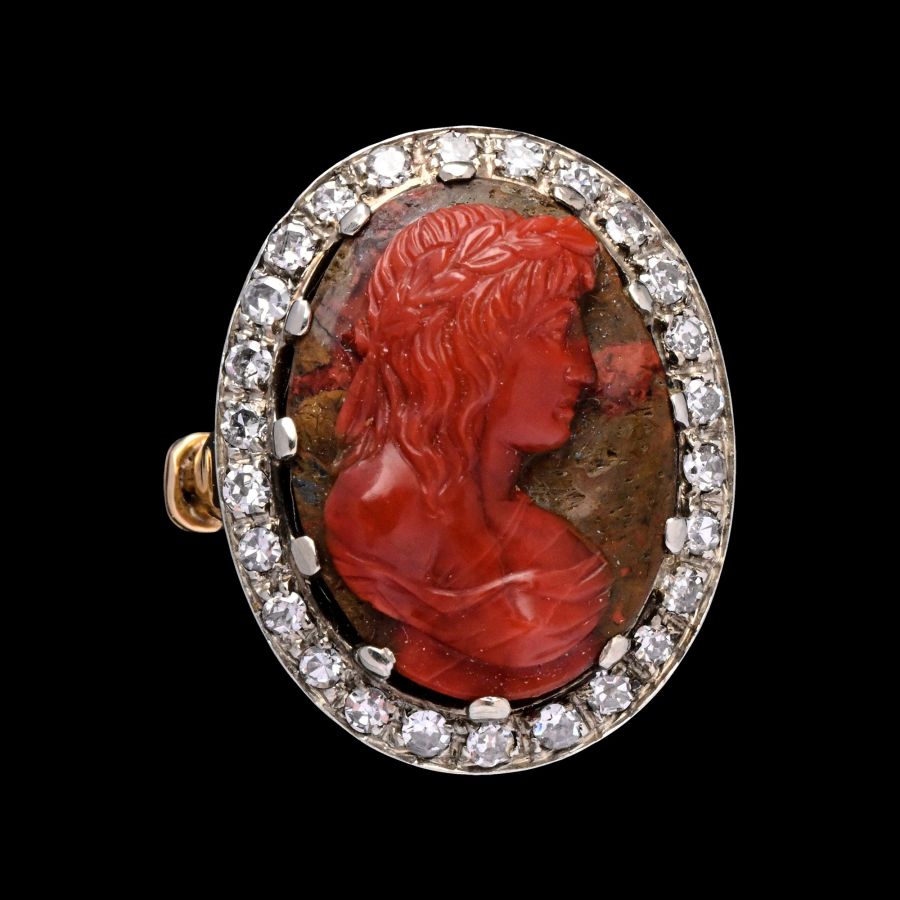
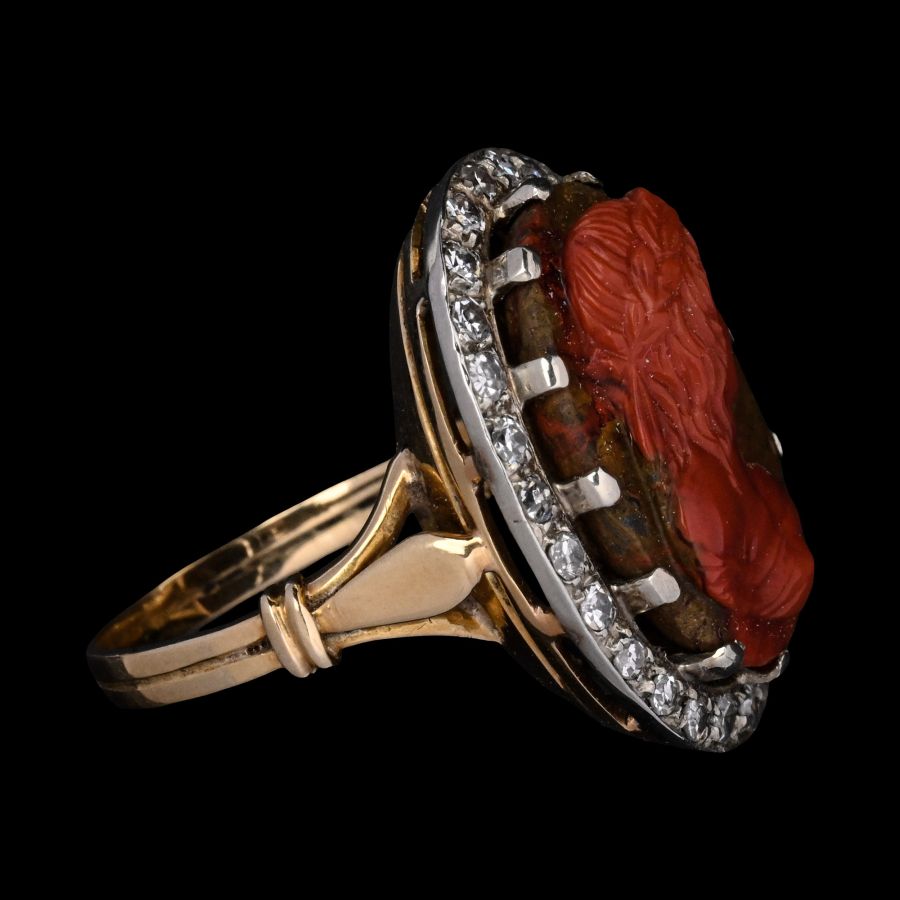
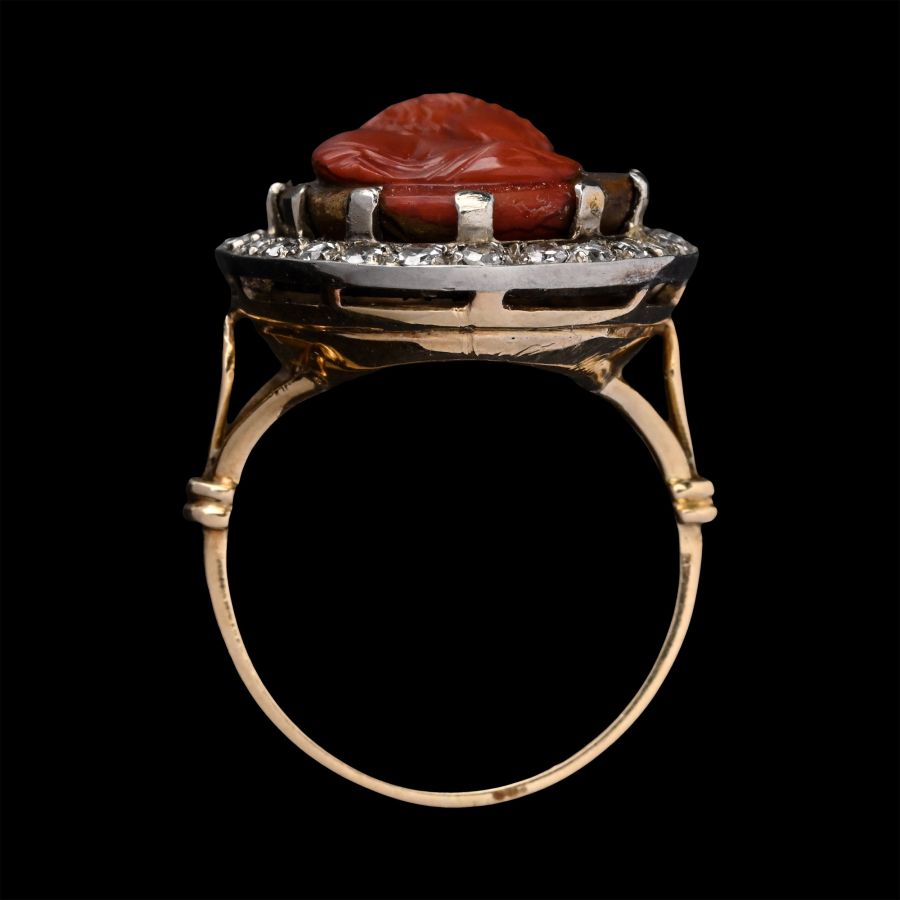
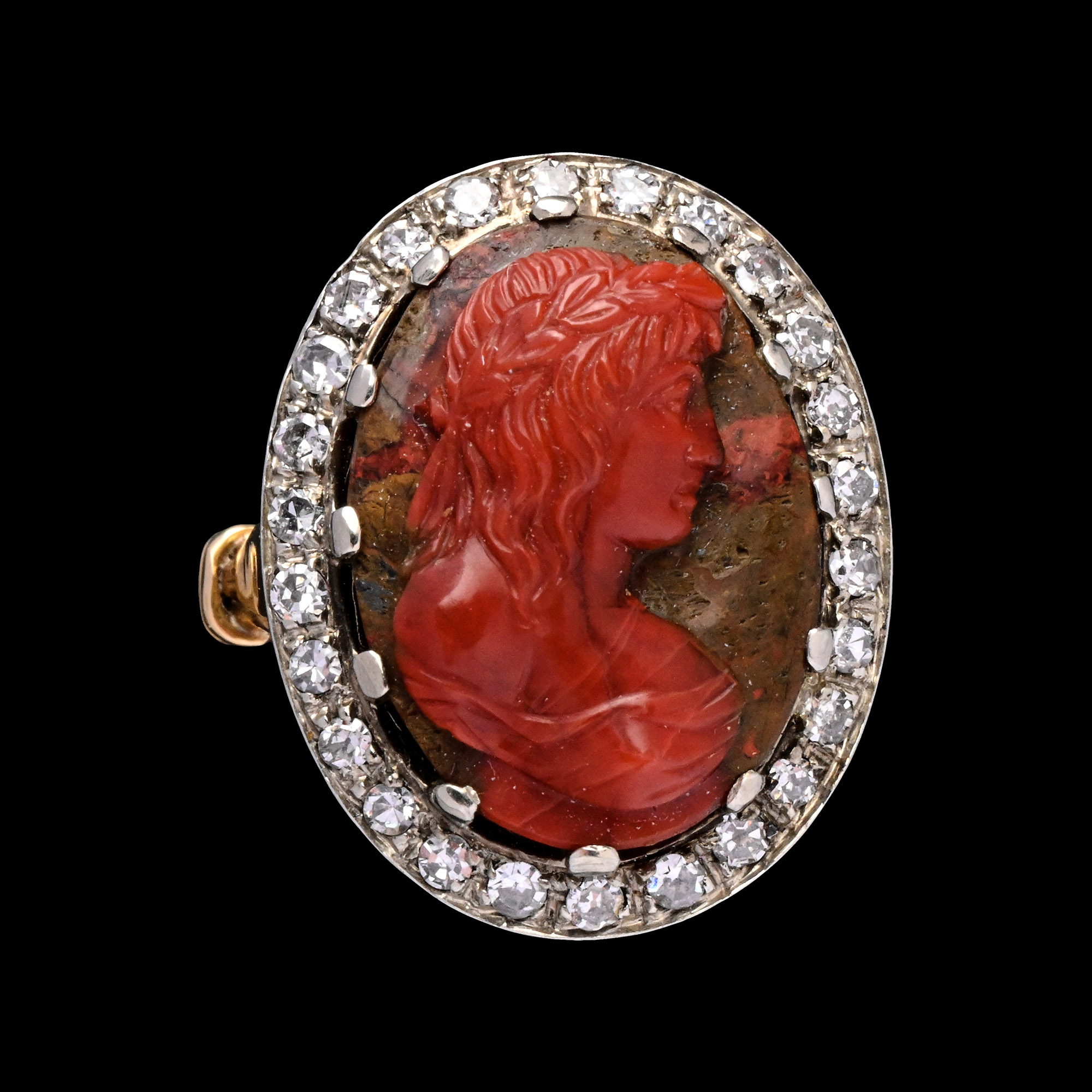
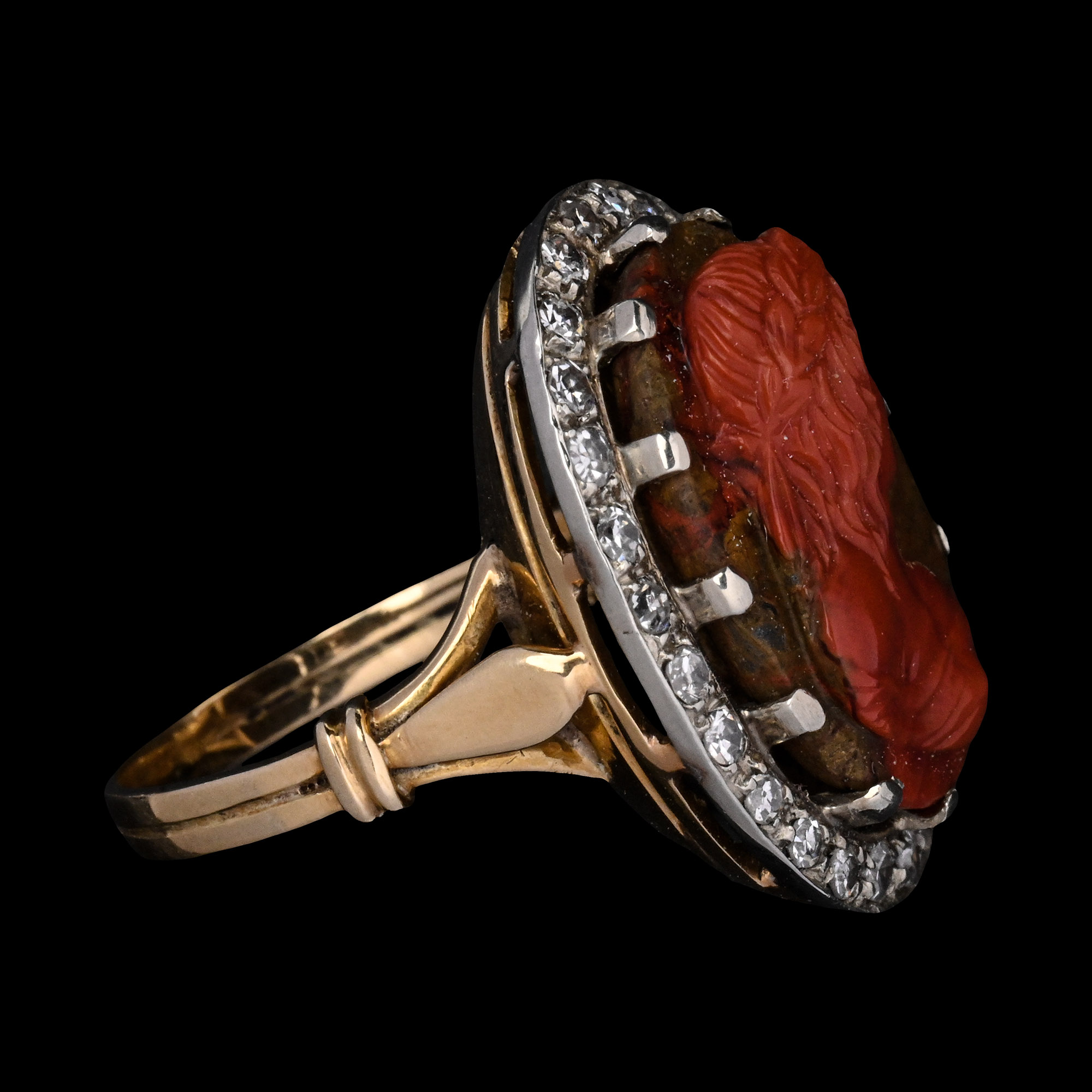
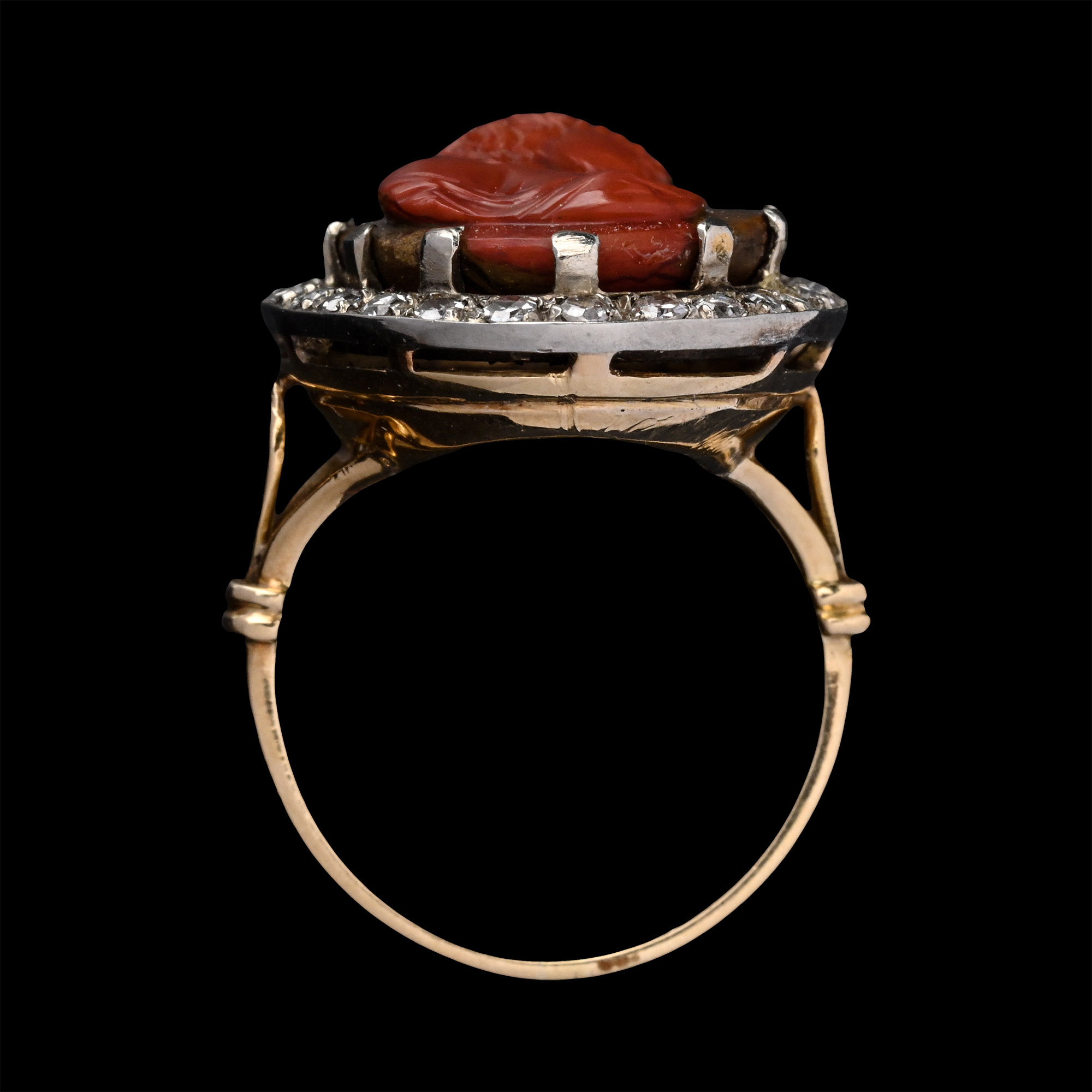
Hardstone Cameo of a Muse in Ring
ITALY, 18TH CENTURY A.D.
1 in. (6.47 grams, 25.88 mm overall, 16.12 mm internal diameter (approximate size British J 1/2, USA 5, Europe 9.32, Japan 9)).
Carved in two-coloured red and brown agate, depicting a classical muse in right-facing profile with flowing hair, and drapery, the laurel wreath identifying her as an embodiment of poetic or artistic inspiration; the cameo set in a 19th-century mount with a border of single-cut diamonds set in platinum, a pierced, open-backed construction and bifurcated shoulders enriched with classical leaf motifs.
ProvenanceAcquired on the European art market.
This lot has been checked against the Interpol Database of stolen works of art and is accompanied by search certificate number no.13327-257906.
Cf. a similar cameo of an English Lady as muse in Draper, J.D., Cameo Appearances, The Metropolitan Museum of Art, New Haven-London, 2008, p.7 no.4.
FootnotesThe union of an eighteenth-century Italian gem engraving with a later English mount reflects a broader nineteenth-century practice of integrating earlier engraved gems into newly conceived settings.
CONDITIONTimeLine Auctions follows a vetting process to ensure the authenticity and legality of all items, reinforcing our commitment to integrity and responsible trading. Each antiquity, antique, and coin lot undergoes thorough examination by a vetting committee of at least ten external specialists, professional trade association members, scientists, and archaeologists: Our Vetting Process
AUCTIONS:
TimeLine is a leading auction house specialising in antiquities, ancient art, collectables, natural history, coins, medals, and books. Our auctions offer museums, collectors, historians, and enthusiasts the opportunity to acquire unique and historically significant pieces.
-
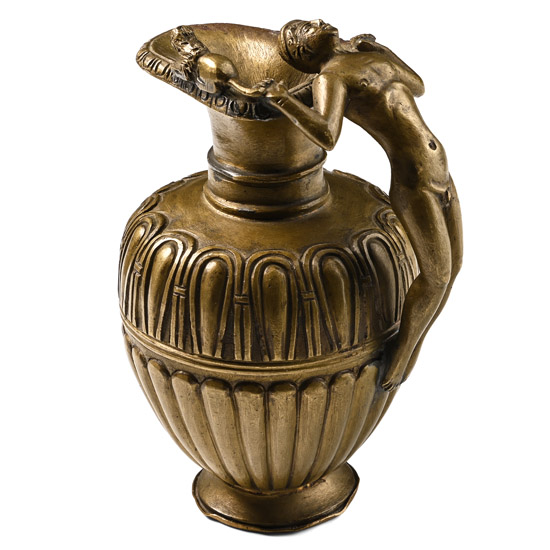
Classical Greek Style Bronze Vessel
20th century A.D.Sold for (Inc. bp): £33
Ovoid, fluted body with a narrow neck and a trefoil mouth, the handle formed as a nude youth grasping the tail of a lion resting on the rim. 543 grams, 11.3 cm
Property of a Nottinghamshire, UK, gentleman. -
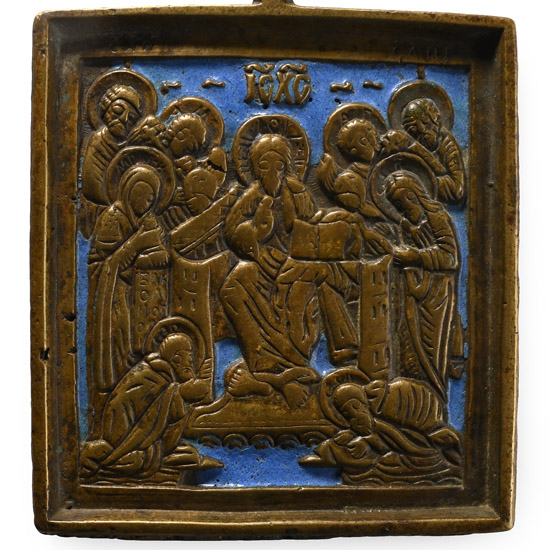
Russian Orthodox Enamelled Bronze Travel Icon with Extended Deesis
19th century A.D.Sold for (Inc. bp): £117
Depicting Deesis with Jesus at the centre, Saint Mary on the left and Saint John the Baptist on the right; Jesus seated upon a throne, depicted with the open Gospel in his left hand and raising his right hand in blessing; Mary, with veiled head and mantle, wearing a maphorion mantle over an embroidered robe and holding a scroll; the Deesis surrounded by a theory of saints, with Saint Zosima and Saint Sabbas making the Proskynesis in front of the Christ; Old Slavic inscription above the figures: 'ΙC ΧΡ' (Jesus Christ). 67 grams, 64 mm
Acquired from Chris Martin-Zakheim, Iconastas, 5 Piccadilly Arcade, London SW1. From the private collection of a West London, UK, gentleman, formed since the early 2000s.
The Deisis or Deesis (Деисус, Gk. for “supplication”) was the depiction of the Virgin, John the Baptist and possibly other saints interceding with Christ on behalf of mankind. -
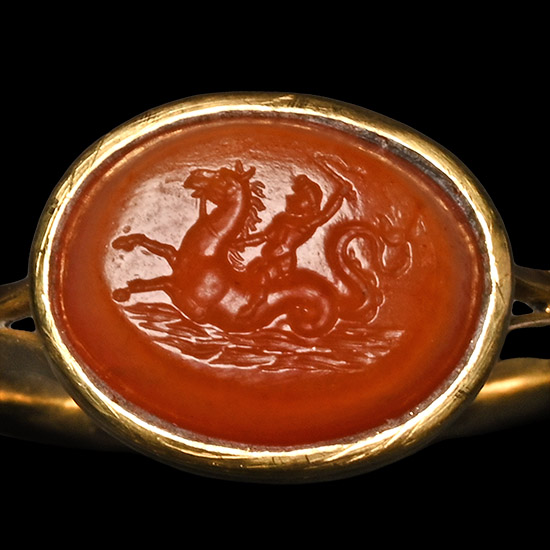
Renaissance Agate Gemstone with Eros Riding a Hippocampus in Gold Ring
16th-17th century A.D.Sold for (Inc. bp): £2,340
Oval banded agate intaglio engraved with Eros riding a hippocampus through the waves and wielding a whip in his hand; set in a later gold ring with openwork shoulders. 4.57 grams, 25.29 mm overall, 17.36 mm internal diameter (approximate size British N 1/2, USA 6 3/4, Europe 14.35, Japan 13)
Acquired on the European art market. This lot has been checked against the Interpol Database of stolen works of art and is accompanied by search certificate number no.13348-257957.
The term hippocampus originates in the Renaissance, from Julius Caesar Arantius. He originated the term from the Greek word for seahorse (hippos [‘horse’] and kampos [‘sea monster’]). Arantius published his description of the hippocampus in 1587, in the first chapter of his work titled De Humano Foetu Liber.
