
Loading, please wait...
LOT 2648
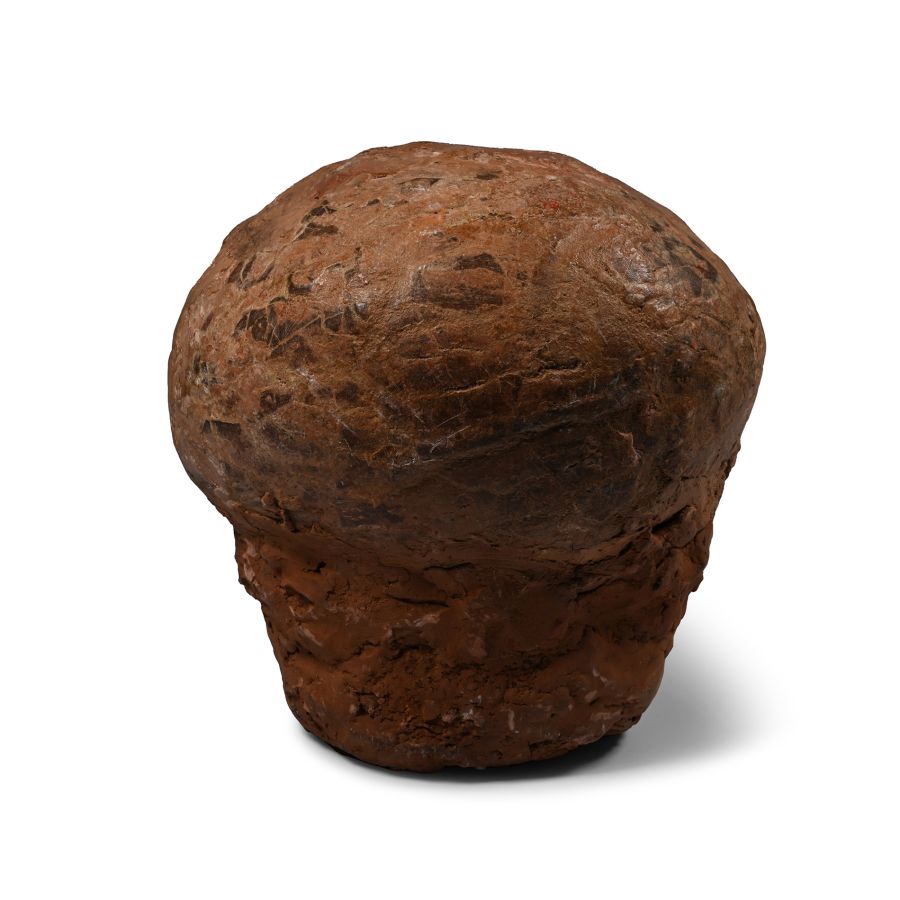
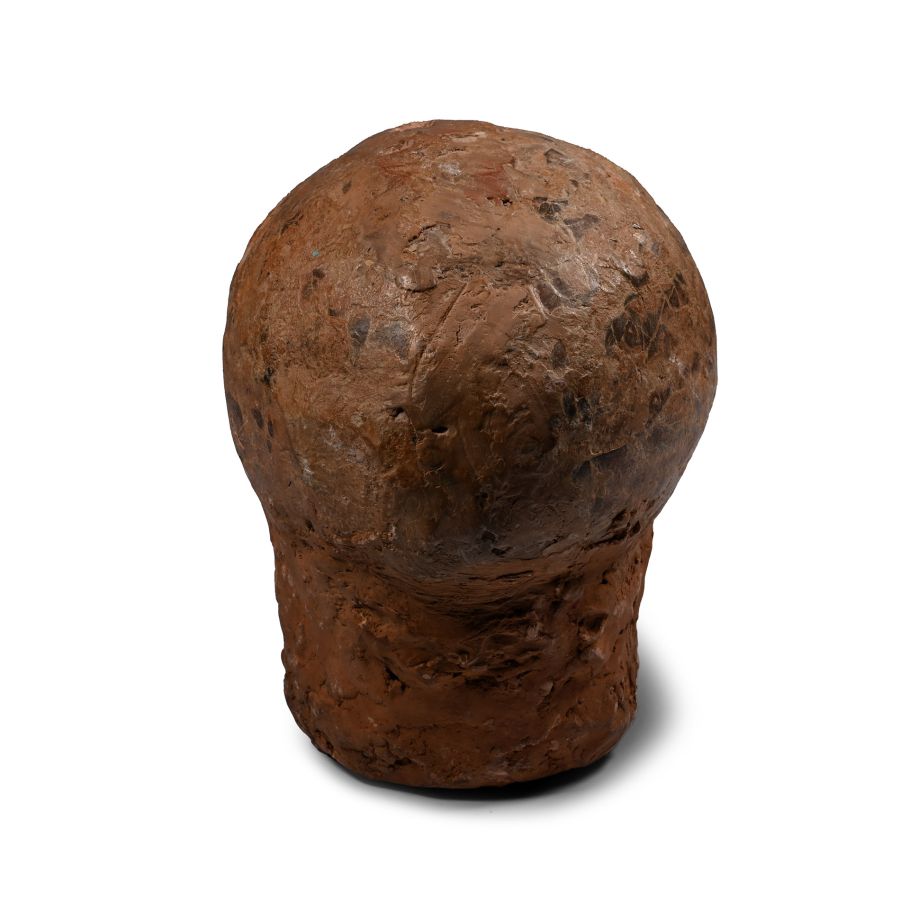
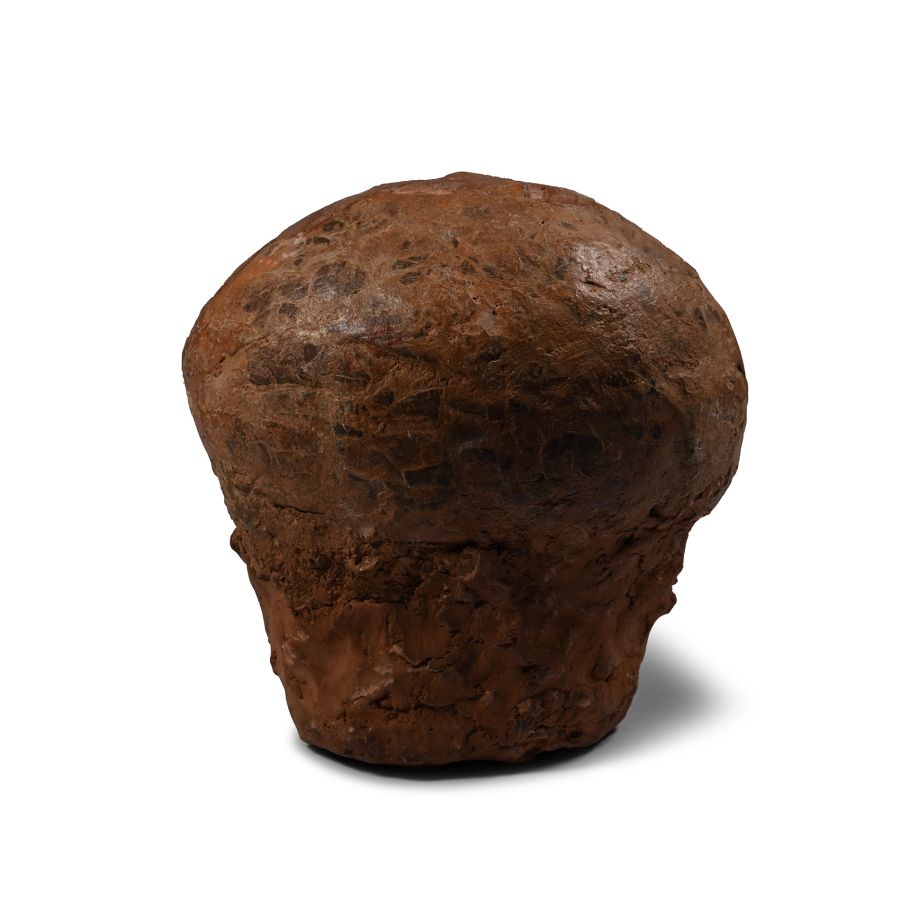
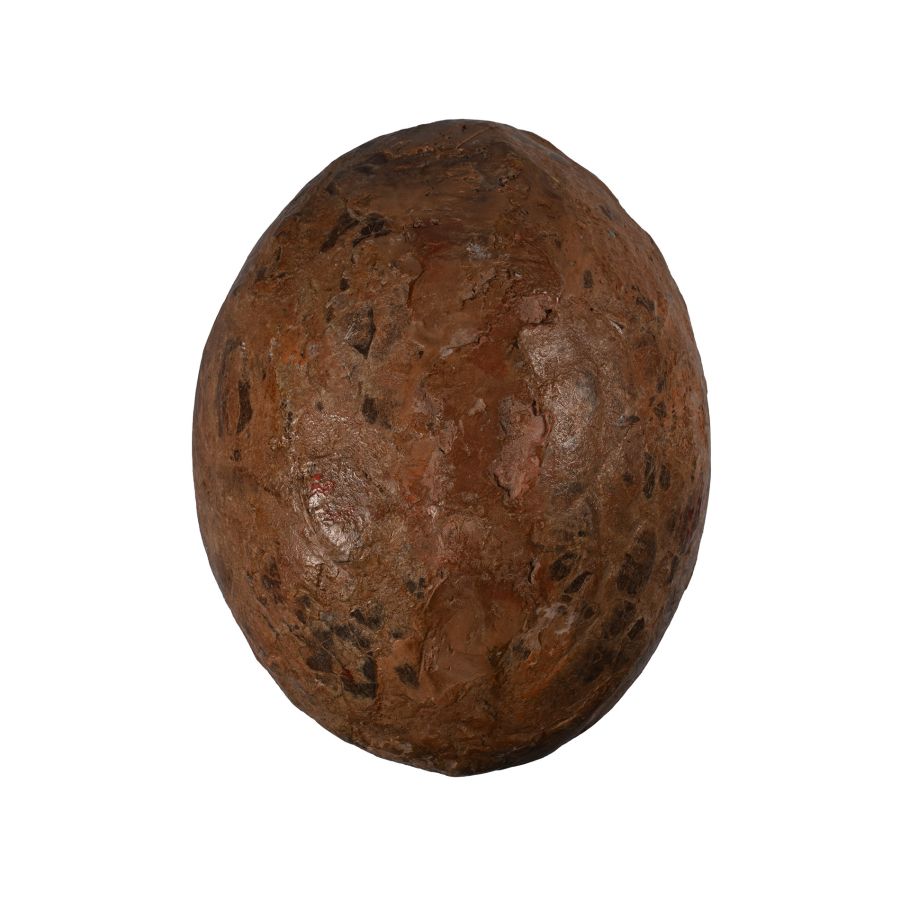
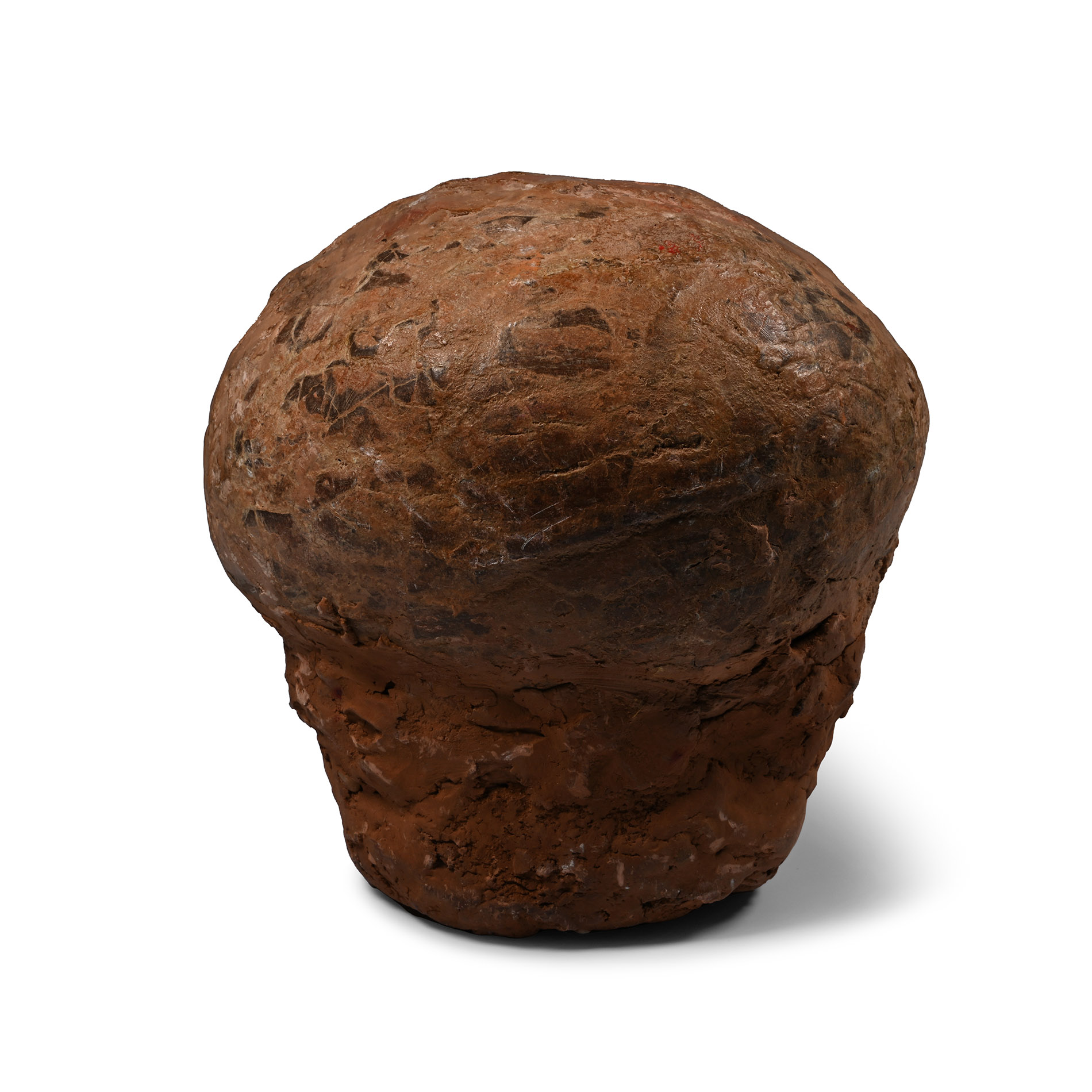
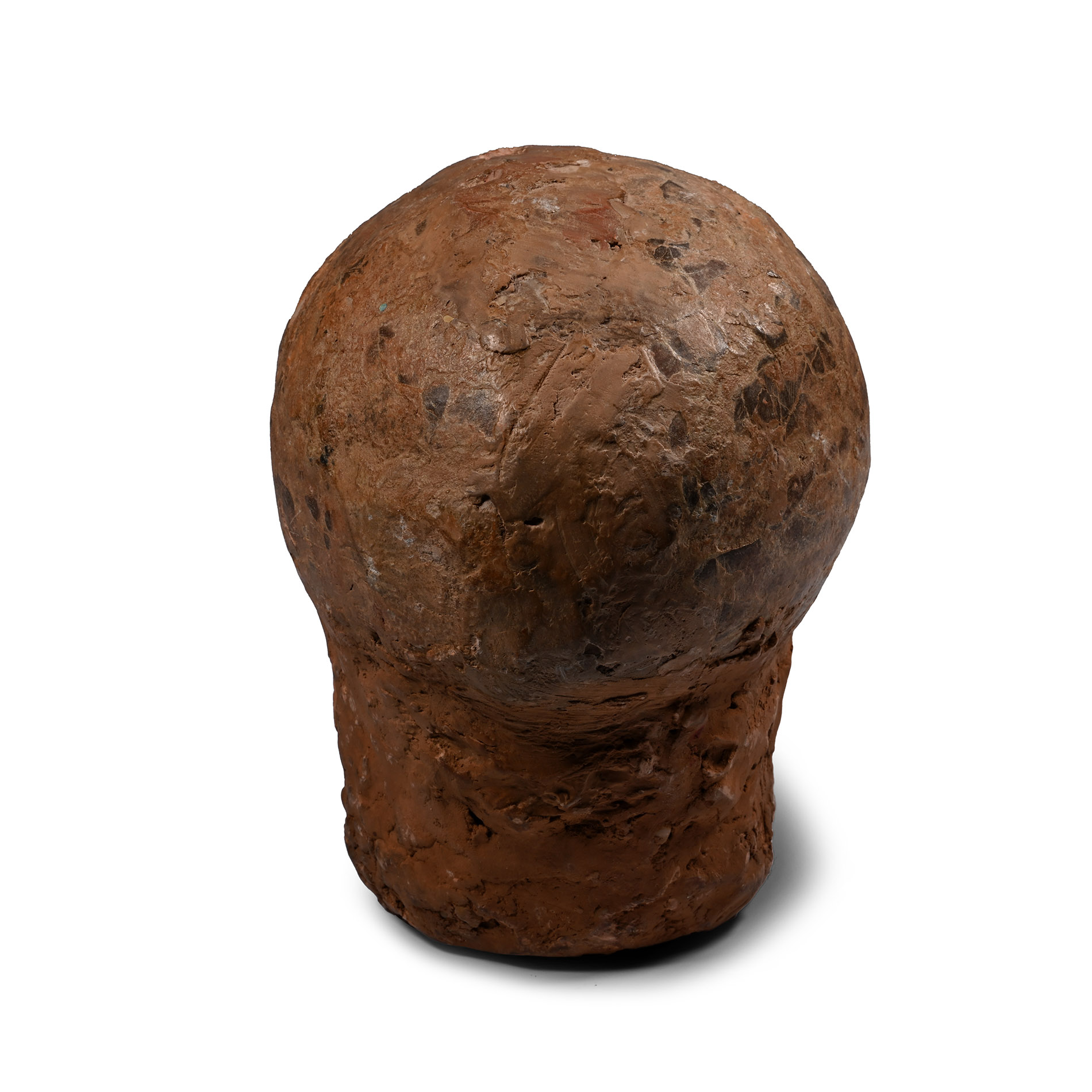
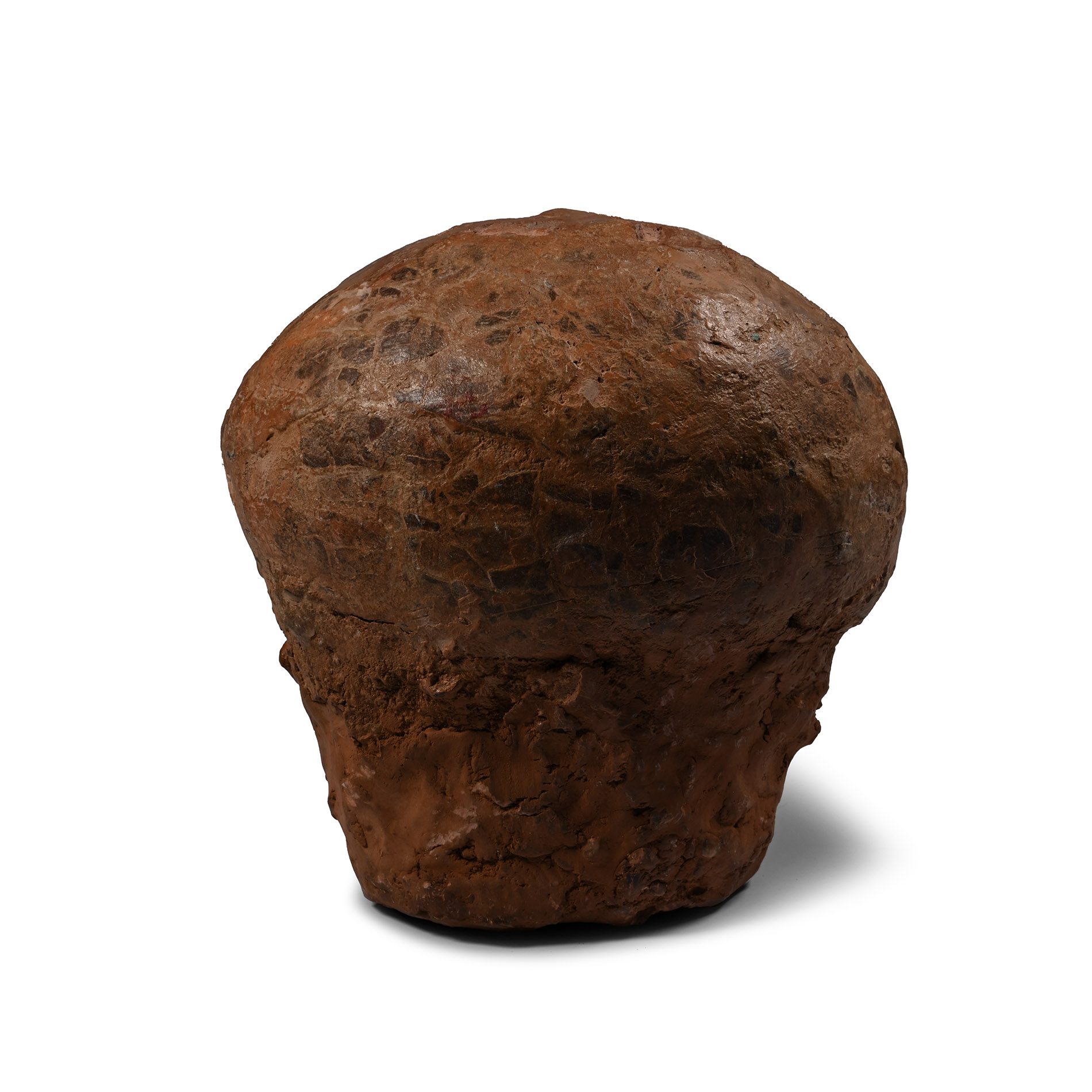
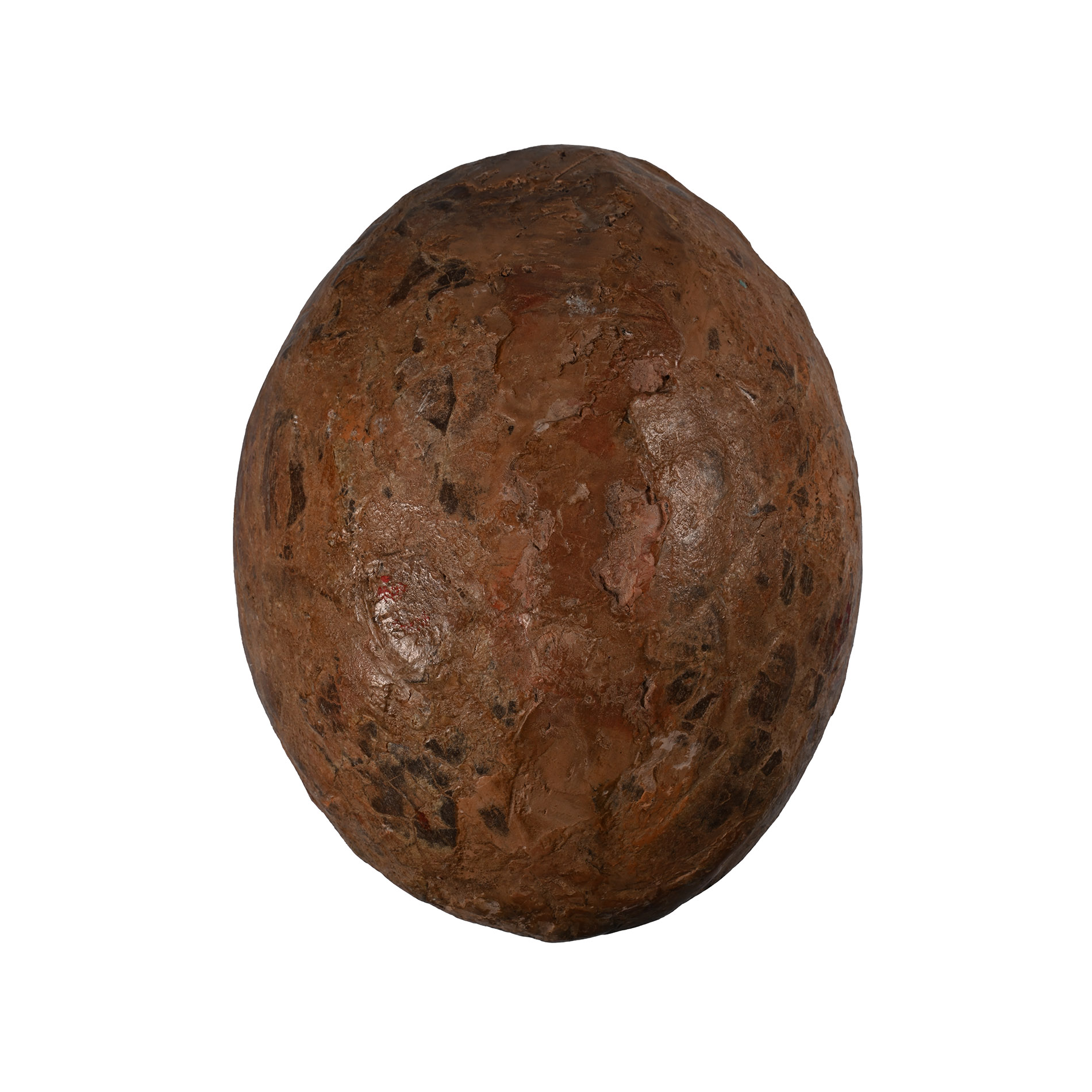
Hadrosaur Dinosaur Egg
CRETACEOUS PERIOD, 100 MILLION YEARS B.P.
6 7/8 in. (4.7 kg, 17.5 cm).
A large Charonosaurus sp. hadrosaur egg partially attached to matrix.
ProvenanceAcquired 1983-1990.
Private collection, Hove, UK.
See Liang, X., et al., Dinosaur eggs and dinosaur egg-bearing deposits (Upper Cretaceous) of Henan Province, China: Occurrences, palaeoenvironments, taphonomy and preservation, 2009, Progress in Natural Science; see Xing L, et al., Hadrosauroid eggs and embryos from the Upper Cretaceous (Maastrichtian) of Jiangxi Province, China, 2022, BMC Ecology and Evolution.
FootnotesHadrosaurs were large dinosaurs, growing up to 10 metres in length, belonging to the ‘Duck-Billed’ group of dinosaurs. They are considered the ‘herd animal’ of the Cretaceous, having been found buried together in their thousands. Dinosaur egg fossils are known from approximately two-hundred sites around the word, particularly in Asia. This nest comes from the Xixia Formation, Henan region of China, which produces some of the best preserved eggs in the world. These eggs can yield entire embryos within them, making them an essential tool for understanding the biology of these creatures.
CONDITIONTimeLine Auctions follows a vetting process to ensure the authenticity and legality of all items, reinforcing our commitment to integrity and responsible trading. Each antiquity, antique, and coin lot undergoes thorough examination by a vetting committee of at least ten external specialists, professional trade association members, scientists, and archaeologists: Our Vetting Process
AUCTIONS:
TimeLine is a leading auction house specialising in antiquities, ancient art, collectables, natural history, coins, medals, and books. Our auctions offer museums, collectors, historians, and enthusiasts the opportunity to acquire unique and historically significant pieces.
-
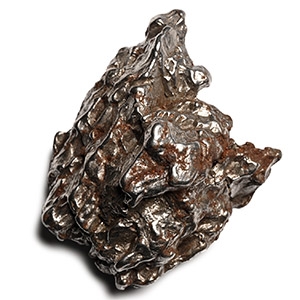
Campo Del Campo Cielo Meteorite
Fell 6000-5000 years B.P.Sold for (Inc. bp): £195
A nickel-iron meteorite (IAB). 76.6 grams, 49 mm
From a Lincolnshire, UK, collection.
A crater field of roughly 26 craters was found in the vicinity of this crater, which is estimated to date to 4-5 thousand years BP. The age of the meteorite itself is thought to be c.4.5 billion years, formed as part of the development of this solar system. The largest two fragments, the 30.8 ton Gancedo and 28.8 ton El Chaco, are among the heaviest meteorite masses ever recovered on Earth. In 1576, the governor of a province in Northern Argentina commissioned the military to search for a large mass of iron, which it was believed the local people claimed had fallen from the sky and which they used for their weapon production. The expedition discovered a large mass of metal which was assumed to be an iron mine and brought back a few samples, which were described as being of unusual purity. Following the legends, in 1774 Don Bartolomé Francisco de Maguna rediscovered the iron mass. He himself did not believe that the stone had fallen from the sky and assumed that it had formed by a volcanic eruption. However, he sent the samples to the Royal Society of London. In 1990 it became protected by law. -
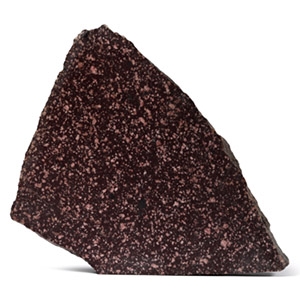
Large Historic Roman Cut & Polished Porphyry Slice
Sold for (Inc. bp): £364
Comprising lacquered porphyry slice of irregular shape, cut and polished on one side, probably recycled material mined in ancient Roman times between the 1st and 5th century A.D. 443 grams, 18.2 cm
From Egypt. Ex Mineral Imports, London, UK. Gregory, Bottley & Lloyd (Gregory's), Harwich, UK.
Mons Porphyrites (today Jabal Abu Dukhkhan) is the mountainous site of a group of ancient Porphyry quarries in the Red Sea Hills of the inhospitable eastern desert in Egypt, a five day trip from the Nile during Roman times. They were discovered by Caius Cominus Leugas in 18 A.D., and during the Roman Empire the mines officially belonged to the emperor and were the only known source of the Imperial Porphyry, Mons Porphyrites. This dark purple stone was associated with royalty and used for prestigious sculpture and architecture. The location of the mines was lost some time in the 5th century, and rediscovered in the early 19th century. Excavations in the area have revealed the well-preserved quarries and the dwelling places of the quarry men, and also thousands of ostraca have been discovered containing messages that provide details of how the quarrying took place, and of how the highly skilled quarrymen ordered their food. -
.jpg)
Amber with Insect Inclusion
Oligocene Period, circa 45 million years B.P.Sold for (Inc. bp): £20
Polished oval-shaped specimen with insect inclusion. 0.61 grams, 16.85 mm
From a North American collection. Ex property of an East Sussex, UK, gentleman.
