
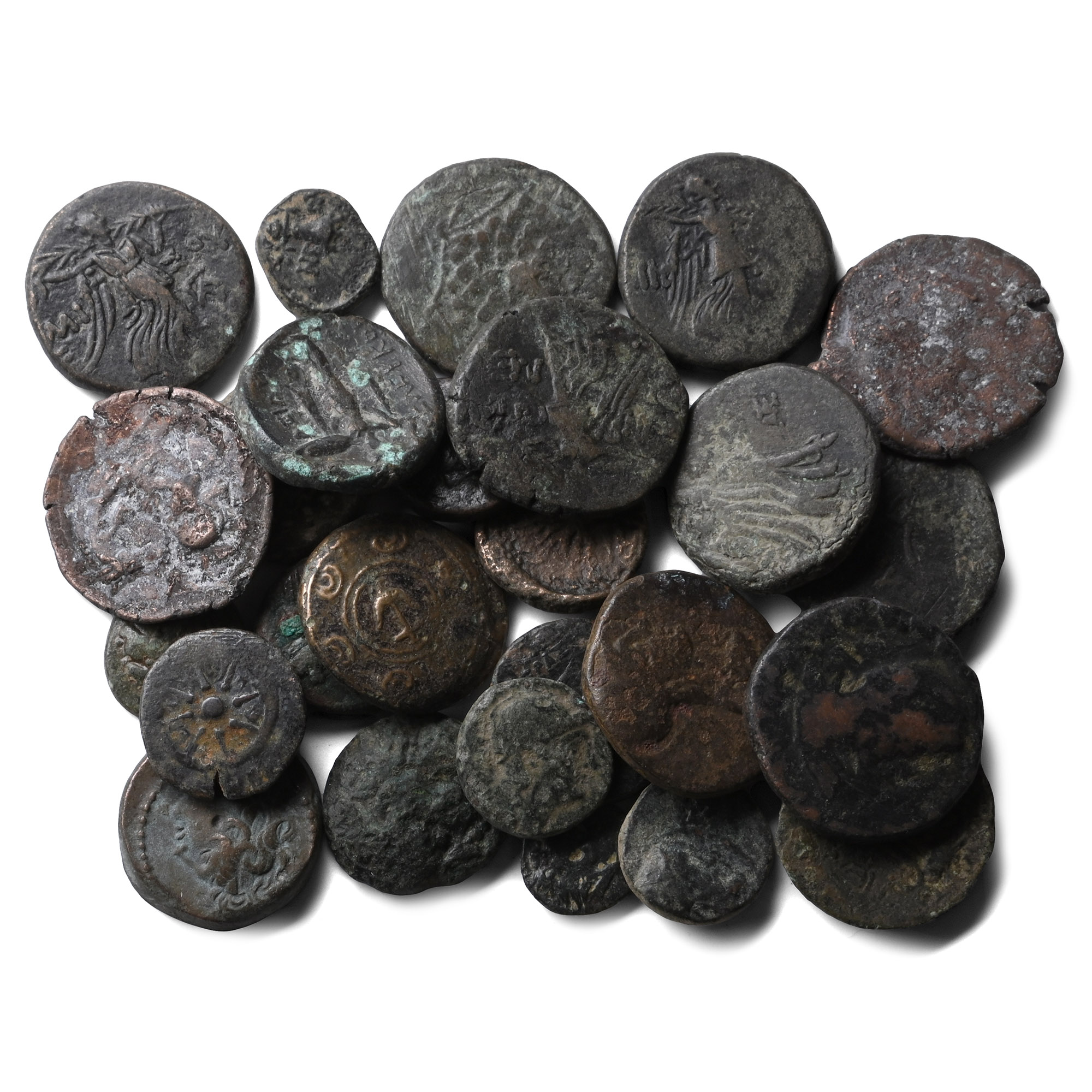
LOT 3350
Group of Twenty Five (25) Greek AE Coins. Circa 3rd-1st century BC.
Comprising: mixed rulers, issues, denominations and reverse types. As shown.(132gr total.).
ProvenanceProperty of a Cambridgeshire, UK, gentleman.
TimeLine Auctions follows a vetting process to ensure the authenticity and legality of all items, reinforcing our commitment to integrity and responsible trading. Each antiquity, antique, and coin lot undergoes thorough examination by a vetting committee of at least ten external specialists, professional trade association members, scientists, and archaeologists: Our Vetting Process
AUCTIONS:
TimeLine is a leading auction house specialising in antiquities, ancient art, collectables, natural history, coins, medals, and books. Our auctions offer museums, collectors, historians, and enthusiasts the opportunity to acquire unique and historically significant pieces.
-
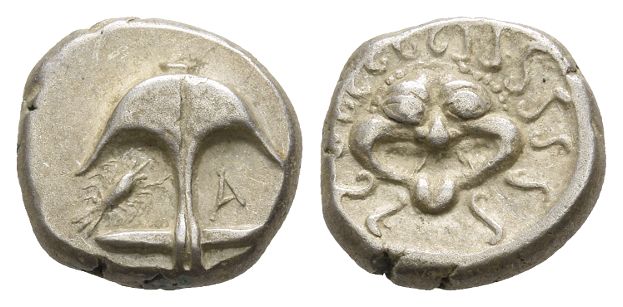
Thrace, Apollonia Pontika AR Drachm. Late 5th-4th centuries BC.
Sold for (Inc. bp): £156
Upright anchor; crayfish to left, A to right / Facing head of Medusa with tongue protruding and snakes as hair. Topalov, Apollonia p. 337, 7; HGC 3.2, 1323. 3.04gr, 13mm, 6h.
Good Very Fine.
Ex Austran art market. Property of a Surrey, UK, gentleman. -
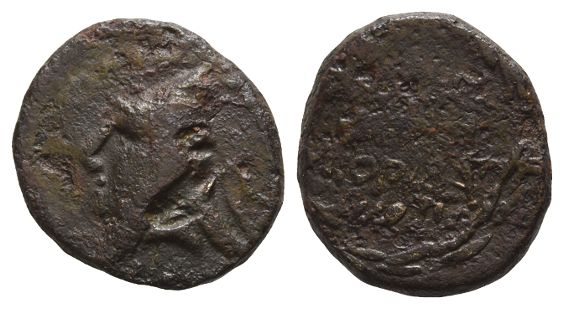
Kings of Sophene, Mithradates II Philopator AE 18mm. Circa 89-after 85 BC.
Sold for (Inc. bp): £7
Bust to left, wearing bashlyk; uncertain countermark / [BAΣΙΛΕΩΣ ΜΙΘΡΙΔΑΤ ΦΙΛO], club within wreath. Kovacs 36. 4.30gr, 18mm, 9h.
Near Very Fine.
Acquired on the European coin market. Property of a Kent, UK, gentleman. -
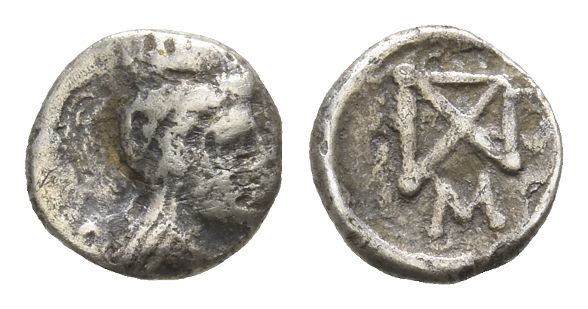
Asia Minor, Uncertain Mint AR Hemiobol. 4th century BC.
Sold for (Inc. bp): £72
Turreted head of female to right / Monogram; M below. CNG E-573, lot 279 var. (kerykeion, no M); CNG E-575, 174; otherwise, unpublished in the standard references. 0.29gr, 7mm, 3h.
Very Fine. Very rare.
Acquired on the European coin market. Property of a Kent, UK, gentleman.
CNG note: 'Prior sales speculated this type may be of Pnytagoras of Salamis, but this was based on a vague similarity of the obverse type to some issues of that king, and an unlikely reading of the monogram as being formed of the letters ΠN.'
