
Loading, please wait...
LOT 2169
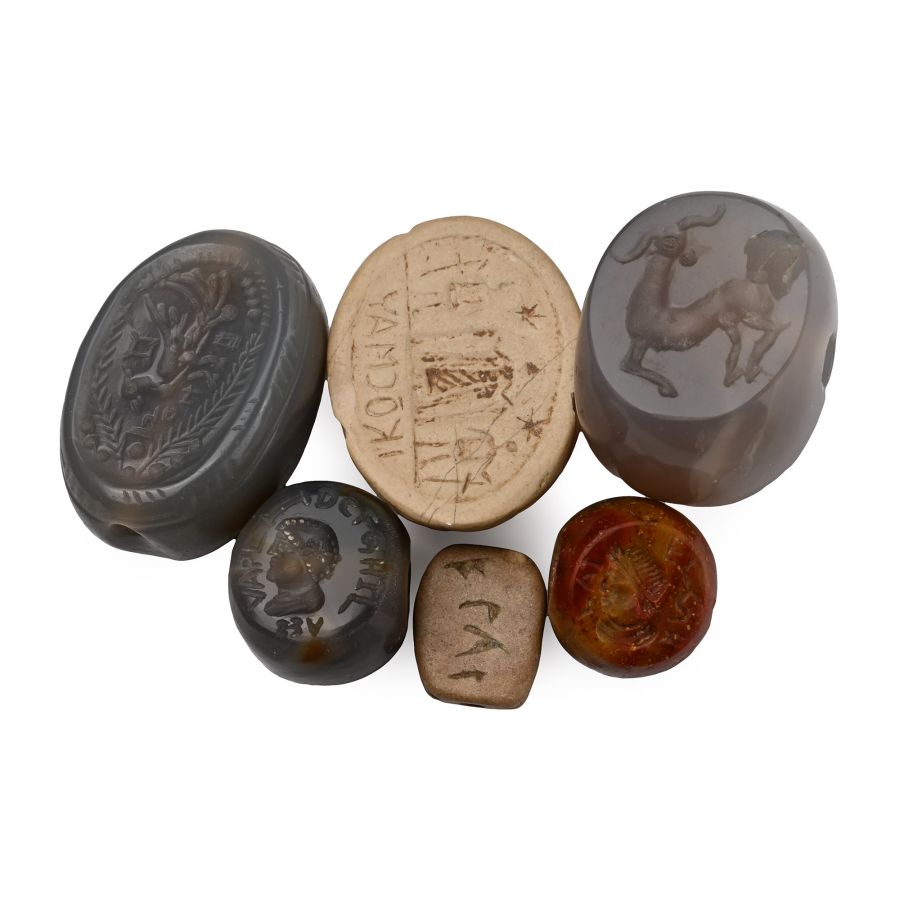
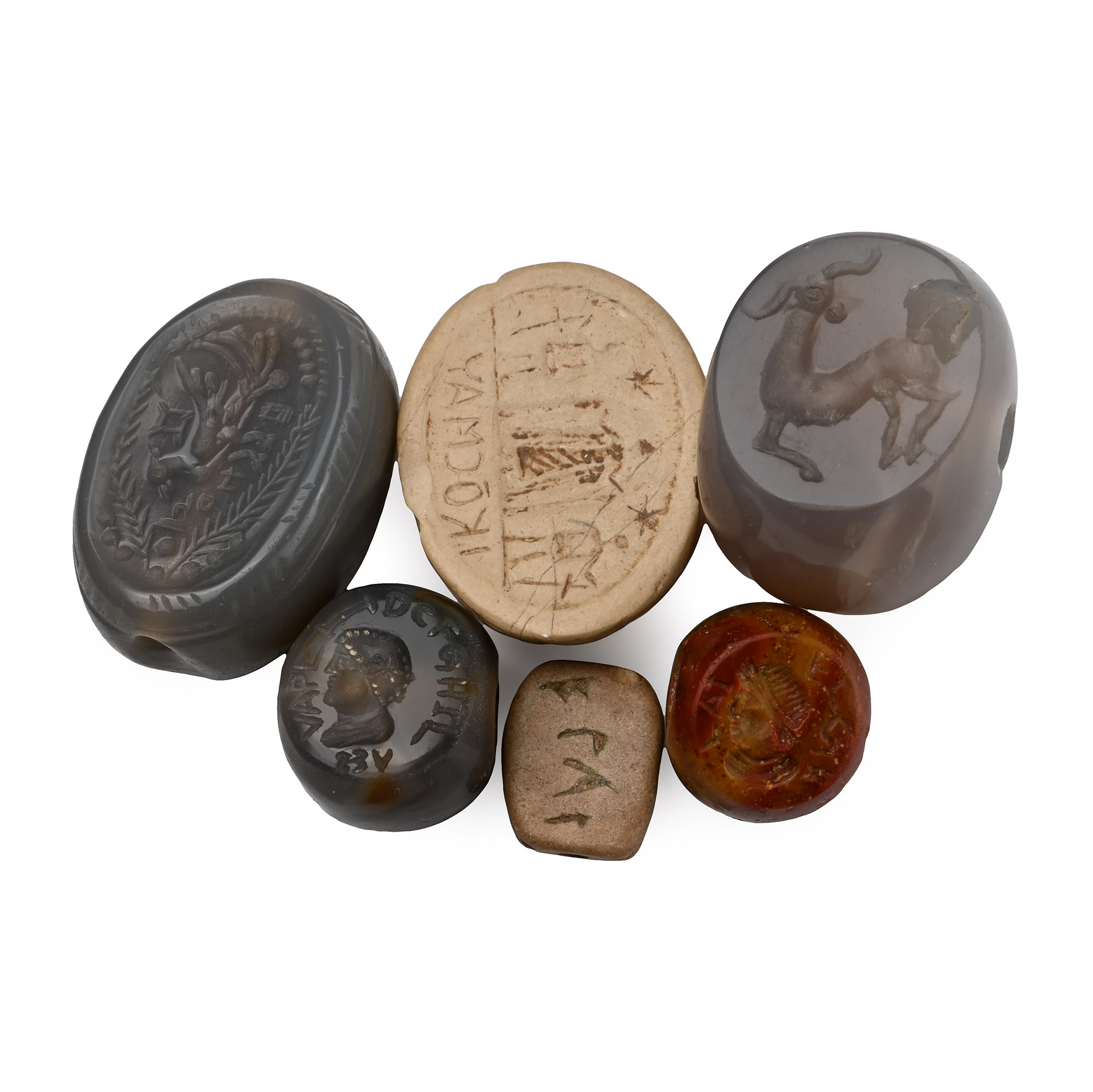
Group of Seals and Scaraboids
20TH CENTURY A.D.
1/2 - 1 1/4 in. (78 grams total, 15-33 mm).
Including scarab with figural scene and legend to underside, plano-convex type with wreath, perching bird and legend, and other types; after the antique. [6]
ProvenanceFrom the late S M collection, London, UK, 1969-1999.
CONDITIONTimeLine Auctions follows a vetting process to ensure the authenticity and legality of all items, reinforcing our commitment to integrity and responsible trading. Each antiquity, antique, and coin lot undergoes thorough examination by a vetting committee of at least ten external specialists, professional trade association members, scientists, and archaeologists: Our Vetting Process
AUCTIONS:
TimeLine is a leading auction house specialising in antiquities, ancient art, collectables, natural history, coins, medals, and books. Our auctions offer museums, collectors, historians, and enthusiasts the opportunity to acquire unique and historically significant pieces.
LOT 2169
Group of Seals and Scaraboids
Estimate £100 - 140€120 - 160 (for guidance only)$140 - 190 (for guidance only)
-
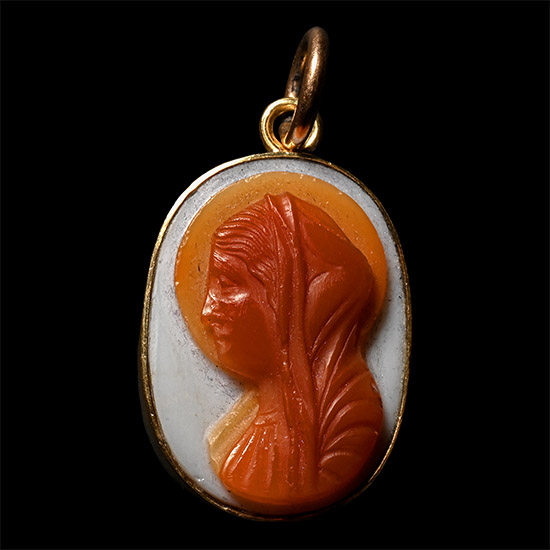
Post Medieval Agate Cameo with Profile Portrait of the Madonna
Italy, 19th century A.D.Estimate: £500 - 700 (+bp*)
Opening Bid: £250
Carved in low relief, nimbate profile bust with palla. 2.77 grams, 34 mm
Private collection, Europe. Acquired on the English art market. -
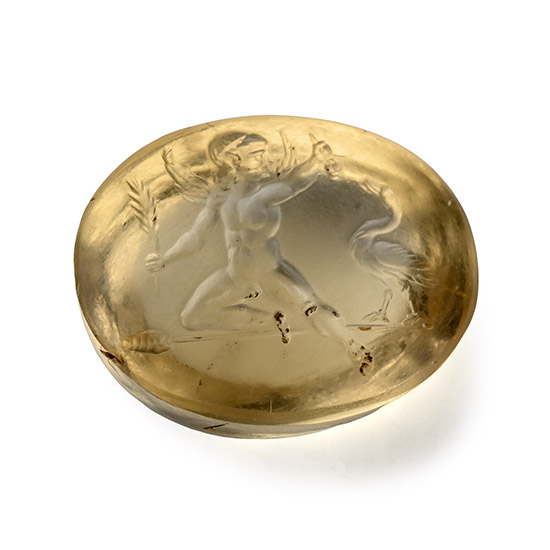
Neoclassical Citrine Gemstone with Putto and Goose
18th-19th century A.D.Sold for (Inc. bp): £1,430
Plano-convex type with incuse scene of a putto kneeling on an arrow with one leg extended over it, holding the flight-feather of a bird in one hand and encouraging a goose to feed from the other hand; with traces of copper tooling; supplied with a museum-quality impression. 1.32 grams, 12 mm
Private English collection, formed between the late 1970s and early 1990s. Private collection, London, UK.
Perhaps the putto is encouraging the goose to approach him so that he can pluck its flight-feathers for use on the shafts of his arrows. -
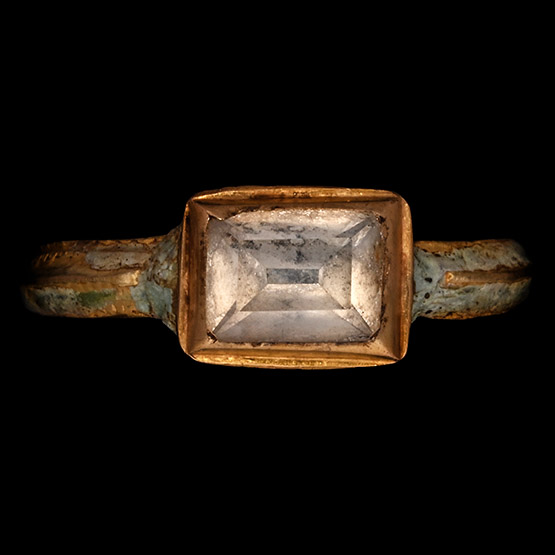
Stuart Period Enamelled Gold Ring with Table-Cut Rock Crystal
England, 17th century A.D.Sold for (Inc. bp): £2,600
D-section hoop with enamel panels to the shoulders, arcade to the rectangular bezel with inset table-cut crystal. 2.17 grams, 21.88 mm overall, 16.84 mm internal diameter (approximate size British M, USA 6, Europe 12.46, Japan 12)
Found whilst searching with a metal detector near Harlaxton, Lincolnshire, UK, on Wednesday 17th November 2021. Acquired on the English art market. Accompanied by a copy of the British Museum's Portable Antiquities Scheme (mPAS) report no.LIN-CCA6D4. This lot has been checked against the Interpol Database of stolen works of art and is accompanied by a search certificate number no.13050-248358.
Finger rings with a principal stone and subsidiary settings in separate collets came into use in the early 13th century, and this form of simple collet continued in use until the 15th century. A gold medieval finger ring with a similar bezel, but with subsidiary settings, is recorded on the PAS database (LIN-EC74C7, 2020T819). Other gold finger rings with a principal stone (albeit with subsidiary settings) and similar framed bezel recorded as treasure on the PAS database, including one from Soberton, Hampshire (HAMP-1DCFF0, 2017T156) and Huntingdon district area, CAM-4A8AB6, 2020T089.
