
![Group of Nine [9] Roman Imperial AE Sestertii.](https://timelineauctions.com/upload/images/items/218069(1).jpg "Group of Nine [9] Roman Imperial AE Sestertii.")
LOT 3200
Group of Nine [9] Roman Imperial AE Sestertii. 2nd-3rd century AD.
Various emperors. Fair to Good Fine.(283gr total.). [9]
ProvenanceProperty of a Bristol, UK, gentleman, by family descent.
TimeLine Auctions follows a vetting process to ensure the authenticity and legality of all items, reinforcing our commitment to integrity and responsible trading. Each antiquity, antique, and coin lot undergoes thorough examination by a vetting committee of at least ten external specialists, professional trade association members, scientists, and archaeologists: Our Vetting Process
AUCTIONS:
TimeLine is a leading auction house specialising in antiquities, ancient art, collectables, natural history, coins, medals, and books. Our auctions offer museums, collectors, historians, and enthusiasts the opportunity to acquire unique and historically significant pieces.
-
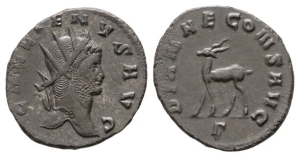
Gallienus BI Antoninianus. AD 253-268.
Sold for (Inc. bp): £30
Rome mint; struck AD 267-268. 3rd officina. GALLIENVS AVG, radiate head to right / DIANAE CONS AVG, antelope advancing to left; Γ in exergue. RIC V.1, 181 (sole reign); MIR 716b1; RSC 165. 3.37gr, 21mm, 6h.
Near Extremely Fine.
From a London, UK, collection, 1990s. -
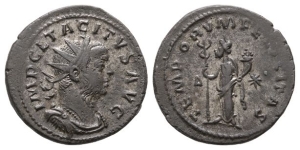
Tacitus BI Antoninianus. AD 275-276.
Estimate: £50 - 70 (+bp*)
Opening Bid: £25
Lugdunum mint; struck AD 276. 4th officina. IMP CL TACITVS AVG, radiate, draped and cuirassed bust to right / TEMPORVM FELICITAS, Felicitas standing facing, head to left, holding long caduceus with right hand and cornucopia with left; Δ in left field, star in right field. RIC V.1 65 (Gaul); MER-RIC 3325 (temporary). 4.44gr, 23mm, 12h.
Good Very Fine. Plenty of silvering remaining.
From a London, UK, collection, 1990s. -
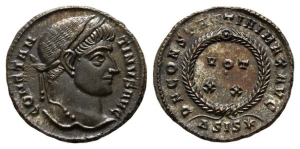
Constantine I BI Nummus. AD 307/310-337.
Sold for (Inc. bp): £33
Siscia mint; struck AD 320-321. 4th officina. CONSTANTINVS AVG, laureate head to right / D N CONSTANTINI MAX AVG, laurel wreath enclosing VOT • X X; ΔSIS(star) below. RIC VII 159. 2.99gr, 18mm, 12h.
Extremely Fine. Some original silvering remaining.
From a private collection, UK.
