
Loading, please wait...
![Green Fuchsite Mica Mineral Specimen Group [100]](https://timelineauctions.com/zoom_images/zoomthumb/2/2/227844_900x900.jpg "Green Fuchsite Mica Mineral Specimen Group [100]")
![Green Fuchsite Mica Mineral Specimen Group [100]](https://timelineauctions.com/zoom_images/zoommap/2/2/227844_200x200.jpg "Green Fuchsite Mica Mineral Specimen Group [100]")
![Green Fuchsite Mica Mineral Specimen Group [100]](https://timelineauctions.com/upload/images/items/227844.jpg "Green Fuchsite Mica Mineral Specimen Group [100]")
LOT 2785
Green Fuchsite Mica Mineral Specimen Group [100]
1 1/4 - 2 3/8 in. (2.69 kg total, 31-62 mm).
Comprising variously sized chunks displaying good lustre. [100, No Reserve]
ProvenanceFrom Brazil.
Ex Mineral Imports, London, UK.
Gregory, Bottley & Lloyd (Gregory's), Harwich, UK.
TimeLine Auctions follows a vetting process to ensure the authenticity and legality of all items, reinforcing our commitment to integrity and responsible trading. Each antiquity, antique, and coin lot undergoes thorough examination by a vetting committee of at least ten external specialists, professional trade association members, scientists, and archaeologists: Our Vetting Process
AUCTIONS:
TimeLine is a leading auction house specialising in antiquities, ancient art, collectables, natural history, coins, medals, and books. Our auctions offer museums, collectors, historians, and enthusiasts the opportunity to acquire unique and historically significant pieces.
-
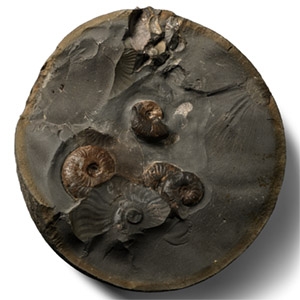
Large Fossil Ammonite Cluster Nodule
Jurassic Period, Toarcian Stage, 184.2-174.7 million years B.P.Sold for (Inc. bp): £26
A spherical half of a nodule containing Eleganticeras sp. specimens. 2.13 kg, 15.3 cm
From Yorkshire coast. From a Lincolnshire, UK, collection. -
![Cut and Polished Mini Agate Crystal Geode Group [100]](https://timelineauctions.com/upload/images/items/small/227843-s.jpg)
Cut and Polished Mini Agate Crystal Geode Group [100]
Sold for (Inc. bp): £52
Comprising one hundred geode halves, most displaying a crystal filled cavity. 618 grams total, 21-42 mm
From Brazil. Ex Mineral Imports, London, UK. Gregory, Bottley & Lloyd (Gregory's), Harwich, UK. -
![Mixed Polished Stone Gaming Piece Group [50]](https://timelineauctions.com/upload/images/items/small/227893-s.jpg)
Mixed Polished Stone Gaming Piece Group [50]
Sold for (Inc. bp): £20
Each cut and polished to a wedge shape, comprising: agate, jasper, tiger's eye, rhodonite, and others. 741 grams total, 37-56 mm
Ex Mineral Imports, London, UK. Gregory, Bottley & Lloyd (Gregory's), Harwich, UK.
