
Loading, please wait...
LOT 0063
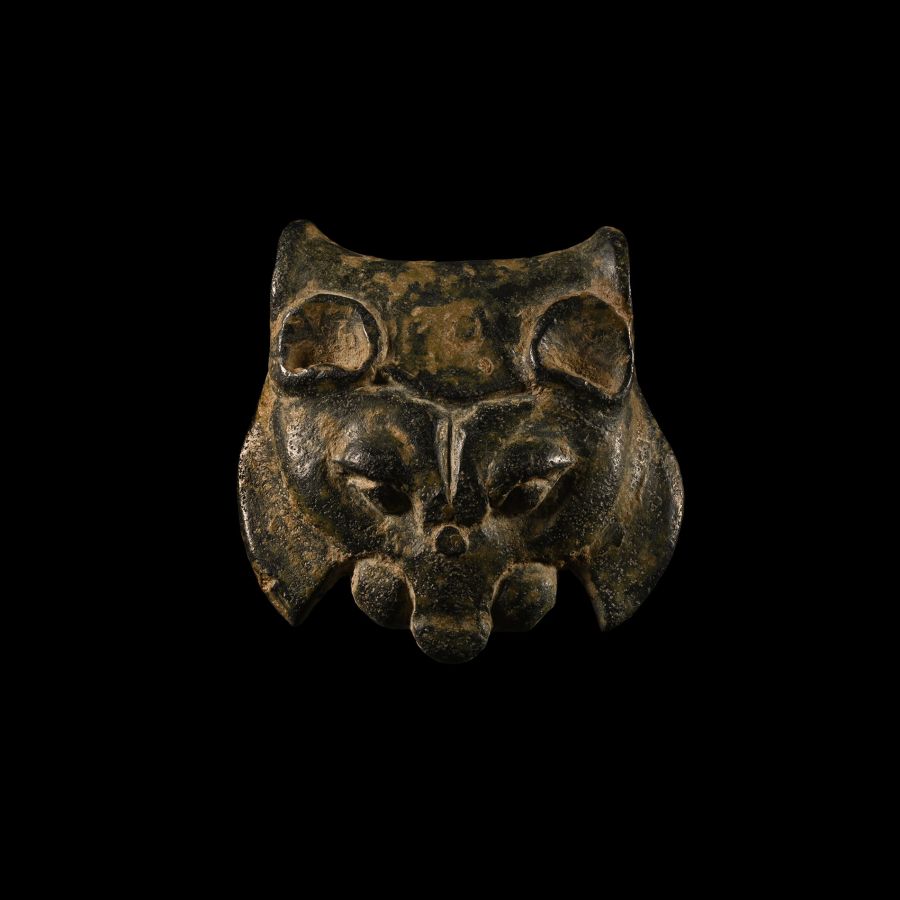
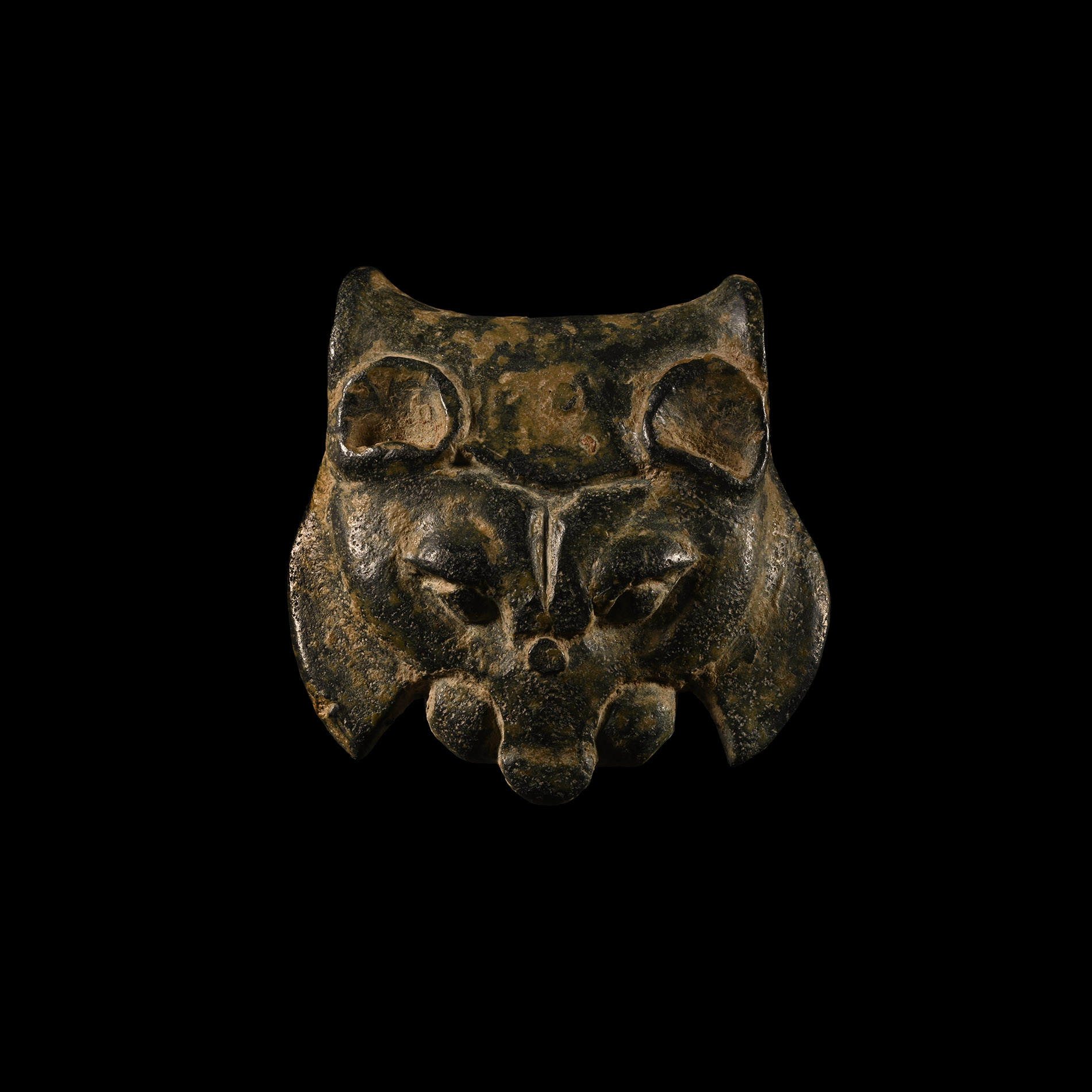
Greek Zoomorphic Bronze Hydria Handle Attachment
CIRCA 5TH-4TH CENTURY B.C.
2 in. (98 grams, 51 mm high).
Modelled as a skinned lion's head with fierce facial detailing; made for soldering to an articulated round handle.
ProvenancePrivate collection, Germany, 1980s.
Acquired on the UK art market 2010.
Cf. Furtwängler, A., Olympia. Die Ergebnisse der von dem Deutschen Reich veranstalteten Ausgrabung Band 4. 2 Bände (Textband, Tafelband), Asher, Berlin, 1890, pl.TL, no.839.
FootnotesThe handles were usually shaped as divinities or animals linked with gods (ie. lions for Herakles). A similar specimen can be seen in the Berlin Museum (inv.7491), from Athens.
CONDITIONTimeLine Auctions follows a vetting process to ensure the authenticity and legality of all items, reinforcing our commitment to integrity and responsible trading. Each antiquity, antique, and coin lot undergoes thorough examination by a vetting committee of at least ten external specialists, professional trade association members, scientists, and archaeologists: Our Vetting Process
AUCTIONS:
TimeLine is a leading auction house specialising in antiquities, ancient art, collectables, natural history, coins, medals, and books. Our auctions offer museums, collectors, historians, and enthusiasts the opportunity to acquire unique and historically significant pieces.
-
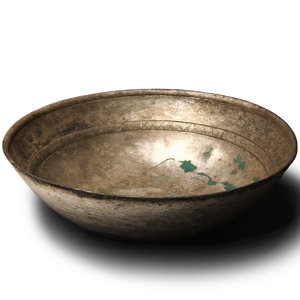
Hellenistic Decorated Silver Bowl
Circa 3rd-2nd century B.C.Sold for (Inc. bp): £416
With everted flaring rim, the exterior plain, the interior with ridged band at the shoulder composed of alternating X-motifs, stylised opposing plants, and dots interspersed with transverse bands. 222 grams, 18.5 cm wide
From a late Japanese specialist collector, 1970-2000s.
Similar segment-shaped silver bowls with partial gilding, decorated on the inside with friezes in the form of garlands or wickerwork, have been found in many nomad mounds in the Caucasus region. Treister attributes them to Parthian workshops. Such cups could also be undecorated or decorated only with a frieze of Ionian cymatium along the edge. -
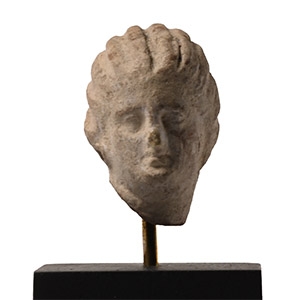
Greek Tanagra Terracotta Head of Aphrodite
Circa 4th-2nd century B.C.Sold for (Inc. bp): £195
With hair divided in vertical arrangements, bound on the back by a fillet, delicate rendering of mouth, nose and eyes; mounted on a custom-made display stand. 38 grams total, 64 mm including stand
Ex P. A., Hertfordshire, UK, specialist collection of Greek art, 1980-1990s.
It seems that half-draped women in sculpture, whatever the pose, are quite rare before the late Hellenistic period; however, they appear as early as the 4th century B.C., on a small scale and in terracotta. North Macedonian terracotta figurines of Aphrodite or mortal girls replicate sculptural trends of the 2nd century B.C. In particular, the the classical sculptural tradition was revived during the latter half of the second century B.C., as evidenced by the figurines. -
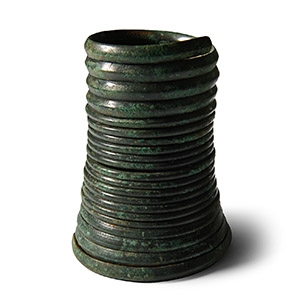
Greek Decorated Bronze Spiral Bracelet
8th-7th century B.C.Sold for (Inc. bp): £585
Formed as a spiral D-section rod with waisted profile, hatched and notched ornament to the edges. 685 grams, 11.5 cm
Private Swiss collection, acquired 2002.
