
Loading, please wait...
LOT 0631
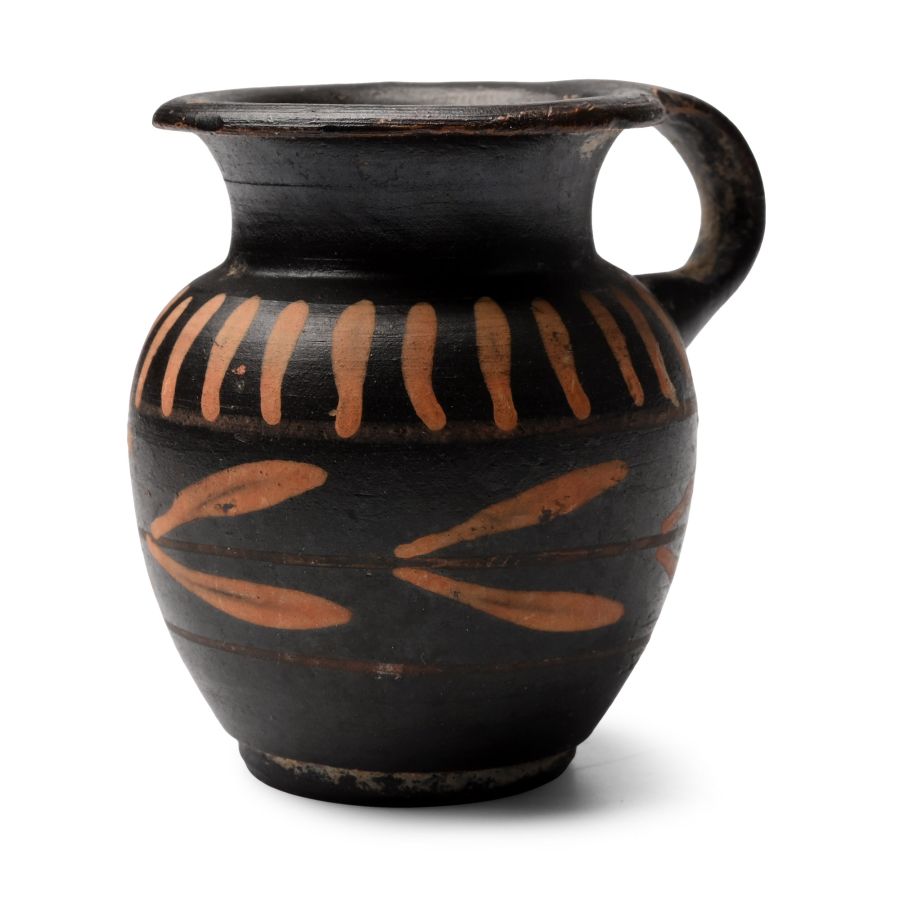
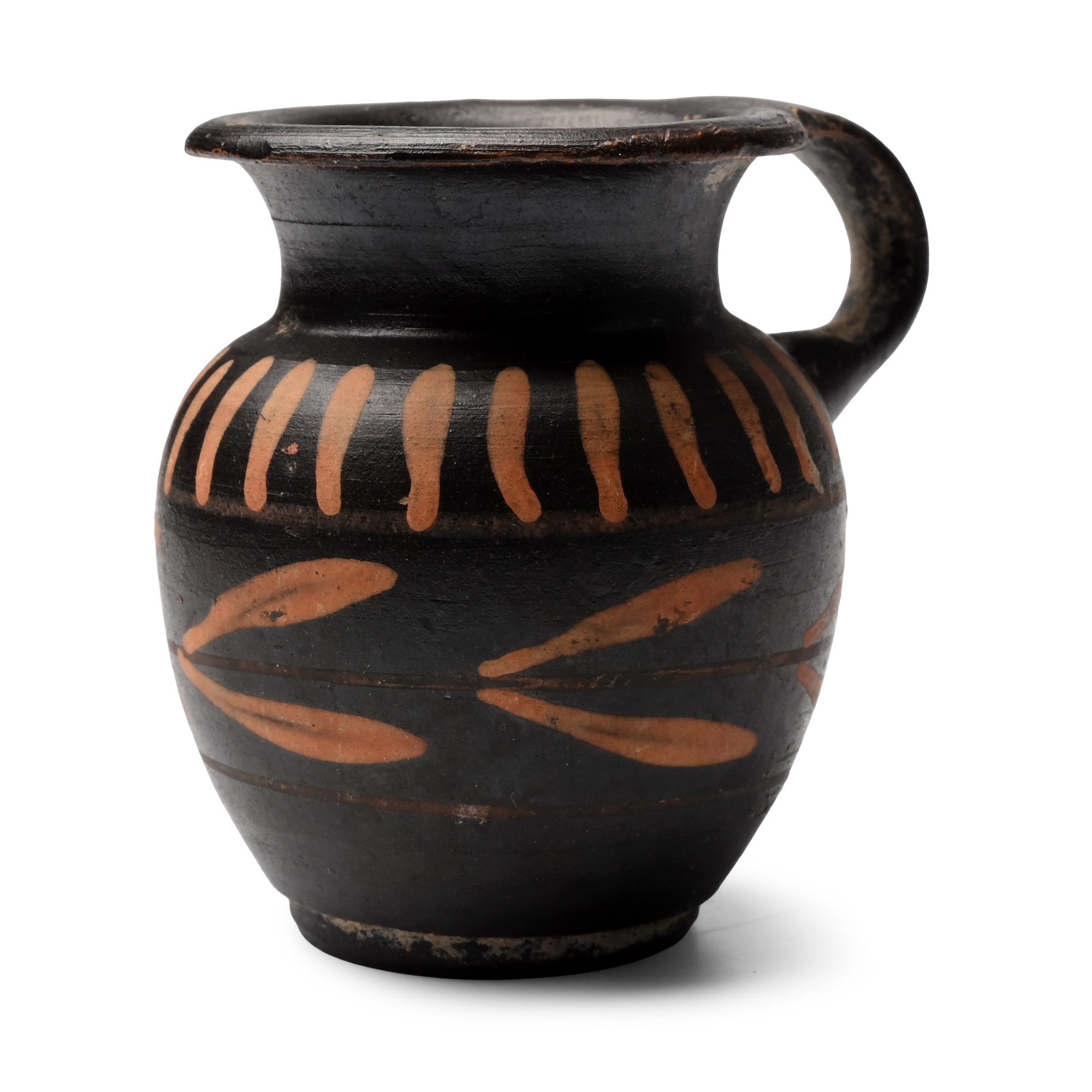
Greek Xenon Black-Glazed Mug with Laurel Leaves
SOUTH ITALIC, CIRCA 4TH CENTURY B.C.
2 1/8 in. (47 grams, 55 mm high).
With broad everted rim, band of vertical strokes to shoulder, laurel leaves below. [No Reserve]
ProvenanceFrom the private collection of a Canadian gentleman living in Essex, UK, formed since the 1920s-circa 1990.
Property of an Essex lady until the late 1990s; thence by descent.
From the private collection of an Essex gentleman since the late 1990s.
This lot is accompanied by an illustrated lot declaration signed by the Head of the Antiquities Department, Dr Raffaele D'Amato.
TimeLine Auctions follows a vetting process to ensure the authenticity and legality of all items, reinforcing our commitment to integrity and responsible trading. Each antiquity, antique, and coin lot undergoes thorough examination by a vetting committee of at least ten external specialists, professional trade association members, scientists, and archaeologists: Our Vetting Process
AUCTIONS:
TimeLine is a leading auction house specialising in antiquities, ancient art, collectables, natural history, coins, medals, and books. Our auctions offer museums, collectors, historians, and enthusiasts the opportunity to acquire unique and historically significant pieces.
-
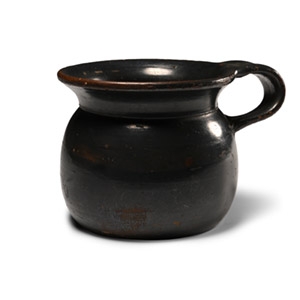
Greek Attic Black-Glazed Terracotta Mug
5th century B.C.Sold for (Inc. bp): £598
Squat, flat-bottomed with everted rim and single strap handle; reserved underside offset by a groove at its edge, pierced at its centre within a small glazed circle. 102 grams, 93 mm wide
From an American estate, acquired between 1970-1989. Accompanied by a copy of an Art Loss Register certificate no.S00075794. This lot is accompanied by an illustrated lot declaration signed by the Head of the Antiquities Department, Dr Raffaele D’Amato. This lot is accompanied by an illustrated lot declaration signed by the Head of the Antiquities Department, Dr Raffaele D'Amato. -
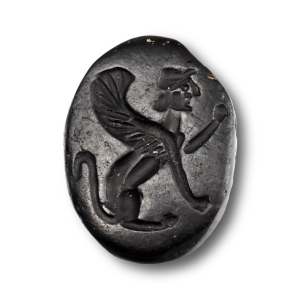
Phoenician Steatite Intaglio with Sphinx
8th-5th century B.C.Estimate: £400 - 600 (‡+bp*)
Opening Bid: £200
Intaglio sphinx sitting with one foreleg raised, arched wing to the back; supplied with a museum-quality impression. 3.52 grams, 17 mm
Acquired in the late 1980s. Private collection, since the late 1990s. This lot is accompanied by an illustrated lot declaration signed by the Head of the Antiquities Department, Dr Raffaele D'Amato. -
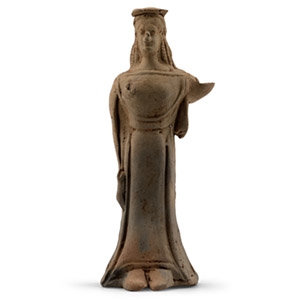
Greek Terracotta Figure of a Kore
5th century B.C.Sold for (Inc. bp): £715
Hollow-formed moulded figure of a maiden standing, wearing a long peplos robe, with carefully dressed hair in hanks; right arm holding a pouch, left arm absent. 173 grams, 18 cm
Acquired on the European art market in the early 2000s. with Galerie Rhéa, Zurich, Switzerland. This lot is accompanied by an illustrated lot declaration signed by the Head of the Antiquities Department, Dr Raffaele D'Amato.
