
Loading, please wait...

LOT 2216
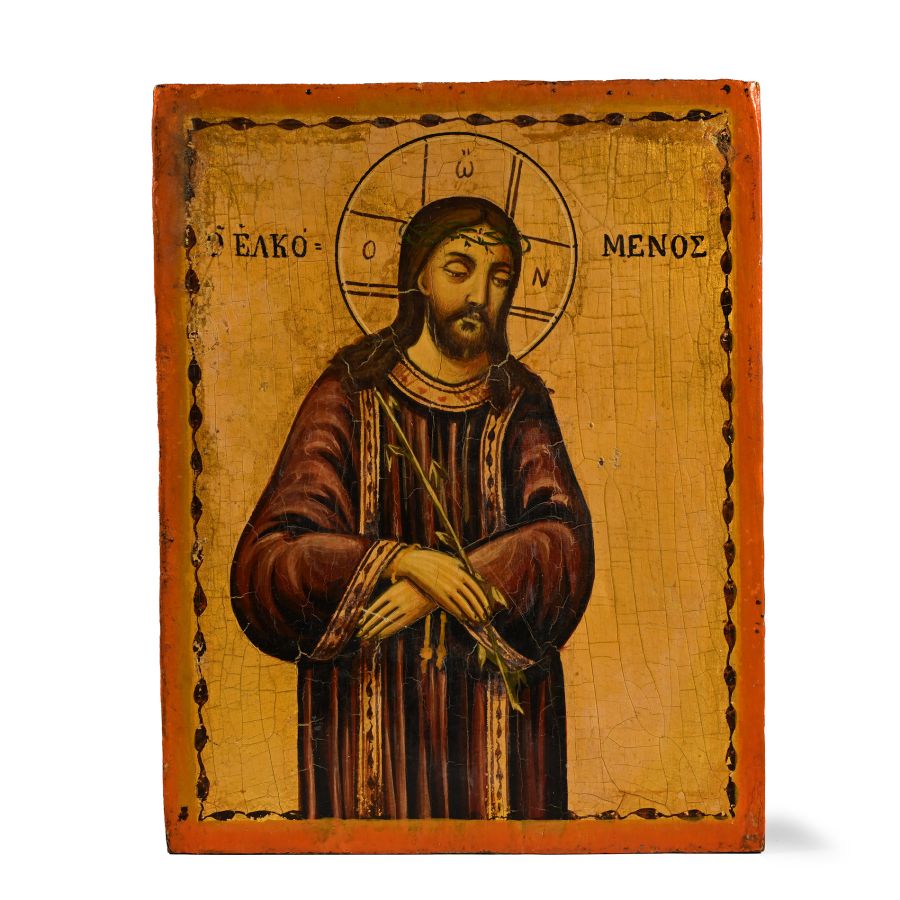
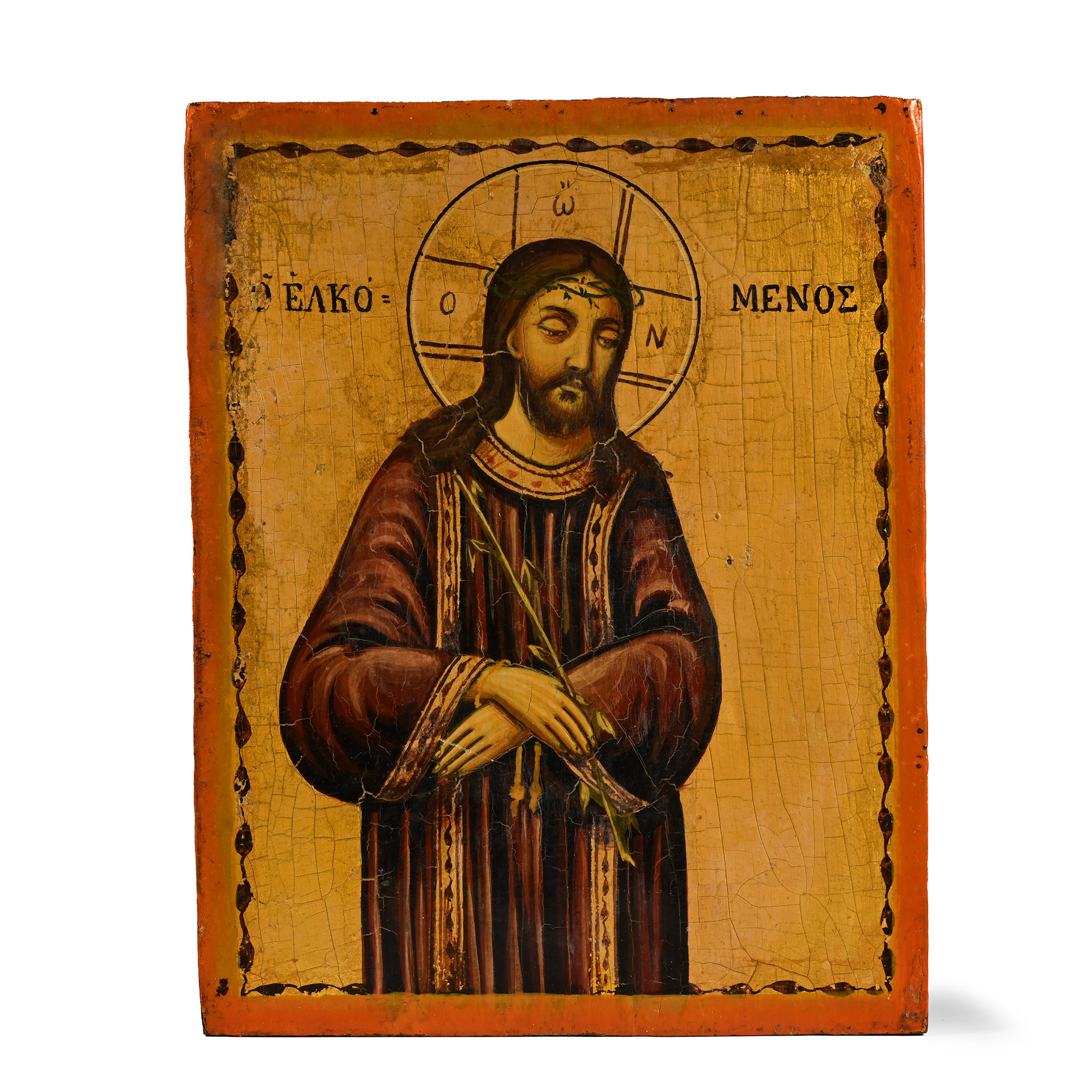
Greek Wooden Icon with Christ 'O Elkomenos'
EARLY 19TH CENTURY A.D.
7 1/2 x 6 in. (303 grams, 19 x 15 cm).
Depicting Christ dressed in a long purple tunica talaris embroidered with long central vertical gold clavi (stripes) and appliques on the cuffs and around the neck; the dress fastened at the waist by a rope; crowned with thorns and holding an olive branch in his hand; Greek inscription 'Ο ΕΛΚOΜΕΝΟΣ' (= the One who came [in the Name of God]), on the background, and three letters inside the nimbus representing the continuous divine self-existence of Christ as God ('O ѾN' = The Only One who always exists); tempera on wood.
ProvenanceProperty of a London, UK, gentleman collector.
This lot is accompanied by an illustrated lot declaration signed by the Head of the Antiquities Department, Dr Raffaele D’Amato.
Cf. for a similar icon the icon of the Church of the Chains of Christ (Elkomenou Christou) in Monemvasia; for the Byzantine prototype of the Elkomenos, see the painting of Roustika Church of Virgin and Saviour, in Crete, in Spatharakis, I., Byzantine Wall-Paintings in Rhethymnon, Chortatzi & Rethymnon, 1998, p.37, fig.34.
FootnotesChrist, bound and crowned with thorns, is here represented before his Crucifixion. The icon is intended to depict the humility of Christ, ready to be raised on the cross, bringing peace to the humanity (olive branch). The purple robe represents the royalty of Christ, who nevertheless, despite being King of the Universe, humbles himself for the salvation of mankind.
CONDITIONTimeLine Auctions follows a vetting process to ensure the authenticity and legality of all items, reinforcing our commitment to integrity and responsible trading. Each antiquity, antique, and coin lot undergoes thorough examination by a vetting committee of at least ten external specialists, professional trade association members, scientists, and archaeologists: Our Vetting Process
AUCTIONS:
TimeLine is a leading auction house specialising in antiquities, ancient art, collectables, natural history, coins, medals, and books. Our auctions offer museums, collectors, historians, and enthusiasts the opportunity to acquire unique and historically significant pieces.
-
.jpg)
Bactrian Style Lapis Lazuli Bead Necklace String
20th century A.D.Sold for (Inc. bp): £78
With tabular and annular lapis lazuli beads, gilt beaded collars. 47 grams, 65 cm long
Acquired 1980-2015. Ex Abelita family collection. This lot is accompanied by an illustrated lot declaration signed by the Head of the Antiquities Department, Dr Raffaele D’Amato. -
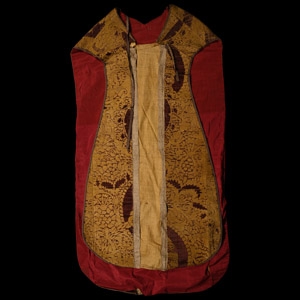
Post Medieval Fabric Garment
England, circa 1480-1500 A.D.Sold for (Inc. bp): £715
Woven fabric panel, possibly a chasuble or other ecclesiastical vestment, in burgundy-red and gold-yellow with supplementary mounting strip to straight edge, braided binding to curved outer edge; mounted on a modern fabric backing. 1.03 kg total, 211 cm
with Sotheby's, London, 26 November 2003, no.204. This lot is accompanied by an illustrated lot declaration signed by the Head of the Antiquities Department, Dr Raffaele D’Amato. -
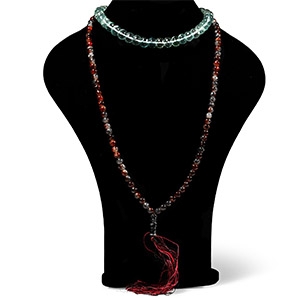
Glass Bead Necklace String Group
20th century A.D.Sold for (Inc. bp): £13
Comprising: a short string of facetted oblate light blue beads, no clasp; prayer bead string with a tassel to the end. 171 grams total, 37-78 cm
Property of a Stockport, UK, collector. This lot is accompanied by an illustrated lot declaration signed by the Head of the Antiquities Department, Dr Raffaele D’Amato.
