
Loading, please wait...


LOT 0436
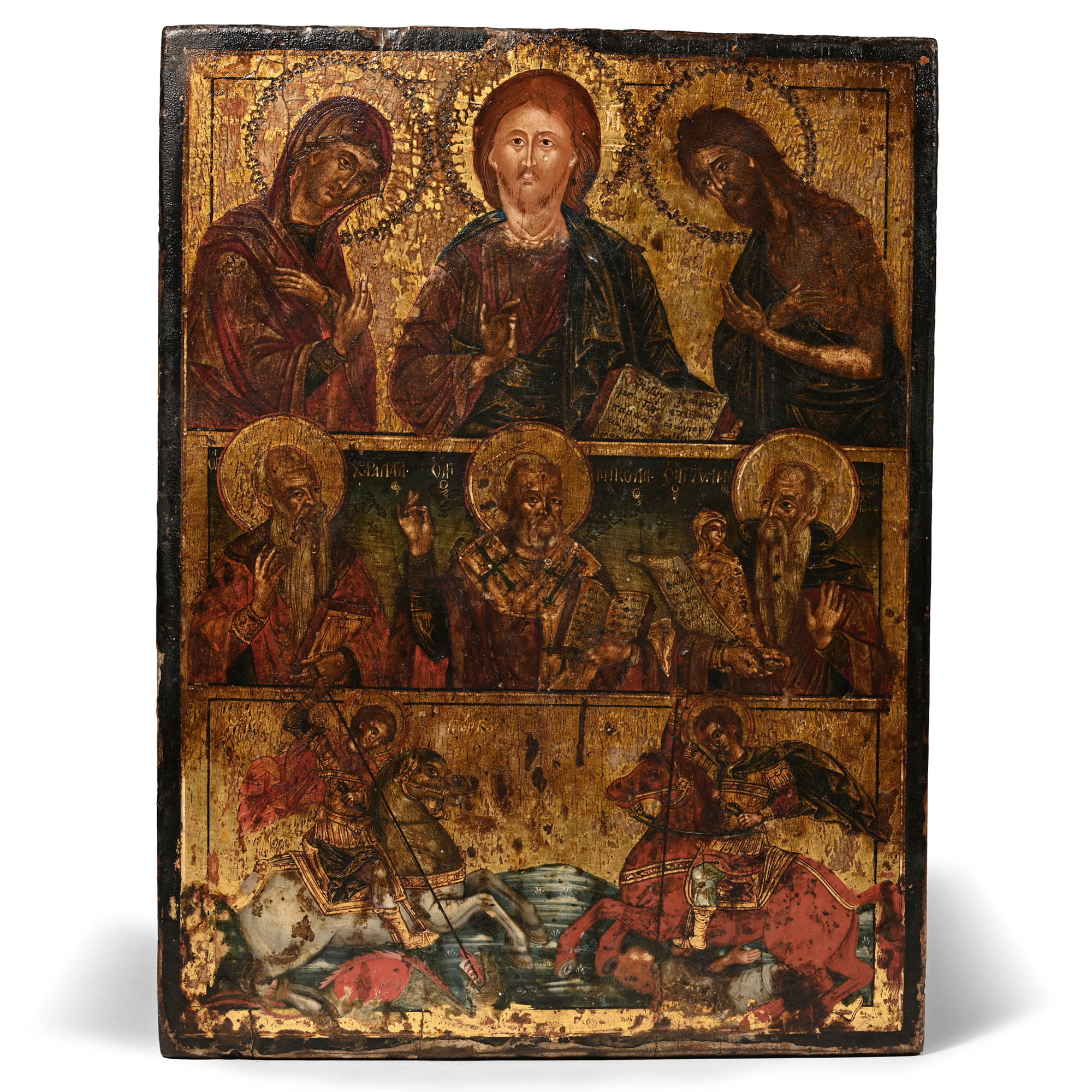
Greek Wooden Icon of Deisis with Saints George and Demetrius
EARLY 18TH CENTURY A.D.
10 1/2 x 14 in. (1.8 kg, 26.8 x 35.5 cm).
Painted on a wooden board with gessoed surface, tempera on wood panel with the recess executed on a gold ground in three registers: above, Deisis with Christ Pantocrator carrying the Gospel, flanked by the Virgin Mary and St John the Baptist; middle, with three bearded saints with their names written in Greek beside them: Aghios Charalambos, Aghios Nikolaos and Aghios Pantaleimon, the first two holding holy books and one the third holding a child; bottom, two mounted military saints, St George attacking a dragon with spear, and St Demetrius trampling the King of Avars.
ProvenanceEx Henry's Auction, Berlin, Germany.
From an important collection of icons.
Accompanied by an academic report by Dr Raffaele D’Amato.
This lot has been checked against the Interpol Database of stolen works of art and is accompanied by search certificate number no.12343-224612.
Cf. for similar icons Popescu, G.A., Cristiani d'Oriente, spiritualità, arte e potere nell'Europa Post-Bizantina, Milano, 1999, cat.99.
FootnotesHere, according to local Greek traditions, the icon is enriched with images of three important saints: among them St Pantaleimon, holding a child in his arms. According to the legend, one day the Saint found a dead child on the street who had been bitten by a snake, which was still beside the child’s body. Pantaleimon began to pray for Jesus to revive the dead child and to destroy the venomous reptile, believing that if his prayers were fulfilled he would become a follower of Christ. His prayers were fulfilled and the child rose up alive, and the snake died before Pantaleimon’s eyes.
CONDITIONTimeLine Auctions follows a vetting process to ensure the authenticity and legality of all items, reinforcing our commitment to integrity and responsible trading. Each antiquity, antique, and coin lot undergoes thorough examination by a vetting committee of at least ten external specialists, professional trade association members, scientists, and archaeologists: Our Vetting Process
AUCTIONS:
TimeLine is a leading auction house specialising in antiquities, ancient art, collectables, natural history, coins, medals, and books. Our auctions offer museums, collectors, historians, and enthusiasts the opportunity to acquire unique and historically significant pieces.
LOT 0436
Greek Wooden Icon of Deisis with Saints George and Demetrius
Sold for (Inc. bp): £2,210
-
.jpg)
Bactrian Style Lapis Lazuli Bead Necklace String
20th century A.D.Sold for (Inc. bp): £33
Composed of carved cylindrical and small cylindrical spacer beads interspersed with teardrop-shaped pendant beads with a central spherical feature bead. 30.8 grams, 48 cm long
Acquired 1980-2015. Ex Abelita family collection. -
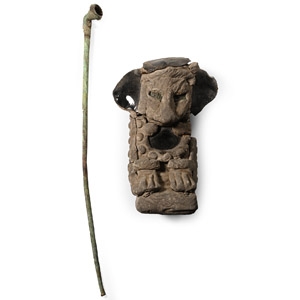
Mixed Bronze and Terracotta Artefact Group
20th century A.D. or earlierSold for (Inc. bp): £7
Comprising: ceramic seated figure with voided mouth; bronze pipe with bell-shaped bowl. 2.14 kg total, 24-46 cm
From a collection acquired on the UK art market from various auction houses and collections mostly before 2000. From an important Cambridgeshire estate; thence by descent. -
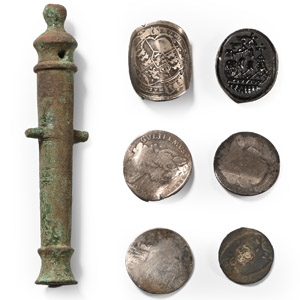
Post Medieval Mixed Toy Cannon, Love Token and Other Artefact Group
18th-19th century A.D.Sold for (Inc. bp): £39
Comprising a hollow-formed barrel for a toy cannon and six bronze coins, one bent as a love token. 50 grams total, 16-80 mm
Ex Stocker collection, Kent, UK, 1955-early 2000s.
