
Loading, please wait...
LOT 0563
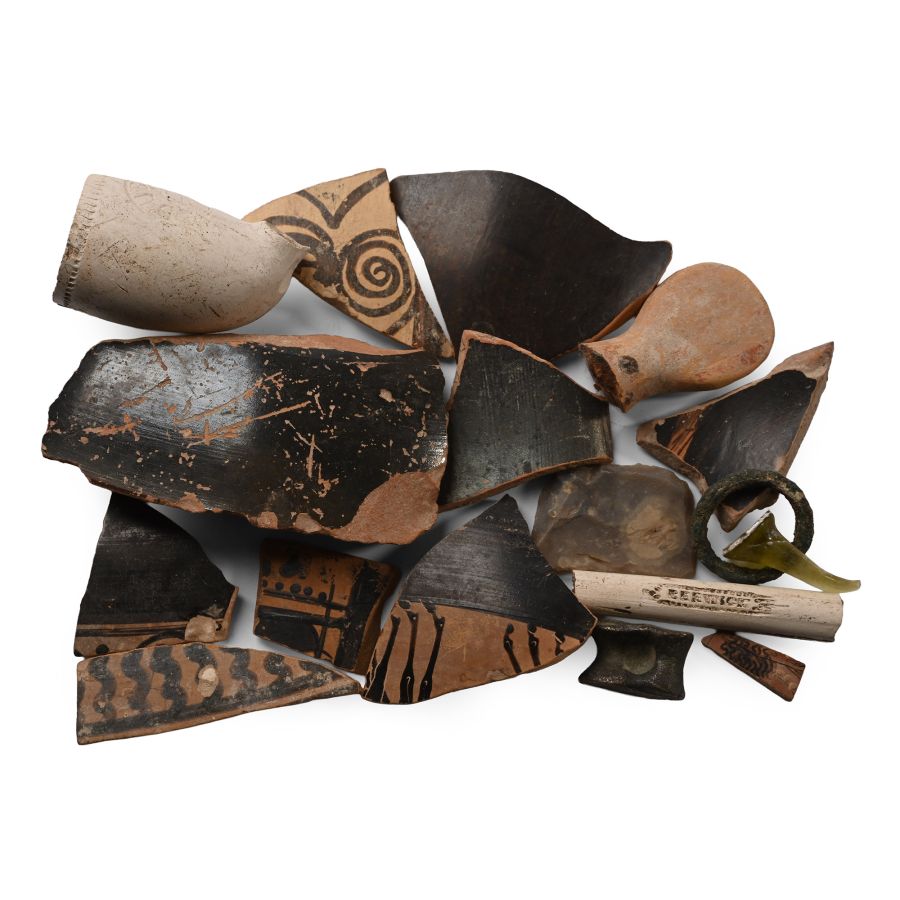
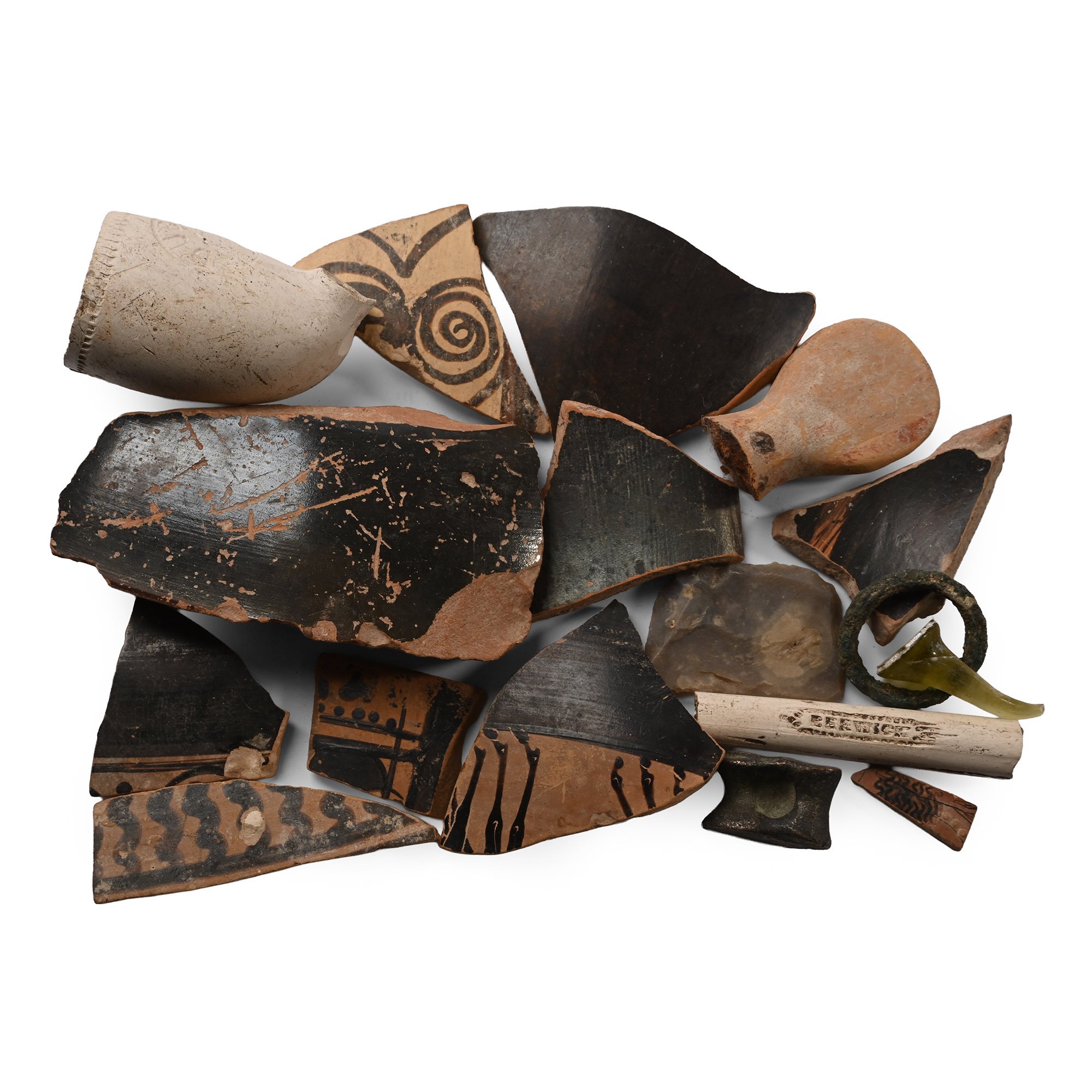
Greek to Post Medieval Artefact Group
5TH CENTURY B.C.-19TH CENTURY A.D.
3/4 - 3 in. (150 grams total, 20-77 mm).
Comprising: various decorated vessel fragments, a flint scraper, a clay pipe bowl and a stem, and other items. [17, No Reserve]
ProvenanceFrom a deceased estate, UK.
Acquired on the UK art market.
This lot is accompanied by an illustrated lot declaration signed by the Head of the Antiquities Department, Dr Raffaele D'Amato.
Cf. Gerhard, E., Auserlesene Griechische Vasenbilder, Hauptsachlich Etruskischen Fundorts, erster Theil Götterbilder Berlin, 1840, plate X, for a similar chariot scene.
FootnotesAmong the fragments of Greek vases one can notice some beautiful depictions of horses' legs (Attic black figures on a red background), probably from a chariot scene. Also noteworthy is the fragment of Geometric pottery with spiral.
CONDITIONTimeLine Auctions follows a vetting process to ensure the authenticity and legality of all items, reinforcing our commitment to integrity and responsible trading. Each antiquity, antique, and coin lot undergoes thorough examination by a vetting committee of at least ten external specialists, professional trade association members, scientists, and archaeologists: Our Vetting Process
AUCTIONS:
TimeLine is a leading auction house specialising in antiquities, ancient art, collectables, natural history, coins, medals, and books. Our auctions offer museums, collectors, historians, and enthusiasts the opportunity to acquire unique and historically significant pieces.
-
Greek Corinthian Shard Group
6th century B.C.Sold for (Inc. bp): £416
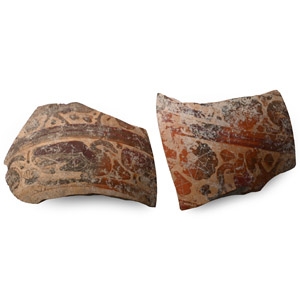
Comprising of two polychrome shards with painted floral, bull and swan motifs. 132 grams total, 9.2-10.8 cm
From the private family collection of Ersula Barter-Hemmerich, the longest serving member of staff working at the United Nations, her private collection formed in the 1950s and 1960s; thence by descent to her grandson. This lot is accompanied by an illustrated lot declaration signed by the Head of the Antiquities Department, Dr Raffaele D'Amato. -
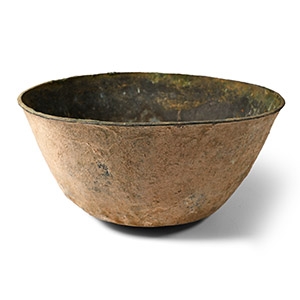
Villanovan Bronze Cup
750-730 B.C.Sold for (Inc. bp): £182
Hemispherical in profile with flat rim. 183 grams, 12.9 cm
Ex London, UK, collections, 1990s-2000s. This lot is accompanied by an illustrated lot declaration signed by the Head of the Antiquities Department, Dr Raffaele D'Amato.
In the necropolises of Southern Etruria, around the second half of the 8th century B.C., new technologies were used, which also involved metalworking. Alongside simple bronze cups intended for everyday use, similar magnificent examples containing a flourish of impressed or engraved geometric motifs were made. -
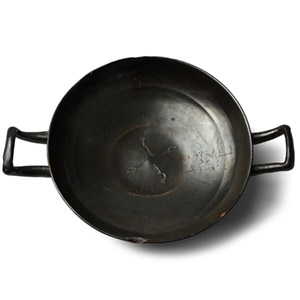
Greek Blackware Stemless Cup
Campanian, 4th century B.C.Sold for (Inc. bp): £234
Broad and shallow dish with carination to inner face, two loop handles, central motif of radiating fronds. 191 grams, 20.8 cm wide
From the collection of a gentleman, acquired on the London art market in the 1990s. This lot is accompanied by an illustrated lot declaration signed by the Head of the Antiquities Department, Dr Raffaele D'Amato.
