
Loading, please wait...
LOT 0121
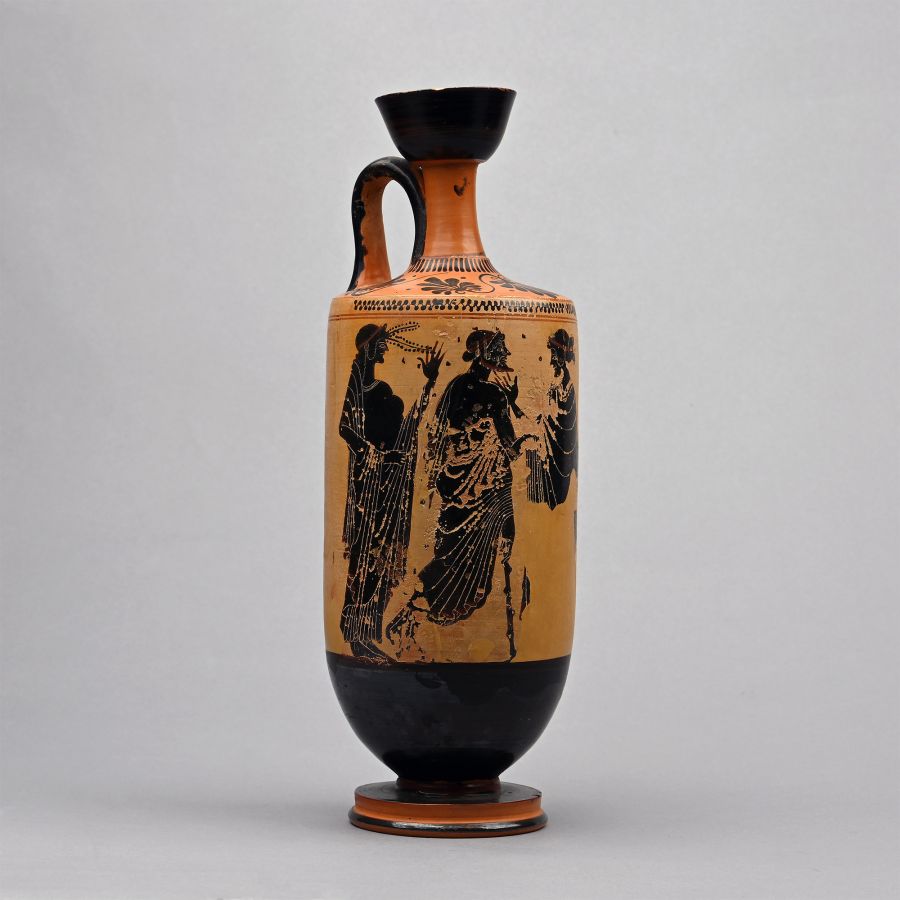
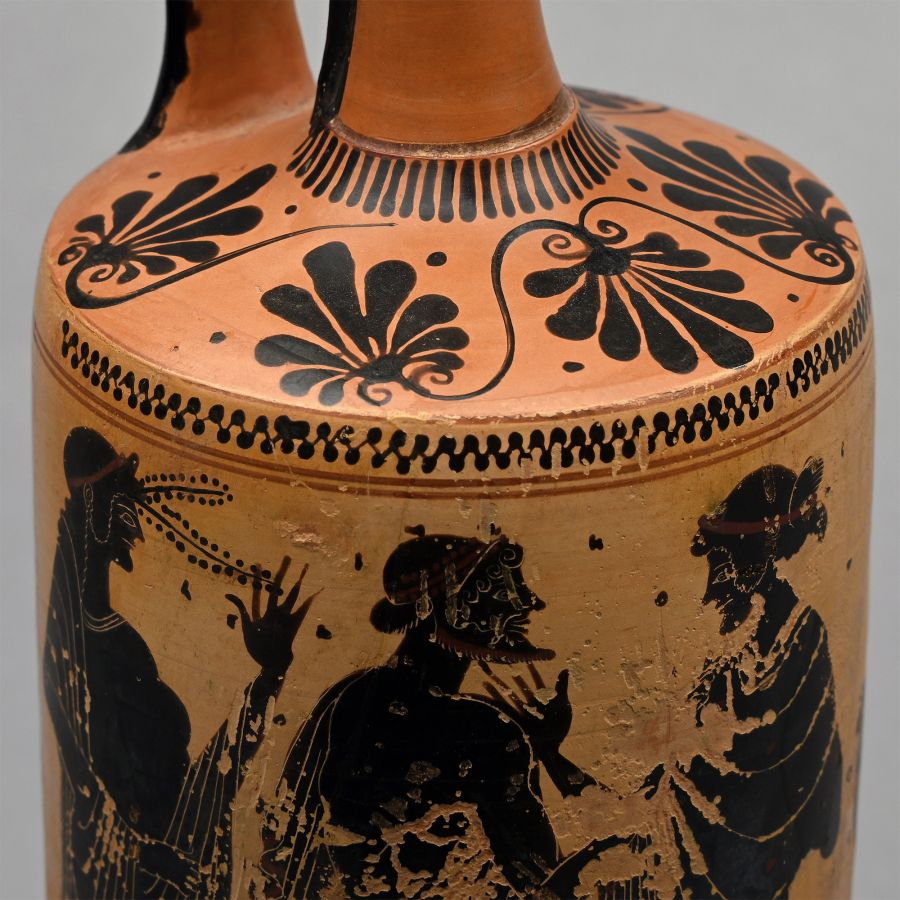
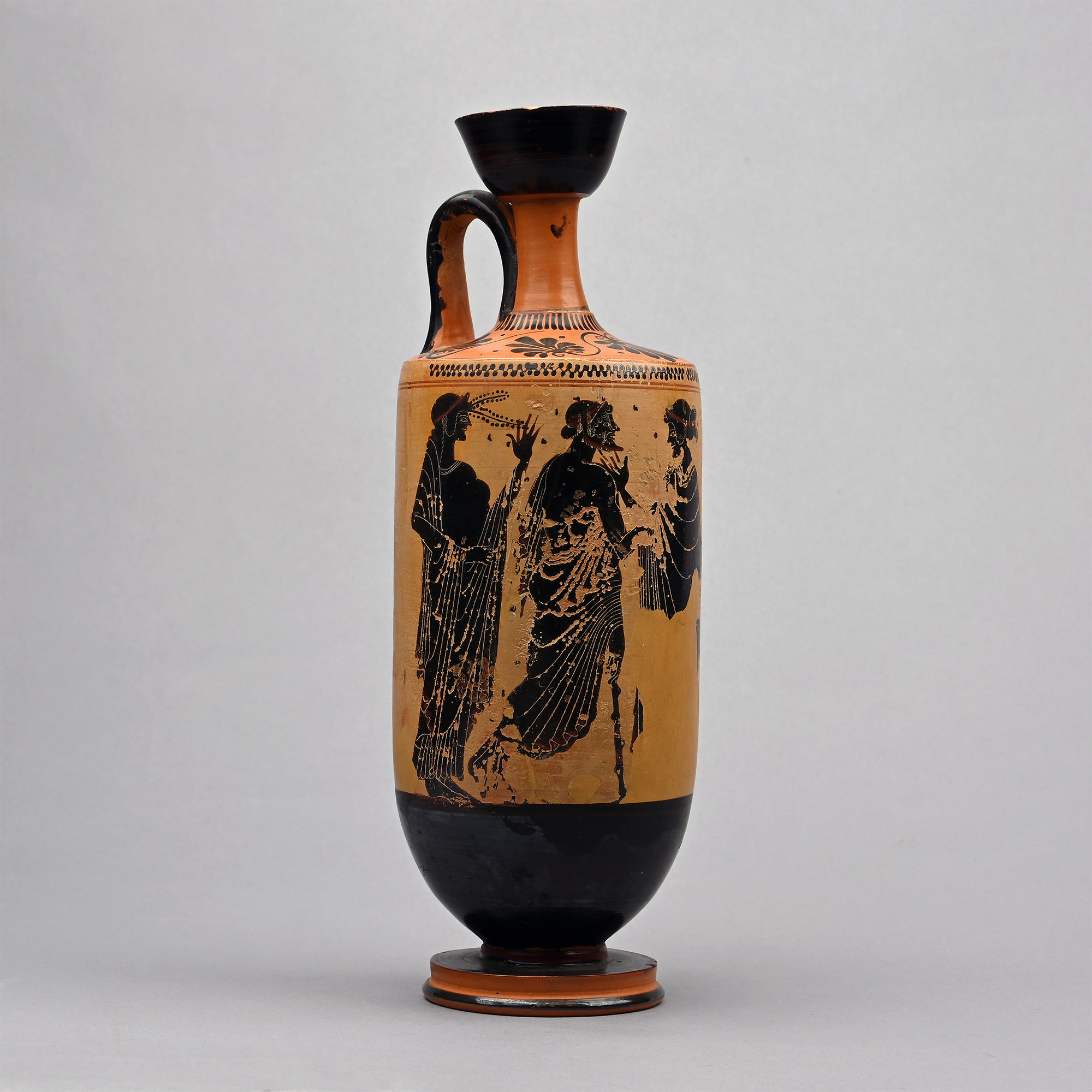
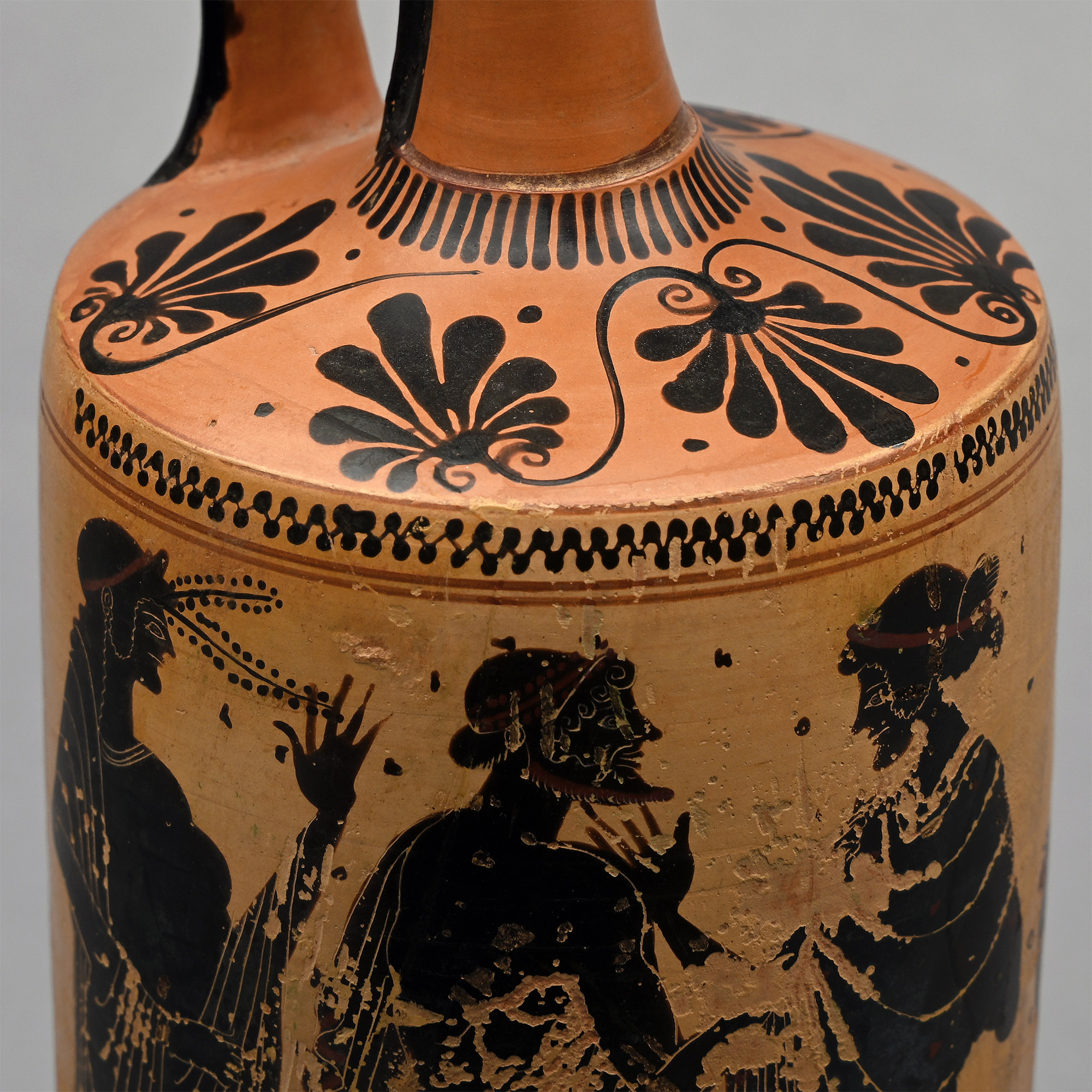
Greek Terracotta White-Ground Painted Lekythos Attributed to the Athena Painter
CIRCA 510-500 B.C.
10 3/8 in. (459 grams, 26.4 cm).
Cylindrical with stepped foot, five palmettes above the shoulder, dynamic frieze of two men visiting two hetairai, each of the figures dressed in long pleated garments, at the centre of the scene, a hetaira on the right reaching towards the bearded male and gently touching his chin with her open hand, a tall draped table behind her with an amphora underneath and a standing bird on the top. [No Reserve]
ProvenanceH.A.C. (Herbert A. Cahn), 19 October 1979.
Private collection, Bern, Switzerland.
Accompanied by an original thermoluminescence analysis report no.N125q45 by Oxford Authentication.
This lot has been checked against the Interpol Database of stolen works of art and is accompanied by a search certificate number no.12644-236376.
Cf. Haspels, C.H.E., Attic black-figured lekythoi, Paris 1936, pp. 41–165, 254–262.
FootnotesThe Athena Painter is known as the painter who designed several Greek black-figure pottery works using the 5th-century BC white-ground technique. He specialised in lekythoi and refers to Athena as the main subject in his works. Together with the Theseus Painter, they continued the tradition of painting large lekythoi. His black figures are of high quality, and in addition to lekythoi, he decorated other potteries such as oenochoai. Some archaeologists say that he may have been the same person as the Bowdoin Painter of red-figure pottery, although they may have just worked in the same workshop.
CONDITIONTimeLine Auctions follows a vetting process to ensure the authenticity and legality of all items, reinforcing our commitment to integrity and responsible trading. Each antiquity, antique, and coin lot undergoes thorough examination by a vetting committee of at least ten external specialists, professional trade association members, scientists, and archaeologists: Our Vetting Process
AUCTIONS:
TimeLine is a leading auction house specialising in antiquities, ancient art, collectables, natural history, coins, medals, and books. Our auctions offer museums, collectors, historians, and enthusiasts the opportunity to acquire unique and historically significant pieces.
LOT 0121
Greek Terracotta White-Ground Painted Lekythos Attributed to the Athena Painter
Estimate £4,000 - 6,000€4,640 - 6,960 (for guidance only)$5,400 - 8,100 (for guidance only)
-
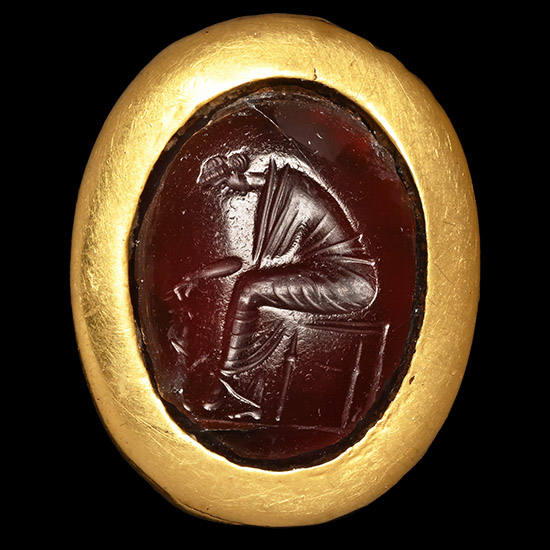
Greek Gold Ring with Garnet Gemstone
Hellenistic, 3rd-2nd century B.C.Estimate: £8,000 - 10,000 (+bp*)
Opening Bid: £4,000
Broad ellipsoid plaque with inset cabochon, intaglio seated figure in ankle-length robe feeding a cat. 16.11 grams, 26.13 mm overall, 20.19x14.09 mm internal diameter (approximate size British J, USA 4 3/4, Europe 8.69, Japan 8)
Ex David Lindhal, London, UK, circa 1997. From a privately held London, UK, collection from the 1980s-1990s. This lot has been checked against the Interpol Database of stolen works of art and is accompanied by search certificate number no.13279-253967. -
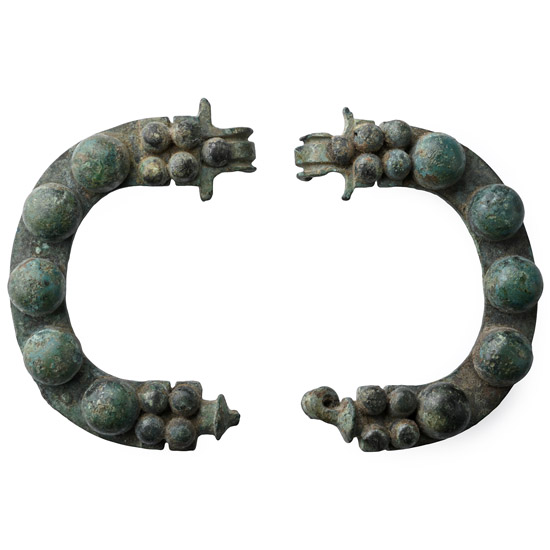
Phrygian Bronze Bow Brooch Pair
Iron Age, circa 8th-7th century B.C.Sold for (Inc. bp): £143
A matched pair with crescentic body, curved catch to one arm and remains of coiled spring to the other; domed studs attached to the arch through prepared holes. 108 grams total, 76 mm
From the private collection of a European gentleman (1942-2024), formed since the 1970s. -
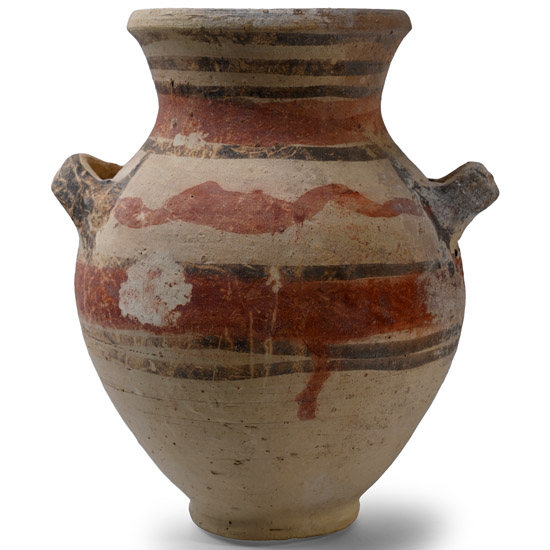
Eastern Mediterranean Two-Handled Vase
Iron Age, circa 6th century B.C. or laterSold for (Inc. bp): £221
With piriform body, broad neck and flared mouth with rolled rim, two lateral loop handles to the shoulder; painted circumferential bands. 593 grams, 19.3 cm
Property of a Northamptonshire collector. Acquired on the UK art market at auction in 2012. Property of a West Northamptonshire, UK, gentleman.
