
Loading, please wait...
LOT 0536
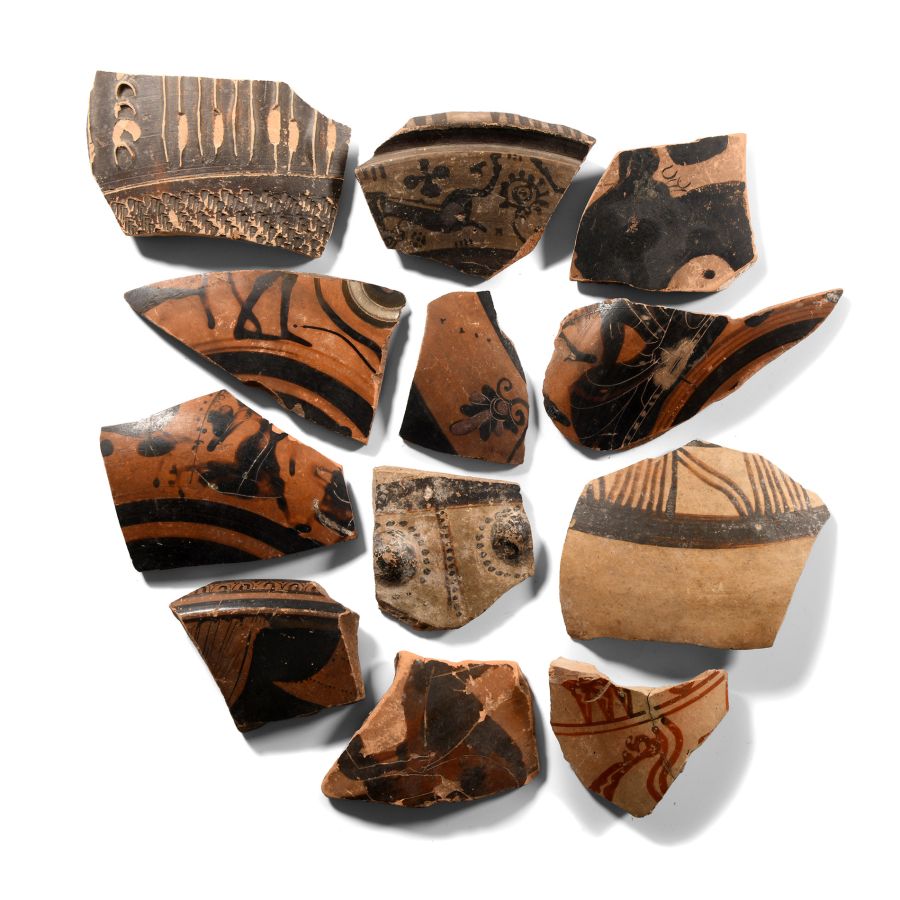
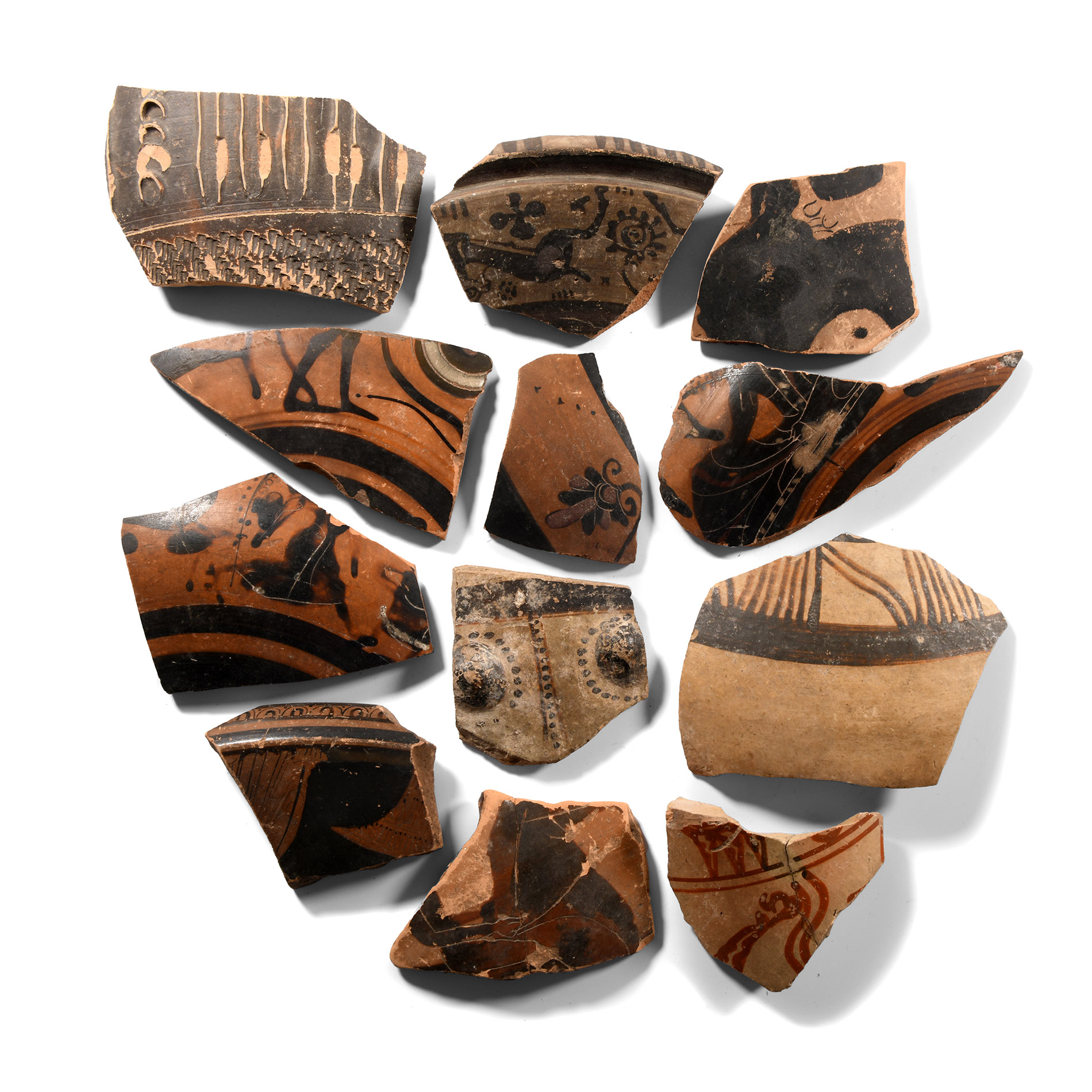
Greek Terracotta Vessel Fragment Group
CIRCA 7TH-3RD CENTURY B.C.
2 1/8 - 4 1/8 in. (264 grams total, 5.3-10.5 cm).
Comprising a variety decorated fragments including: four figural black-figure fragments; one with raised line decoration; one with raised bosses; a fragment with a gazelle facing back; one with painted motifs in red; and three other fragments with painted motifs. [12, No Reserve]
ProvenanceAcquired early 20th century.
Ex property of UK lady by descent.
Property of a Nottinghamshire gentleman.
TimeLine Auctions follows a vetting process to ensure the authenticity and legality of all items, reinforcing our commitment to integrity and responsible trading. Each antiquity, antique, and coin lot undergoes thorough examination by a vetting committee of at least ten external specialists, professional trade association members, scientists, and archaeologists: Our Vetting Process
AUCTIONS:
TimeLine is a leading auction house specialising in antiquities, ancient art, collectables, natural history, coins, medals, and books. Our auctions offer museums, collectors, historians, and enthusiasts the opportunity to acquire unique and historically significant pieces.
-
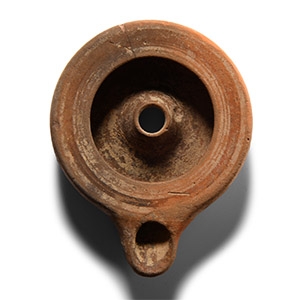
Greek Corinthian Terracotta Oil Lamp
Circa 5th-3rd century B.C.Sold for (Inc. bp): £195
With short nozzle, open reservoir with central cone open beneath; orange and brown pigment. 113 grams, 10.7 cm wide
Acquired before 1990s/early 2000s. From the family collection of Jack Lyttle (1944-2023), Kilmacolm, Scotland; thence by descent to his granddaughter. Property of an East Sussex, UK, gentleman. -
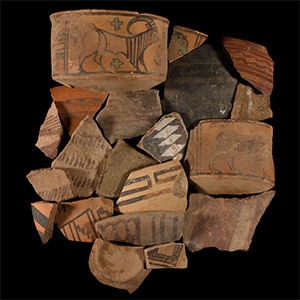
Greek and Other Painted Terracotta Fragment Group
4th-2nd century B.C. and earlierSold for (Inc. bp): £124
Comprising fragments from various types of vessels, most with painted decoration; including a large fragment of an Indus Valley vessel with a polychrome frieze with an ibex. 427 grams total, 37-95 mm
UK gallery, early 2000s. -
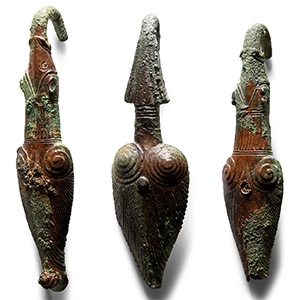
Etruscan Bronze Armoured Belt Hook Collection
6th century B.C.Estimate: £1,500 - 2,000 (‡+bp*)
Opening Bid: £750
Three clasp appliqués from a girdle, each comprising a slightly domed palmette-shaped body with fixing lug to the underside, spirals flanking a narrow neck and triangular hooked finial, two with zoomorphic detailing and one with convergent lines. 59 grams total, 81-88 mm
One with Bonham's, London, Knightsbridge, UK, 22 September 1998, lot 405. Two acquired early 1990s. Ex private American collection; thence by descent. Private collection since 1998. Accompanied by a copy of the relevant Bonhams catalogue pages. This lot has been checked against the Interpol Database of stolen works of art and is accompanied by search certificate no.11610-198948.
