
Loading, please wait...

LOT 0531
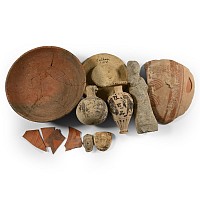
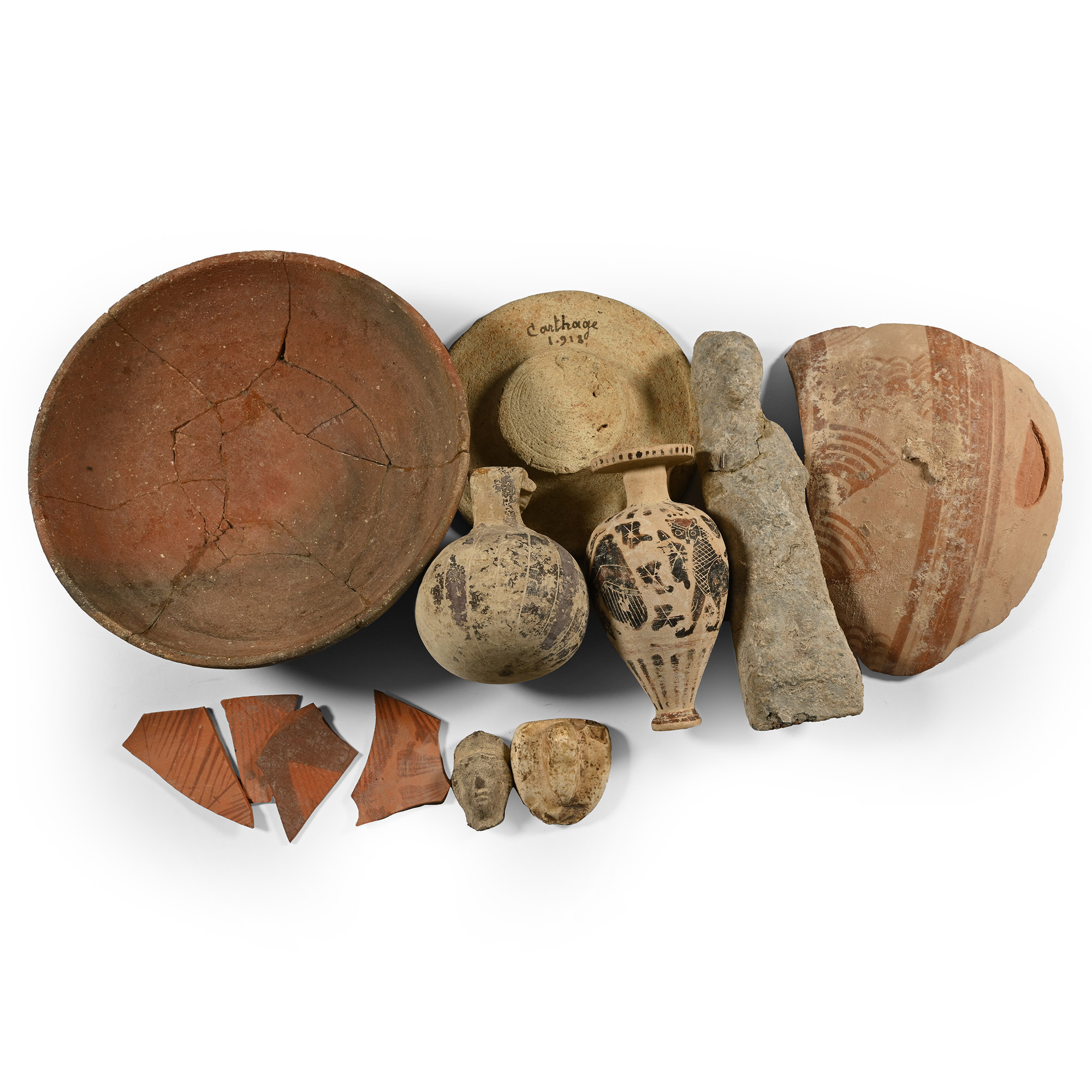
Greek Terracotta Vessel and Fragment Group
CIRCA 6TH-3RD CENTURY B.C. AND LATER
1 3/8 - 6 in. (773 grams total, 3.6-15.2 cm).
Including a hollow-formed femal figurine, aryballos, dish, and various fragments; piriform aryballos after the antique. [12, No Reserve]
ProvenanceCambridgeshire, UK, collection, 1990s.
This lot is accompanied by an illustrated lot declaration signed by the Head of the Antiquities Department, Dr Raffaele D’Amato.
TimeLine Auctions follows a vetting process to ensure the authenticity and legality of all items, reinforcing our commitment to integrity and responsible trading. Each antiquity, antique, and coin lot undergoes thorough examination by a vetting committee of at least ten external specialists, professional trade association members, scientists, and archaeologists: Our Vetting Process
AUCTIONS:
TimeLine is a leading auction house specialising in antiquities, ancient art, collectables, natural history, coins, medals, and books. Our auctions offer museums, collectors, historians, and enthusiasts the opportunity to acquire unique and historically significant pieces.
-
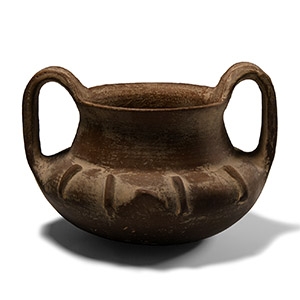
Etruscan Brownware Impasto Vase
8th-7th century B.C.Estimate: £600 - 800 (‡+bp*)
Opening Bid: £300
Biconical with a broad neck, everted rim and two high handles, shoulder decorated with high vertical ridges with conical knop at centre to two faces. 328 grams, 14.4 cm
Ex private Mister X. (1931-2017) collection. Sold in the benefit of the 'Croix-Rouge of Monaco'. This lot is accompanied by an illustrated lot declaration signed by the Head of the Antiquities Department, Dr Raffaele D’Amato. -
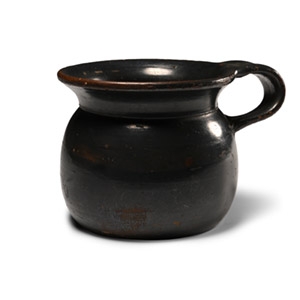
Greek Attic Black-Glazed Terracotta Mug
5th century B.C.Estimate: £400 - 600 (‡+bp*)
Opening Bid: £180
Squat, flat-bottomed with everted rim and single strap handle; reserved underside offset by a groove at its edge, pierced at its centre within a small glazed circle. 102 grams, 93 mm wide
From an American estate, acquired between 1970-1989. Accompanied by a copy of an Art Loss Register certificate no.S00075794. This lot is accompanied by an illustrated lot declaration signed by the Head of the Antiquities Department, Dr Raffaele D’Amato. -
.jpg)
Greek Apulian Single-Handled Fluted Blackware Wine Cup
4th century B.C.Sold for (Inc. bp): £1,560
High-glazed with raised fluting decorating the body, broad c-section neck and everted rim, segmented openwork handle. 174 grams, 90 mm high
Acquired in the 1960s-1970s. Ex European private collection. This lot has been checked against the Interpol Database of stolen works of art and is accompanied by search certificate number no.11856-206542. This lot has been cleared against the Art Loss Register database, and is accompanied by an illustrated lot declaration signed by the Head of the Antiquities Department, Dr Raffaele D’Amato.
