
Loading, please wait...


LOT 0086
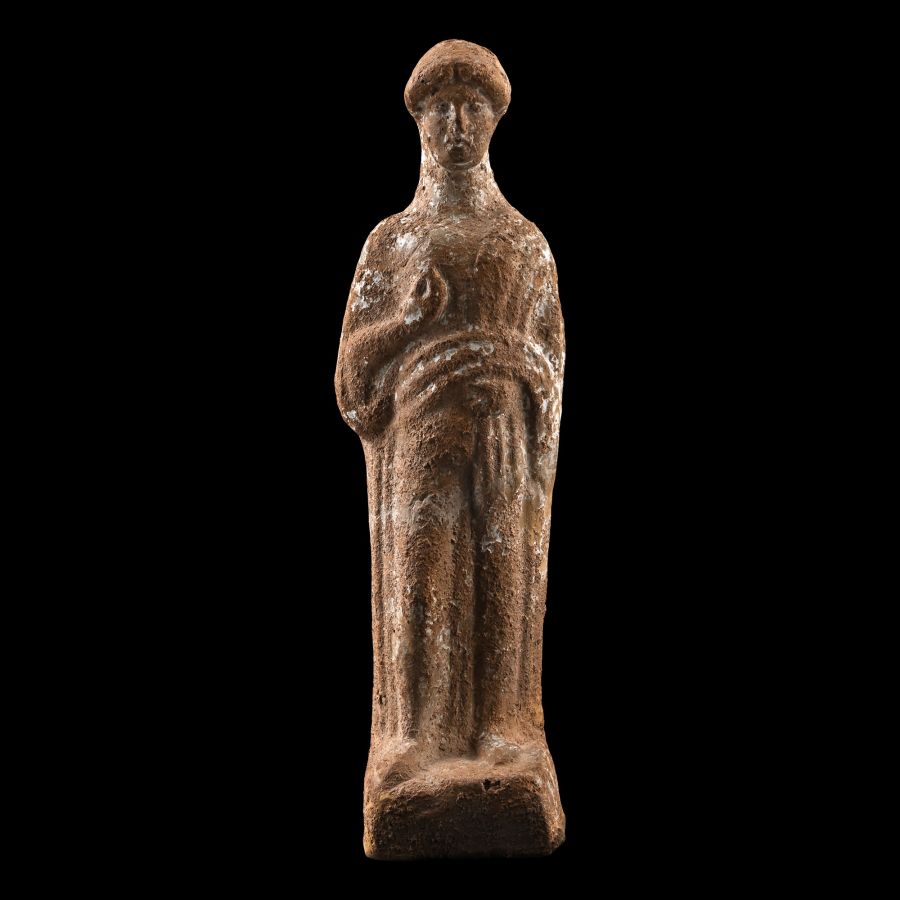
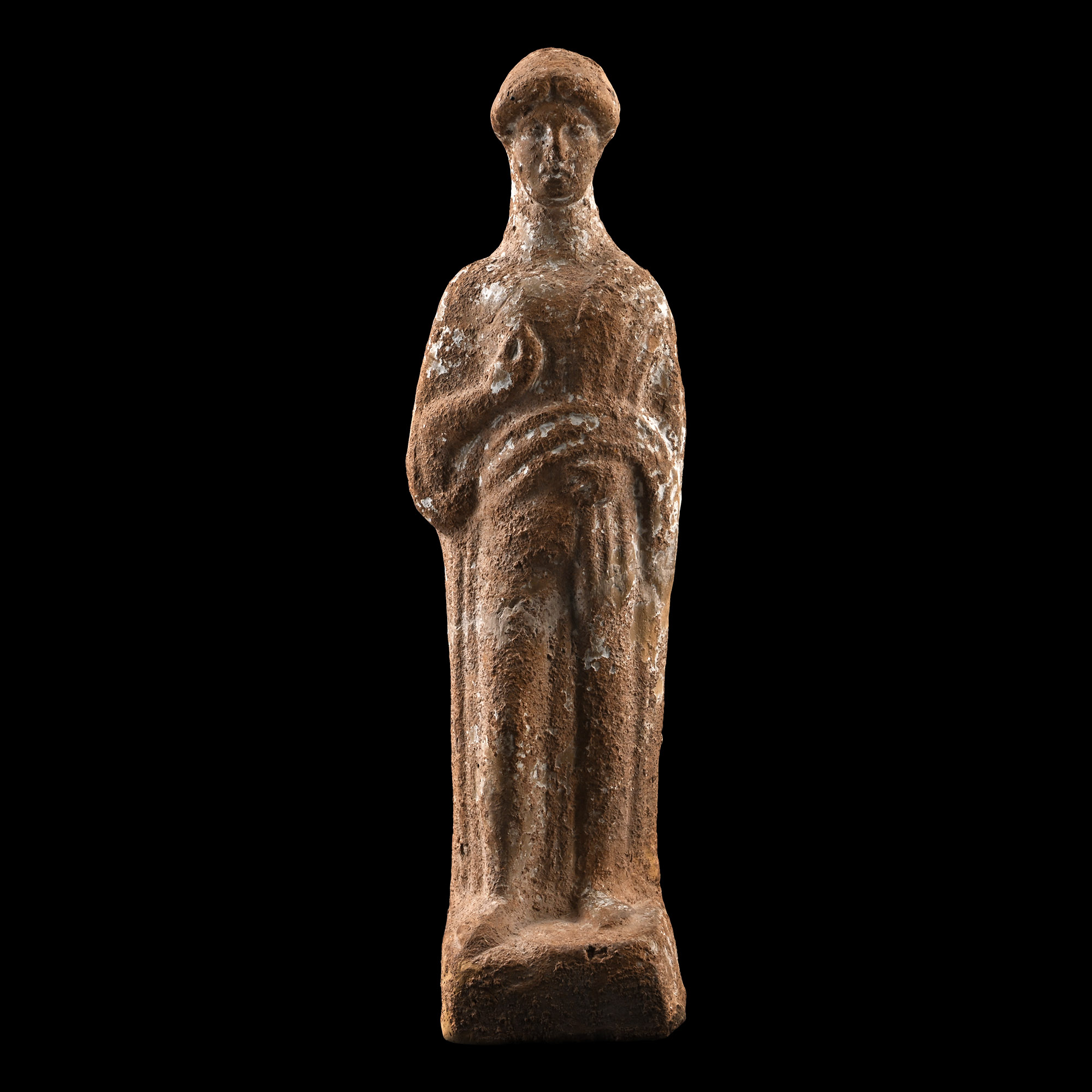
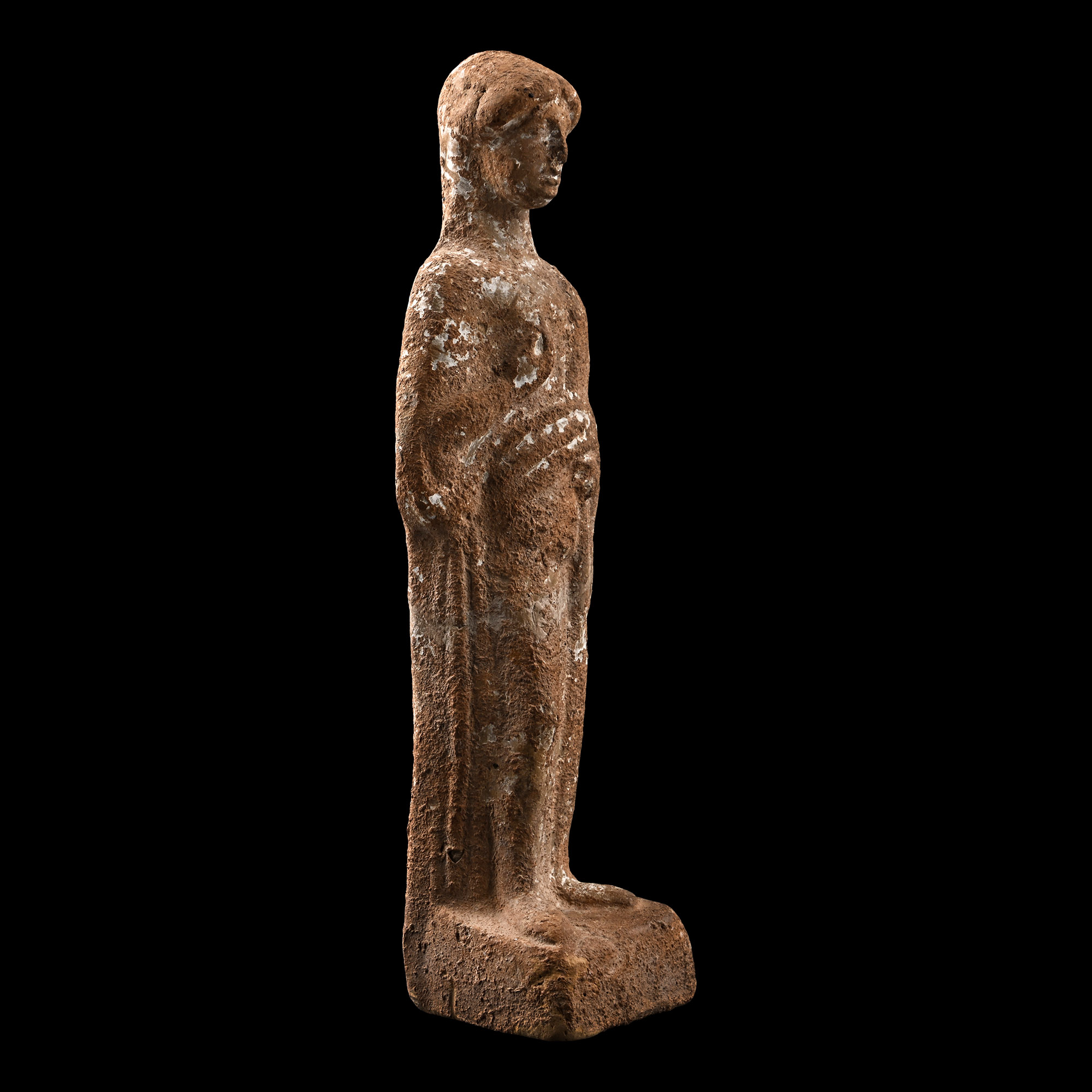
Greek Terracotta Statuette of a Kore
5TH CENTURY B.C.
7 1/4 in. (196 grams, 18.5 cm).
Modelled as a standing female figure on a raised rectangular base, wearing a peplos with the left foot stepping forward, one hand holding a flower(?).
ProvenanceEx Prof. Hans Dahn (1919-2019), Lausanne; acquired 15 July 1958, from Roussos, Basel; Dahn's list no.205.
LiteratureCf. The Louvre, item no.MNE 978.
CONDITIONTimeLine Auctions follows a vetting process to ensure the authenticity and legality of all items, reinforcing our commitment to integrity and responsible trading. Each antiquity, antique, and coin lot undergoes thorough examination by a vetting committee of at least ten external specialists, professional trade association members, scientists, and archaeologists: Our Vetting Process
AUCTIONS:
TimeLine is a leading auction house specialising in antiquities, ancient art, collectables, natural history, coins, medals, and books. Our auctions offer museums, collectors, historians, and enthusiasts the opportunity to acquire unique and historically significant pieces.
LOT 0086
Greek Terracotta Statuette of a Kore
Estimate £500 - 700€580 - 810 (for guidance only)$680 - 950 (for guidance only)
Opening Bid
£275 (EUR 319; USD 371) ‡+BP*
-
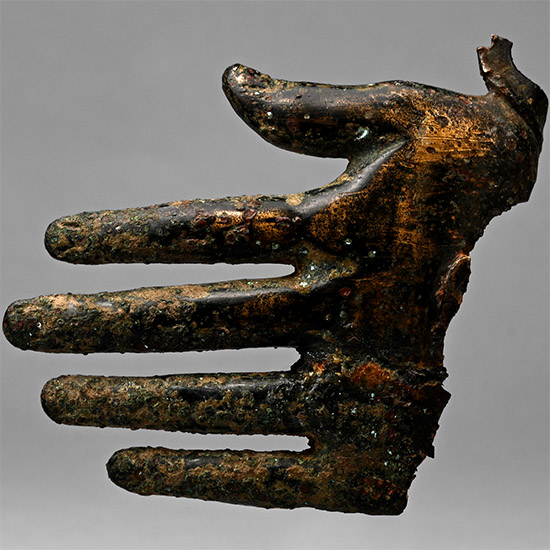
Etruscan Votive Bronze Hand
Circa 7th-6th century B.C.Estimate: £1,800 - 2,400 (‡+bp*)
Opening Bid: £900
Modelled in the half-round with D-section fingers, portion of cuff behind the thumb; mounted on a custom-made display stand. 187 grams total, 11.8 cm high including stand
Acquired on the German art market before 1992; thence by descent. This lot has been checked against the Interpol Database of stolen works of art and is accompanied by search certificate no.13191-249245.
Votive offerings gained increasing popularity throughout Etruria, southern Latium and later northern Campania from the 7th century B.C. onwards. Most gods were thought to possess the power to heal, and the sick flocked to their sanctuaries for a cure or to pray for future health. Usually, these dedications depicted the parts of the human anatomy that needed healing. The area of Vulci offered many graves in which pairs of hands cut from a sheet of bronze, rolled up at the base to form the wrist, have been found. -
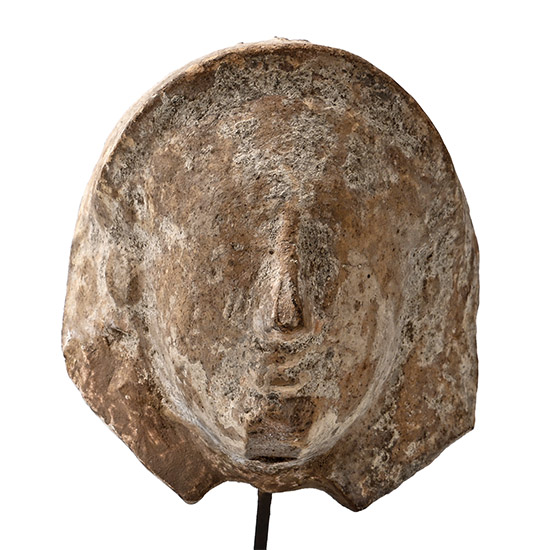
Greek Terracotta Female Protome Head
Late 6th century B.C.Estimate: £150 - 200 (‡+bp*)
Opening Bid: £70
Hollow-formed female face with a pointed nose and narrow lips, wearing a pair of disc earrings, head covered by a stephane headdress and a veil, a small hole on top for suspension; mounted on a custom-made stand. 178 grams total, 13.5 cm including stand
Ex André Lorenceau (1930-2019), Baselland, 1960s-2000; thence by descent.
Terracottas of this type typically served as votive offerings and may represent the deity to whom the offering was presented. -
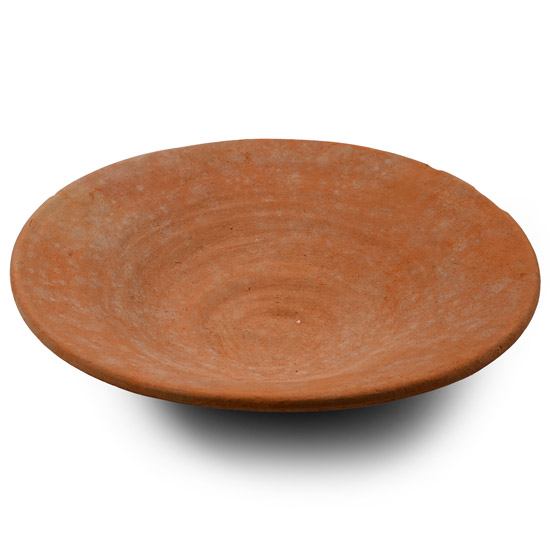
Parthian Terracotta Dish
2nd century B.C.-2nd century A.D.Estimate: £50 - 70 (+bp*)
Opening Bid: £5
Broad and shallow with squared edge to the rim. 501 grams, 20.4 cm
Acquired on the UK art market since the 1990s. From the property of a late Lincolnshire, UK, gentleman; thence by descent.
