
Loading, please wait...
_900x900.jpg "Greek Terracotta Standing Figure")
_200x200.jpg "Greek Terracotta Standing Figure")
.jpg "Greek Terracotta Standing Figure")
LOT 0088
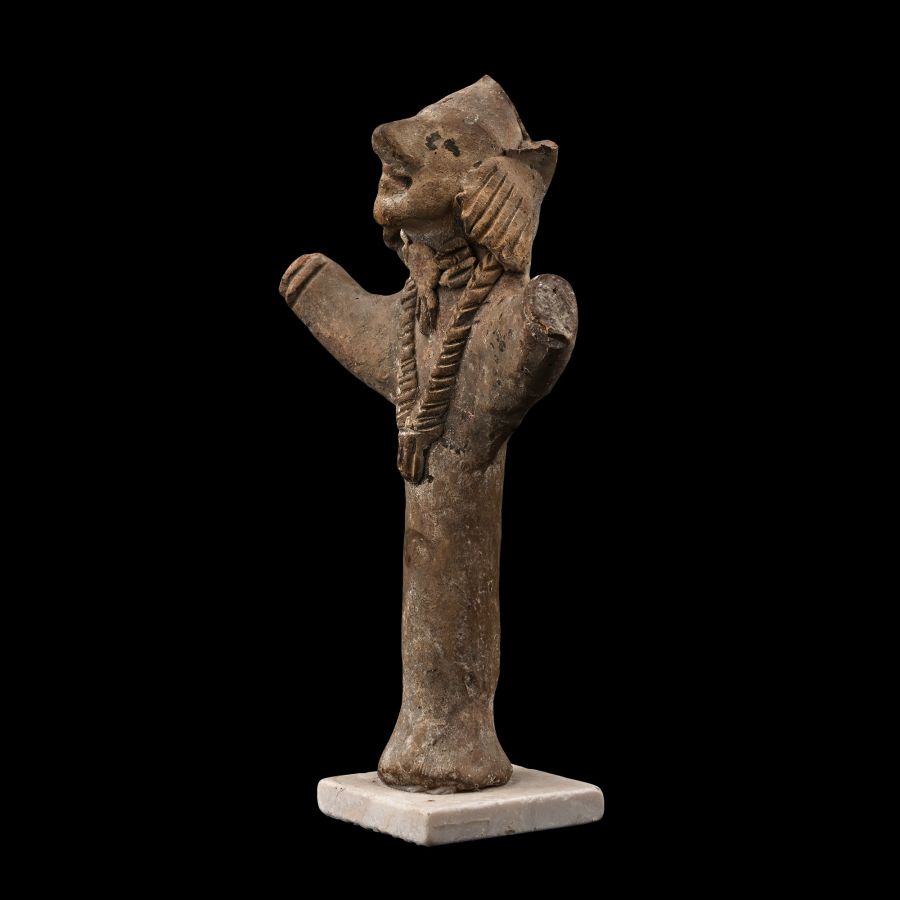
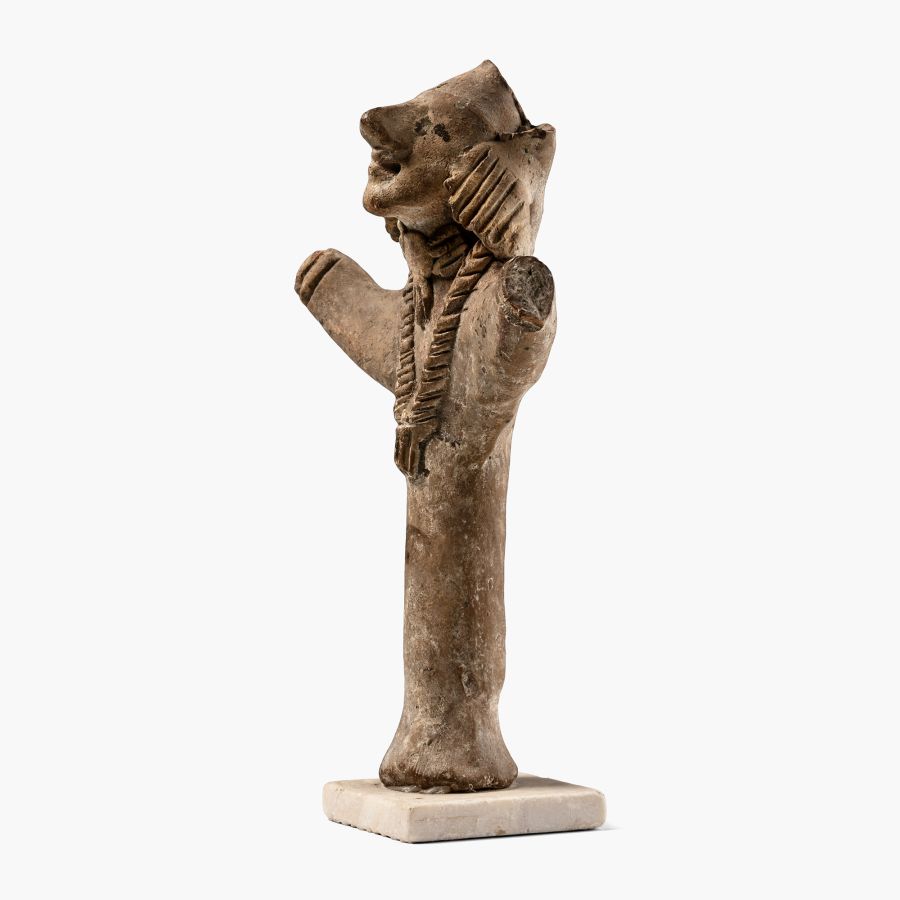
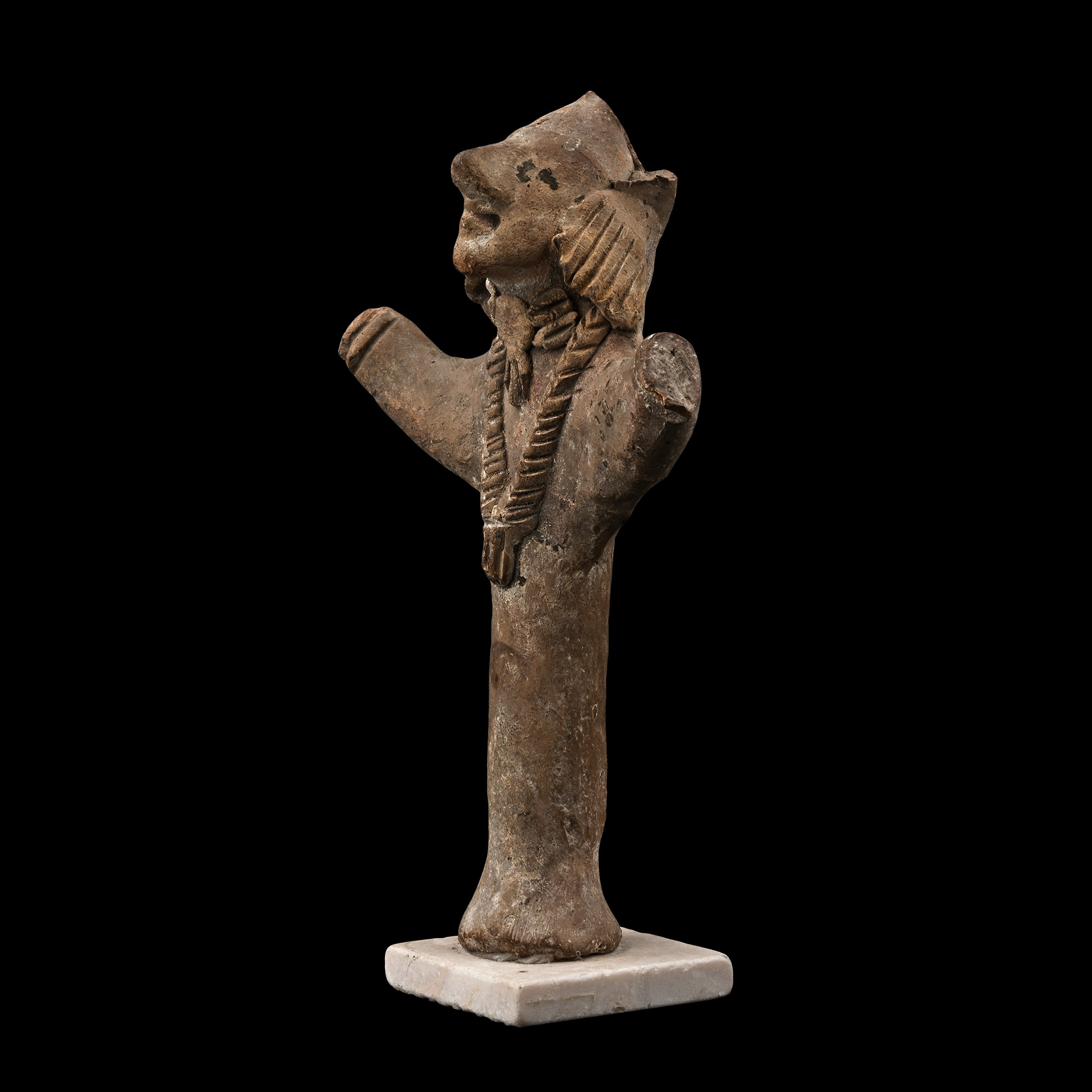
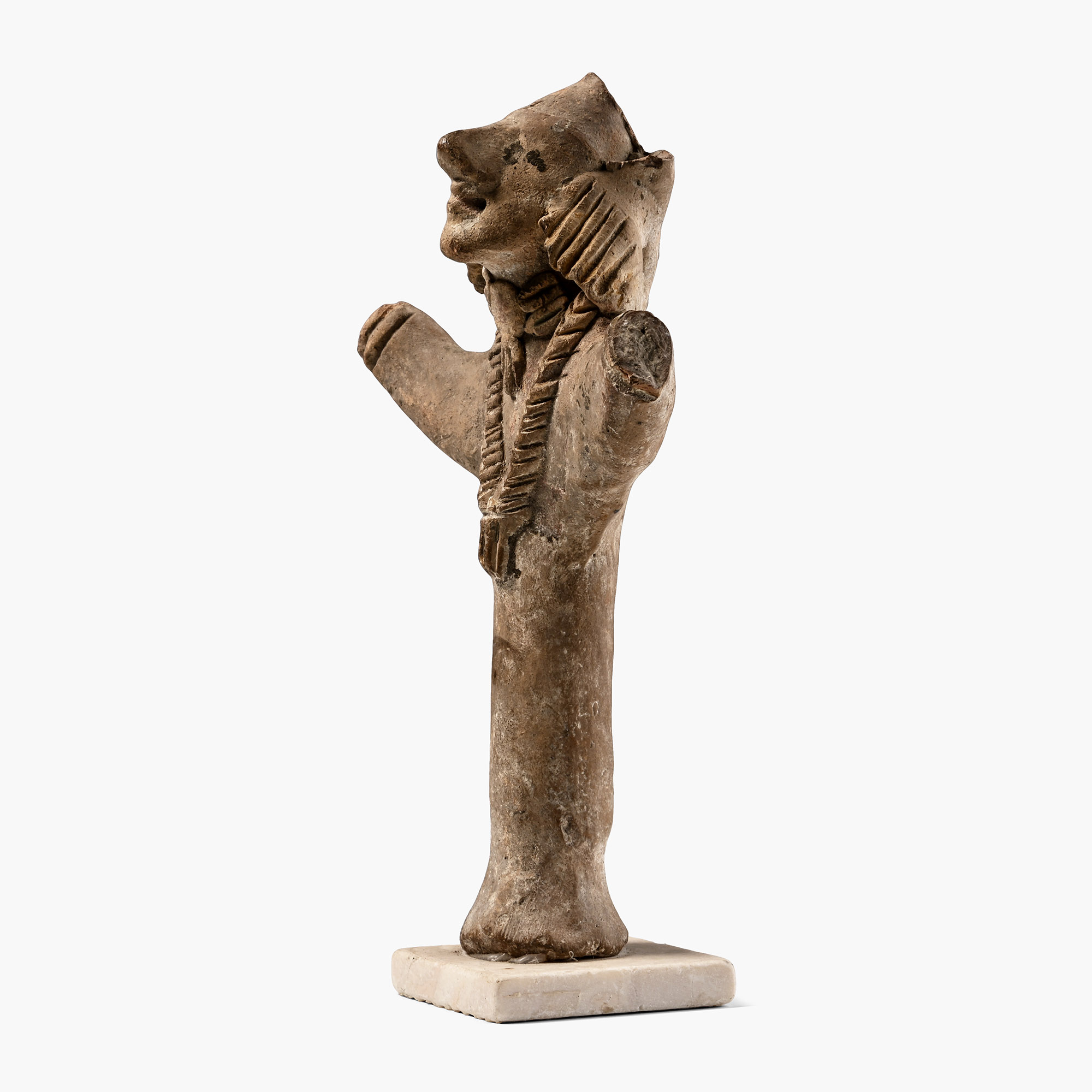
Greek Terracotta Standing Figure
ARCHAIC, 7TH-5TH CENTURY B.C.
6 3/4 in. (277 grams total, 17 cm high including stand).
Modelled in the round figure standing with arms raised, head tilted upward with shoulder-length hair and horned cap, collar to the throat with large disc closure, pectoral pendant on a stylised braided thong; mounted on a custom-made stand; possibly Cypriot workmanship. [No Reserve]
ProvenanceEx Ernest Ohly collection.
Acquired from Woolley & Wallis, Wiltshire, UK, 20 May 2010, no.1010 (part).
From an important Cambridgeshire estate; thence by descent.
From the private collection of John Meredith, acquired since the 1990s; thence by descent.
TimeLine Auctions follows a vetting process to ensure the authenticity and legality of all items, reinforcing our commitment to integrity and responsible trading. Each antiquity, antique, and coin lot undergoes thorough examination by a vetting committee of at least ten external specialists, professional trade association members, scientists, and archaeologists: Our Vetting Process
AUCTIONS:
TimeLine is a leading auction house specialising in antiquities, ancient art, collectables, natural history, coins, medals, and books. Our auctions offer museums, collectors, historians, and enthusiasts the opportunity to acquire unique and historically significant pieces.
-
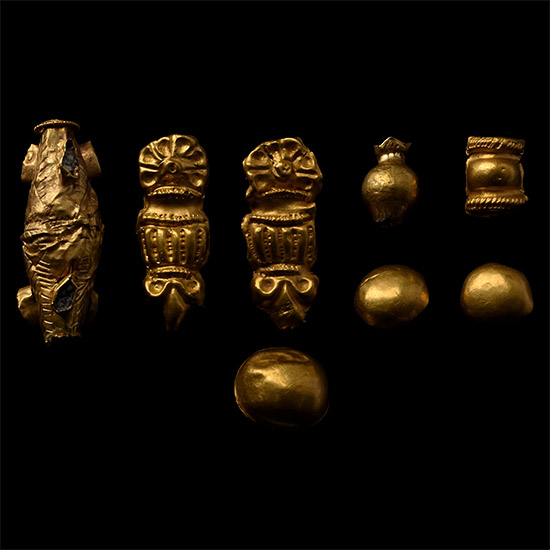
Greek Gold Bead Collection
4th-3rd century B.C.Estimate: £1,500 - 2,000 (‡+bp*)
Opening Bid: £750
A collection of necklace pendants and dress appliques comprising: a hollow bead with a truncated conical shape, featuring appliques for precious stone inserts; three studs with a hemispherical dome; a pair of appliques decorated with rosette and mask-shaped elements; a pendant in the form of a myrtle berry, and another fragment. 11.19 grams total, 10-31 mm
Acquired by a Swiss family in the mid-1980s to late 1990s, thence by descent. Private collection, Switzerland, since the late 1990s. This lot has been checked against the Interpol Database of stolen works of art and is accompanied by a search certificate number no.13023-246772.
The iconography of Hellenistic jewellery often incorporates vegetal motifs, reflecting the Greek value of fertility and a royal Greek female wearer’s obligation to produce heirs. With its heavy incorporation of plant motifs, including tendrils, blossoms, and a bursting pomegranate, the diadem design symbolises a woman’s reproductive potential and alludes to the female wearer’s social responsibility to produce offspring. -
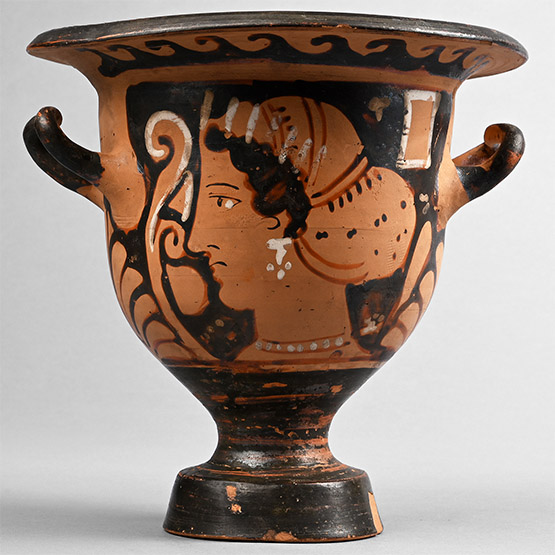
Greek Red-Figure Bell Krater
Campanian, 340-325 B.C.Estimate: £3,000 - 4,000 (+bp*)
Opening Bid: £1,500
With notable added white details; Side A: woman moving to her right while holding a cista, dressed in a chiton clinched at the waist, with a himation draped over her left arm, her hair adorned with a sakkos; Side B: profile head of a woman wearing a patterned sakkos and radiated stephane, intricate earrings and necklace of beads, objects in the field; beneath the handles, palmettes with floral elements. 585 grams, 18 cm high
Ex Rev. & Mrs T.S. Hichens, Cornwall with Charles Ede, 1981 (Stock No.8370). Ex Mrs B. Shankes, November 1986. This lot has been checked against the Interpol Database of stolen works of art and is accompanied by search certificate no.13068-248976.
Bell kraters were commonly used in regions of ancient Italy for mixing and serving wine during communal gatherings, thanks to their wide shape and flared mouth. These vessels also served as artistic expressions, reflecting the cultural tastes of the time. The Chevron Group is the conventional name for a group of ancient Apulian red-figure vase painters who were active in Southern Italy between approximately 335-310 BC. They are named for their distinctive use of a band of chevron patterns to encircle the rims of the small kraters (mixing vessels) they decorated. -
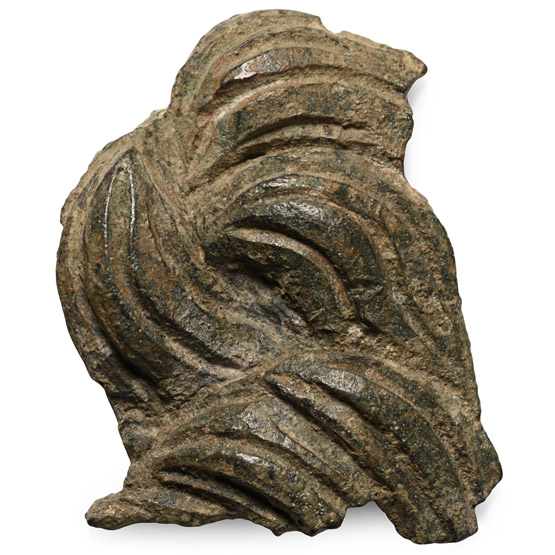
Greek Bronze Beard Fragment from a Life-Size Statue
Hellenistic, 2nd-1st century B.C.Sold for (Inc. bp): £169
Section from a groomed beard showing neatly arranged curls with incised striations. 20.77 grams, 46 mm
London, UK, art market, 1980s. Private collection, London, UK.
