
Loading, please wait...
LOT 0585
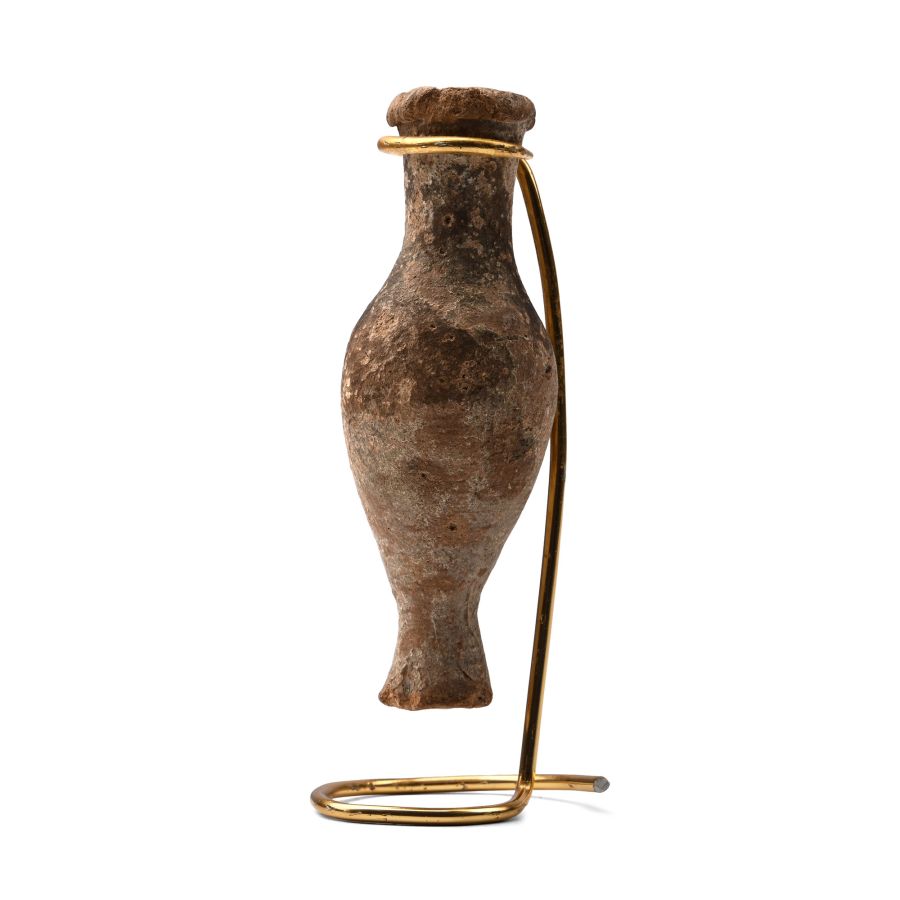
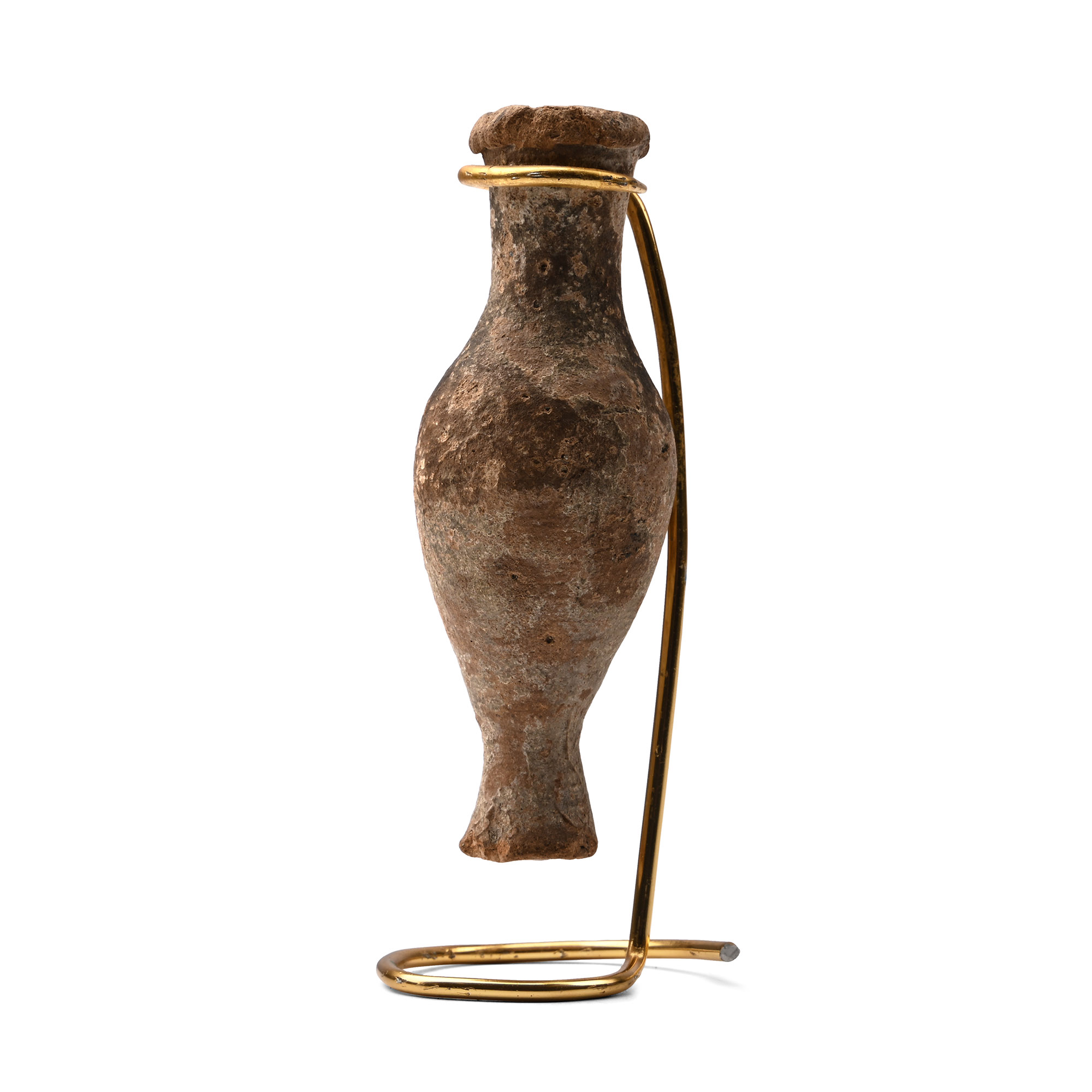
Greek Terracotta Spindle Flask
HELLENISTIC, LATE 2ND-1ST CENTURY B.C.
3 1/8 in. (3 5/8 in.) (24 grams total, 80 mm high, 93 mm including stand).
With a narrow neck and carinated mouth, developing to a biconical body and flared foot; mounted on a custom-made stand. [No Reserve]
ProvenanceFrom a Scottish gentleman’s collection, Glasgow, formed from the early 2000s.
CONDITIONTimeLine Auctions follows a vetting process to ensure the authenticity and legality of all items, reinforcing our commitment to integrity and responsible trading. Each antiquity, antique, and coin lot undergoes thorough examination by a vetting committee of at least ten external specialists, professional trade association members, scientists, and archaeologists: Our Vetting Process
AUCTIONS:
TimeLine is a leading auction house specialising in antiquities, ancient art, collectables, natural history, coins, medals, and books. Our auctions offer museums, collectors, historians, and enthusiasts the opportunity to acquire unique and historically significant pieces.
-
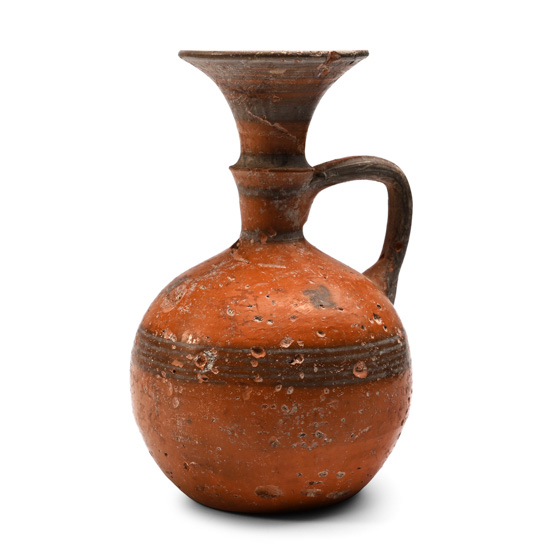
Cypriot Terracotta Jug with Decorations
7th-6th century B.C.Sold for (Inc. bp): £364
Comprising a spherical body and flat base, trumpet-shaped mouth with biconvex collar and strap handle; painted circumferential bands. 67 grams, 91 mm
Acquired by a Swiss family in the mid-1980s to late 1990s, thence by descent. Private collection, Switzerland, since the late 1990s. -
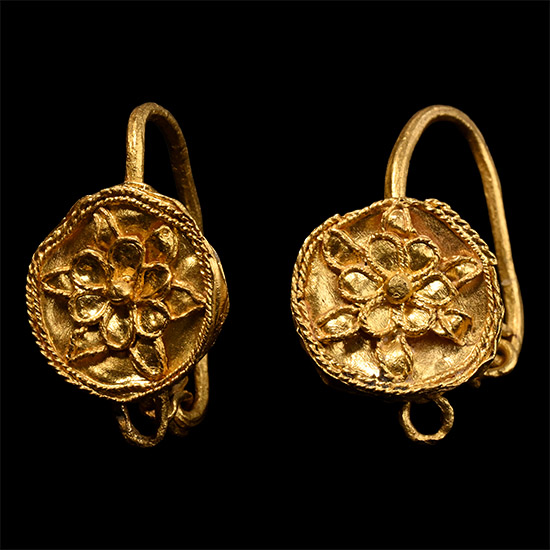
Greek Gold Earring Pair with Rosettes
5th century B.C.Estimate: £1,800 - 2,400 (+bp*)
Opening Bid: £833
Each a sturdy hoop with a hook-and-eye closure, granule above; discoid plaque with applied granule border, filigree rosette. 5.64 grams total, 22.9-24.8 mm
Acquired on the UK art market 1971-1974. Private collection, London. This lot has been checked against the Interpol Database of stolen works of art and is accompanied by search certificate number no.13173-248088. -
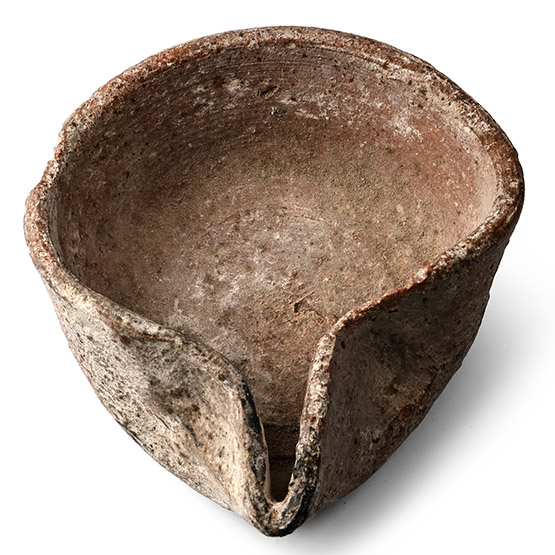
Greek Terracotta Pinched Rim Oil Lamp
Hellenistic, 2nd-1st century B.C.Sold for (Inc. bp): £117
Discoid in plan with sidewall pinched to form a nozzle; with old collector's tag '13 oil lamp of Hellenistic period'. 73 grams, 85 mm
From the Lloyd and Jeanne Raport collection, Washington, D.C. and Florida, USA, formed between 1972-2000. Acquired through Bonhams, London, UK.
