
Loading, please wait...

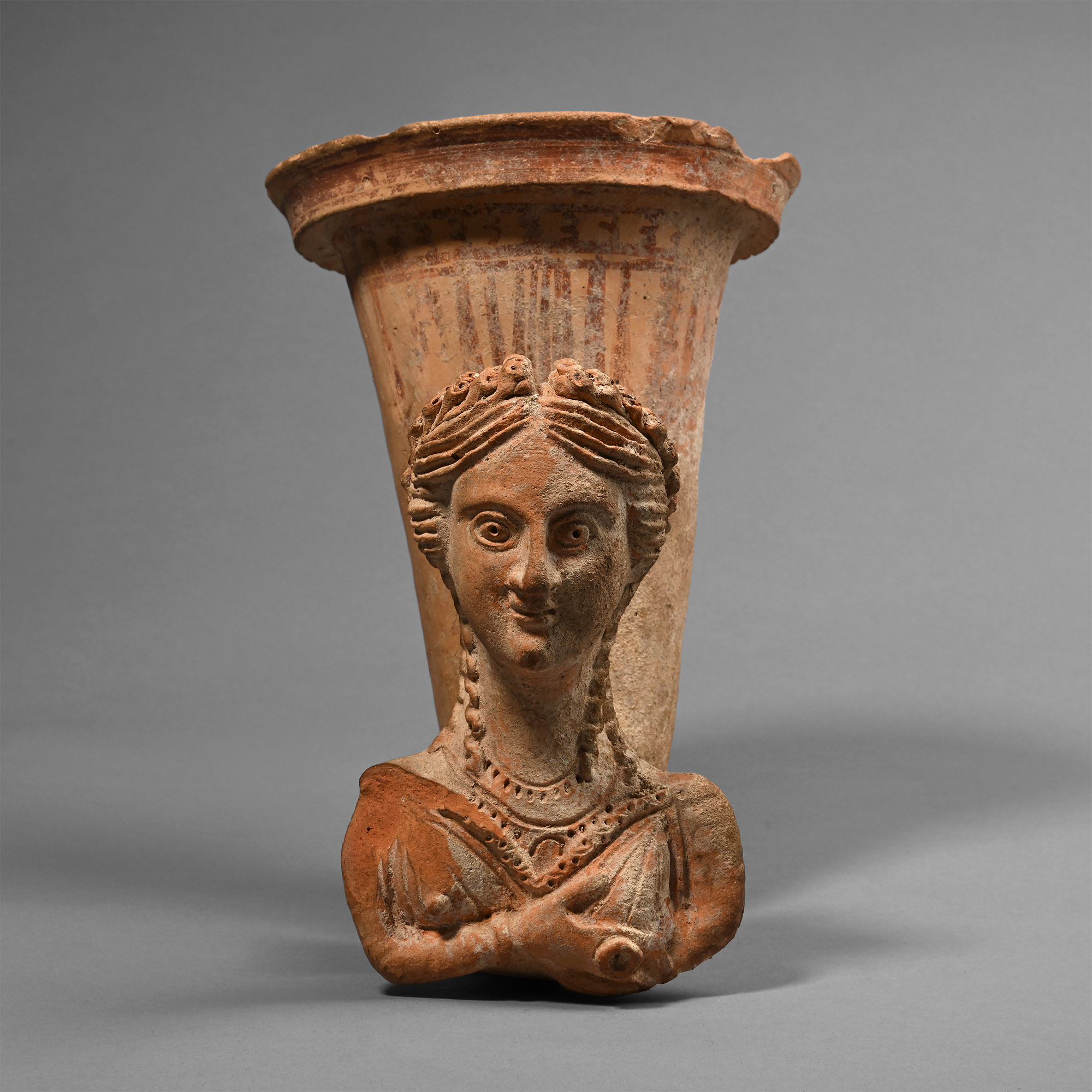
LOT 0058
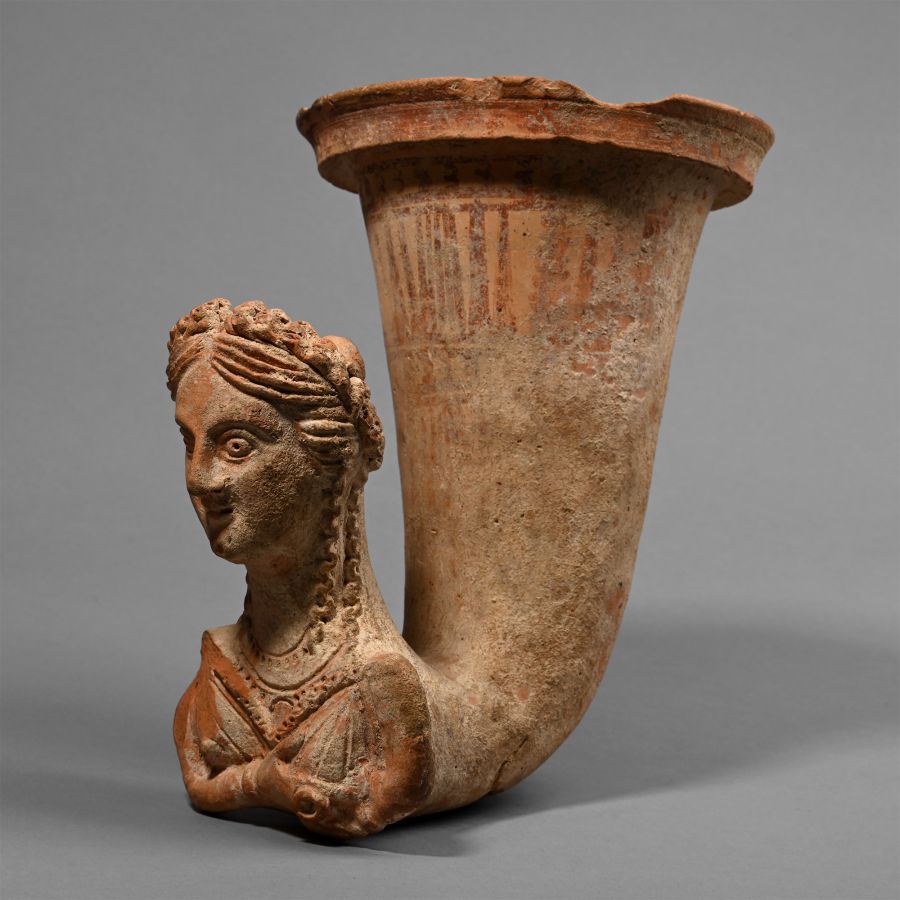
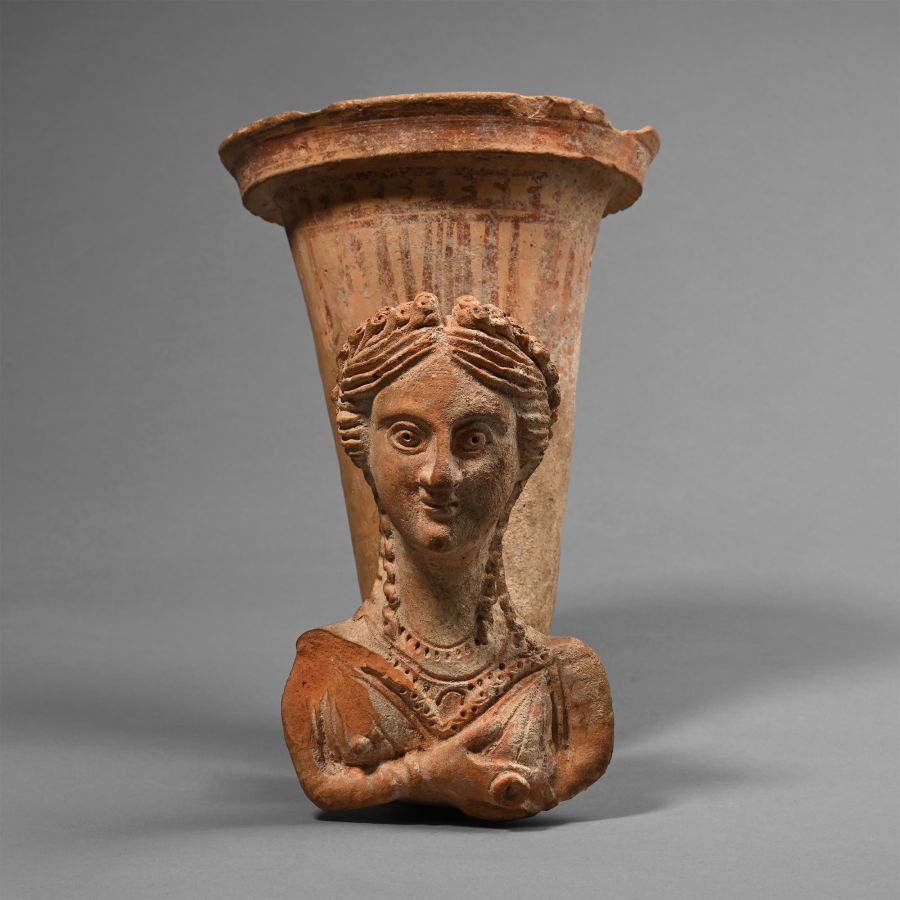
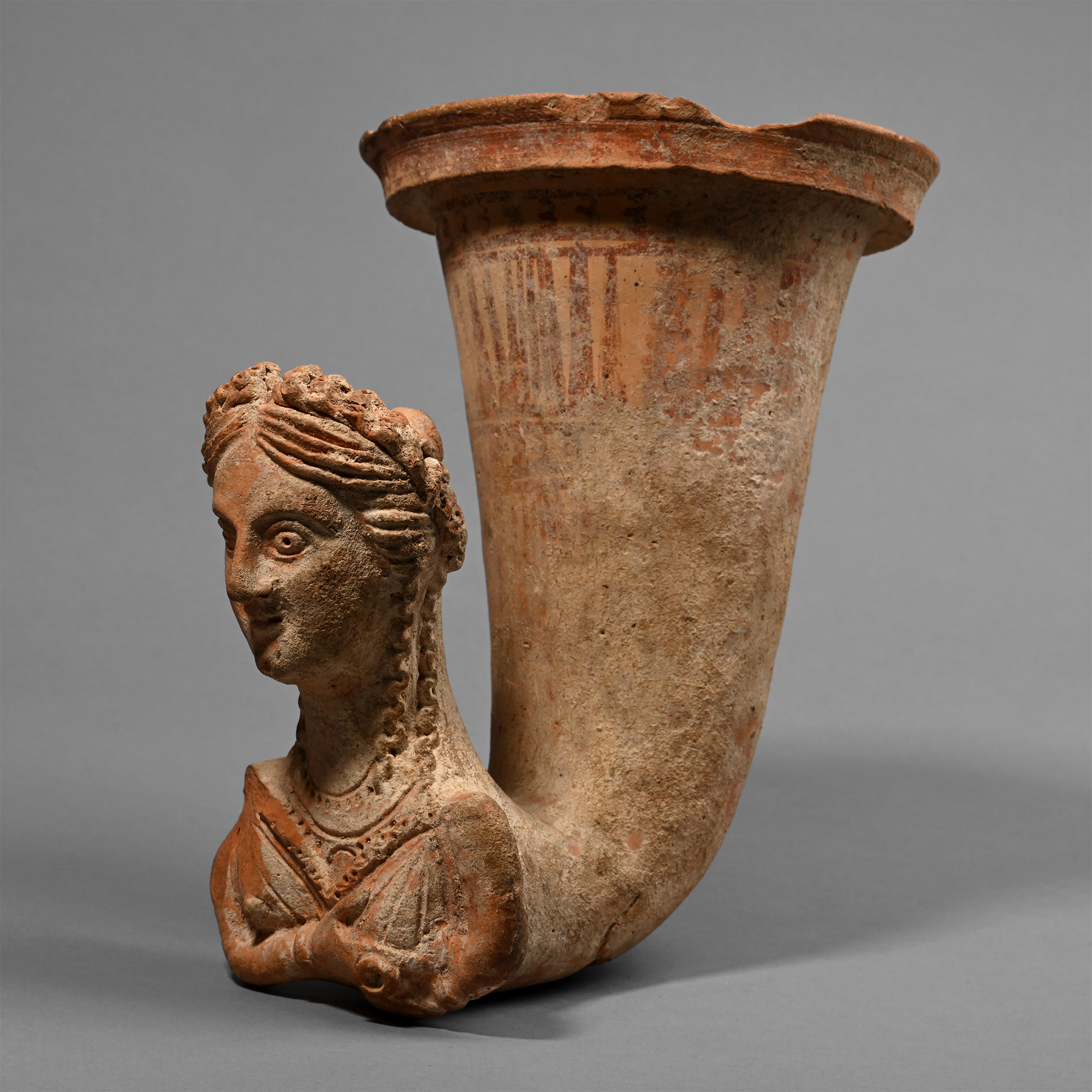
Greek Terracotta Rhyton of a Goddess
3RD-2ND CENTURY B.C.
9 1/2 in. (1.25 kg, 24 cm).
With flanged and stepped rim, tapering curved body, figural finial of the goddess with diadem; bands of red and cream geometric detail to the rim and upper body, red wave patterns to the inner face; the goddess modelled with carefully dressed hair and floral diadem, ringlets cascading to her collar bone, alert facial expression with almond-shaped eyes and prominent nose, with C-shaped billetted collar and chiton, cupping her left breast in her right hand; mounted on a custom-made stand.
ProvenancePrivate collection, London, UK; formed 1970s-1980s.
Accompanied by an academic report by Dr Raffaele D’Amato.
This lot has been checked against the Interpol Database of stolen works of art and is accompanied by search certificate number no.13312-258233.
Cf. Rawlinson, G.M.A., The five great Monarchies of the Ancient Eastern World, III vol., New York, 1881; Carter, M.L., Goldstein, S., Harper P.O., Kawami, T.S., Meyers, P., Splendors of the Ancient East, Antiquities from the al-Sabah collection, London, 2013; Ebbinghaus, S., Feasting with gods, heroes, and kings, Cambridge, 2019, nos.42,43 and fig.7.13, for Hellenistic rhyta.
FootnotesIt is challenging to identify the divinity represented on our vessel: it can be associated with Ariadne, wife of the god Dionysus, but also with a Parthian goddess such as Anahita. She was a Zoroastrian goddess associated with water, fertility, and wisdom, widely venerated across the Parthian Empire and often invoked alongside Ahura Mazda in royal and religious inscriptions. Rhyta in her likeness, typically terminating in a zoomorphic or divine protome, were used as ceremonial drinking vessels, reflecting Anahita's close association with libation and purification rites.
CONDITIONTimeLine Auctions follows a vetting process to ensure the authenticity and legality of all items, reinforcing our commitment to integrity and responsible trading. Each antiquity, antique, and coin lot undergoes thorough examination by a vetting committee of at least ten external specialists, professional trade association members, scientists, and archaeologists: Our Vetting Process
AUCTIONS:
TimeLine is a leading auction house specialising in antiquities, ancient art, collectables, natural history, coins, medals, and books. Our auctions offer museums, collectors, historians, and enthusiasts the opportunity to acquire unique and historically significant pieces.
-
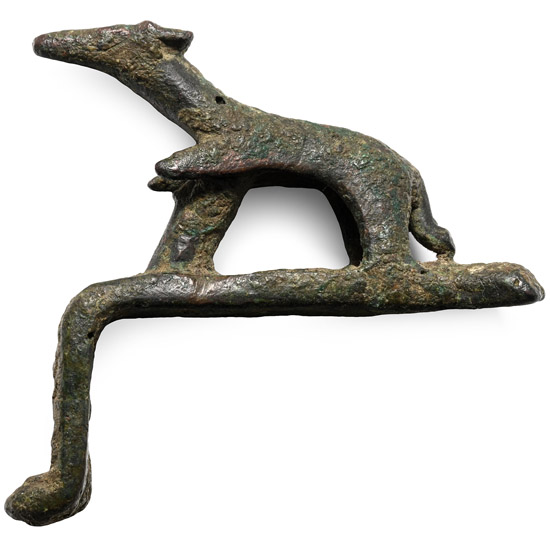
Greek Bronze Fitting with Fox
Circa 5th century B.C.Sold for (Inc. bp): £72
L-shaped bracket with a leaping fox, the beast with an elongated muzzle and swept-back ears. 46.7 grams, 62 mm
From the private coin collection of a West London, UK, gentleman, formed since the mid 1980s. -
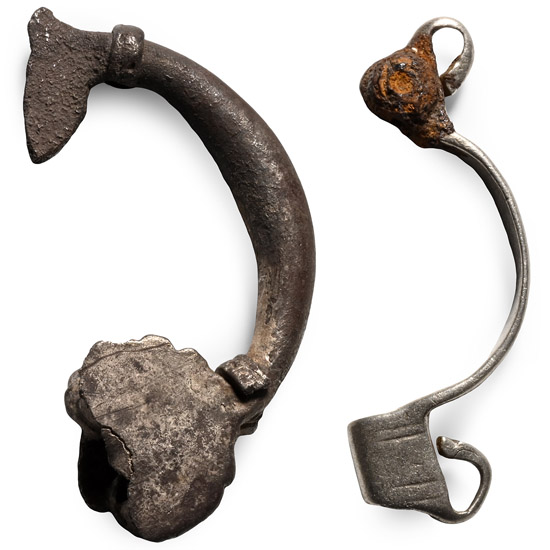
Greek Silver Bow Brooch Group
5th-3rd century B.C.Sold for (Inc. bp): £26
Comprising two bow brooches, one with recurved finials, both lacking a pin. 12.64 grams total, 40-43 mm
Ex German art market, 2000s. Acquired from an EU collector living in London. From the collection of a Surrey, UK, gentleman. -
.jpg)
Eastern Greek Carnelian Scaraboid Gemstone with Nude Hero Holding Lions
6th-5th century B.C. or laterSold for (Inc. bp): £780
Scaraboid type with incuse design to the underside of a nude hero facing, holding one lion by the neck and another by the hind leg; supplied with a museum-quality impression. 4.25 grams, 19 mm
From the private collection of a European gentleman (1942-2024), formed since the 1970s.
The gem could be considered a representation of Heracles, even if the iconography is unusual, and is influenced by the Mesopotamian environment, from where it borrows the frontal image of the hero (Gilgamesh or Enkidu) fighting with two beasts. The hero is beardless and holding an inverted lion. He is acting like a master of the animals, showing eastern traits reminiscent of Graeco-Phoenician art. In the Phoenician tradition, a similar image of the god Bes, holding two lions, as posis theron (‘Master of the Animals’), is common. The type is more frequent in the Eastern Mediterranean than in the West and is found on scarabs in carnelian and chalcedony.
