Loading, please wait...

Use mousewheel to zoom in and out, click to enlarge

Details

LOT 0553

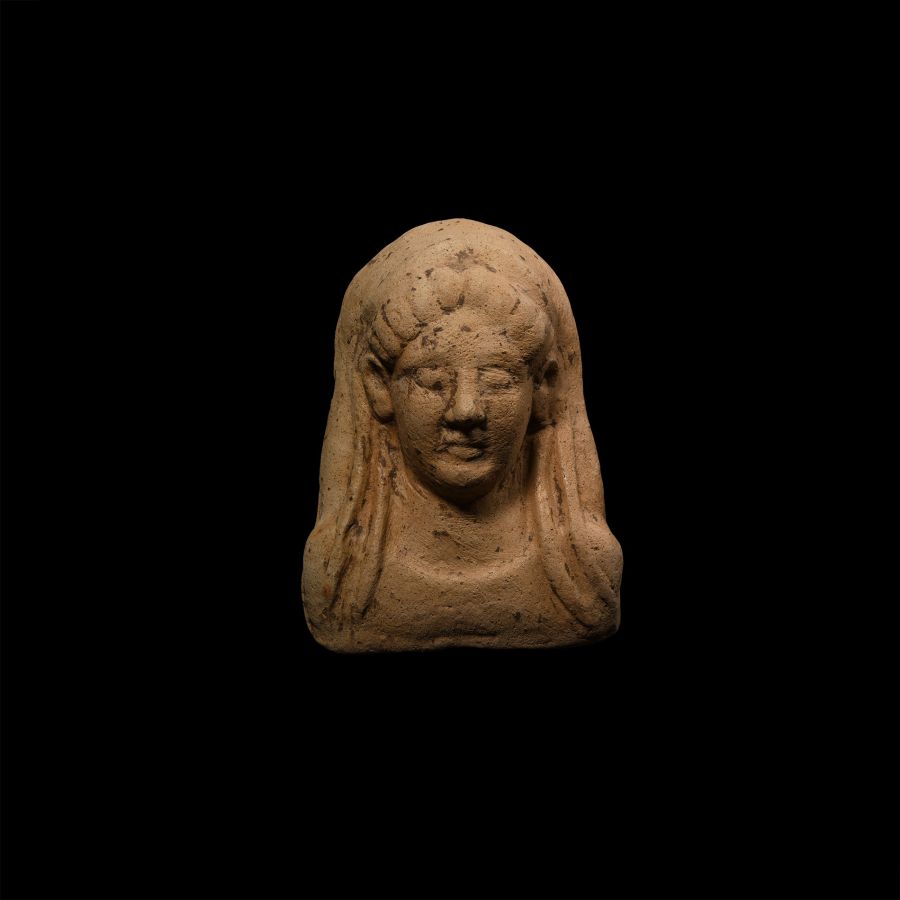
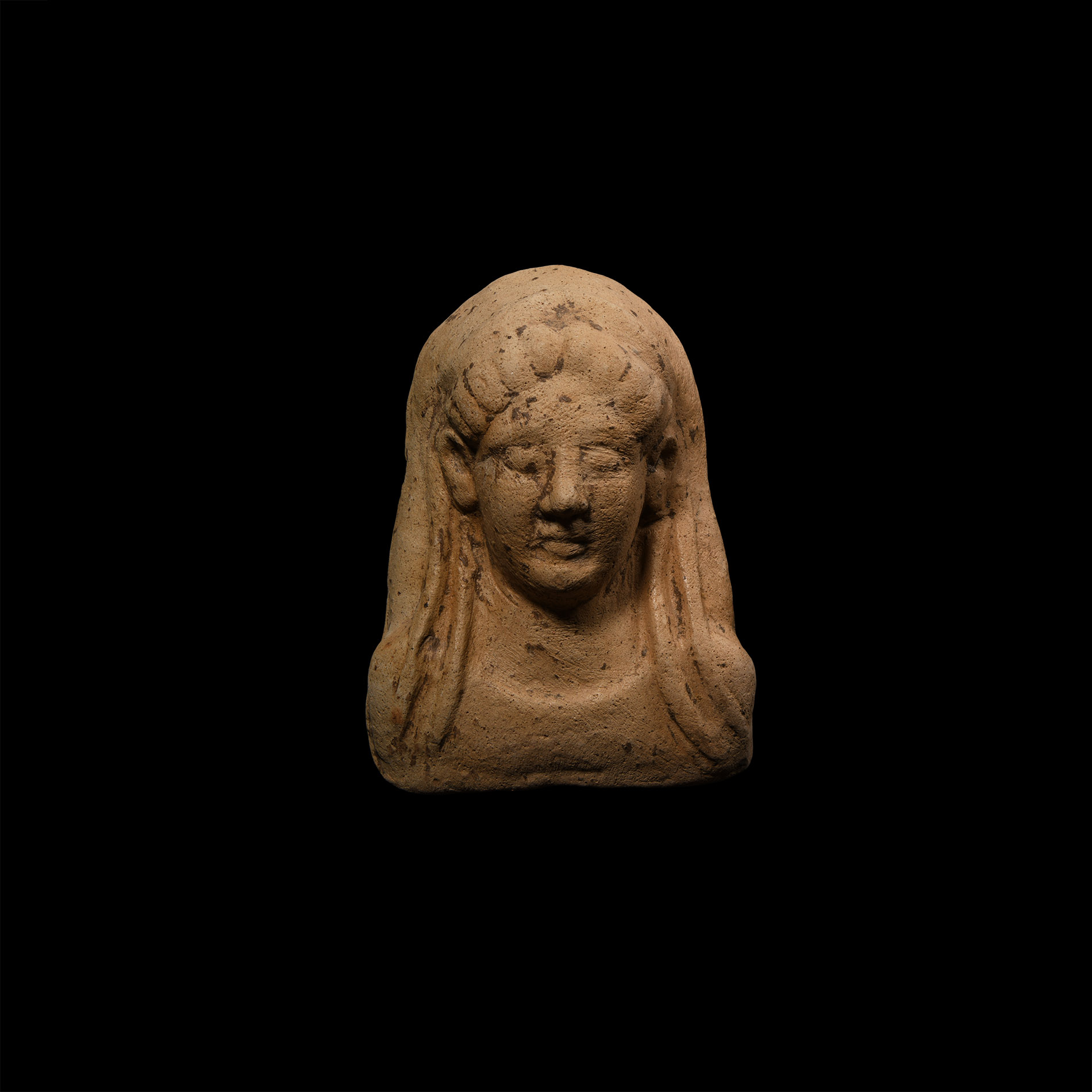
Greek Terracotta Protome Mask

CIRCA 4TH-3RD CENTURY B.C.

4 1/4 in. (89 grams, 10.9 cm).

D-shaped ceramic panel with detailing moulding of a female bust with styled hair and soft facial features. [No Reserve]

Provenance

Acquired 1970s-1996.
Property of a North American collector.
London collection, 2016.

Literature

Cf. similar in the collection of the British Museum under accession no.1814,0704.808.

CONDITION

VETTING:

TimeLine Auctions follows a vetting process to ensure the authenticity and legality of all items, reinforcing our commitment to integrity and responsible trading. Each antiquity, antique, and coin lot undergoes thorough examination by a vetting committee of at least ten external specialists, professional trade association members, scientists, and archaeologists: Our Vetting Process


AUCTIONS:

TimeLine is a leading auction house specialising in antiquities, ancient art, collectables, natural history, coins, medals, and books. Our auctions offer museums, collectors, historians, and enthusiasts the opportunity to acquire unique and historically significant pieces.

LOT 0553

Greek Terracotta Protome Mask

Sold for (Inc. bp): £416

Print page

RELATED LOTS

  • Greek Terracotta Head Collection
    Greek Terracotta Head Collection
    3rd-2nd century B.C.

    Sold for (Inc. bp): £1,690

    Each modelled in the round and and derived from a larger female figure, some wearing diadems and some with draped heads; each mounted on a custom-made display base. 491 grams total, 9.5-13.5 cm high including stand


    Acquired in the 1970s. Ex European private collection. This lot has been checked against the Interpol Database of stolen works of art and is accompanied by search certificate no.11795-206534.

    These figurines reflect sculptural prototypes. Interestingly the head of one of the women is draped in a himation, and the head is turned slightly to the right like the terracotta of Amisos which represents a dancer. These figurines were most probably manufactured in Hellenistic cities by craftsmen who used either light yellow or dark brown clay. After the firing, the surface of the clay became reddish, while the core became grey-brown. The majority of the figurines were made from untreated clay with many impurities, such as coarse grain. Due to the quality of the clay the surface of the figurines was often rugged, despite the retouch, but were painted with vivid colours, as is still visible on the pink polos on one of the heads.

    Lot Details

  • Greek Bronze Hephaistos Statuette
    Greek Bronze Hephaistos Statuette
    Circa 5th century B.C.

    Estimate: £20,000 - 30,000 (+bp*)

    Opening Bid: £10,000

    The elegant figure depicting the Greek god of fire and metalworking seated and nude except for the pilos on his head, lean body with naturalistic detailing, shown bearded and with curly hair emerging beneath the cap; he would have once held a pair of tongs in his left hand and a hammer in his right hand; accompanied by a custom-made display stand. 294 grams total, 13.5 cm high including stand

    Fine condition, wonderful state of preservation, very rare.

    with Elie Borowski, Basel. Subsequently in the collection of Denys Sutton (1917-1991), London, acquired from the above on 11 October 1963. Thence by descent. with Sotheby's, New York, 6 December 2012, lot 11. Accompanied by an academic report by Dr Raffaele D’Amato. This lot has been checked against the Interpol Database of stolen works of art and is accompanied by search certificate number no. 11827-207739.

    According to legend, Hephaistos was thrown into the ocean by his mother Hera and raised by the sea nymph Thetis. Upon his return to Olympus, he took his revenge by imprisoning his mother and obtaining the hand of the most beautiful of the goddesses, Aphrodite. He became the blacksmith of the gods. Sculptural depictions of the god, known as Vulcan to the Romans, are very rare. Hephaistos was the armourer of the heroes, and certainly his greatest artwork was making Achilles' armour.

    Lot Details

  • Etruscan Bronze Statuette of Herakles
    Etruscan Bronze Statuette of Herakles
    4th-3rd century B.C.

    Estimate: £30,000 - 40,000 (‡+bp*)

    Opening Bid: £11,111

    Modelled in the round with a muscular nude body, his club lifted in his right hand behind his head, his hair dressed in rows of tight, close-set curls underneath a Nemean lionskin hood with cloak billowing over his left arm, the paws tied across his chest; mounted on a custom-made display stand. 290 grams total, 14.5 cm high (19.5 cm high including stand)

    Fine condition, excellent uniform patina.

    with Sotheby's, New York, 21 November 1985, lot 60. Ex private New York collection. Accompanied by an academic report by Dr Raffaele D'Amato. This lot has been checked against the Interpol Database of stolen works of art and is accompanied by search certificate number no.11794-206497.

    The statuette assumes the position of the 'attacking Hercules', which characterises numerous Etruscan statues of the hero of the classical era, however, with a less aggressive stance. The type was probably an Etruscan creation of the 5th century B.C., based on Greek models, which lasted until the end of the Hellenistic period, when Etruria was by then incorporated into the Roman world. This statuette, despite certain anatomical stylisation and an impersonal characterisation of the face, is the result of a good artistic and technical quality. The comparison of the artwork with the group identified as ‘Trieste’ from Colonna shows that this specimen is more recent and should be dated to the end of the Hellenistic Age. These small statuettes were probably offered ex-voto by the Romano-Etruscan aristocracy of the period.

    Lot Details

Stay up-to-date with the latest from TimeLine Auctions by joining our mailing list