
Loading, please wait...
LOT 0511
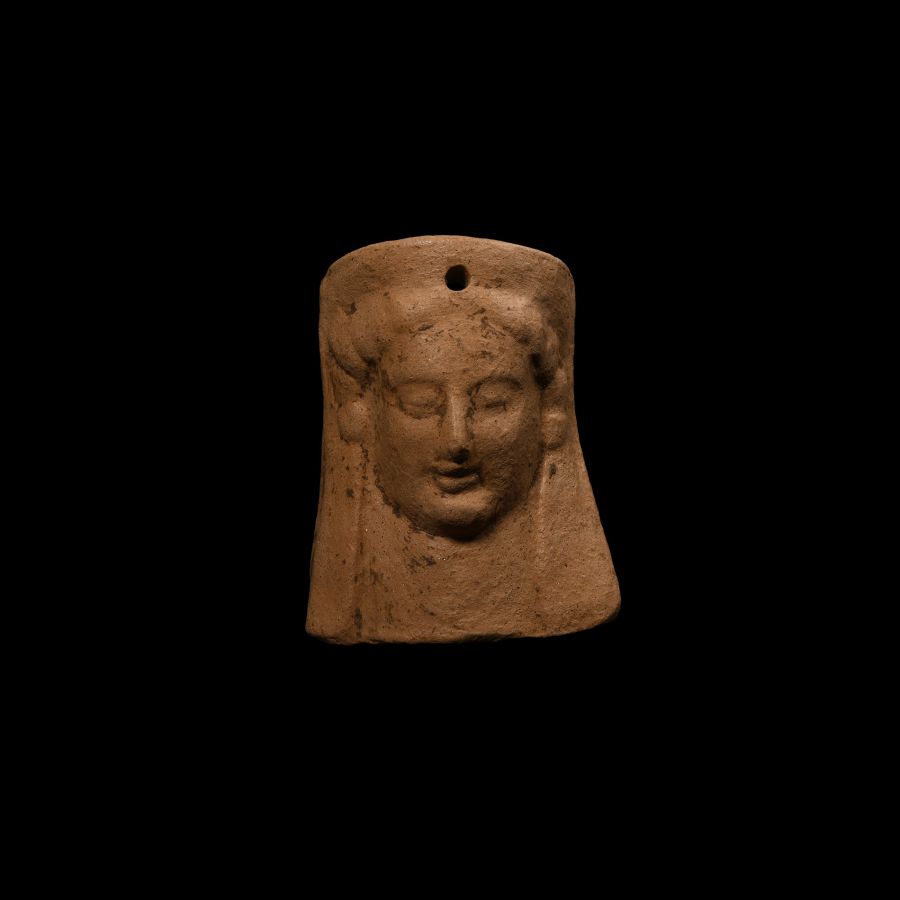
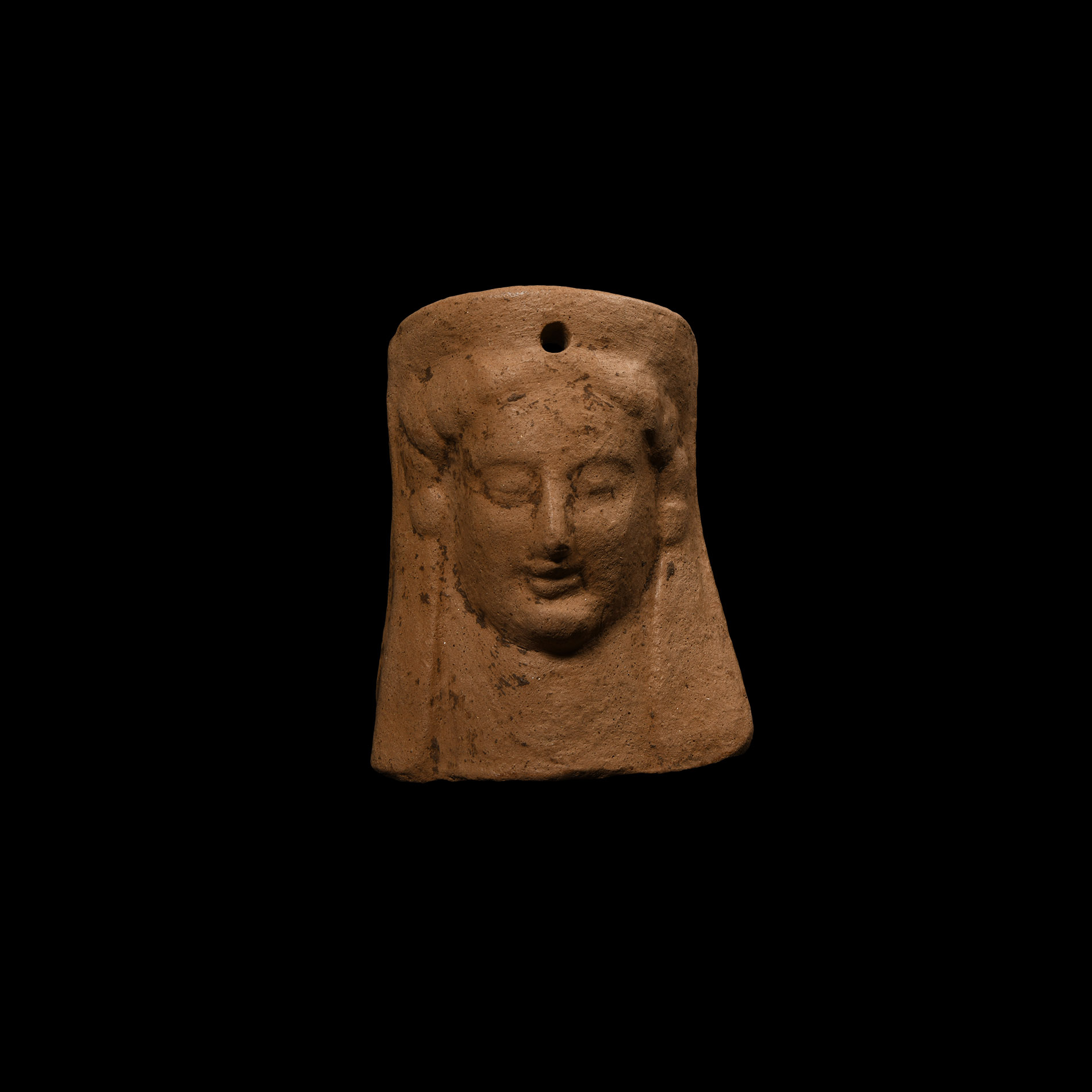
Greek Terracotta Protome Mask
CIRCA 4TH-3RD CENTURY B.C.
4 in. (127 grams, 10.4 cm).
C-section moulding with female face, pierced at the brow. [No Reserve]
ProvenanceAcquired 1970s-1996.
Property of a North American collector.
London collection, 2016.
Cf. similar in the collection of the British Museum under accession no.1814,0704.808.
CONDITIONTimeLine Auctions follows a vetting process to ensure the authenticity and legality of all items, reinforcing our commitment to integrity and responsible trading. Each antiquity, antique, and coin lot undergoes thorough examination by a vetting committee of at least ten external specialists, professional trade association members, scientists, and archaeologists: Our Vetting Process
AUCTIONS:
TimeLine is a leading auction house specialising in antiquities, ancient art, collectables, natural history, coins, medals, and books. Our auctions offer museums, collectors, historians, and enthusiasts the opportunity to acquire unique and historically significant pieces.
-
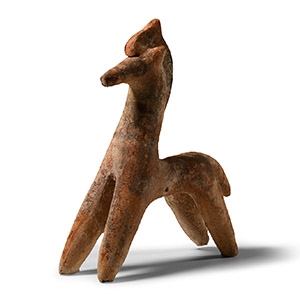
Cypriot Bichrome Ware Terracotta Horse Model
Circa 850-750 B.C.Sold for (Inc. bp): £611
Modelled in the round, detailed in black and crimson. 168 grams, 13 cm high
Lt. Col. H.A. Hill, R.A.M.C. while stationed in Cyprus as S.M.O in the 1920s, thence by descent. -
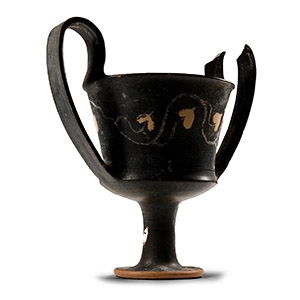
South Italian Blackware Kantharos with Ivy Branch
5th-4th century B.C.Estimate: £1,500 - 2,000 (‡+bp*)
Opening Bid: £750
The high-handled drinking cup with carinated lower body, discoid feet and vines painted to the equator. 525 grams, 22.2 cm
Acquired in the late-1980. Ex S.A. collection. -
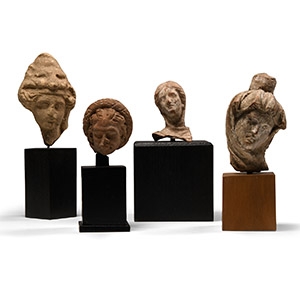
Greek Terracotta Head Collection
3rd-2nd century B.C.Sold for (Inc. bp): £1,690
Each modelled in the round and and derived from a larger female figure, some wearing diadems and some with draped heads; each mounted on a custom-made display base. 491 grams total, 9.5-13.5 cm high including stand
Acquired in the 1970s. Ex European private collection. This lot has been checked against the Interpol Database of stolen works of art and is accompanied by search certificate no.11795-206534.
These figurines reflect sculptural prototypes. Interestingly the head of one of the women is draped in a himation, and the head is turned slightly to the right like the terracotta of Amisos which represents a dancer. These figurines were most probably manufactured in Hellenistic cities by craftsmen who used either light yellow or dark brown clay. After the firing, the surface of the clay became reddish, while the core became grey-brown. The majority of the figurines were made from untreated clay with many impurities, such as coarse grain. Due to the quality of the clay the surface of the figurines was often rugged, despite the retouch, but were painted with vivid colours, as is still visible on the pink polos on one of the heads.
