
Loading, please wait...
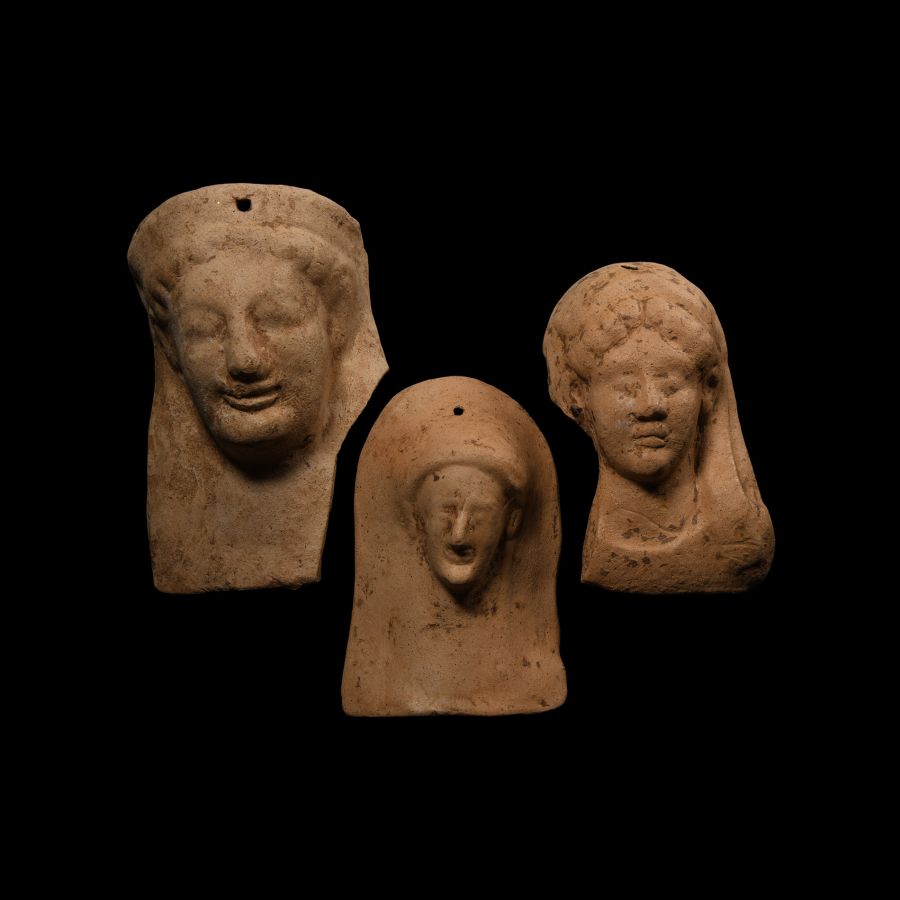
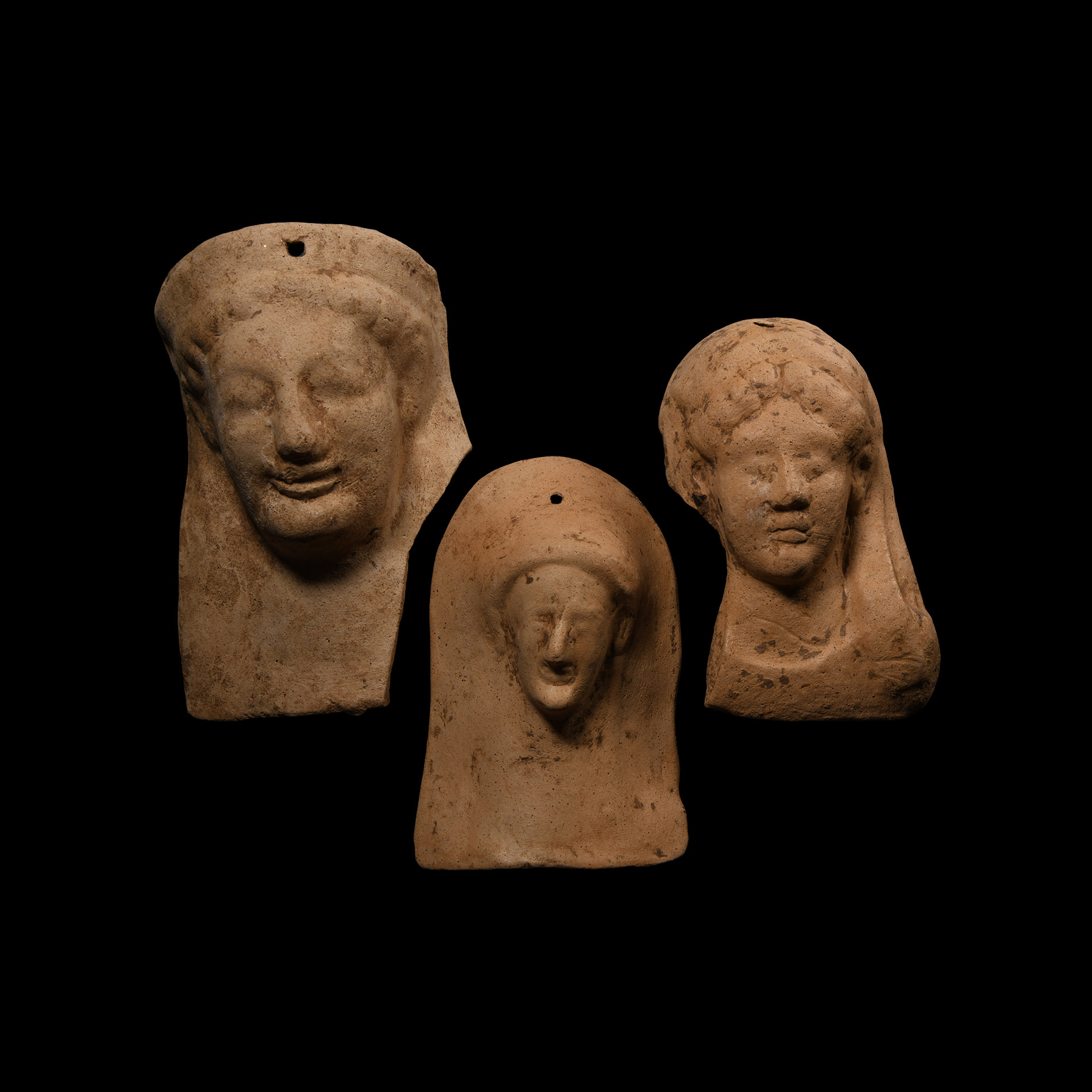
LOT 0545
Greek Terracotta Protome Mask Collection
CIRCA 4TH-3RD CENTURY B.C.
4 - 4 3/4 in. (290 grams total, 10.3-11.9 cm).
Three ceramic masks each moulded with a female face, pierced at the brow. [3, No Reserve]
ProvenanceAcquired 1970s-1996.
Property of a North American collector.
London collection, 2016.
Cf. similar in the collection of the British Museum under accession no.1814,0704.808.
CONDITIONTimeLine Auctions follows a vetting process to ensure the authenticity and legality of all items, reinforcing our commitment to integrity and responsible trading. Each antiquity, antique, and coin lot undergoes thorough examination by a vetting committee of at least ten external specialists, professional trade association members, scientists, and archaeologists: Our Vetting Process
AUCTIONS:
TimeLine is a leading auction house specialising in antiquities, ancient art, collectables, natural history, coins, medals, and books. Our auctions offer museums, collectors, historians, and enthusiasts the opportunity to acquire unique and historically significant pieces.
-
.jpg)
Cypriot Terracotta Goddess Figurine
Late 2nd millennium B.C.Sold for (Inc. bp): £1,690
With columnar body and flared base, arms raised, applied domed breasts, pinched facial features with applied mouth and ears; applied band to the brow for the hair or headdress; remains of coral-pink painted detailing. 299 grams, 20.2 cm
From the collection of French scholar and diplomat Auguste Dozon (1822-1890). Subsequently Hotel Des Ventes Monte Carlo, 6th May 2018, lot 7. With French cultural property passport. -
.jpg)
Greek Bronze Bow Fibula
8th-7th century B.C.Sold for (Inc. bp): £124
The keeled bow with a central bulb, integral pin and large catch-plate. 29 grams, 89 mm
From the family collection of a Surrey gentleman since before 1960.
The function of the catch-plate fibulae was utilitarian and decorative, they were used for woollen clothing (Herodotus V, 87) and they have been found in houses, tombs and as votive offerings in sanctuaries. Our fibula is an early type, very often found in the graves of the Greek colonies of Southern Italy and widespread in the Magna Graecia. This typology was introduced there by the Greeks. Like all female fibulae, it functioned as a clothing fastener, usually worn as a pair on each shoulder. -
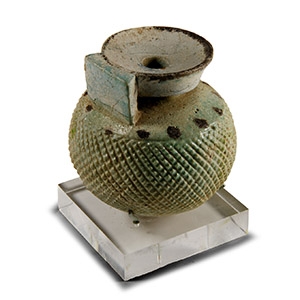
Greek Aryballos Perfume Jar
Circa 6th century B.C.Sold for (Inc. bp): £2,210
Bulbous-bodied with dished rim ad short strap handle, decorative painted trail to the lip, spots to the shoulder and incised cross-hatching to the lower body; accompanied by a custom-made display stand. 104 grams, 63 mm (149 grams total, 82 mm high including stand)
Ex Swiss private collection, C.A., Geneva (1961-2000). Thence in a French collection. with Charles Ede Limited, catalogue 183, item number 31, 2011. Accompanied by a copy of French cultural passport number 116789, dated 15 April 2010. Accompanied by a copy of an Art Loss Register certificate no.S00048851, dated 3 June 2011.
