Loading, please wait...

Use mousewheel to zoom in and out, click to enlarge

Details

LOT 0599

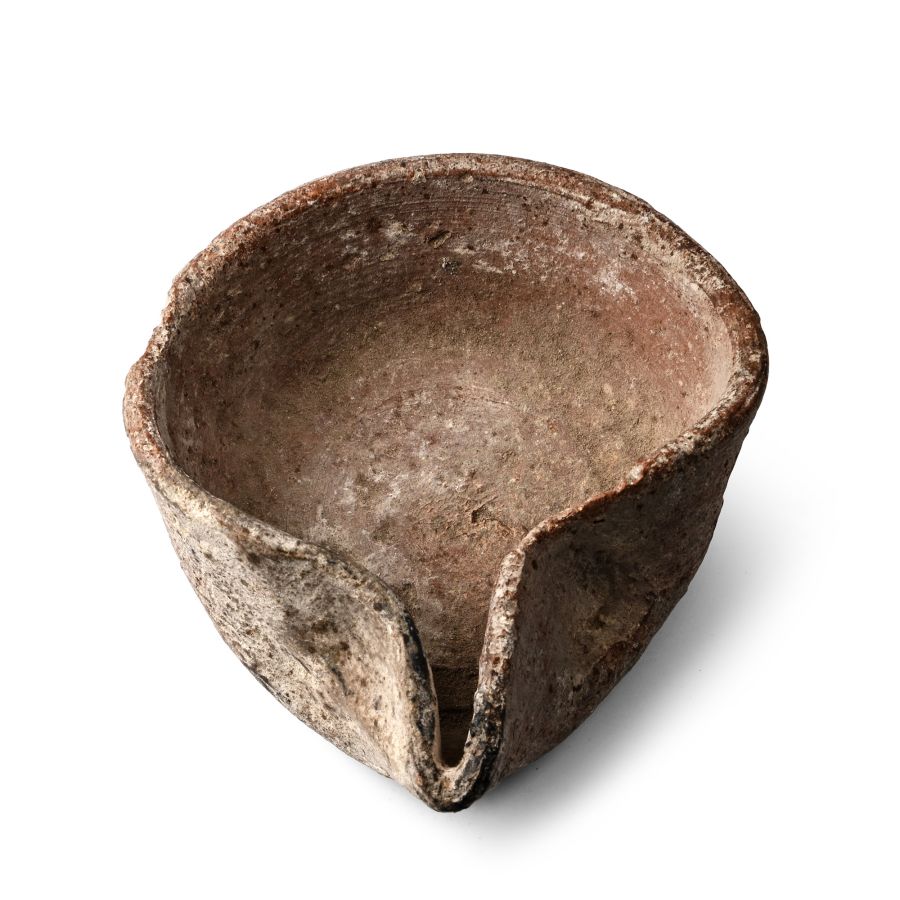
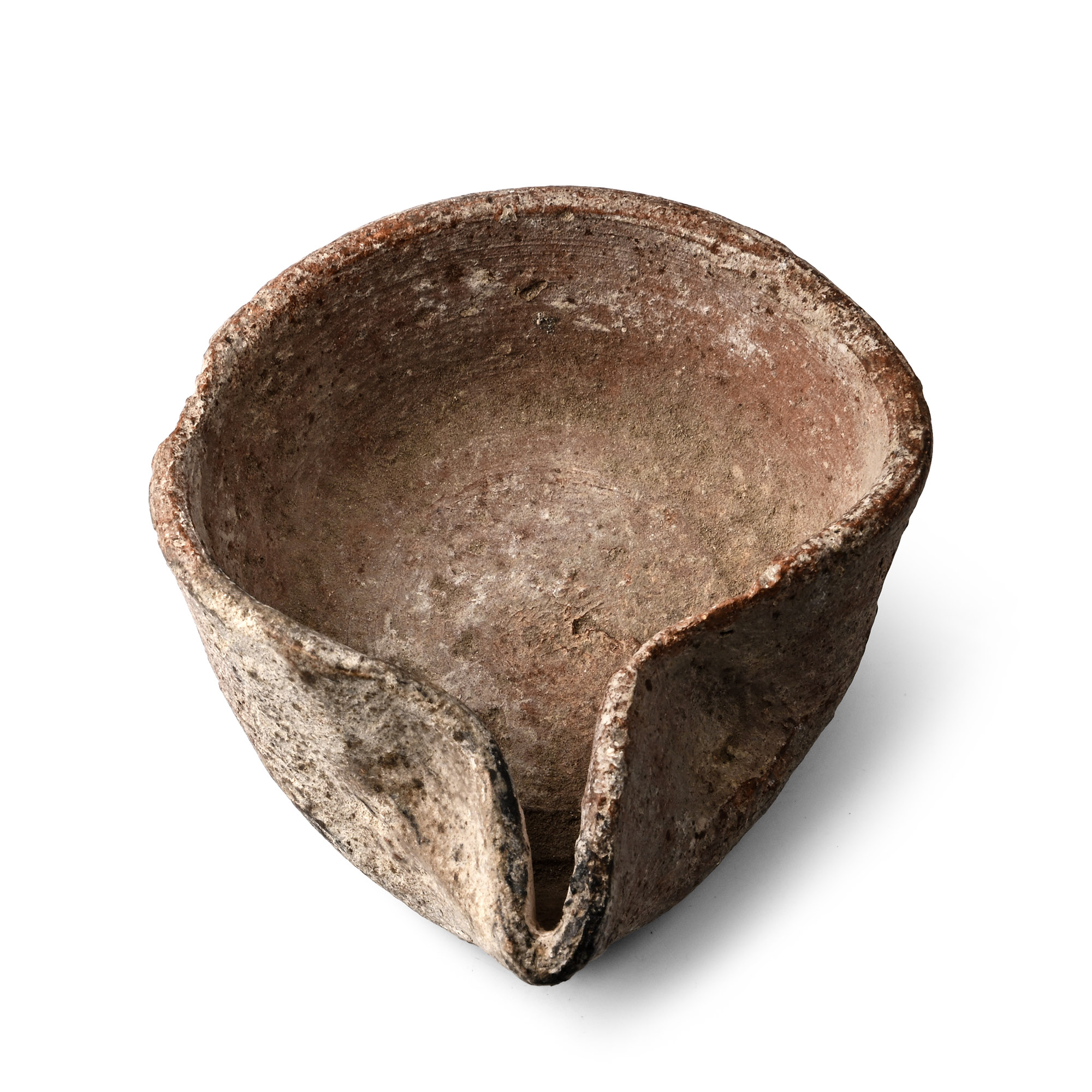
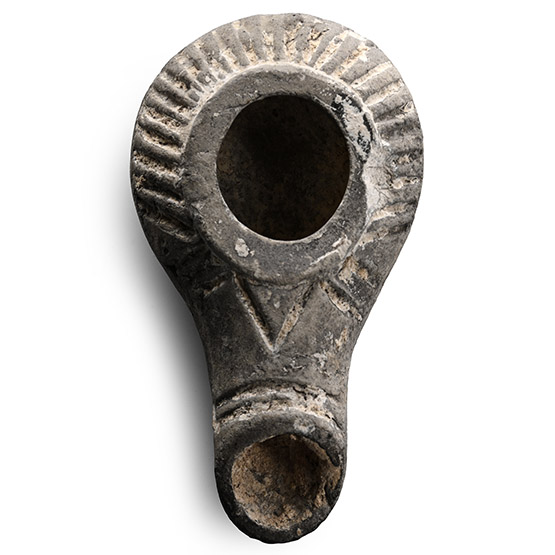
Greek Terracotta Pinched Rim Oil Lamp

HELLENISTIC, 2ND-1ST CENTURY B.C.

3 3/8 in. (73 grams, 85 mm).

Discoid in plan with sidewall pinched to form a nozzle; with old collector's tag '13 oil lamp of Hellenistic period'. [No Reserve]

Provenance

From the Lloyd and Jeanne Raport collection, Washington, D.C. and Florida, USA, formed between 1972-2000.
Acquired through Bonhams, London, UK.

CONDITION

VETTING:

TimeLine Auctions follows a vetting process to ensure the authenticity and legality of all items, reinforcing our commitment to integrity and responsible trading. Each antiquity, antique, and coin lot undergoes thorough examination by a vetting committee of at least ten external specialists, professional trade association members, scientists, and archaeologists: Our Vetting Process


AUCTIONS:

TimeLine is a leading auction house specialising in antiquities, ancient art, collectables, natural history, coins, medals, and books. Our auctions offer museums, collectors, historians, and enthusiasts the opportunity to acquire unique and historically significant pieces.

LOT 0599

Greek Terracotta Pinched Rim Oil Lamp

Sold for (Inc. bp): £117

Print page

RELATED LOTS

  • Greek Attic Red-Figure Fragment Collection
    Greek Attic Red-Figure Fragment Collection
    Early 5th century B.C.

    Sold for (Inc. bp): £975

    Comprising four irregular fragments depicting an owl with a dotted body and large circular eyes, a youthful nude wearing a laurel wreath, a draped young female, male head with long hair wearing a wreath of vine leaves. 26 grams total, 36-70 mm


    From the stock of a former UK antiquarian, acquired at trade fairs and from private collection formed in the 1980s-1990s. Private collection, Europe.

    Lot Details

  • Greek Silver-Gilt Lion-Head Military Phalera
    Greek Silver-Gilt Lion-Head Military Phalera
    Hellenistic, 2nd century B.C.

    Estimate: £40,000 - 60,000 (+bp*)

    Opening Bid: £22,222

    Originally forming part of an elite horse-harness assemblage, made as a circular disc with a slightly flared rim and originally fitted with rear attachment loops (now lost); strongly modelled frontal lion’s head in high relief at the centre, gripping a spear or arrow in its jaws; the lion’s mane rendered in thick, slightly undulating locks, with additional chasing to suggest twisted strands, the facial features treated with pronounced linear and punched details: herringbone-patterned notches articulating the nose and whiskers, small star- or whirl-rosette motifs chiselled on the cheeks and chin; the central medallion framed by a raised ridge and a belted garland composed of pointed laurel leaves, dots imitating fruits, and four tied segments, a broad concentric frieze of alternating vegetal motifs surrounding, including narrow palmettes, lotus flowers, and oval blossoms with serrated petals, arranged rhythmically with alternating orientations; the floral elements originally selectively gilded against an ungilded silver ground, the outer flange decorated with a further leaf garland, and pierced with pairs of holes for attachment to leather straps. 451 grams, 27 cm


    From the Walter Bizzarri family collection, 19th century. Accompanied by a copy of an examination report number 101/2018 by Dr Habil Mikhail Treister, 22 September 2018. Accompanied by an expertise from Striptwist Ltd, a London-based company run by historical precious metal specialist Dr Jack Ogden, reference number 180701. Accompanied by copies of the relevant Apollo magazine pages. Accompanied by an academic report by Dr Raffaele D’Amato. This lot has been checked against the Interpol Database of stolen works of art and is accompanied by search certificate number no.10275-168732.

    Stylistically and typologically, the phalera belongs to a small and early group of large Hellenistic shoulder phalerae known from the North Pontic region. Comparative analysis places it slightly later than the celebrated examples from the Fedulov Treasure, suggesting a date in the first half—possibly the first quarter—of the 2nd century BC. While the iconography of the lion with a spear in its mouth appears to derive from Bosporan royal or civic imagery of the late 3rd century BC, the more schematic execution of the relief and ornament suggests production in a provincial workshop operating within the cultural sphere of the Bosporan Kingdom rather than at its principal centres. Such monumental phalerae are widely understood as prestige objects, likely produced as diplomatic gifts or ceremonial donations for members of the nomadic elite in contact with the Bosporan state. The scale, technical ambition, and iconographic complexity of the present example firmly support its interpretation as a high-status object within this tradition. Technical examination indicates that the phalera was raised from a single sheet of silver, worked predominantly by matrix hammering from the reverse and refined by extensive chasing from the front. The vegetal ornament and figural details were executed freehand, as evidenced by subtle variations among repeated elements. Gilding was primarily achieved by foil gilding, with thin gold sheets burnished onto the silver surface; minor traces of mercury detected in some gilded areas may indicate early or corrective use of mercury amalgam gilding, a technique just beginning to appear at this period

    Lot Details

  • Greek Terracotta Oil Lamp
    Greek Terracotta Oil Lamp
    Hellenistic, circa 3rd-2nd century B.C.

    Sold for (Inc. bp): £39

    Rounded body with large central filler hole and pointed lug on the shoulder, the rim with a low-relief ovolo decoration, elongated nozzle with scooped nozzle; low basal ring.; old collector's label 'MH1932'. 34 grams, 65 mm


    From an old West Country, UK, collection, sold at auction. From the private collection of a West Midlands lady collector.

    Lot Details

Stay up-to-date with the latest from TimeLine Auctions by joining our mailing list