
Loading, please wait...
LOT 0668
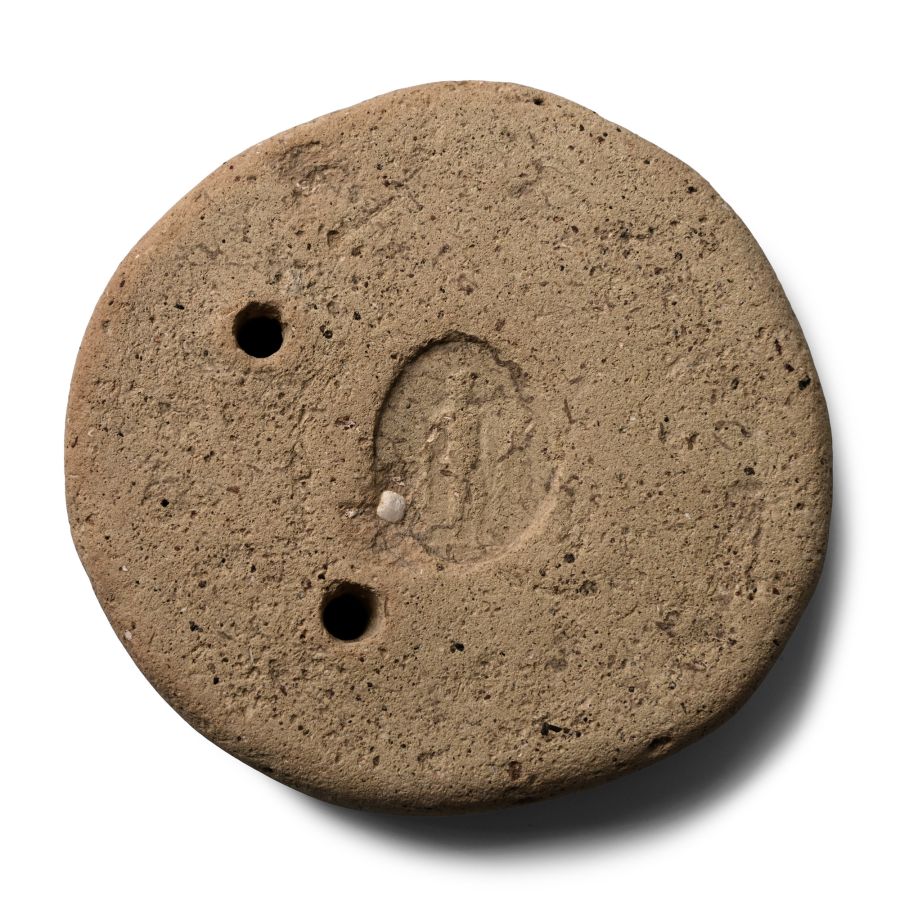
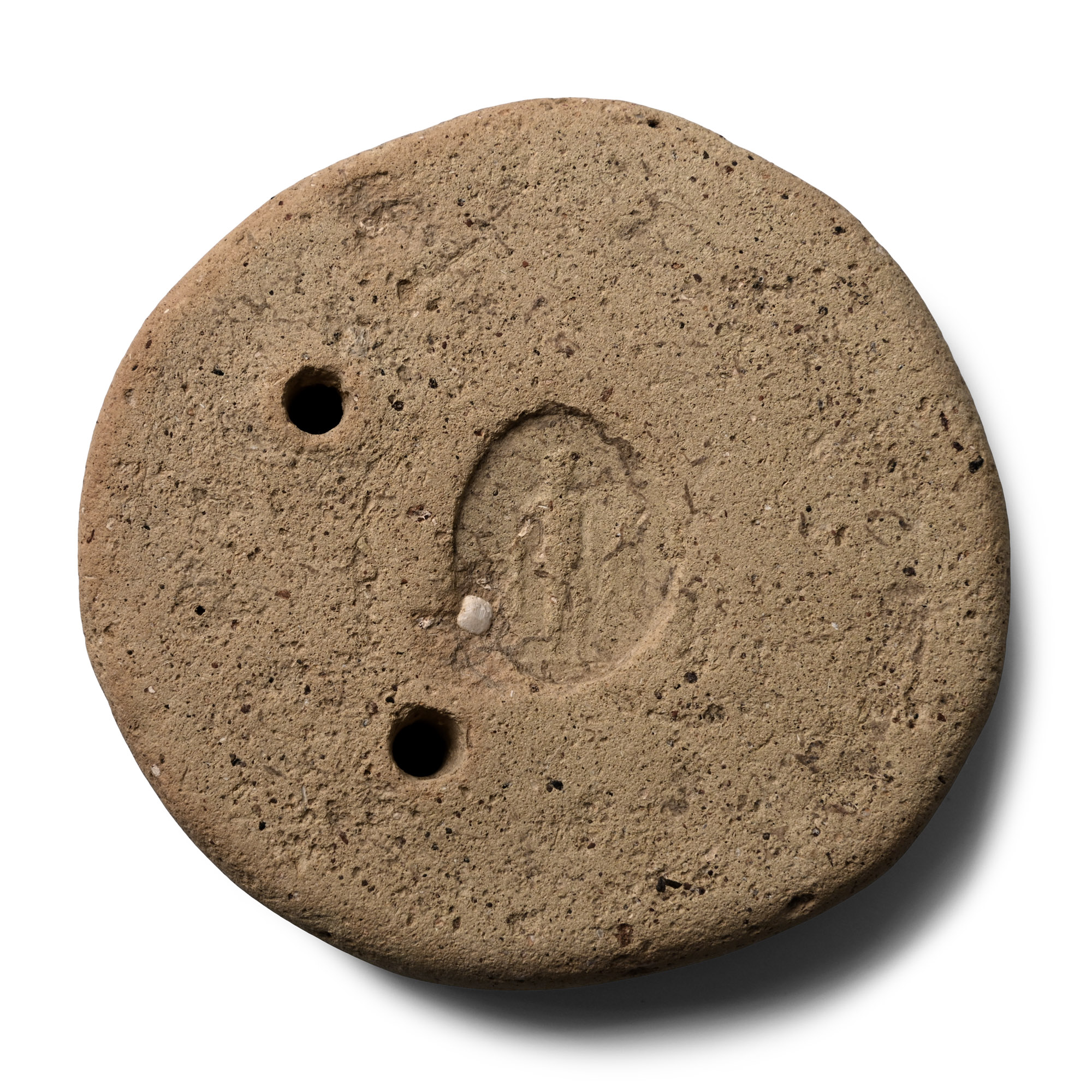
Greek Terracotta Pendant with Stamp
6TH-4TH CENTURY B.C.
3 in. (90 grams, 76 mm).
Thick disc with rounded edge, two suspension holes, impressed ellipsoid panel with standing figure of Hermes. [No Reserve]
ProvenanceAcquired on the European art market in the early 2000s.
with Galerie Rhéa, Zurich, Switzerland.
This lot is accompanied by an illustrated lot declaration signed by the Head of the Antiquities Department, Dr Raffaele D'Amato.
TimeLine Auctions follows a vetting process to ensure the authenticity and legality of all items, reinforcing our commitment to integrity and responsible trading. Each antiquity, antique, and coin lot undergoes thorough examination by a vetting committee of at least ten external specialists, professional trade association members, scientists, and archaeologists: Our Vetting Process
AUCTIONS:
TimeLine is a leading auction house specialising in antiquities, ancient art, collectables, natural history, coins, medals, and books. Our auctions offer museums, collectors, historians, and enthusiasts the opportunity to acquire unique and historically significant pieces.
-
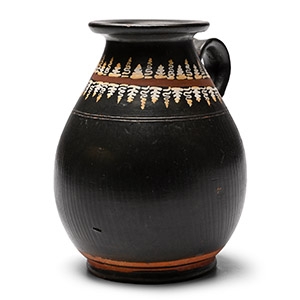
Greek Gnathian Black-Glazed Jug with Grape Vines
South Italic, 5th-3rd century B.C.Sold for (Inc. bp): £442
Blackware juglet with pedestal base, bulbous body, waisted neck and everted rim; the applied handle to the rear; band of red flanked by cream and white fronds to the shoulder. 155 grams, 11 cm
From the private collection of a Canadian gentleman living in Essex, UK, formed since the 1920s-circa 1990. Property of an Essex lady until the late 1990s; thence by descent. From the private collection of an Essex gentleman since the late 1990s. This lot is accompanied by an illustrated lot declaration signed by the Head of the Antiquities Department, Dr Raffaele D'Amato. -
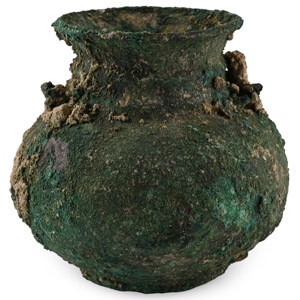
Parthian Bronze Vessel
1st-2nd century A.D.Sold for (Inc. bp): £169
Squat in profile with broad foot, ribs to the neck and deep flared rim; remains of loops for suspension. 125 grams, 78 mm wide
Ex London, UK, collection, 1990-2000. This lot is accompanied by an illustrated lot declaration signed by the Head of the Antiquities Department, Dr Raffaele D'Amato. -
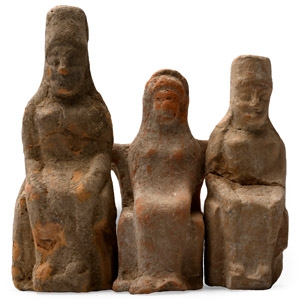
Archaic Greek Terracotta Seated Goddess Group
6th century B.C.Sold for (Inc. bp): £208
Each seated on a high-backed throne, wearing a polos headdress with two long braids falling from underneath the headdress, wearing a long chiton. 266 grams total, 9.5-11.7 cm
with H.A.C., Basel, prior 1999. This lot is accompanied by an illustrated lot declaration signed by the Head of the Antiquities Department, Dr Raffaele D'Amato.
