
Loading, please wait...


LOT 0774
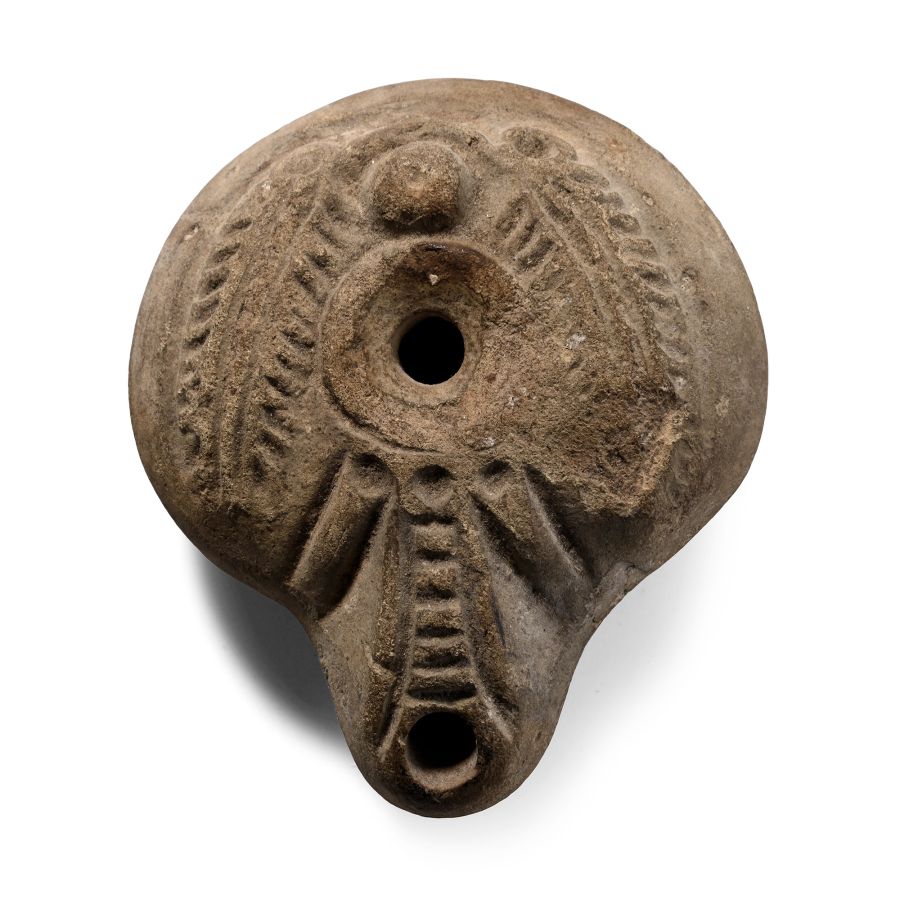
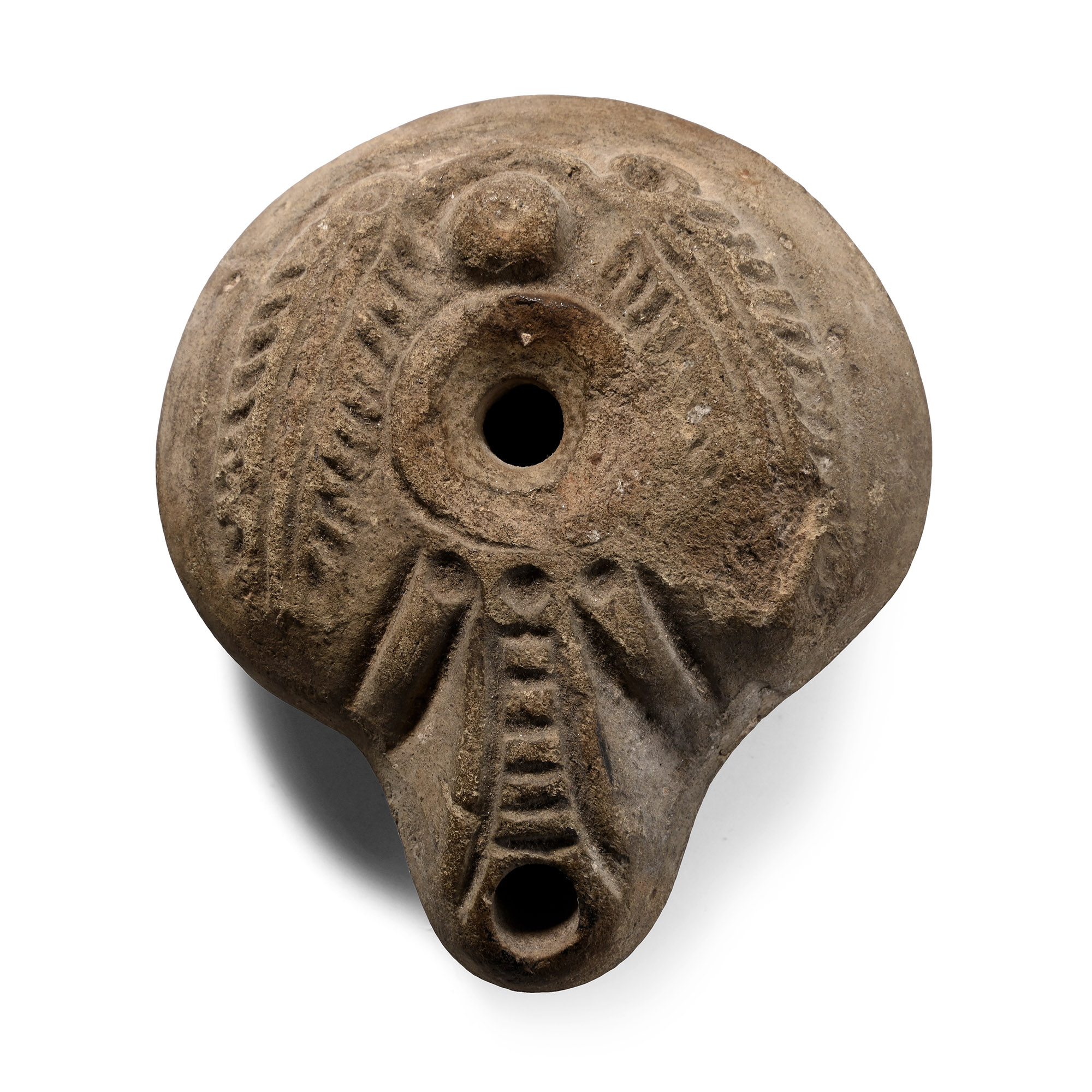
Greek Terracotta Oil Lamp
CIRCA 1ST CENTURY B.C.
3 1/4 in. (85 grams, 83 mm).
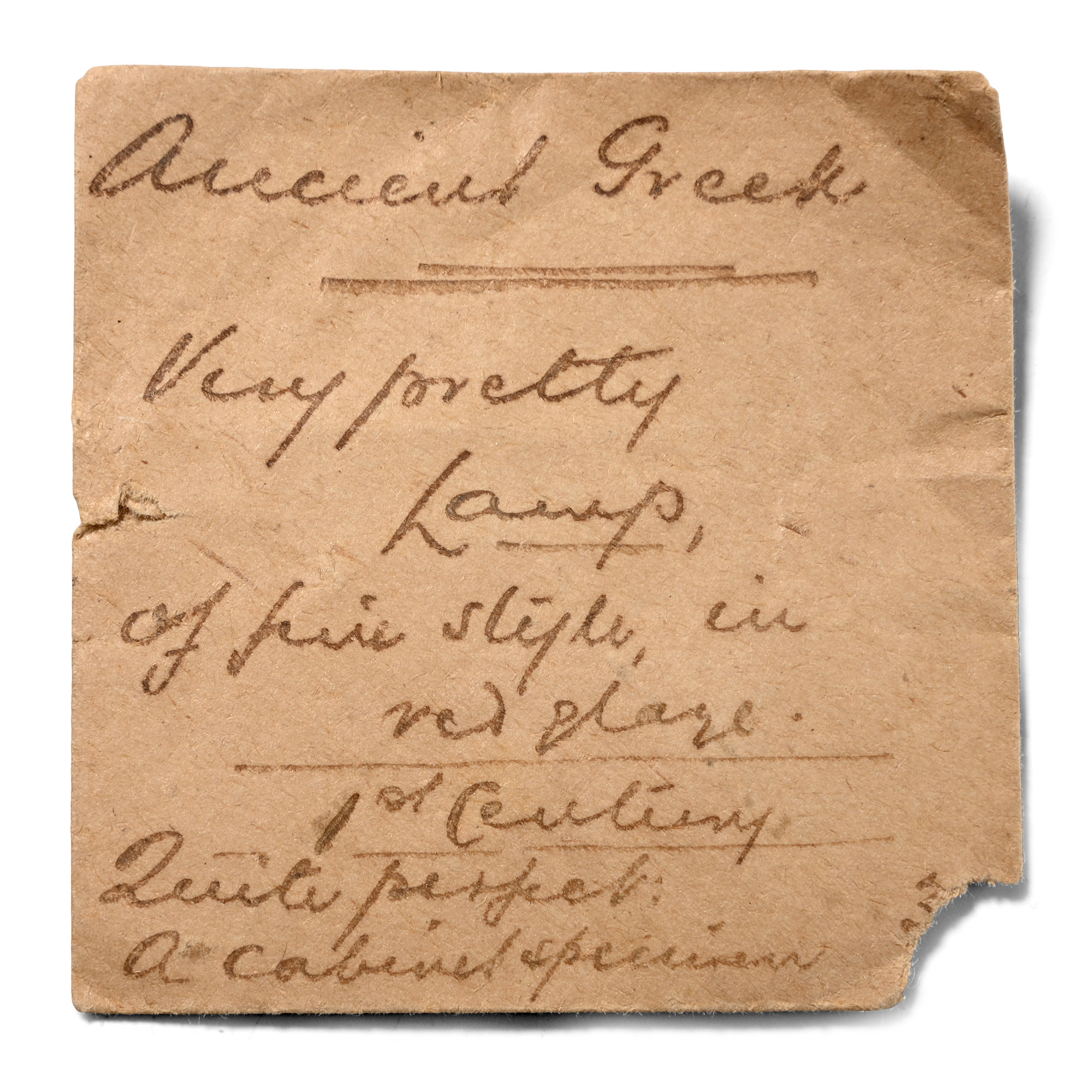
Biconvex in profile with short nozzle and impressed 'ear of wheat' motif; with old collector's ticket 'Ancient Greek Very pretty lamp of fine style in red glaze. 1st century. Quite perfect: a cabinet specimen.' [No Reserve]
ProvenanceFrom Alexandria.
From the estate of a deceased Sussex private collector since the early 20th century.
Accompanied by an old original handwritten collector's ticket.
TimeLine Auctions follows a vetting process to ensure the authenticity and legality of all items, reinforcing our commitment to integrity and responsible trading. Each antiquity, antique, and coin lot undergoes thorough examination by a vetting committee of at least ten external specialists, professional trade association members, scientists, and archaeologists: Our Vetting Process
AUCTIONS:
TimeLine is a leading auction house specialising in antiquities, ancient art, collectables, natural history, coins, medals, and books. Our auctions offer museums, collectors, historians, and enthusiasts the opportunity to acquire unique and historically significant pieces.
LOT 0774
Greek Terracotta Oil Lamp
Estimate £80 - 100€93 - 116 (for guidance only)$108 - 135 (for guidance only)
-
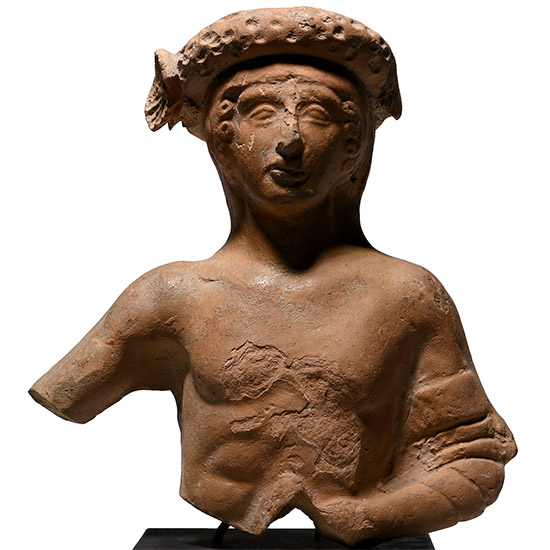
Greek Terracotta Figure of Young Dionysos
5th century B.C.Estimate: £1,200 - 1,700 (‡+bp*)
Opening Bid: £675
Modelled as a hollow torso nude of a youthful male, with a beardless face, full lips, tall nose and almond-shaped eyes; short curly hair with a thick wreath including a rosette, folded fabric draped over the right hand; mounted on a custom-made stand. 327 grams total, 15 cm including stand
Ex Prof. Hans Dahn (1919-2019), Lausanne; acquired 12 March 1954 from Donati in Basel (Dahn's list no.105).
It remains a matter of debate who these clay symposiasts- characterised by their specific, sometimes very imaginative headdresses- represent. They have been variously interpreted as Dionysos, heroised deceased persons or representative images of the urban elite. The type was particularly popular in Taranto. The recumbent man probably held a kantharos in his left hand and wore a coat that was tightly wrapped around his left arm. -
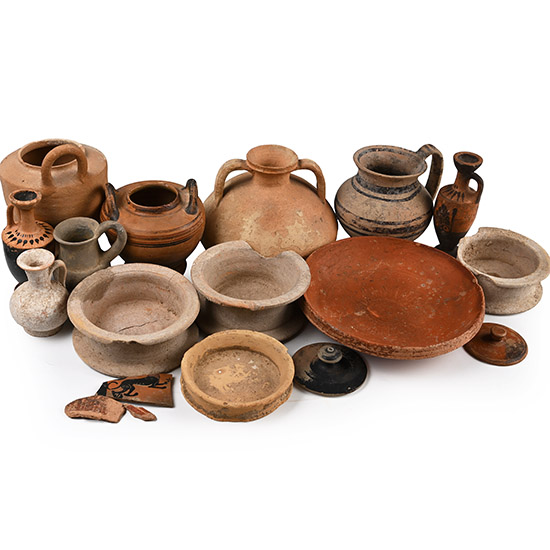
Greek Collection of Terracotta Vessels and Bases
5th-3rd century B.C.Estimate: £700 - 900 (‡+bp*)
Bids: 2 | Current Bid: £400
Mixed group of artefacts, including: a vessel fragment with a panther; a single-handled jug with painted circumferential bands; a low redware dish with an incised sunburst motif; a small lekythos with palmette design; a small lekythos with painted decoration; a squat vessel with two strap handles and a short neck, low relief spiral decoration on the base. 2.6 kg total, 3-17.5 cm
Ex Prof. Kurt Alder, Riehen; thence by descent. 1. two clay vessels and clay dish: ex Jacob Hirsch; with Galerie Fischer, Lucerne, Auction 17 November 1976, no.1493. 2. Apulian lekythos with palmettes: with Galerie Fischer, Lucerne, Auction 17 November 1976, no.1542. 3. Apulian lekythos: with Galerie Fischer, Lucerne, Auction 16–20, 1976, no.1542. 4. Daunian handled jug: with Galerie Koller, Zurich, Auction 34, no.2532. 5. potsherd fragment: with Münzen und Medaillen AG, Basel. 6. lebes with lid: acquired in September 1975. -
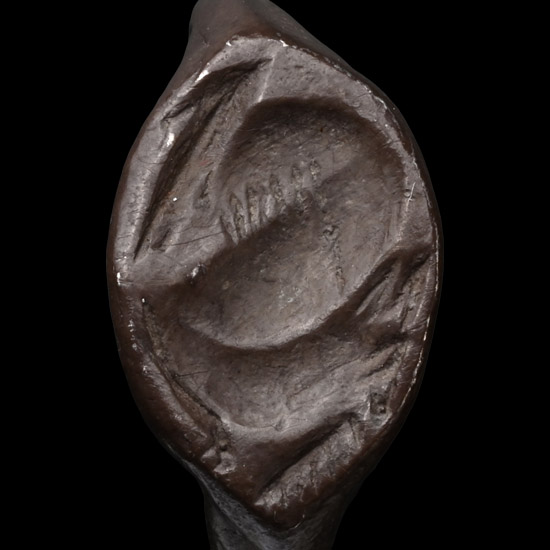
Greek Silver Ring with a Seated Ibex
5th–4th century B.C.Estimate: £150 - 200 (+bp*)
Opening Bid: £75
Comprising a keeled hoop and an elliptical bezel engraved in intaglio with a seated ibex, its head turned back across its body. 3.72 grams, 20.59 mm overall, 16.43 mm internal diameter (approximate size British L 1/2, USA 6, Europe 11.87, Japan 11)
Abelita family collection, acquired during 1980–2015.
