
Loading, please wait...
LOT 0540
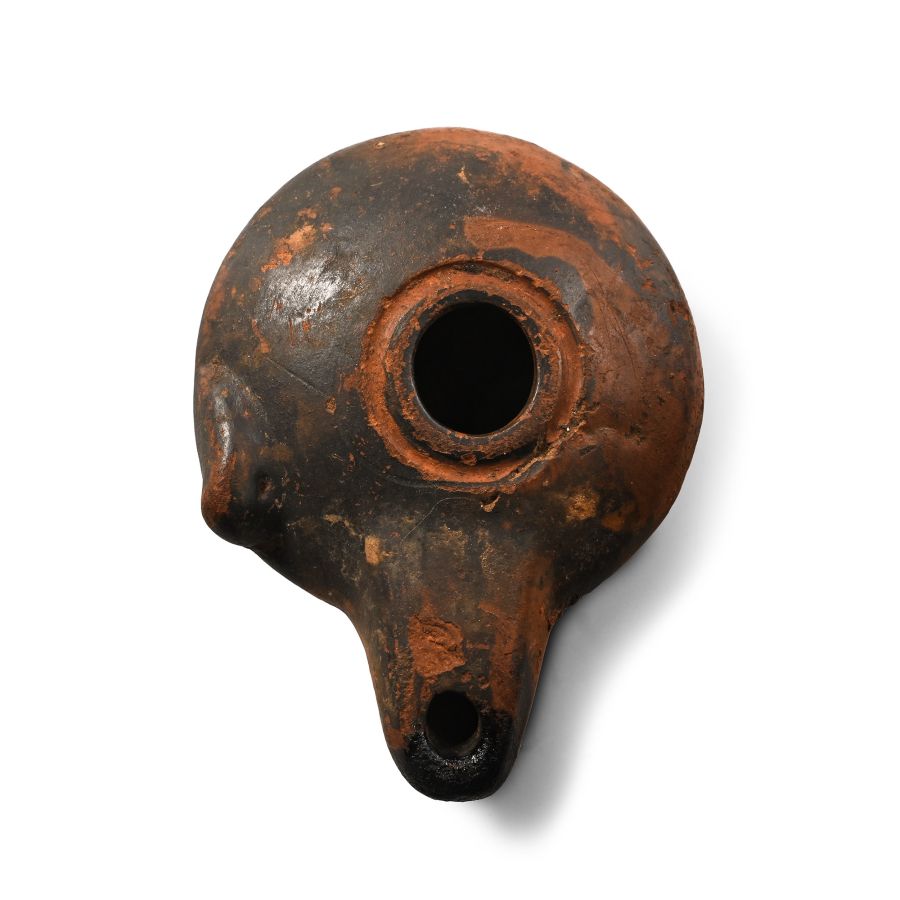
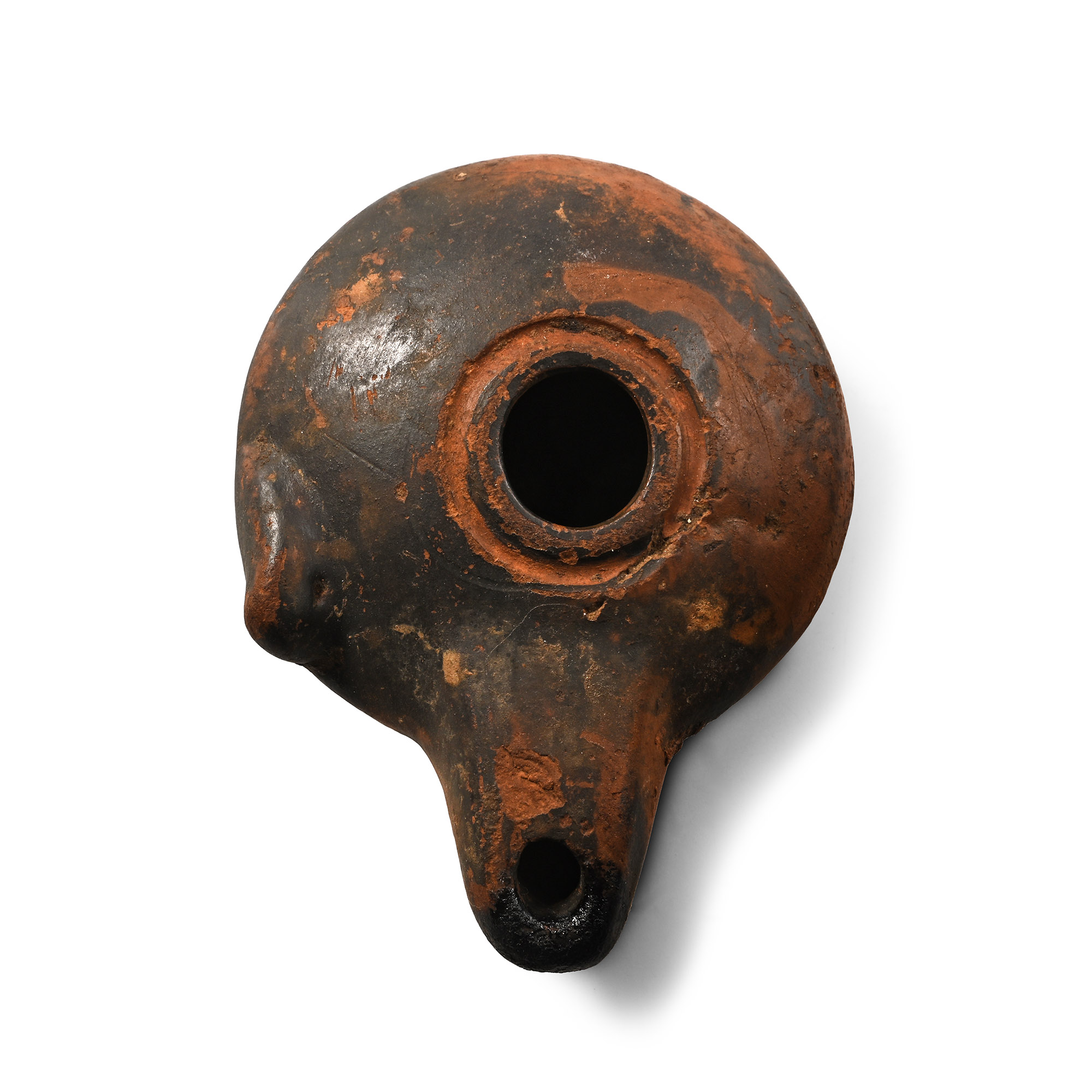
Greek Terracotta Oil Lamp
HELLENISTIC, CIRCA 3RD-2ND CENTURY B.C.
4 in. (103 grams, 99 mm).
Rounded body with large central filler hole and pointed lug on the shoulder, the rim with a low-relief ovolo decoration, elongated nozzle with scooped nozzle; low basal ring. [No Reserve]
ProvenanceFrom a UK collection formed in the 1980s.
Property of an Essex, UK, gentleman.
Cf. Młynarczyk, J., Alexandrian and Alexandria-influenced mould-made lamps of the Hellenistic period, Bar International Series 677, Oxford, 1997, pp.54-57, Type G, fig. 67, for the type.
CONDITIONTimeLine Auctions follows a vetting process to ensure the authenticity and legality of all items, reinforcing our commitment to integrity and responsible trading. Each antiquity, antique, and coin lot undergoes thorough examination by a vetting committee of at least ten external specialists, professional trade association members, scientists, and archaeologists: Our Vetting Process
AUCTIONS:
TimeLine is a leading auction house specialising in antiquities, ancient art, collectables, natural history, coins, medals, and books. Our auctions offer museums, collectors, historians, and enthusiasts the opportunity to acquire unique and historically significant pieces.
-
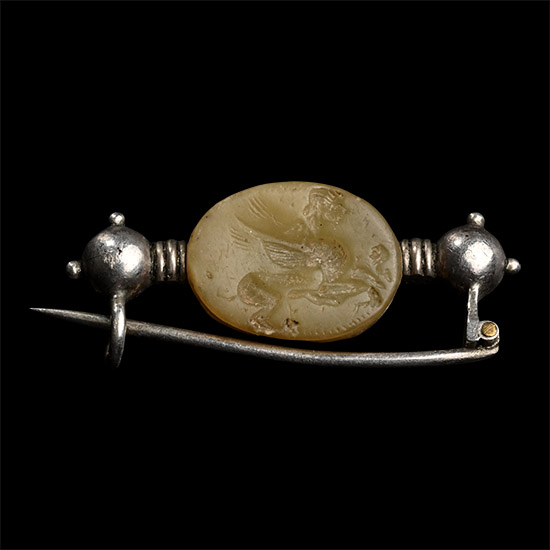
Etruscan Carnelian Scarab with Sphinx in Later Victorian Silver Mount
5th-4th century B.C.Sold for (Inc. bp): £442
Naturalistically carved scarab on an oval base engraved with a leaping sphinx, set in a later silver brooch mount. 5.12 grams, 36 mm
Acquired on the European art market. -
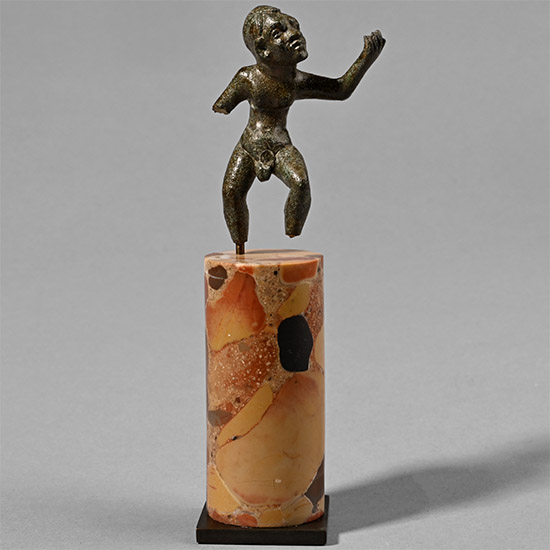
Greek Bronze Statuette of an Alexandrian Dancing Dwarf
Hellenistic, 1st century B.C.-1st century A.D.Estimate: £3,000 - 4,000 (+bp*)
Opening Bid: £1,500
In an active pose with both legs bent and left arm raised dramatically, head tilted to the left; exaggerated facial features, short trimmed hair, slim body with developed pectoral muscles and pronounced kyphosis; mounted on a columnar stand. 295 grams total, 15 cm high imcluding stand
Belgian private art collection of M.A., Brussels, Belgium, 1995. with Gorny and Mosch, 14 December 2011, no.82. This lot has been checked against the Interpol Database of stolen works of art and is accompanied by search certificate number no.13330-258951.
Such figures are often described as ‘grotesques’, yet typically constituted overstated representations of people with dwarfism. Such individuals are invariably shown with exaggerated features such as pot bellies, hunched backs, bald heads, large phalli and angry facial expressions. -
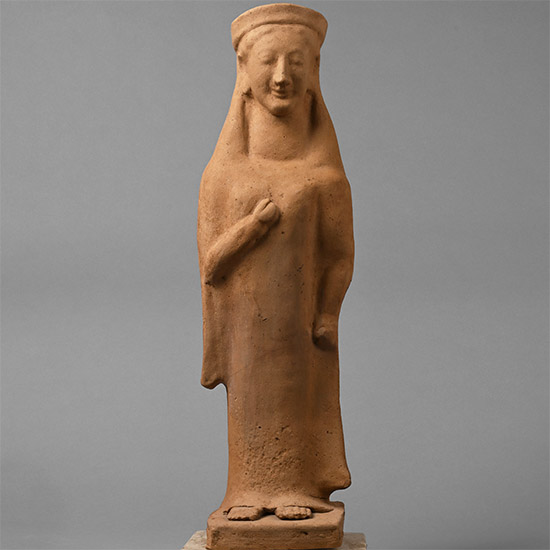
Large Greek Terracotta Figure of a Kore
6th century B.C.Estimate: £4,000 - 6,000 (‡+bp*)
Opening Bid: £2,222
Hollow-formed with scaphoid headdress, long hair hanging behind the shoulders, heavy peplos dress extending to the floor with splayed hem and feet visible beneath; left hand held straight at the thigh, right hand in a fist between the breasts; mounted on a custom-made stand. 6.7 kg total, 57 cm including stand
Swiss private collection, assembled in the 1970s-1980s. with Galerie Serodine, Ascona, Switzerland, 1993. Collection of Dr E.N., Zug, acquired in 1995. This lot has been checked against the Interpol Database of stolen works of art and is accompanied by a search certificate number no.12858-241755.
One of the most typical 6th-century B.C. terracotta female figurines was that of a standing or seated woman wearing a chiton tunic and a himation over it. It was a votive figure offered to the shrines or temples, usually representing the goddess Demeter. The headgear, polos, was an element usually identifying the goddess Demeter or her daughter Persephone. Attica was one of the principal centres of figurine production, but Corinth continued to produce solid standing or seated females with moulded fronts and flat backs.
