
Loading, please wait...
LOT 0585
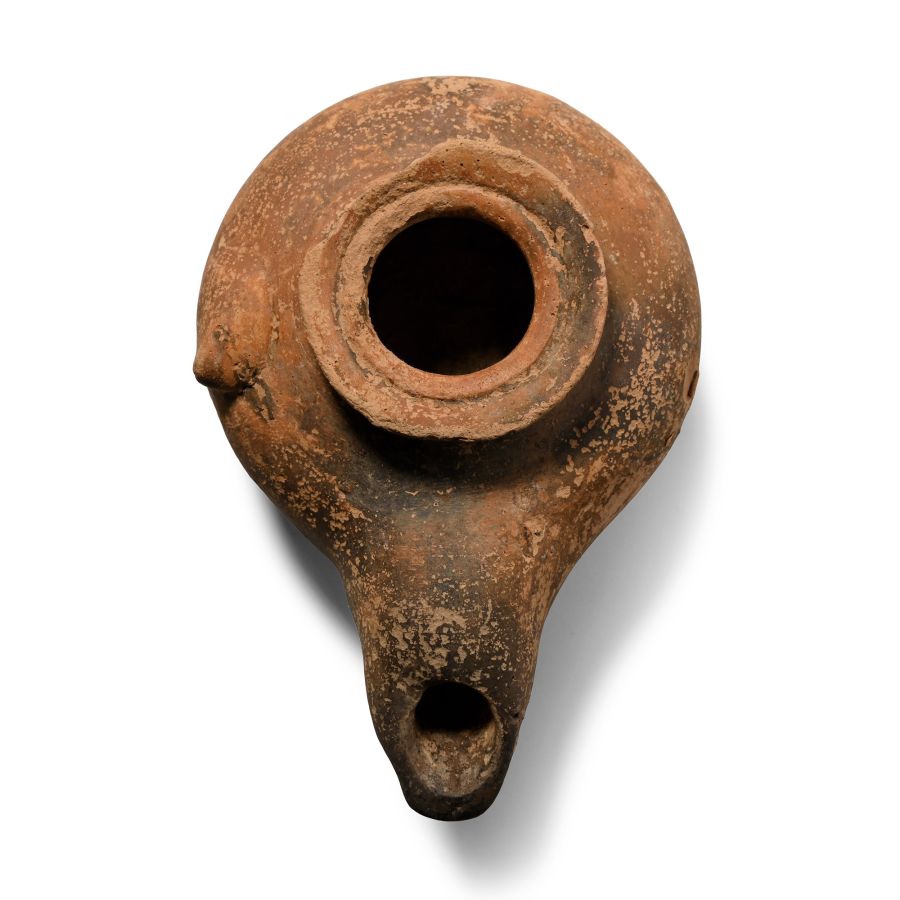
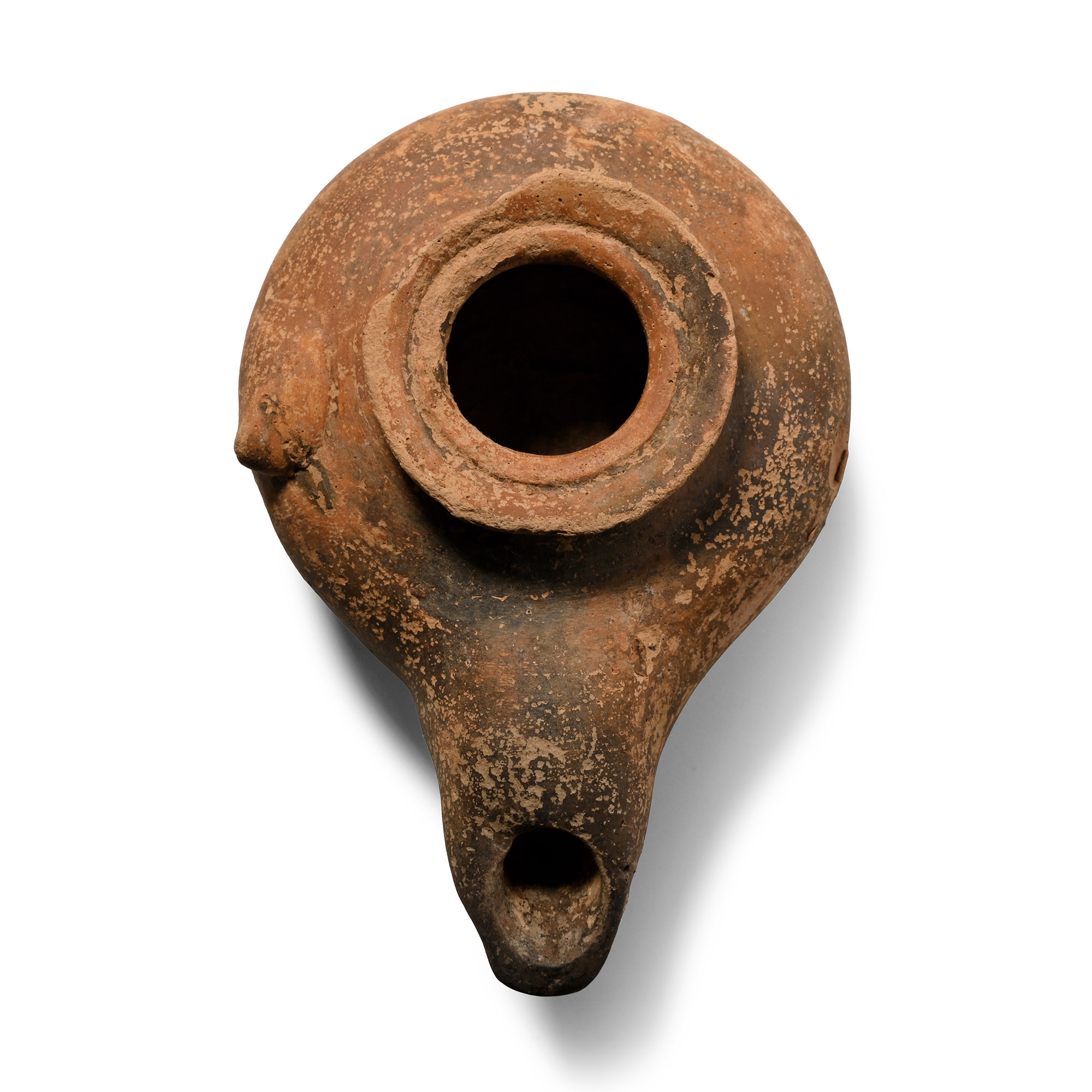
Greek Terracotta Oil Lamp
CYPRUS, CIRCA 4TH CENTURY B.C.
3 1/2 in. (80.5 grams, 88 mm).
Shallow, round body with everted rim on the filler hole, tapering nozzle and low foot. [No Reserve]
ProvenancePrivate collection, Oxfordshire, UK, by direct descent from the collection of Judge George Cyril Griffith-Williams (1893-1983), Supreme Court Judge of the Colony of Cyprus; items having been collected in the 1930s and 1940s in Cyprus during his tenure there.
CONDITIONTimeLine Auctions follows a vetting process to ensure the authenticity and legality of all items, reinforcing our commitment to integrity and responsible trading. Each antiquity, antique, and coin lot undergoes thorough examination by a vetting committee of at least ten external specialists, professional trade association members, scientists, and archaeologists: Our Vetting Process
AUCTIONS:
TimeLine is a leading auction house specialising in antiquities, ancient art, collectables, natural history, coins, medals, and books. Our auctions offer museums, collectors, historians, and enthusiasts the opportunity to acquire unique and historically significant pieces.
-
.jpg)
Greek Terracotta Lekanis Lid
Circa 4th century B.C.Sold for (Inc. bp): £39
Discoid and convex with concentric rings to the upper face, knop handle with central recess. 34.6 grams, 77 mm
From the private collection of Mr Brian Edwards, New Malden, Surrey, UK, formed from the late 1970s-early 1980s; thence by descent. -
.jpg)
Greek Agate Gemstone with Running Hound
Circa 300-200 B.C.Sold for (Inc. bp): £59
With intaglio running hound; chipped; supplied with a museum-quality impression. 0.53 grams, 11.01 mm
From the private collection of a European gentleman (1942-2024), formed since the 1970s. -
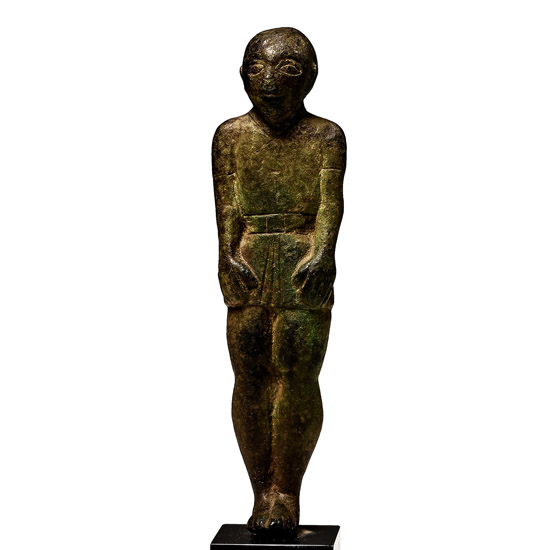
Iberian Bronze Figurine of a Man in Egyptianizing Dress
4th-2nd century B.C.Estimate: £2,500 - 3,500 (‡+bp*)
Opening Bid: £1,250
Standing with arms held straight at the sides, short hair with neck-ring to rear, short-sleeved tunic with pleats to centre-front and rear, wide belt; perhaps a monumental fitting; gas permeation to rear right leg; mounted on a custom-made stand. 77.8 grams total, 10 cm including stand
Private collection, Paris, France, assembled in the 1950s-1960s. with Tessier-Sarrou & Associés, Paris, 2015. European private collection. Accompanied by a copy of an Art Loss Register certificate, no.S00107108. Accompanied by a copy of French cultural export passport no.167803. This lot has been checked against the Interpol Database of stolen works of art and is accompanied by a search certificate number no.12651-234613.
