
Loading, please wait...
LOT 0595
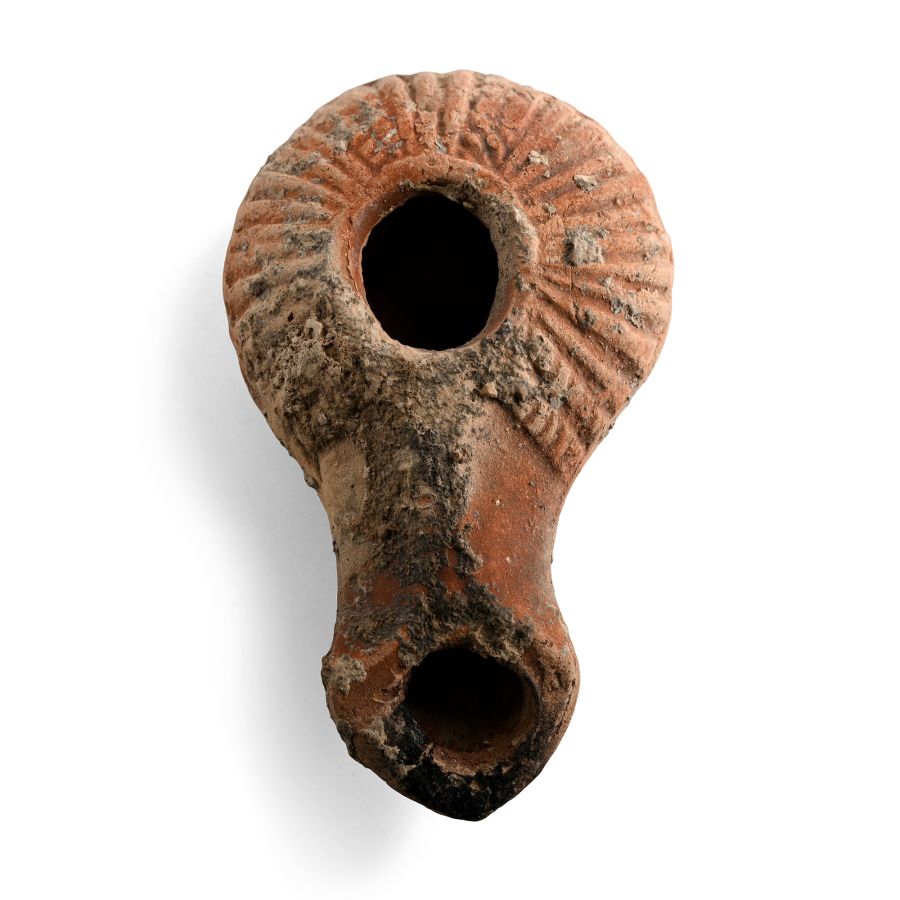
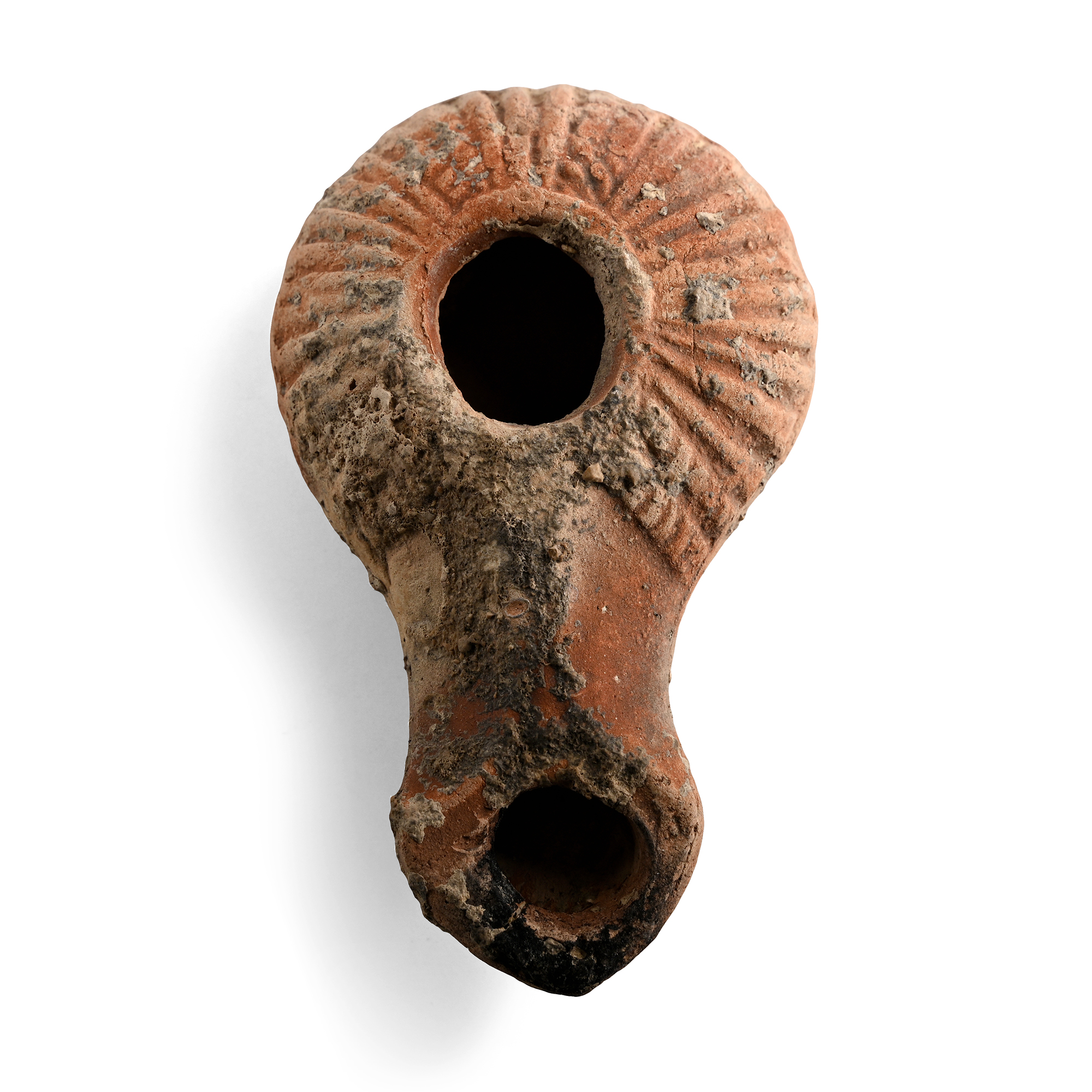
Greek Terracotta Oil Lamp
HELLENISTIC, LATE 2ND-1ST CENTURY B.C.
3 1/2 in. (38.5 grams, 89 mm).
Piriform body with volute nozzle, radiating linear decoration to the shoulder. [No Reserve]
ProvenanceFrom a collection of lamps from a late Scottish gentleman, 1970-1990s.
CONDITIONTimeLine Auctions follows a vetting process to ensure the authenticity and legality of all items, reinforcing our commitment to integrity and responsible trading. Each antiquity, antique, and coin lot undergoes thorough examination by a vetting committee of at least ten external specialists, professional trade association members, scientists, and archaeologists: Our Vetting Process
AUCTIONS:
TimeLine is a leading auction house specialising in antiquities, ancient art, collectables, natural history, coins, medals, and books. Our auctions offer museums, collectors, historians, and enthusiasts the opportunity to acquire unique and historically significant pieces.
-
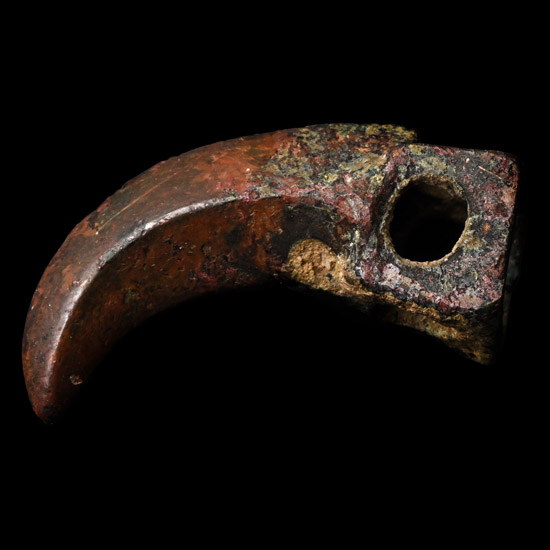
Scythian Bronze Eagle's Talon Pendant
Circa 6th century B.C.Sold for (Inc. bp): £156
Curved square-section hook with cuboid finial pierced on all four sides and to the top. 12.45 grams, 36.19 mm
From the private collection of a European gentleman (1942-2024), formed since the 1970s. -
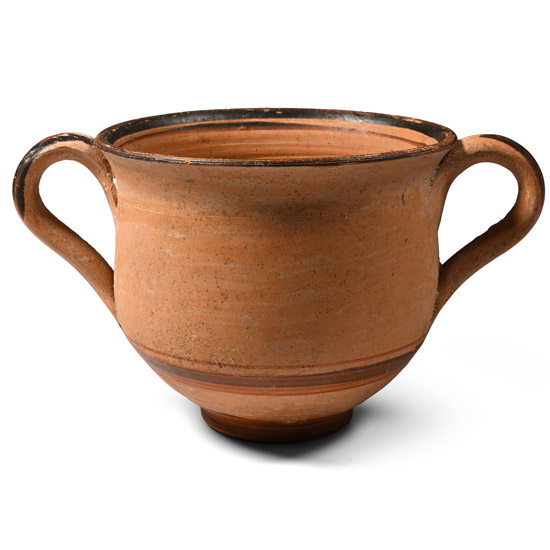
Daunian Terracotta Twin-Handled Cup
5th-4th century B.C.Sold for (Inc. bp): £312
Comprising a bell-shaped thin-walled body with two strap handles and an everted rim, dark lip with a thin circumferential band below; each handle with a lentoid motif; narrow foot with two circumferential bands above. 206 grams, 16 cm wide
From the estate of a Swiss gentleman, Ticino, before 1970. with Galerie Rhéa, Zurich, Switzerland.
Daunian pottery is characterised by unique shapes and decorative motifs, which include geometric patterns, plant and animal motifs, and human figures. The pottery is typically made from a coarse clay, and it is decorated with black or dark brown slip, a type of liquid clay that is applied to the surface of the pottery before firing. -
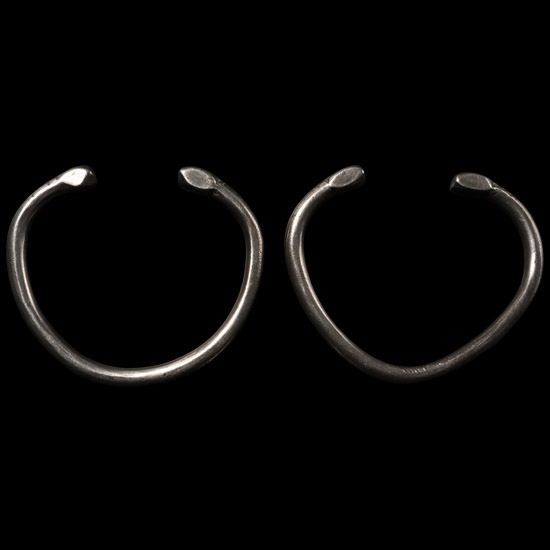
Parthian Silver Bracelet Pair
2nd century B.C.-2nd century A.D.Sold for (Inc. bp): £338
Matched pair of penannular bracelets with round-section bodies and polygonal finials, hatched decoration above the finials. 174 grams total, 86-89 mm
with a London, UK gallery 1971-early 2000s.
