
Loading, please wait...
LOT 0579
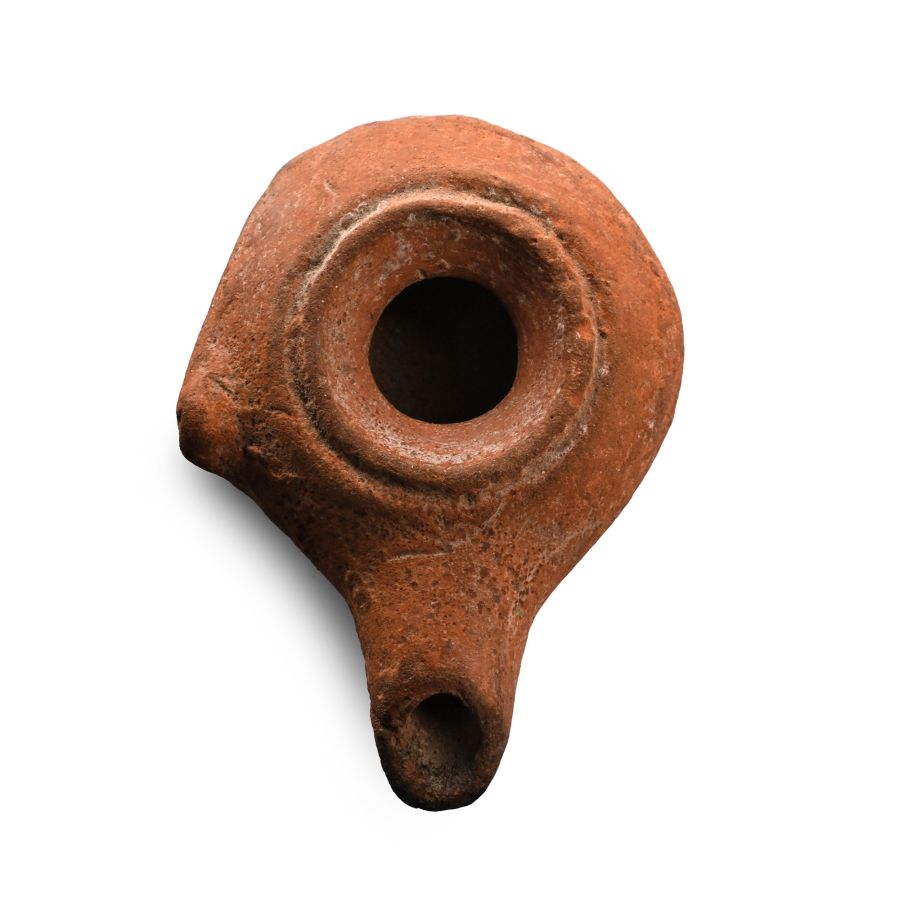
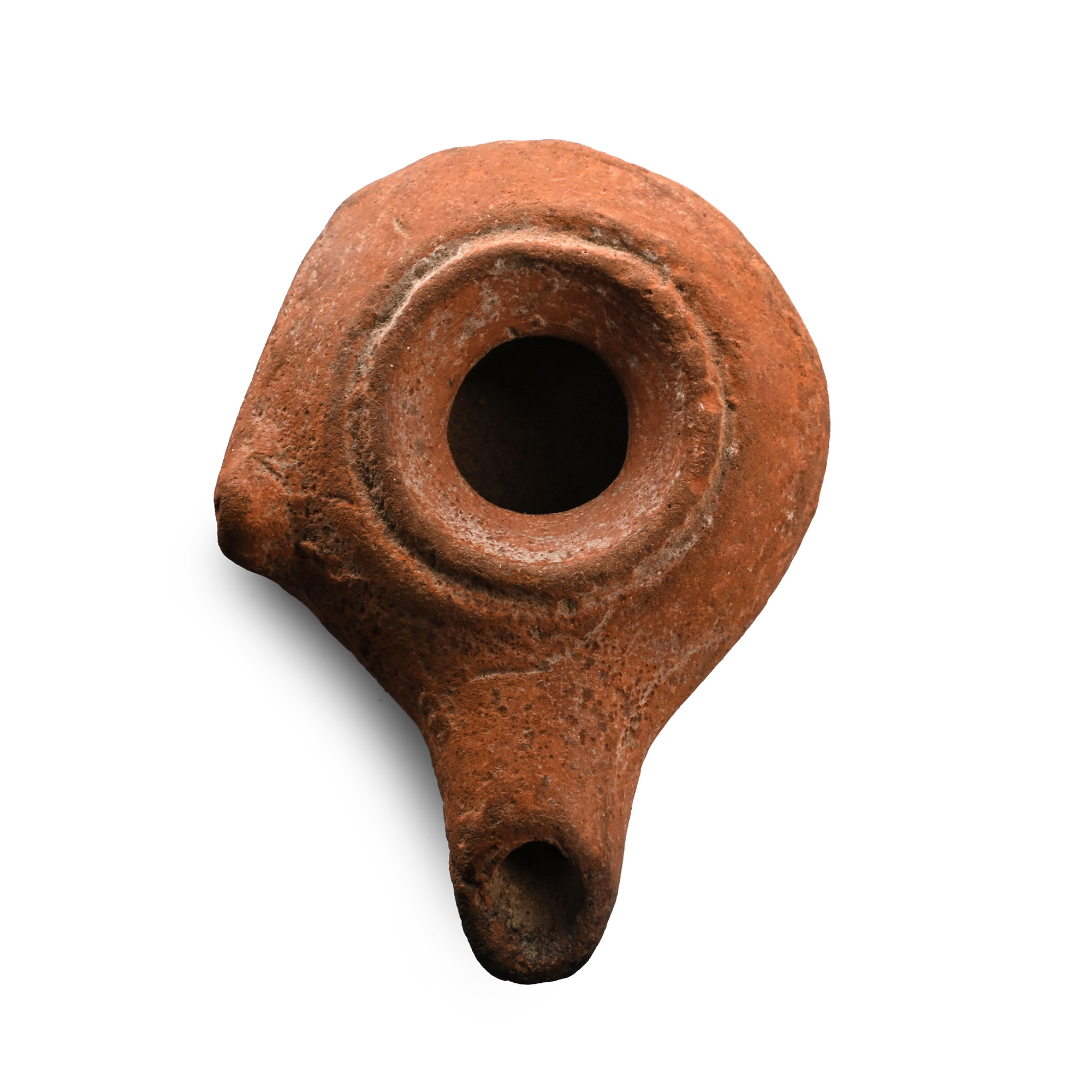
Greek Terracotta Oil Lamp
HELLENISTIC, CIRCA 3RD-2ND CENTURY B.C.
2 1/2 in. (34 grams, 65 mm).
Rounded body with large central filler hole and pointed lug on the shoulder, the rim with a low-relief ovolo decoration, elongated nozzle with scooped nozzle; low basal ring.; old collector's label 'MH1932'. [No Reserve]
ProvenanceFrom an old West Country, UK, collection, sold at auction.
From the private collection of a West Midlands lady collector.
Cf. Młynarczyk, J., Alexandrian and Alexandria-influenced mould-made lamps of the Hellenistic period, Bar International Series 677, Oxford, 1997, pp.54-57, Type G, fig. 67, for the type.
CONDITIONTimeLine Auctions follows a vetting process to ensure the authenticity and legality of all items, reinforcing our commitment to integrity and responsible trading. Each antiquity, antique, and coin lot undergoes thorough examination by a vetting committee of at least ten external specialists, professional trade association members, scientists, and archaeologists: Our Vetting Process
AUCTIONS:
TimeLine is a leading auction house specialising in antiquities, ancient art, collectables, natural history, coins, medals, and books. Our auctions offer museums, collectors, historians, and enthusiasts the opportunity to acquire unique and historically significant pieces.
-
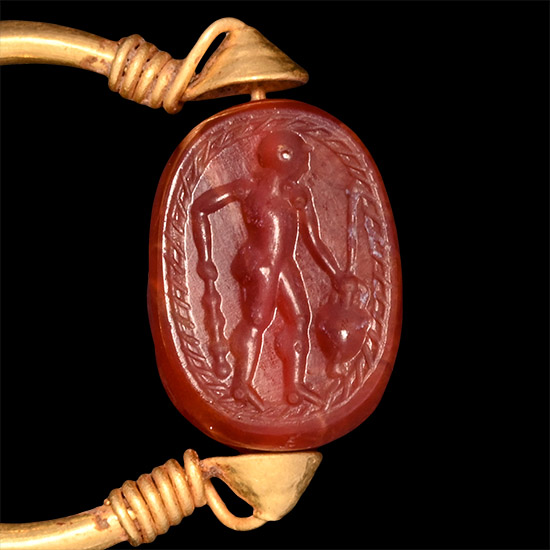
Etruscan Carnelian Scarab with Hercules at a Fountain in Gold Ring
3rd century B.C.Estimate: £1,500 - 2,000 (+bp*)
Opening Bid: £750
Hoop made from D-section wire with coils to the shoulders, scarab bezel with carapace detailing and intaglio of a standing nude figure of Hercules holding a club and amphora at a stream, enclosed by a roped border. 5.73 grams, 22.52 mm overall, 18.68 x 16.58 mm internal diameter (approximate size British P, USA 7 1/2, Europe 16.23, Japan 15)
Acquired on the UK art market. Private collection, England. -
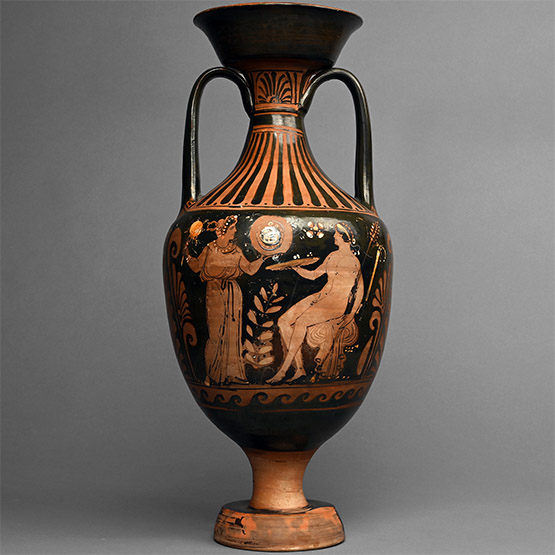
Large Greek Red-Figure Amphora with Dionysian Scenery
Apulian, 3rd-2nd century B.C.Sold for (Inc. bp): £3,640
The piriform body with broad, stepped rim and two lentoid-section handles; painted palemete beneath each handle and on the neck below the mouth; Side A: red-figure frieze depicting a standing woman wearing a himation and stephane, her hands raised supporting objects, a laurel frond before her and a seated nude male with thyrsus and other items; Side B: two opposed figures standing supported by staves, each wearing a loosely draped floor-length garment; objects in the field. 1.88 kg, 43 cm
Acquired on the art market between the late 1990s and mid-2000s. Estate of the late Barry Paul Buxton (1944-2024), Oakham, Rutland. Acquired on the UK art market, 2025. Accompanied by a thermoluminescence analysis report no.N126a18 from Oxford Authentication. This lot has been checked against the Interpol Database of stolen works of art and is accompanied by search certificate no.13075-248951.
The subject is standard, often representing the draped youths completely enveloped in their himatia. -
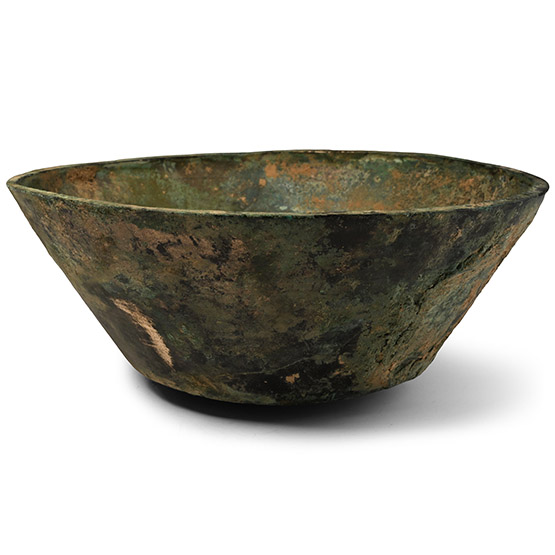
Parthian Bronze Bowl
2nd century B.C.-1st century A.D.Sold for (Inc. bp): £117
Broad and squat with flared sidewall and lip to the inner edge of the mouth. 250 grams, 16.1 cm
Ex 1990s collection and with a central London gallery.
