Loading, please wait...
LOT 0537
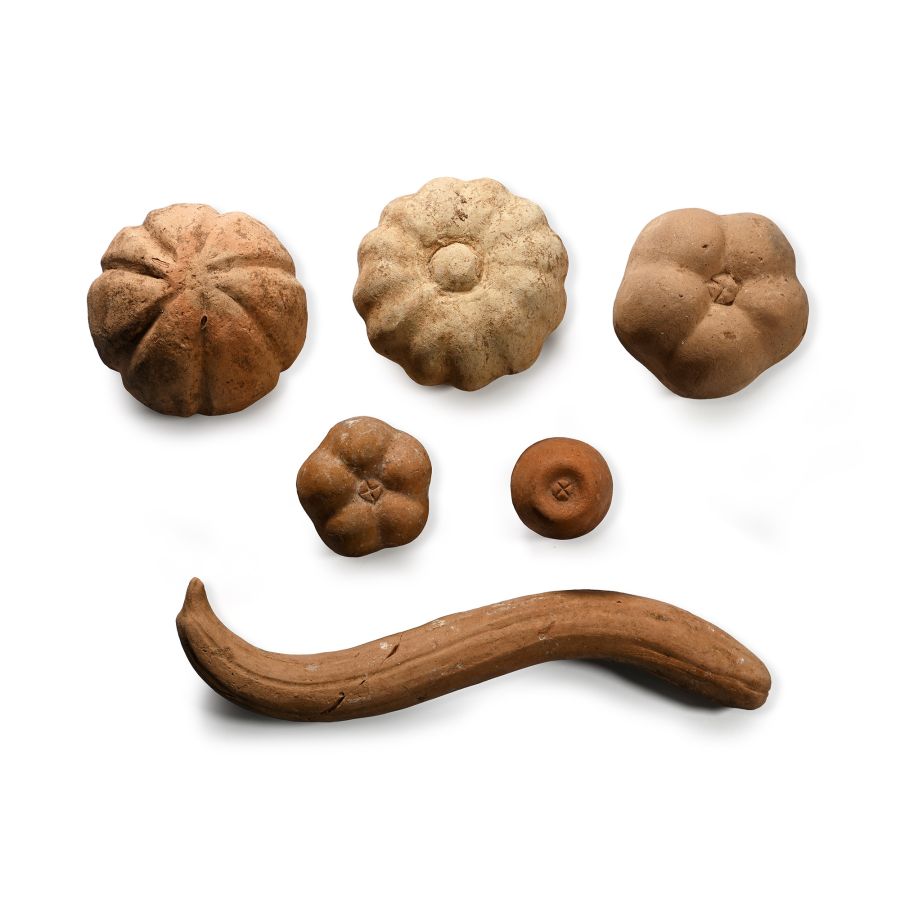
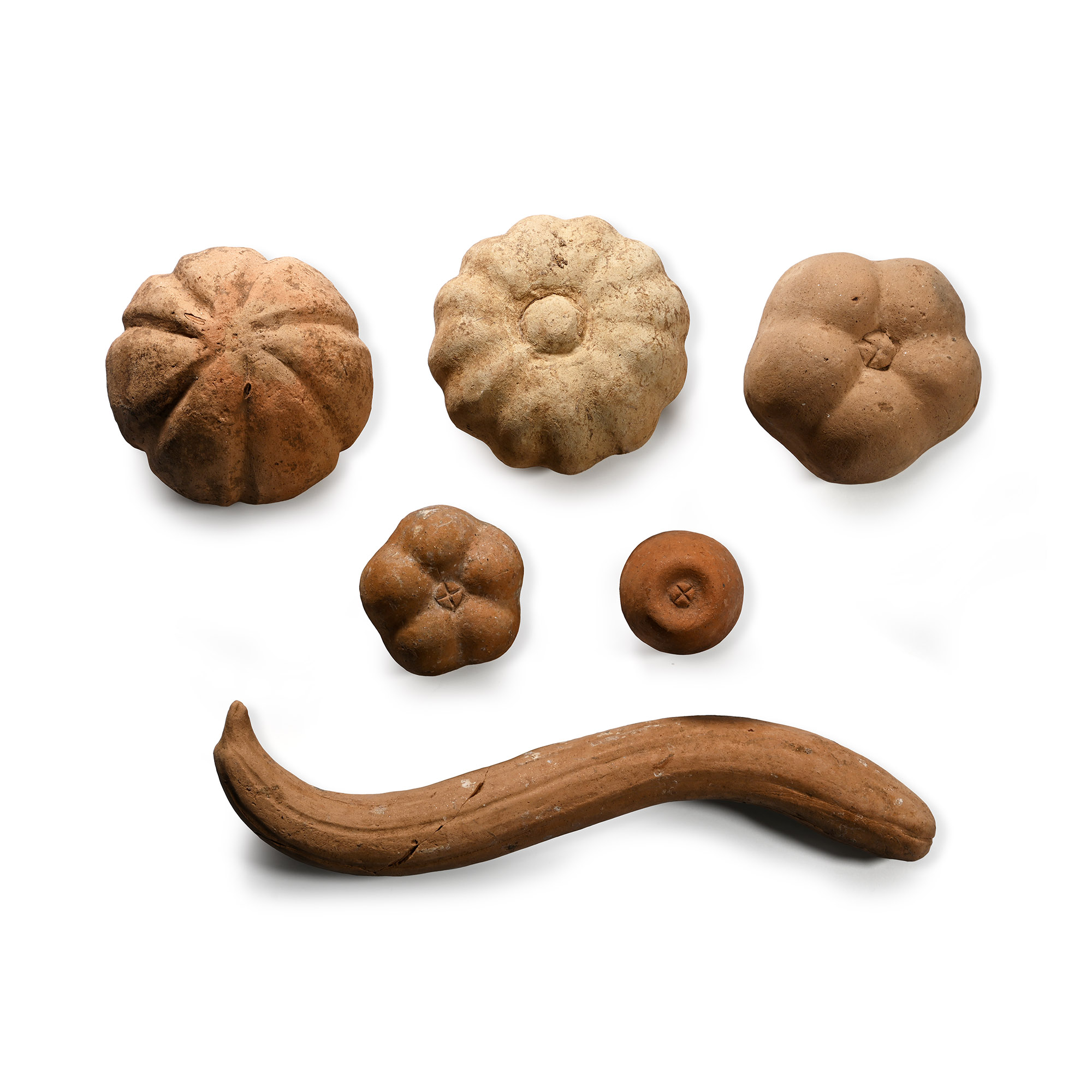
Greek Terracotta Model Fruit and Vegetable Group
4TH CENTURY B.C.
1 3/4 - 7 3/8 in. (989 grams total, 4.5-18.7 cm).
Including pomegranates, apples and a gourd. [6, No Reserve]
ProvenanceEstate of Mr Bruno Fellinger (1926-2016), Küsnacht, Switzerland.
with Galerie Rhéa, Zurich, Switzerland.
TimeLine Auctions follows a vetting process to ensure the authenticity and legality of all items, reinforcing our commitment to integrity and responsible trading. Each antiquity, antique, and coin lot undergoes thorough examination by a vetting committee of at least ten external specialists, professional trade association members, scientists, and archaeologists: Our Vetting Process
AUCTIONS:
TimeLine is a leading auction house specialising in antiquities, ancient art, collectables, natural history, coins, medals, and books. Our auctions offer museums, collectors, historians, and enthusiasts the opportunity to acquire unique and historically significant pieces.
-
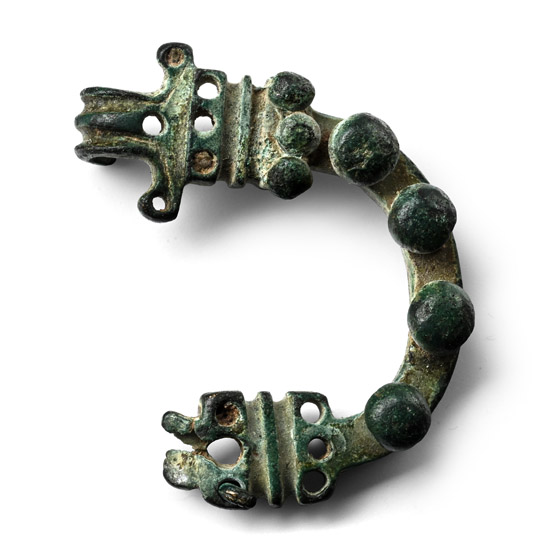
Phoenicio-Punic Terracotta Oil Lamp
Circa 3rd-2nd century B.C.Sold for (Inc. bp): £52
A triangular body with a narrow spout and two filler holes at the sides. 75 grams, 86.6 mm
From the private collection of Mr Brian Edwards, New Malden, Surrey, UK, formed from the late 1970s-early 1980s; thence by descent. Accompanied by a collector's data information card with collection reference no.119. -
Greek Marble Figure of a Seated God or Philosopher
Hellenistic, 3rd-1st century B.C.Estimate: £15,000 - 20,000 (‡+bp*)
Opening Bid: £7,500
Carved in the round male figure in a seated pose wearing a loosely draped pallium on the shoulders and lower body, legs crossed at the knees; openwork frame to the chair with deep undercuts; mounted on a custom-made stand. 563 grams total, 86 mm high including stand
Formerly in a private collection, London. European private collection, acquired in 2002. Accompanied by a copy of an Art Loss Register certificate, 8 June 2004. This lot has been checked against the Interpol Database of stolen works of art and is accompanied by search certificate number no.13210-249309.
The statuette could represent Zeus or Chronos, based on similarities with two statues in the Vatican Museums and two statues in the Thebes Museum. The god is depicted seated, with his torso exposed, and his left hand, which normally holds the sceptre in statues of seated Zeus, is instead stretched out across his legs. -
Greek Red-Figure Bell Krater with Warrior Funerary Offering Scene, Attributed to CA Painter
Campanian, 350-300 B.C.Sold for (Inc. bp): £5,980
Comprising a bell-shaped body with narrow stem and stepped pedestal foot, broad rim with square loop handles and palmettes beneath, frieze to sidewall: Side A: Oscan warrior with cuirass, helmet, shield and spear standing beside an altar with a female holding a patera in her extended hand, diadem in the other at her side; Side B: seated female with a patera and wreath facing a standing cloaked figure with thyrsus. 2.38 kg, 29.5 cm high
Private collection, Geneva, acquired in the late 1960s. Private collection, acquired in Geneva in 2000. Accompanied by collector's notes and old images. Accompanied by an original copy thermoluminescence analysis report no.QED1412/.SG-0602 from QED Laboratoire. Accompanied by an academic report by Dr Raffaele D'Amato. This lot has been checked against the Interpol Database of stolen works of art and is accompanied by search certificate number no.13219-249314.
The krater offers an interesting glimpse into the local life of Campania in the 4th century B.C. Particularly noteworthy is the depiction of the Oscan Samnite warrior, fully armed in the style of Campanian, Samnite, or Lucanian mercenaries, performing a funerary sacrifice. The depiction of the Chalcidian helmet, with its central crest and twin lateral plumes (geminae pinnae), dedicated to Mars, is extremely detailed. The style and the way in which the figures are realised, the conformation of the women, the details of the warrior, seem to point to the workshop of the CA Painter, a Campanian red-figure vase-painter whose name is unknown. Nevertheless, consistent individual characteristics of style suggest the existence of a unique artistic personality. Trendall called him the CA Painter because he was the chief painter in the first stage of Cumaean red-figure vase-painting, the initials standing for Cumaean (C), first stage (A).