
Loading, please wait...
LOT 0043
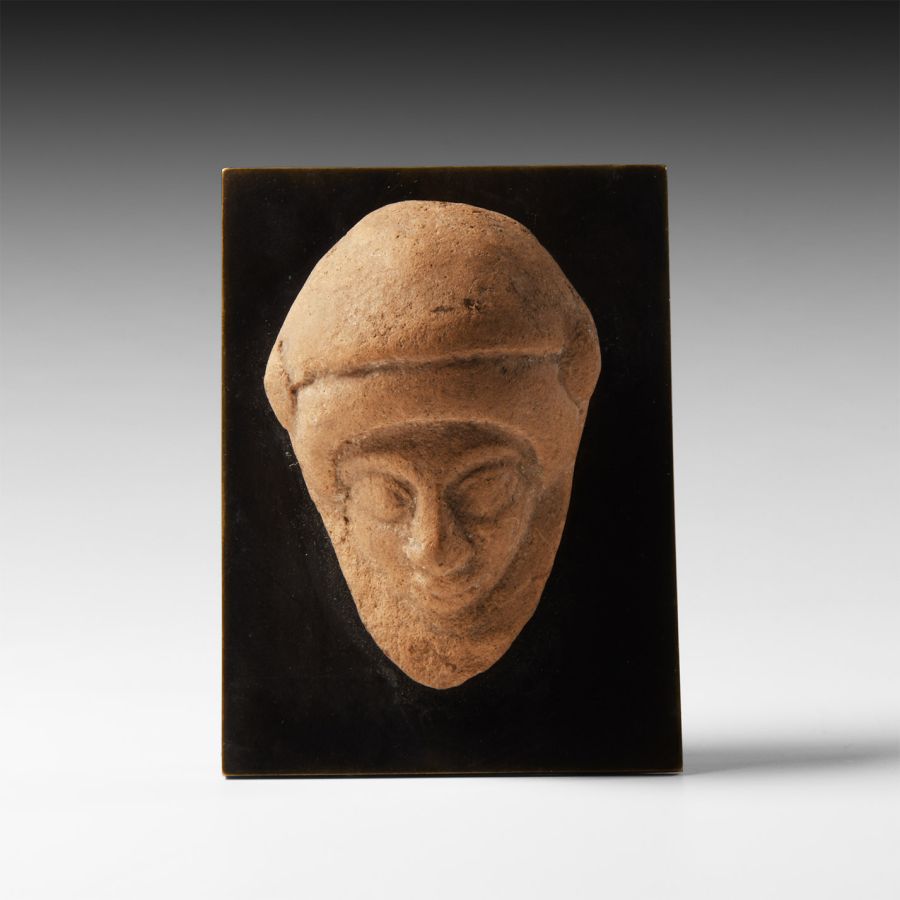
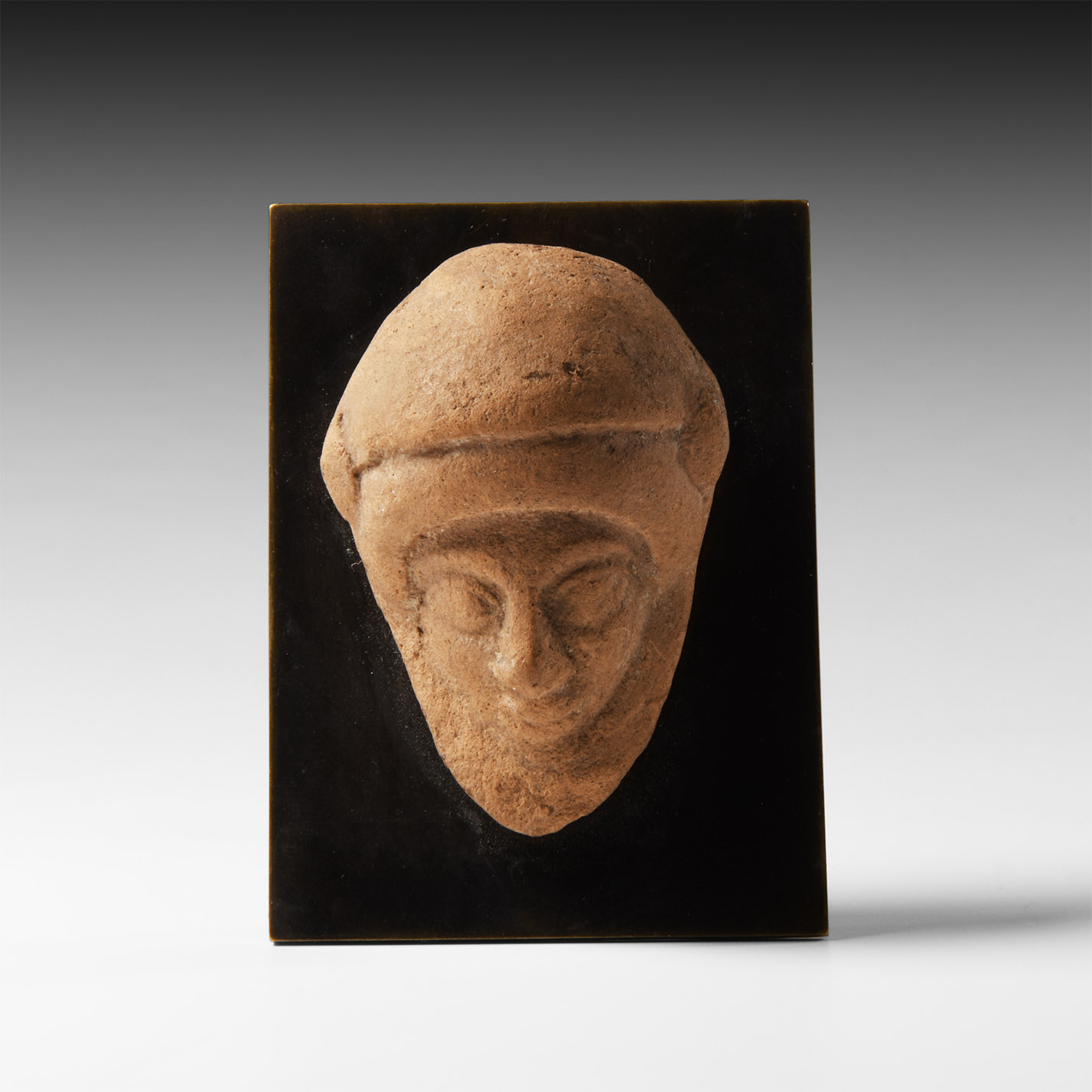
Greek Terracotta Mask with Helmet
6TH-5TH CENTURY B.C.
2 5/8 in. (93 grams, 66 mm).
A terracotta model male head with helmet and beard, exaggerated almond-shaped eyes, small pursed lips; mounted on a custom-made display stand.
Provenancewith Hotel Drouot, Succession of Former collection Colonel W. Mutiaux, Paris, 5 September 1952, lot 66.
Ex collection of Eugène Muriaux (1846-1925?).
From the collection M.W., Paris, France, 1950-1970.
Ex collection of Françoise and Claude Bourelier.
TimeLine Auctions follows a vetting process to ensure the authenticity and legality of all items, reinforcing our commitment to integrity and responsible trading. Each antiquity, antique, and coin lot undergoes thorough examination by a vetting committee of at least ten external specialists, professional trade association members, scientists, and archaeologists: Our Vetting Process
AUCTIONS:
TimeLine is a leading auction house specialising in antiquities, ancient art, collectables, natural history, coins, medals, and books. Our auctions offer museums, collectors, historians, and enthusiasts the opportunity to acquire unique and historically significant pieces.
-
.jpg)
Greek Apulian Red-Figure Stand
4th century B.C.Estimate: £1,000 - 1,400 (+bp*)
Opening Bid: £500
A ceramic columnar stand with trumpet-shaped base, carinated balusters and broad upper face with dished centre; painted with running wave patterns to the baluster, base and top, the centre with a rosette; the base with the profile head of a lady of fashion with the earrings, necklace and diadem picked out in white. 847 grams, 25 cm high
French collection, 1990s-early 2000s. Ex Hampel Auctions, Munich, Germany, 1990s. -
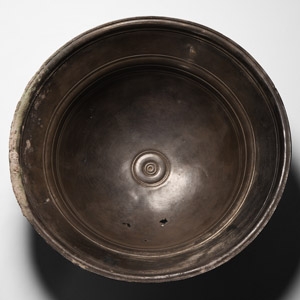
Hellenistic Silver Decorated Bowl
3rd century B.C.-1st century A.D.Estimate: £4,000 - 6,000 (‡+bp*)
Opening Bid: £2,000
A squat sheet-silver bowl with carinated profile, rolled rim, raised circumferential bands to the inner face and centre. 437 grams, 20 cm wide
cracked
Private Swiss collection, acquired 1999. Ex Surena collection, London, UK. Private European collection. This lot has been checked against the Interpol Database of stolen works of art and is accompanied by search certificate no.11617-199030. -
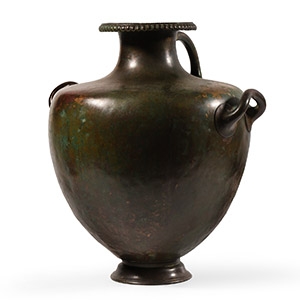
Large Greek Hydria with Egg-and-Dart Motifs
Early 5th century B.C.Sold for (Inc. bp): £9,525
A spectacular bronze hydria composed of a tapering body, broad shoulder and waisted neck, the everted rim decorated with egg-and-dart motifs, three round-section handles and tiered, ogival foot; professionally restored. 4.7 kg, 39.5 cm
Fine condition, professionally restored. A spectacular display piece.
Acquired circa 1989-1990. Private collection of N.A., Niedersachsen. Accompanied by an original French cultural passport number 226773 dated 3 June 2021. Accompanied by an academic report by Dr Raffaele D'Amato. This lot has been checked against the Interpol Database of stolen works of art and is accompanied by search certificate no.11306-190969.
Whilst such vessels were originally produced for holding water, hydriai were often re-purposed. From the 5th century B.C. onwards, they also had a funerary function, used in the cult of the dead and the underworld. Appearing as grave deposits, they were sometimes used as funerary urns, receptacles for the ashes of the deceased (see the MET hydria from Galaxidi, found with the bones still inside). Hydriai were also commonly associated with rituals relating to the cults of the gods. They have been found in temples and public buildings and have been recorded as prizes in athletic games. It has also been suggested that the more lavish examples were gifted to brides.
