
Loading, please wait...
LOT 0630
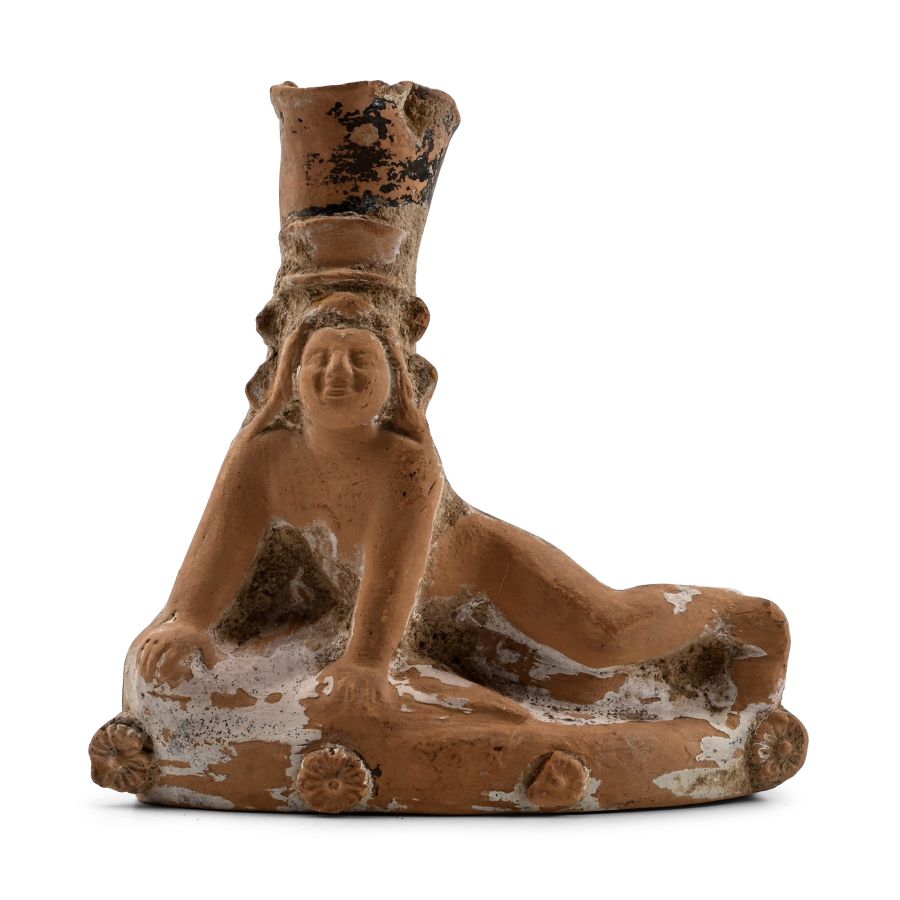
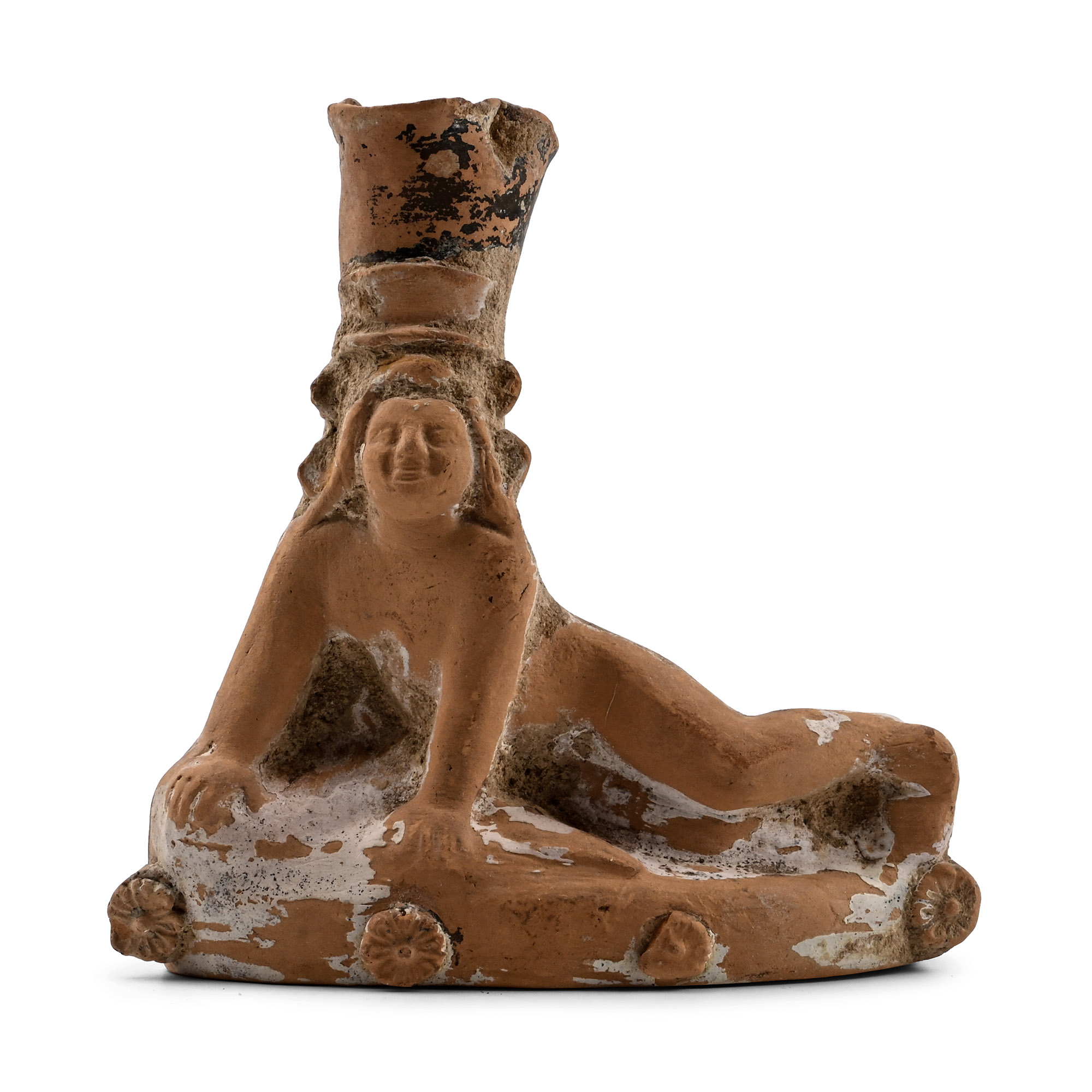
Greek Terracotta Kohl Vessel
HELLENISTIC, 2ND CENTURY B.C.
4 in. (86 grams, 10.2 cm).
Hollow-formed as a nude figure rising from a prone position on an ellipsoid base; rosettes to foot; flared tubular mouth pinched into a trefoil.
ProvenanceAcquired on the European art market in the early 2000s.
with Galerie Rhéa, Zurich, Switzerland.
TimeLine Auctions follows a vetting process to ensure the authenticity and legality of all items, reinforcing our commitment to integrity and responsible trading. Each antiquity, antique, and coin lot undergoes thorough examination by a vetting committee of at least ten external specialists, professional trade association members, scientists, and archaeologists: Our Vetting Process
AUCTIONS:
TimeLine is a leading auction house specialising in antiquities, ancient art, collectables, natural history, coins, medals, and books. Our auctions offer museums, collectors, historians, and enthusiasts the opportunity to acquire unique and historically significant pieces.
-
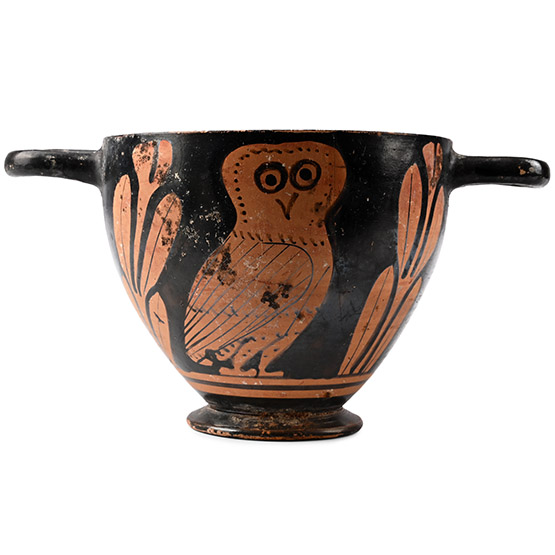
Greek Red-Figure Owl Skyphos
Attic, 4th century B.C.Sold for (Inc. bp): £1,235
Mammiform body with flared pedestal base and two loop handles to the rim; each side with a facing image of an owl between laurel fronds; concentric circles to the base, Attic workmanship. 115 grams, 15.2 cm wide
Acquired on the art market between the late 1990s and mid-2000s. Estate of the late Barry Paul Buxton (1944–2024), Oakham, Rutland. Acquired on the UK art market, 2025. -
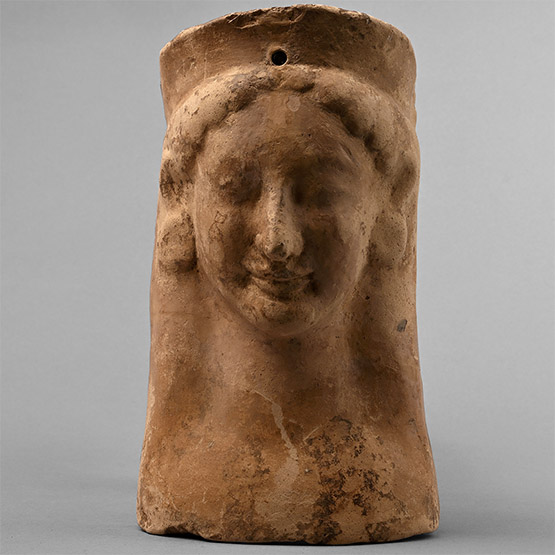
Greek Terracotta Female Protome
Early 5th century B.C.Estimate: £1,500 - 2,000 (‡+bp*)
Opening Bid: £750
Mould-made female protome with oval face, graceful nose and typical "archaic" smile; forehead framed by snail-shell curls descending to shoulder-height; with a low polos with a central perforation and large disc earrings. 606 grams, 19.5 cm
Ex Herbert A. Cahn, Kunst der Antike, Basel, 1997. with Paul and Vreny Vosseler-Studer, Riehen. Accompanied by a copy of an Art Loss Register certificate no.S00057826. This lot has been checked against the Interpol Database of stolen works of art and is accompanied by search certificate number no.12474-228714. -
.jpg)
Greek Bronze Ring with Goddess Nike
4th-2nd century B.C.Sold for (Inc. bp): £364
With discoid bezel, showing the Greek goddess of victory, Nike, holding a victory wreath in one hand, and the long ribbons of the latter in the other, the ring itself probably was part of a victory price for the winner of a contest (agon). 8.87 grams, 25.51 mm overall, 22.53 x 21.73 mm internal diameter (approximate size British Y, USA 12, Europe 27.51, Japan 26)
Acquired on the European art market in the 2000s. Private collection, England.
