
Loading, please wait...
LOT 0062
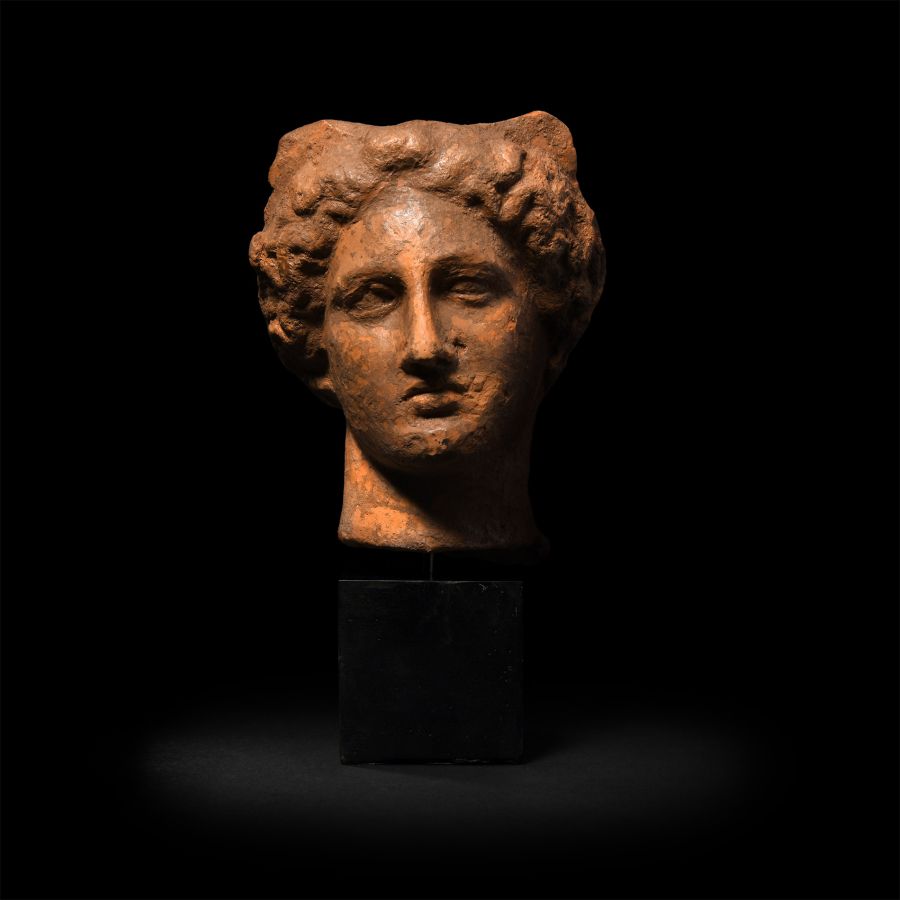
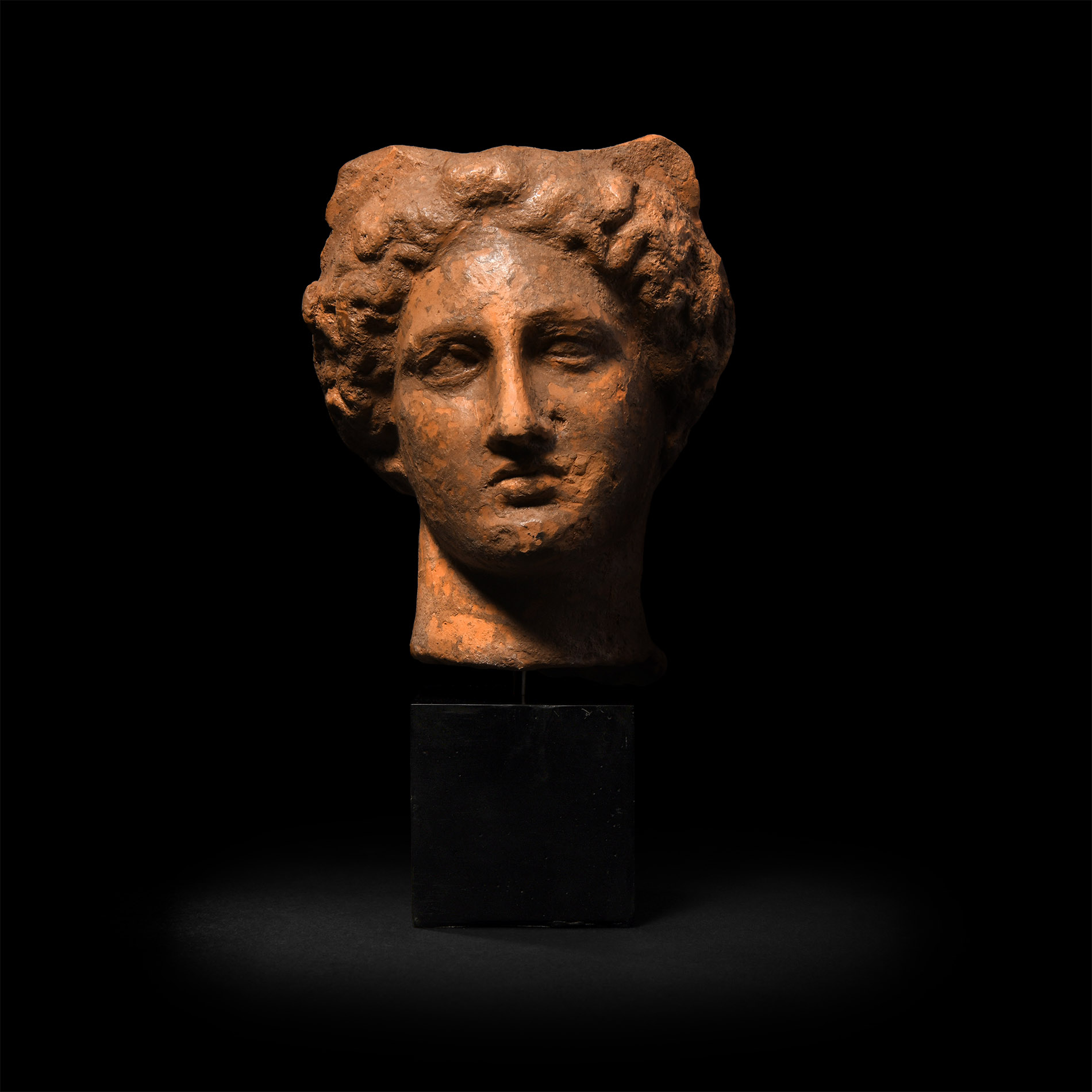
Greek Terracotta Head of a Woman
3RD-2ND CENTURY B.C.
7 1/2 in. (675 grams total, 19 cm high including stand).
A terracotta bust of a woman with elaborate band of curls to the brow; spout or hole to the rear of the head; mounted on a custom-made display stand with old lot sticker to base.
ProvenancePrivate European collection.
with Genève Enchères, 12th December 2017, lot 861.
This lot has been checked against the Interpol Database of stolen works of art and is accompanied by search certificate no.11612-199036.
Cf. The British Museum, Museum numbers: 1926,0410.7 'Head of terracotta female figure, wearing himation drawn up over head' and 1870,0105.2 'Terracotta female head wearing earrings', for stylistically similar examples.
CONDITIONTimeLine Auctions follows a vetting process to ensure the authenticity and legality of all items, reinforcing our commitment to integrity and responsible trading. Each antiquity, antique, and coin lot undergoes thorough examination by a vetting committee of at least ten external specialists, professional trade association members, scientists, and archaeologists: Our Vetting Process
AUCTIONS:
TimeLine is a leading auction house specialising in antiquities, ancient art, collectables, natural history, coins, medals, and books. Our auctions offer museums, collectors, historians, and enthusiasts the opportunity to acquire unique and historically significant pieces.
LOT 0062
Greek Terracotta Head of a Woman
Estimate £2,000 - 3,000€2,320 - 3,480 (for guidance only)$2,700 - 4,050 (for guidance only)
-
Greek Stone Head of a Female
4th-3rd century B.C.Sold for (Inc. bp): £2,340
A carved stone head modelled with semi-naturalistic facial features and dressed hair falling down the neck in tight curls. 4.2 kg, 17 cm high
Acquired early 1990s. Ex private American collection; thence by descent. Private Swiss collection since 1998. This lot has been checked against the Interpol Database of stolen works of art and is accompanied by search certificate no.11613-198981. -
.jpg)
Greek and Other Artefact Group
Circa 7th-2nd century B.C.Sold for (Inc. bp): £52
A group of two silver artefacts comprising: a brooch element with catchplate and decorative ribbing; a possible earring with coiled closures. 8.55 grams total, 29-33 mm
Essex gallery, early 2000s. -
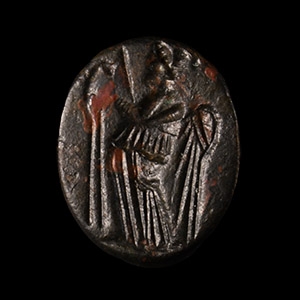
Greek Ring with Tyche
3rd-2nd century B.C.Estimate: £600 - 800 (+bp*)
Opening Bid: £300
An Eastern Greek bronze finger ring with intaglio winged Tyche in profile. 6.09 grams, 20.50 mm overall, 16.92 mm internal diameter (approximate size British K, USA 5 1/4, Europe 9.95, Japan 9)
Acquired in the late 1980s-early 1990s. Important North West London collection.
