Loading, please wait...

Use mousewheel to zoom in and out, click to enlarge

Details

LOT 0525

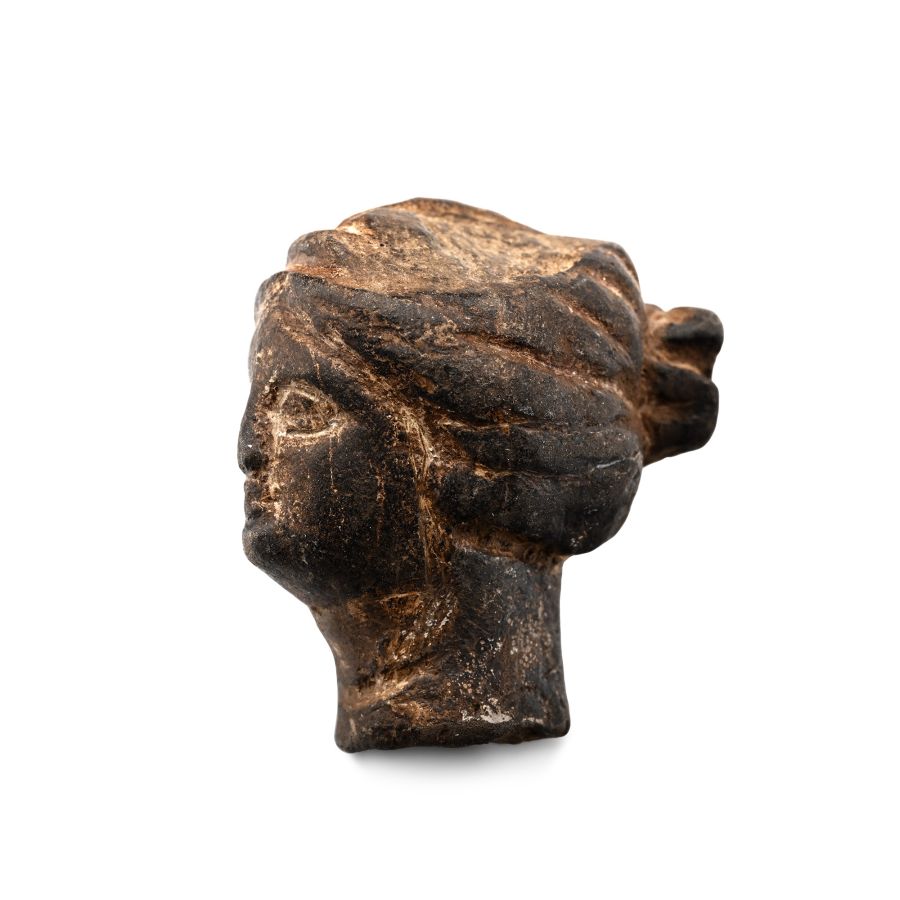
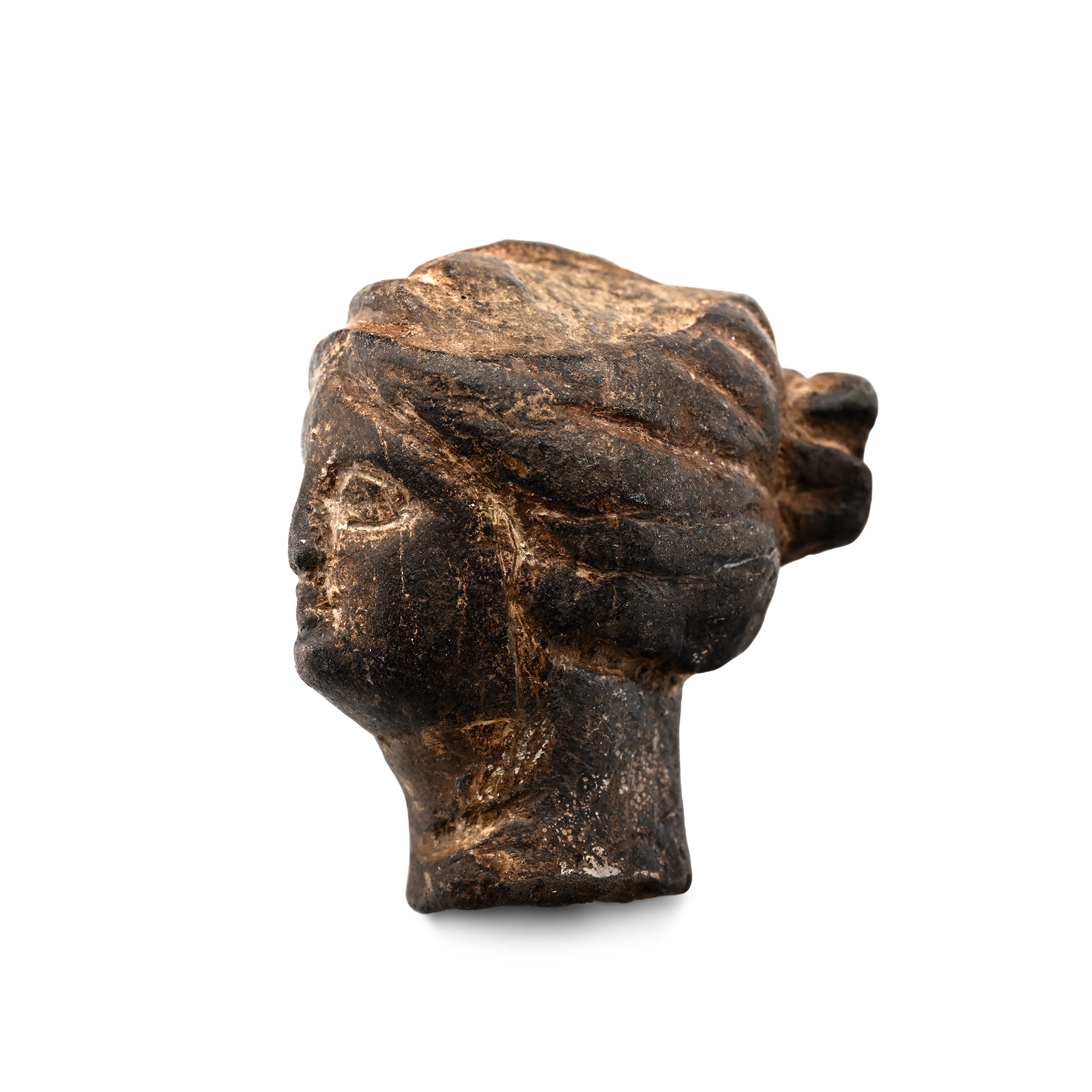
Greek Terracotta Head of a Goddess

CIRCA 4TH-3RD CENTURY B.C.

1 3/8 in. (20.3 grams, 36 mm).

With her hair pulled back in a voluminous chignon, large almond-shaped eyes and small pursed lips.

Provenance

Ex German art market, 2000s.
Acquired from an EU collector living in London.
From the collection of a Surrey, UK, gentleman.

CONDITION

VETTING:

TimeLine Auctions follows a vetting process to ensure the authenticity and legality of all items, reinforcing our commitment to integrity and responsible trading. Each antiquity, antique, and coin lot undergoes thorough examination by a vetting committee of at least ten external specialists, professional trade association members, scientists, and archaeologists: Our Vetting Process


AUCTIONS:

TimeLine is a leading auction house specialising in antiquities, ancient art, collectables, natural history, coins, medals, and books. Our auctions offer museums, collectors, historians, and enthusiasts the opportunity to acquire unique and historically significant pieces.

LOT 0525

Greek Terracotta Head of a Goddess

Sold for (Inc. bp): £117

Print page

RELATED LOTS

  • Greek Black-Figure Kylix with Warriors and Sphinxes
    With Thermoluminescence Analysis Report
    Greek Black-Figure Kylix with Warriors and Sphinxes
    Attic, circa 530 B.C.

    Sold for (Inc. bp): £7,800

    Comprising: a broad shallow bowl with two loop handles curving up towards the rim, short stem and broad foot with chamfered outer edge; the bowl with reserved central disc to inner face, palmette motifs at the junctions of the handles, frieze depicting two standing nude males flanking a crouching sphinx in profile; restored and with old dealer's labels beneath base. 414 grams, 27.3 cm wide


    Ex Prof. F.S., Villingen-Schwenningen, Germany, 1991. with Gallery Drees Archeo S.P.R.L., Brussels. Acquired from the above, 16 December 2017. Accompanied by a copy of an Art Loss Register certificate, no.S00041086. Accompanied by a Gallery Drees Archeo certificate of authenticity. Accompanied by a thermoluminescence report no.0102 0910 from Laboratory Ralf Kotalla, 6 September 2010. This lot has been checked against the Interpol Database of stolen works of art and is accompanied by search certificate number no.12945-246388.

    The present piece is a wide-bowled drinking cup known as a kylix - one of the most popular forms of pottery from the Achaean times (1600-1100 B.C.) through to the classical period (c.510-323 B.C.). It dates to an important moment in the development of Greek ceramics, just as the black-figure technique was being perfected by Athenian painters. Painted in black slip with details incised on top, kylikes usually had a frieze around the outside of the bowl as well as another scene on the tondo of the inside. The scene here represented can be linked with the well-known episode of Oedipus and the Sphinx.

    Lot Details

  • Greek Red-Figure Bell Krater with Warrior Funerary Offering Scene, Attributed to CA Painter
    Greek Red-Figure Bell Krater with Warrior Funerary Offering Scene, Attributed to CA Painter
    Campanian, 350-300 B.C.

    Sold for (Inc. bp): £5,980

    Comprising a bell-shaped body with narrow stem and stepped pedestal foot, broad rim with square loop handles and palmettes beneath, frieze to sidewall: Side A: Oscan warrior with cuirass, helmet, shield and spear standing beside an altar with a female holding a patera in her extended hand, diadem in the other at her side; Side B: seated female with a patera and wreath facing a standing cloaked figure with thyrsus. 2.38 kg, 29.5 cm high


    Private collection, Geneva, acquired in the late 1960s. Private collection, acquired in Geneva in 2000. Accompanied by collector's notes and old images. Accompanied by an original copy thermoluminescence analysis report no.QED1412/.SG-0602 from QED Laboratoire. Accompanied by an academic report by Dr Raffaele D'Amato. This lot has been checked against the Interpol Database of stolen works of art and is accompanied by search certificate number no.13219-249314.

    The krater offers an interesting glimpse into the local life of Campania in the 4th century B.C. Particularly noteworthy is the depiction of the Oscan Samnite warrior, fully armed in the style of Campanian, Samnite, or Lucanian mercenaries, performing a funerary sacrifice. The depiction of the Chalcidian helmet, with its central crest and twin lateral plumes (geminae pinnae), dedicated to Mars, is extremely detailed. The style and the way in which the figures are realised, the conformation of the women, the details of the warrior, seem to point to the workshop of the CA Painter, a Campanian red-figure vase-painter whose name is unknown. Nevertheless, consistent individual characteristics of style suggest the existence of a unique artistic personality. Trendall called him the CA Painter because he was the chief painter in the first stage of Cumaean red-figure vase-painting, the initials standing for Cumaean (C), first stage (A).

    Lot Details

  • Large Greek Bronze Ring with Nike
    Large Greek Bronze Ring with Nike
    Circa 4th-2nd century B.C.

    Sold for (Inc. bp): £65

    Featuring a substantial D-section hoop and a lentoid bezel with goddess Nike in a dynamic pose with her arms outstretched. 6.74 grams, 25.43 mm overall, 21.81 mm internal diameter (approximate size British U 1/2, USA 10 1/4, Europe 23.15, Japan 22)


    From the private collection of a European gentleman (1942-2024), formed since the 1970s.

    Lot Details

Stay up-to-date with the latest from TimeLine Auctions by joining our mailing list