
Loading, please wait...
LOT 0076
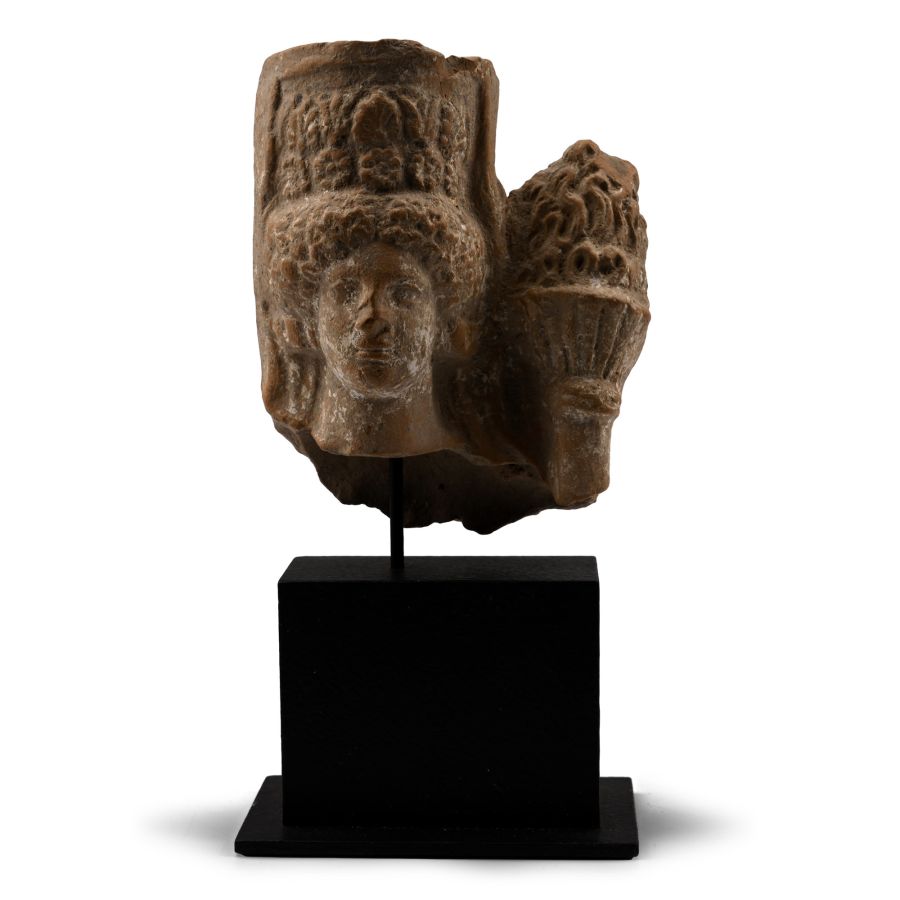
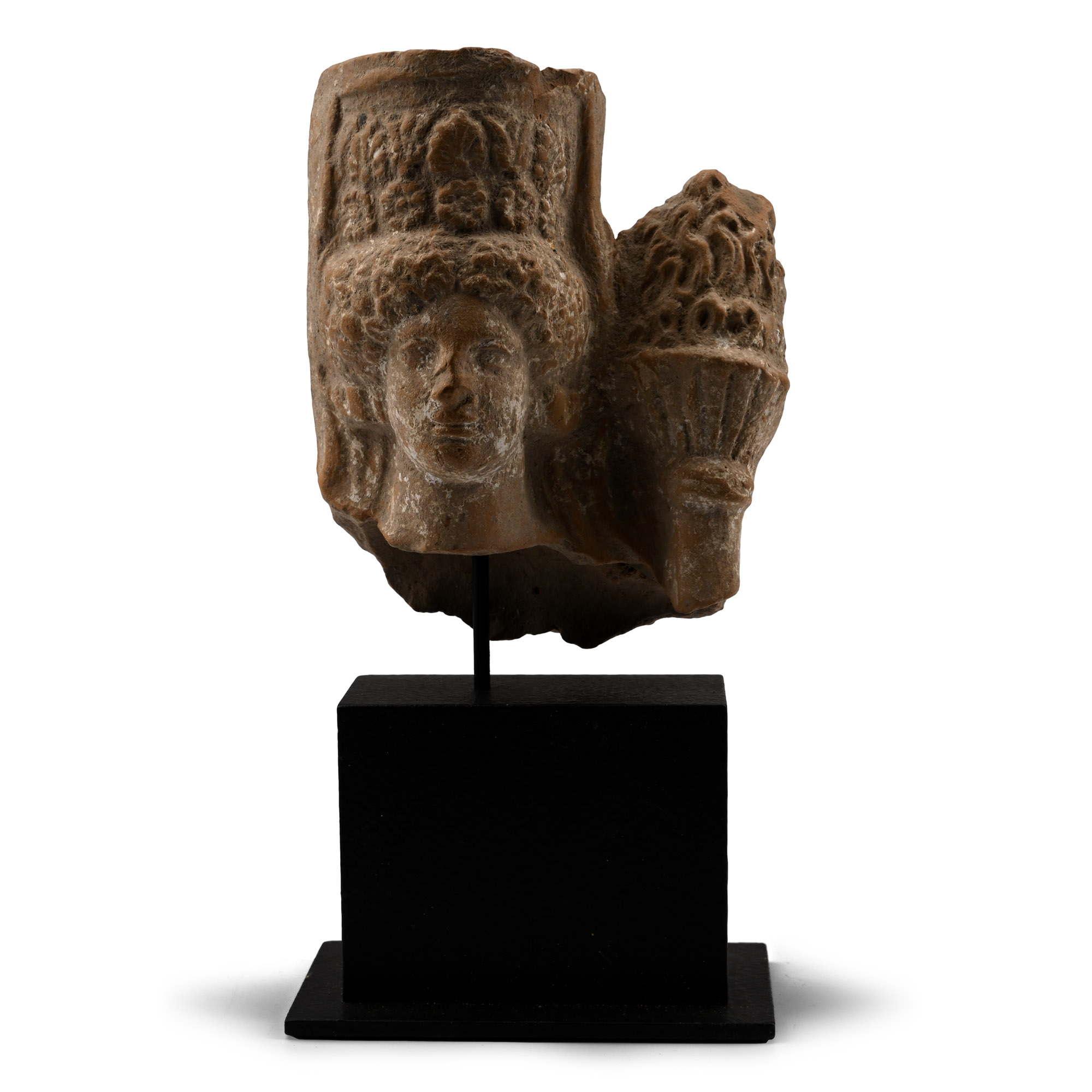
Greek Terracotta Head of a Goddess
5TH-3RD CENTURY B.C.
6 7/8 in. (334 grams total, 17.5 cm including stand).
Hollow-formed with moulded detail to the obverse, plain reverse; female head with earrings, bouffant hairstyle and modius, flanked by a torch with flared rim and flame; mounted on a custom-made stand.
ProvenanceAcquired on the European art market in the early 2000s.
with Galerie Rhéa, Zurich, Switzerland.
This lot is accompanied by an illustrated lot declaration signed by the Head of the Antiquities Department, Dr Raffaele D'Amato.
TimeLine Auctions follows a vetting process to ensure the authenticity and legality of all items, reinforcing our commitment to integrity and responsible trading. Each antiquity, antique, and coin lot undergoes thorough examination by a vetting committee of at least ten external specialists, professional trade association members, scientists, and archaeologists: Our Vetting Process
AUCTIONS:
TimeLine is a leading auction house specialising in antiquities, ancient art, collectables, natural history, coins, medals, and books. Our auctions offer museums, collectors, historians, and enthusiasts the opportunity to acquire unique and historically significant pieces.
-
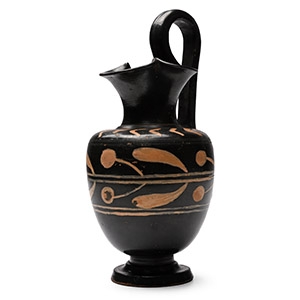
Greek Apulian Blackware Oinochoe with Laurel Leaves
South Italic, circa 4th century B.C.Sold for (Inc. bp): £364
With tiered foot, ovoid body, tapering neck and scooped trefoil mouth; tall strap handle to the rear; painted laurel frond to the sidewall and chevrons to the shoulder. 170 grams, 16.3 cm
From the private collection of a Canadian gentleman living in Essex, UK, formed since the 1920s-circa 1990. Property of an Essex lady until the late 1990s; thence by descent. From the private collection of an Essex gentleman since the late 1990s. This lot is accompanied by an illustrated lot declaration signed by the Head of the Antiquities Department, Dr Raffaele D'Amato. -
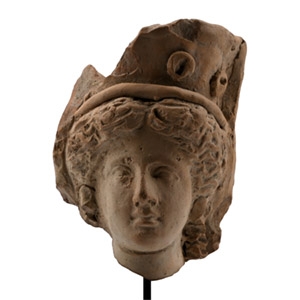
Greek Terracotta Head of a Goddess
5th-3rd century B.C.Sold for (Inc. bp): £910
Hollow-formed female head with flared headdress, applied collar and annulets; mounted on a custom-made stand. 228 grams total, 18.8 cm including stand
Acquired on the European art market in the early 2000s. with Galerie Rhéa, Zurich, Switzerland. This lot is accompanied by an illustrated lot declaration signed by the Head of the Antiquities Department, Dr Raffaele D'Amato. -
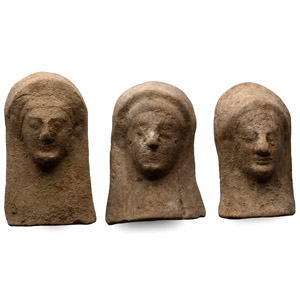
Greek Terracotta Female Protome Group
Early 5th century B.C.Sold for (Inc. bp): £338
Each tongue-shaped in plan and hollow to the reverse, female bust in high-relief with palla head-covering. 157 grams total, 79-87 mm
with H.A.C., Basel, prior 1999. This lot is accompanied by an illustrated lot declaration signed by the Head of the Antiquities Department, Dr Raffaele D'Amato.
