
Loading, please wait...
LOT 0075
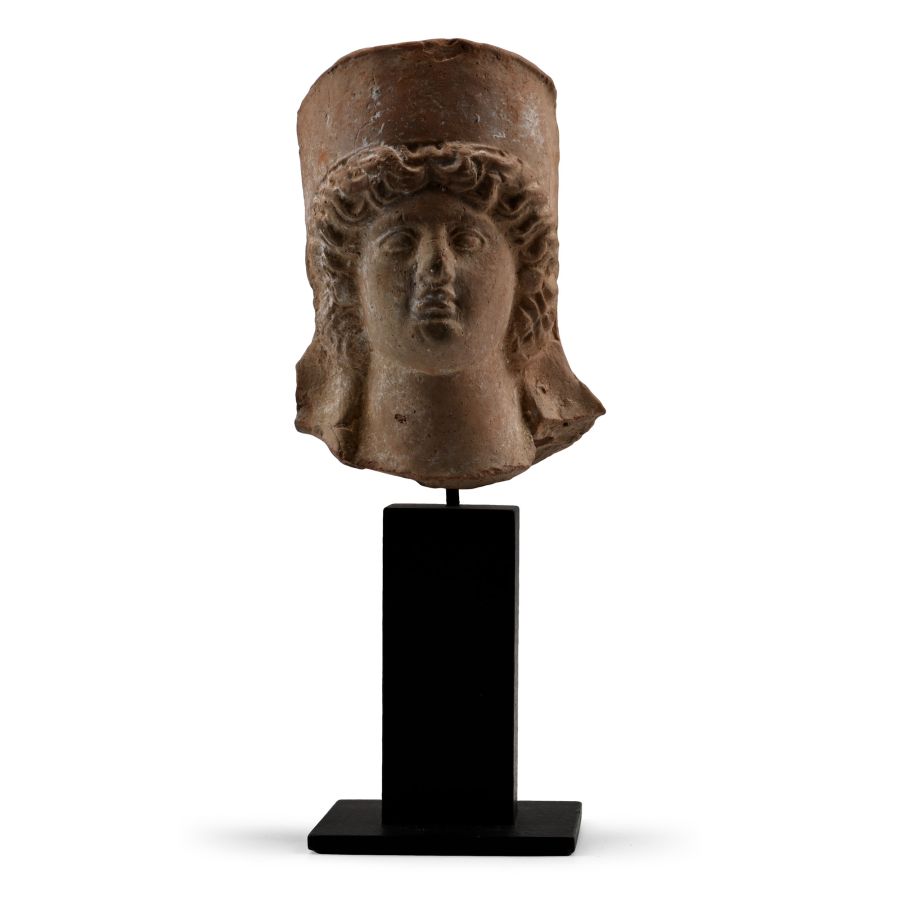
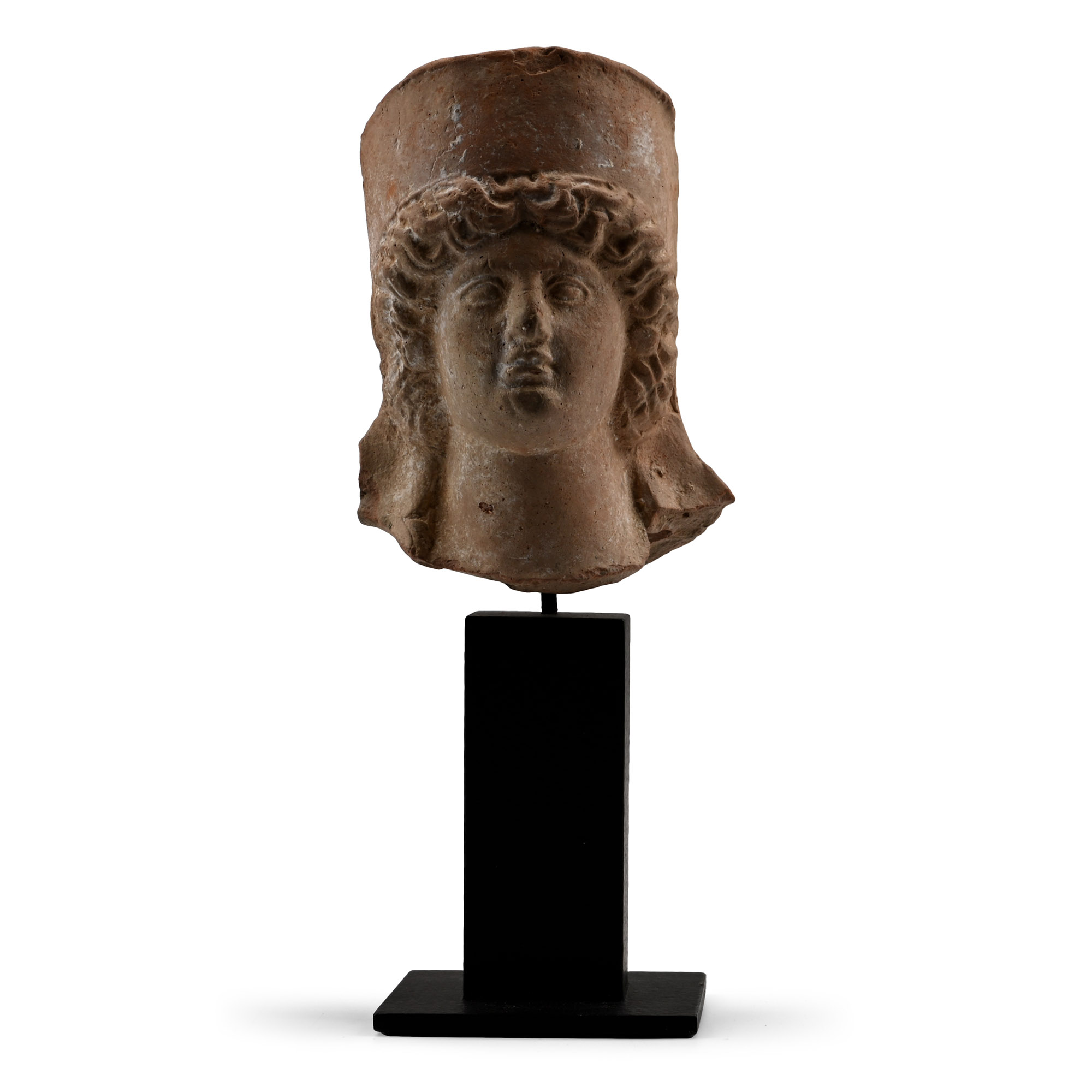
Greek Terracotta Head of a Goddess
5TH-3RD CENTURY B.C.
6 1/8 in. (164 grams total, 15.5 cm including stand).
Hollow-formed female head in high-relief moulding with hair swept back, mounted on a custom-made stand.
ProvenanceAcquired on the European art market in the early 2000s.
with Galerie Rhéa, Zurich, Switzerland.
This lot is accompanied by an illustrated lot declaration signed by the Head of the Antiquities Department, Dr Raffaele D'Amato.
TimeLine Auctions follows a vetting process to ensure the authenticity and legality of all items, reinforcing our commitment to integrity and responsible trading. Each antiquity, antique, and coin lot undergoes thorough examination by a vetting committee of at least ten external specialists, professional trade association members, scientists, and archaeologists: Our Vetting Process
AUCTIONS:
TimeLine is a leading auction house specialising in antiquities, ancient art, collectables, natural history, coins, medals, and books. Our auctions offer museums, collectors, historians, and enthusiasts the opportunity to acquire unique and historically significant pieces.
-
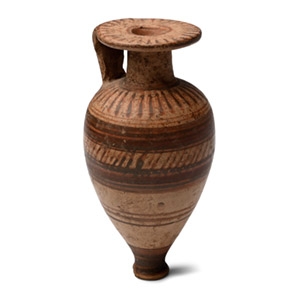
Greek Corinthian Piriform Terracotta Aryballos
Circa 625-600 B.C.Sold for (Inc. bp): £260
Comprising a piriform body with small flared foot, narrow neck and broad flat mouth, strap handle to rear. 59 grams, 10.3 cm
From the private collection of a Canadian gentleman living in Essex, UK, formed since the 1920s-circa 1990. Property of an Essex lady until the late 1990s; thence by descent. From the private collection of an Essex gentleman since the late 1990s. This lot is accompanied by an illustrated lot declaration signed by the Head of the Antiquities Department, Dr Raffaele D'Amato. -
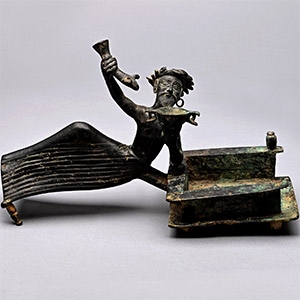
Parthian Bronze Batillum with a Reclining Banqueteer Holding a Skyphos and Rhyton
3rd-1st century B.C.Estimate: £6,000 - 8,000 (+bp*)
Opening Bid: £3,000
Comprising a square base with a raised border and supported by four stub feet, each originally surmounted by poppy-head finials (one now absent); a hollow-formed figure of a banqueteer reclining elegantly with his weight resting on his left elbow, his proper right leg drawn up beneath the folds of a finely pleated robe; in his right hand, a ram’s head rhyton and his left hand cradling a skyphos; his bearded head with a laurel wreath. 1.58 kg, 25 cm
Private New York collection, formed in the 1960s. Acquired on the North American art market, 1990s. with Cahn Auktionen AG, Basel, Switzerland, 13 November 2015, no.84 (CHF 18,000). Accompanied by an academic report by Dr Raffaele D'Amato. This lot has been checked against the Interpol Database of stolen works of art and is accompanied by a search certificate number no.12379-226873. This lot has been cleared against the Art Loss Register database, and is accompanied by an illustrated lot declaration signed by the Head of the Antiquities Department, Dr Raffaele D'Amato.
The composition reflects the iconography of elite banquet culture in the ancient world, capturing both refinement and ritual in a single expressive figure. The Greek 'συμπόσιον' 'symposium' was the later part of a formal banquet which took place after the food had been consumed, when the serving of strong drink was accompanied by music, dancing, poetic composition or recital or earnest conversation. The custom has similarities with the Roman convivium and with the customs of many Mediterranean and Western Asiatic people. The Parthian Empire was culturally diverse and included many Hellenic groups; the Arsacid court adopted a range of aspects of contemporary Greek culture, among them Greek military structures and the Greek language as a lingua franca alongside the Parthian (Iranian) language and Aramaic. -
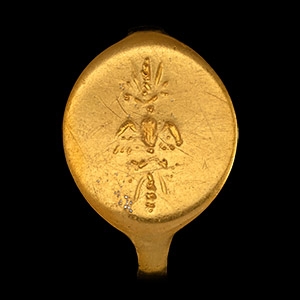
Greek Gold Ring with Thunderbolt
4th-3rd century B.C.Sold for (Inc. bp): £1,690
Flat-section hoop expanding to a flat discoid bezel with engraved stylised Zeus's thunderbolt. 3.78 grams, 21.88 mm overall, 20.32 mm internal diameter (approximate size British R 1/2, USA 8 3/4, Europe 19.38, Japan 18)
UK private collection before 2000. Acquired on the UK art market. Private collection, London, UK. This lot has been cleared against the Art Loss Register database, and is accompanied by an illustrated lot declaration signed by the Head of the Antiquities Department, Dr Raffaele D'Amato.
