
Loading, please wait...
LOT 0503
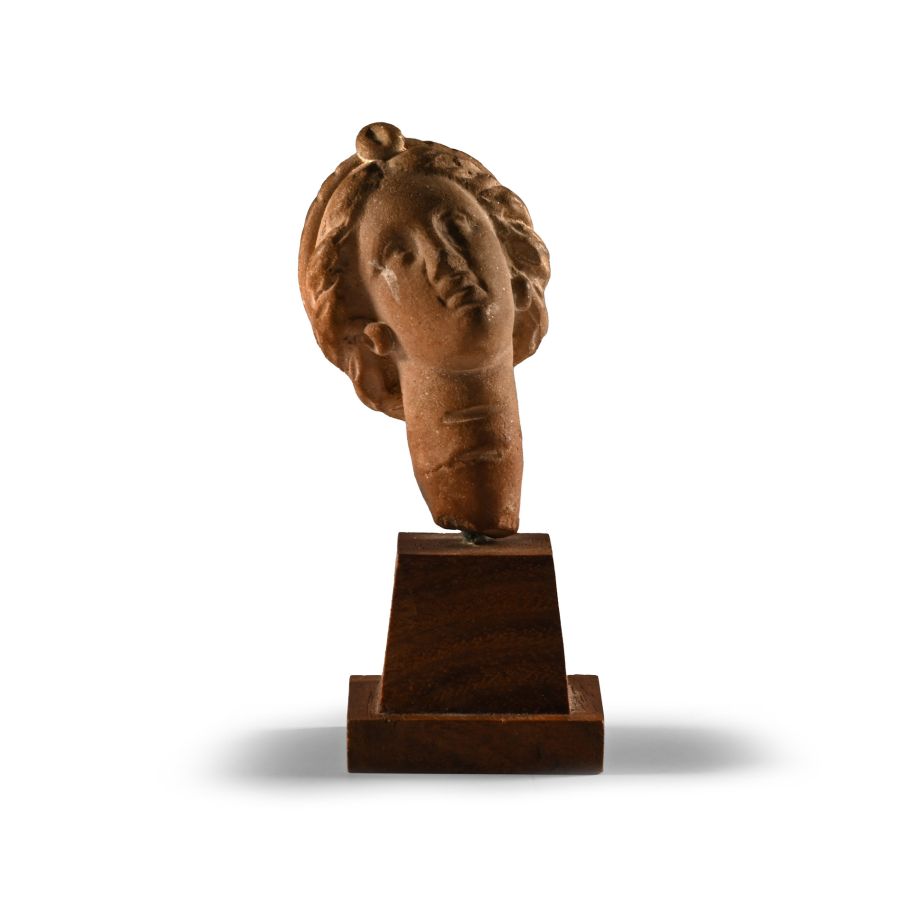
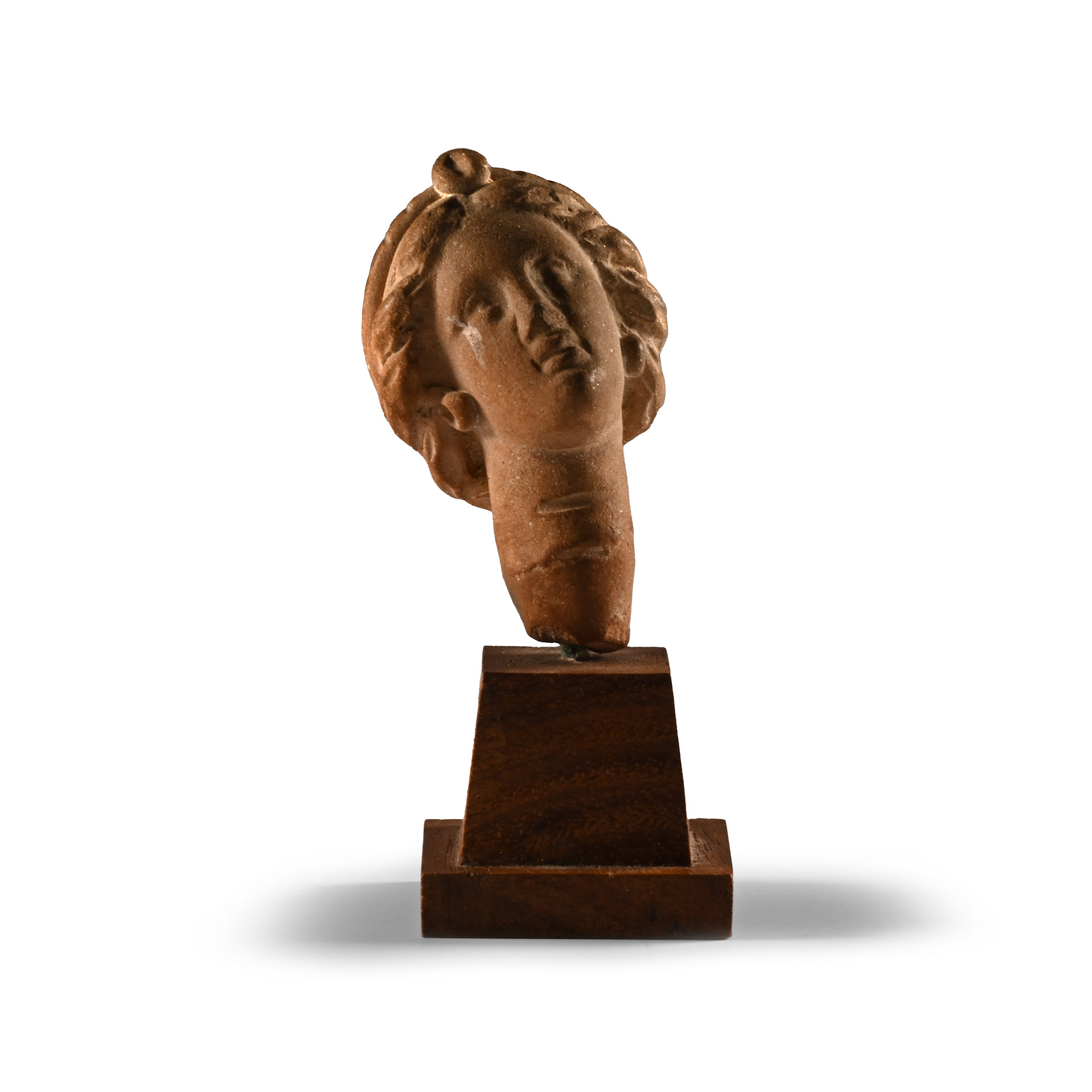
Greek Terracotta Head of a Goddess
4TH-3RD CENTURY B.C.
3 in. (41.3 grams total, 75 mm high including stand).
With a delicately modelled face and full lips, hooped earrings visible from beneath her hair; the hair with central parting and pulled to a chignon at the nape of the neck; wearing a diadem with central embellishment; mounted on a custom-made display stand.
ProvenanceEx French Sorbonne archaeology professor (deceased); 1960s -2000s.
LiteratureCf. Summerer, L., Hellenistische Terrakotten aus Amisos: ein Beitrag zur Kunstgeschichte des Pontosgebietes, Stuttgart, 1999, figs.S II, 15,S; for a similar head of a dancer from Amisos see Louvre CA 1876.
FootnotesThese figurines were most probably manufactured in Hellenistic cities by craftsmen who used either light yellow or dark brown clay. After the firing, the surface of the clay became reddish, while the core became grey-brown. The majority of the figurines were made from untreated clay with many impurities, such as coarse grain. Due to the quality of the clay the surface of the figurines was often rugged, despite the retouch, but were painted with vivid colours.
CONDITIONTimeLine Auctions follows a vetting process to ensure the authenticity and legality of all items, reinforcing our commitment to integrity and responsible trading. Each antiquity, antique, and coin lot undergoes thorough examination by a vetting committee of at least ten external specialists, professional trade association members, scientists, and archaeologists: Our Vetting Process
AUCTIONS:
TimeLine is a leading auction house specialising in antiquities, ancient art, collectables, natural history, coins, medals, and books. Our auctions offer museums, collectors, historians, and enthusiasts the opportunity to acquire unique and historically significant pieces.
-
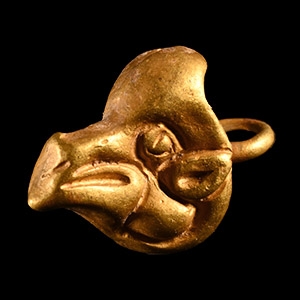
Scythian Gold Animal Head Pendant
4th-5th century B.C.Sold for (Inc. bp): £416
Comprising a stylised head of a boar modelled in the round, annular eye and tall bristles above the head; loop to the rear. 0.81 grams, 12 mm
From a late Japanese specialist collector, 1970-2000s. -
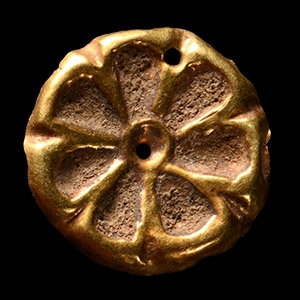
Greek Gold Floral Mount
Circa 4th-2nd century B.C.Sold for (Inc. bp): £104
The repoussé flower with seven petals and pierced through the pistil and once between the petals. 0.36 grams, 14 mm wide
Property of a UK gentleman, acquired 20 November 1981. Property of an East Sussex, UK, gentleman. -
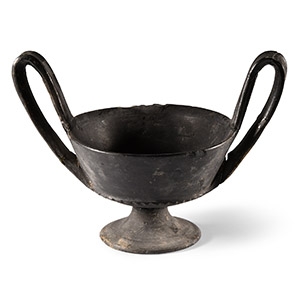
Etruscan Bucchero Kantharos Cup
Circa 7th-6th century B.C.Sold for (Inc. bp): £390
Black ceramic with broad bowl and two loop handles, short stem and trumpet-shaped foot; bowl with fluted carination; repaired. 339 grams, 18.5 cm wide
From the Steel family collection, 1950s-late 1990s.
