
Loading, please wait...
LOT 0584
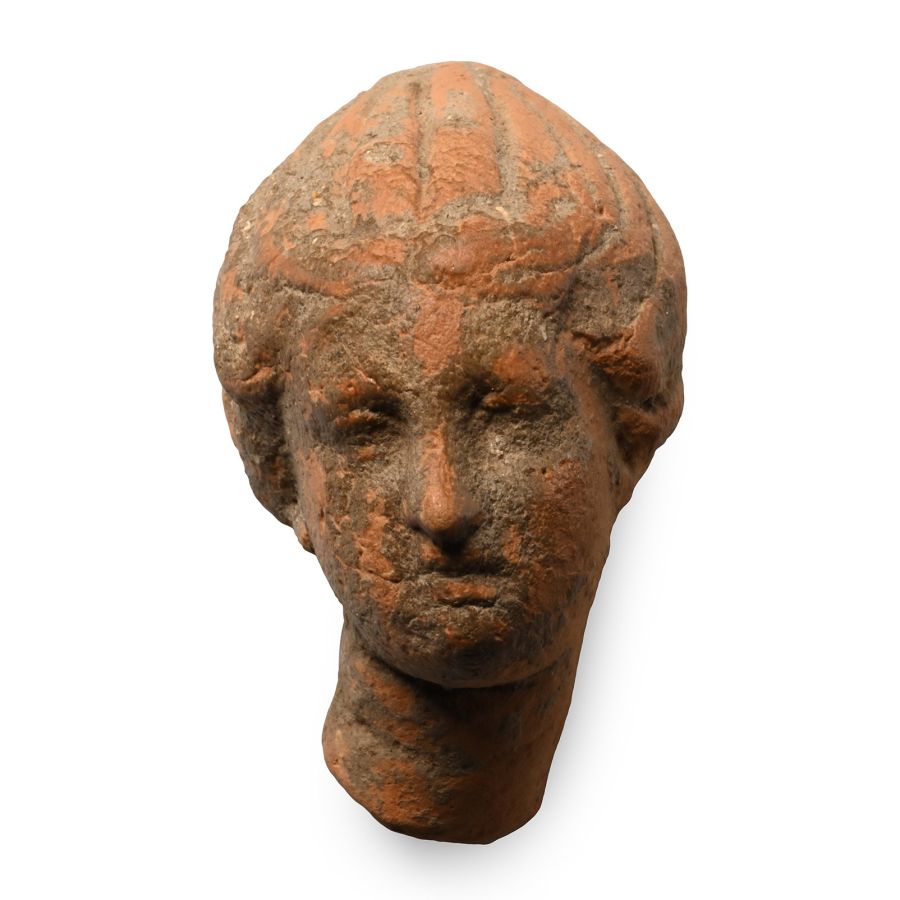
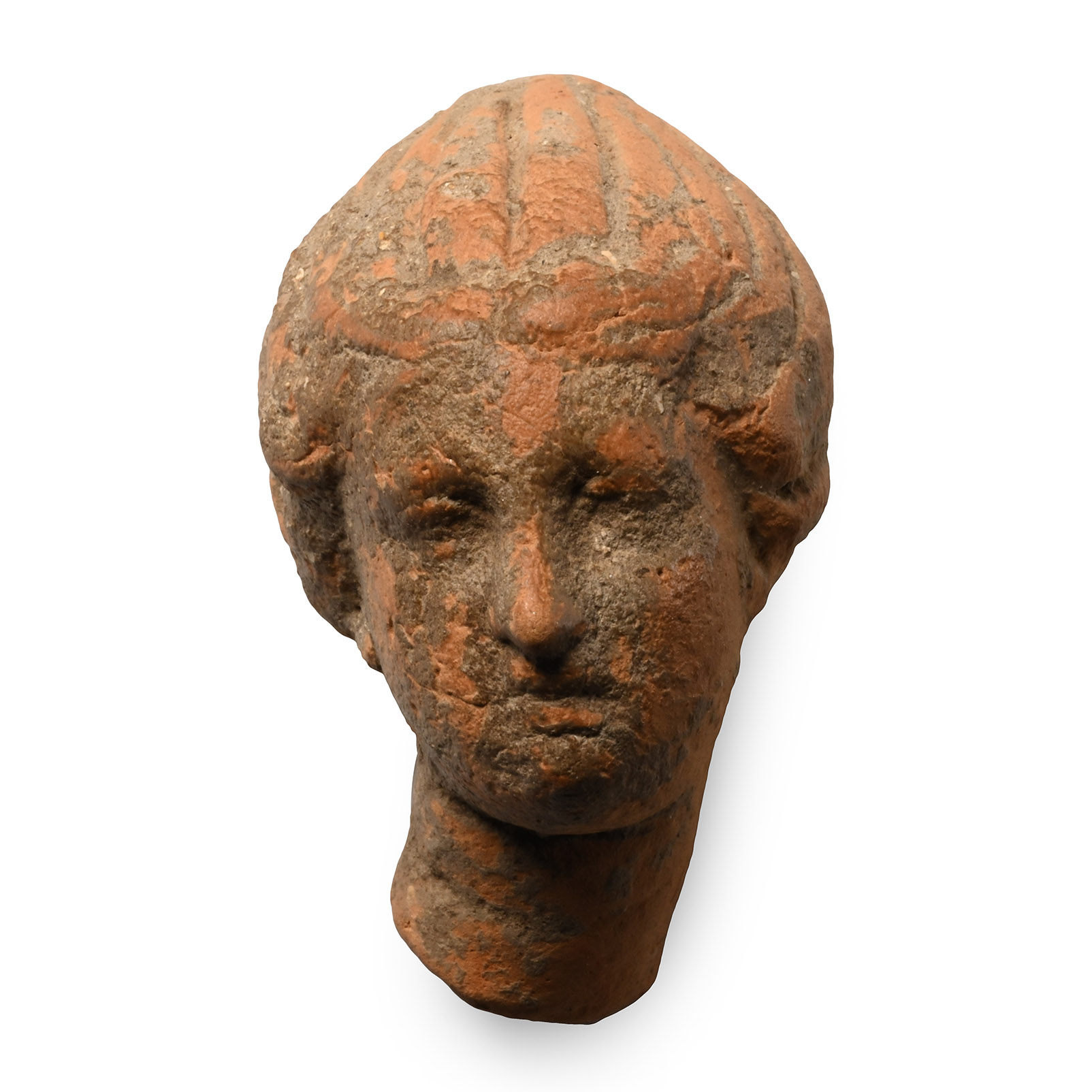
Greek Terracotta Head of a Female
TARENTINE, 3RD-1ST CENTURY B.C.
2 1/4 in. (43 grams, 56 mm).
Female head moulded with a segmented conical cap with earlobes visible beneath; the head slightly turned and tilted downwards on a long slender neck.
ProvenanceAcquired in the mid 1980s-1990s.
Private collection, Switzerland, thence by descent.
Private collection, since the late 1990s.
This lot is accompanied by an illustrated lot declaration signed by the Head of the Antiquities Department, Dr Raffaele D’Amato.
Cf. similar though larger Tarentine female head in the Metropolitan Museum under accession number: 2013.612.
CONDITIONTimeLine Auctions follows a vetting process to ensure the authenticity and legality of all items, reinforcing our commitment to integrity and responsible trading. Each antiquity, antique, and coin lot undergoes thorough examination by a vetting committee of at least ten external specialists, professional trade association members, scientists, and archaeologists: Our Vetting Process
AUCTIONS:
TimeLine is a leading auction house specialising in antiquities, ancient art, collectables, natural history, coins, medals, and books. Our auctions offer museums, collectors, historians, and enthusiasts the opportunity to acquire unique and historically significant pieces.
-
Cypriot Terracotta Mask with Helmet
6th-5th century B.C.Sold for (Inc. bp): £442
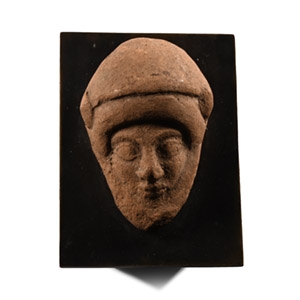
Modelled in the half-round with stylised facial features and wearing a large helmet; mounted on a custom-made display stand. 94 grams total, 50 mm (66 mm including stand)
with Hotel Drouot, Succession of Former collection Colonel W. Mutiaux, Paris, 5 September 1952, lot 66. Ex collection of Eugène Muriaux (1846-1925?). From the collection M.W., Paris, France, 1950-1970. Ex collection of Françoise and Claude Bourelier. This lot is accompanied by an illustrated lot declaration signed by the Head of the Antiquities Department, Dr Raffaele D’Amato.
The man's helmet is typically Phoenician-Cypriot. Therefore, it is possible to consider this terracotta as the portrait of a Cypriot warrior, with Greek and Phoenician elements. The artefact is part of ex-voto productions with Greek-Phoenician characteristics widespread throughout the Eastern Mediterranean. -
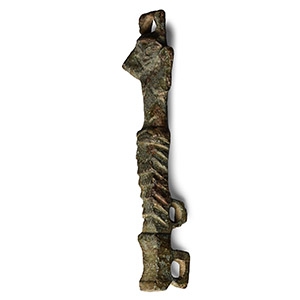
Greek Bronze Lockplate Figure
4th-3rd century B.C.Sold for (Inc. bp): £39
Formed as a locking-mechanism plate with two pierced lugs to the reverse, figural handle of Aphrodite with raised arms dressing her hair, loop above. 22.9 grams, 74 mm
Acquired on the London art market in the late 1980s-1990s. From the family collection of an East London, UK, gentleman. This lot is accompanied by an illustrated lot declaration signed by the Head of the Antiquities Department, Dr Raffaele D’Amato. -
.jpg)
Parthian Hammered Silver Drinking Vessel
2nd-1st century B.C.Estimate: £400 - 600 (+bp*)
Opening Bid: £150
Squat bowl with integral raised foot, incised line beneath the rim. 171 grams, 16 cm
London, UK gallery, 1971-early 2000s. This lot is accompanied by an illustrated lot declaration signed by the Head of the Antiquities Department, Dr Raffaele D’Amato.
