
Loading, please wait...
LOT 0520
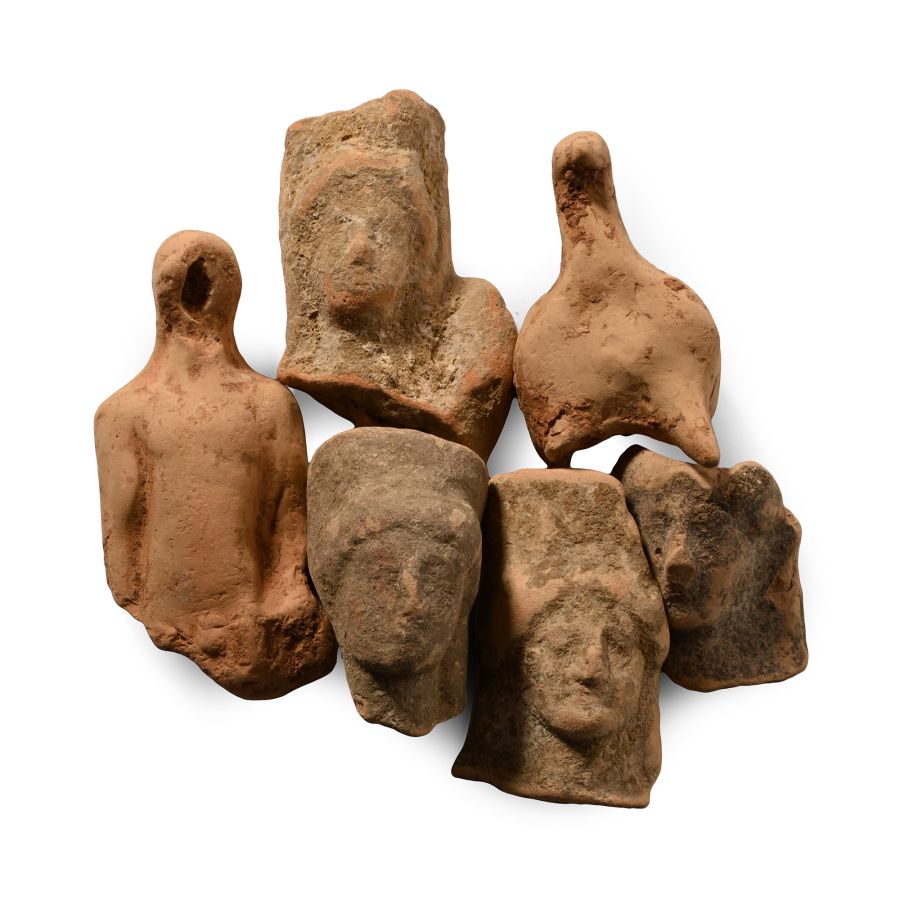
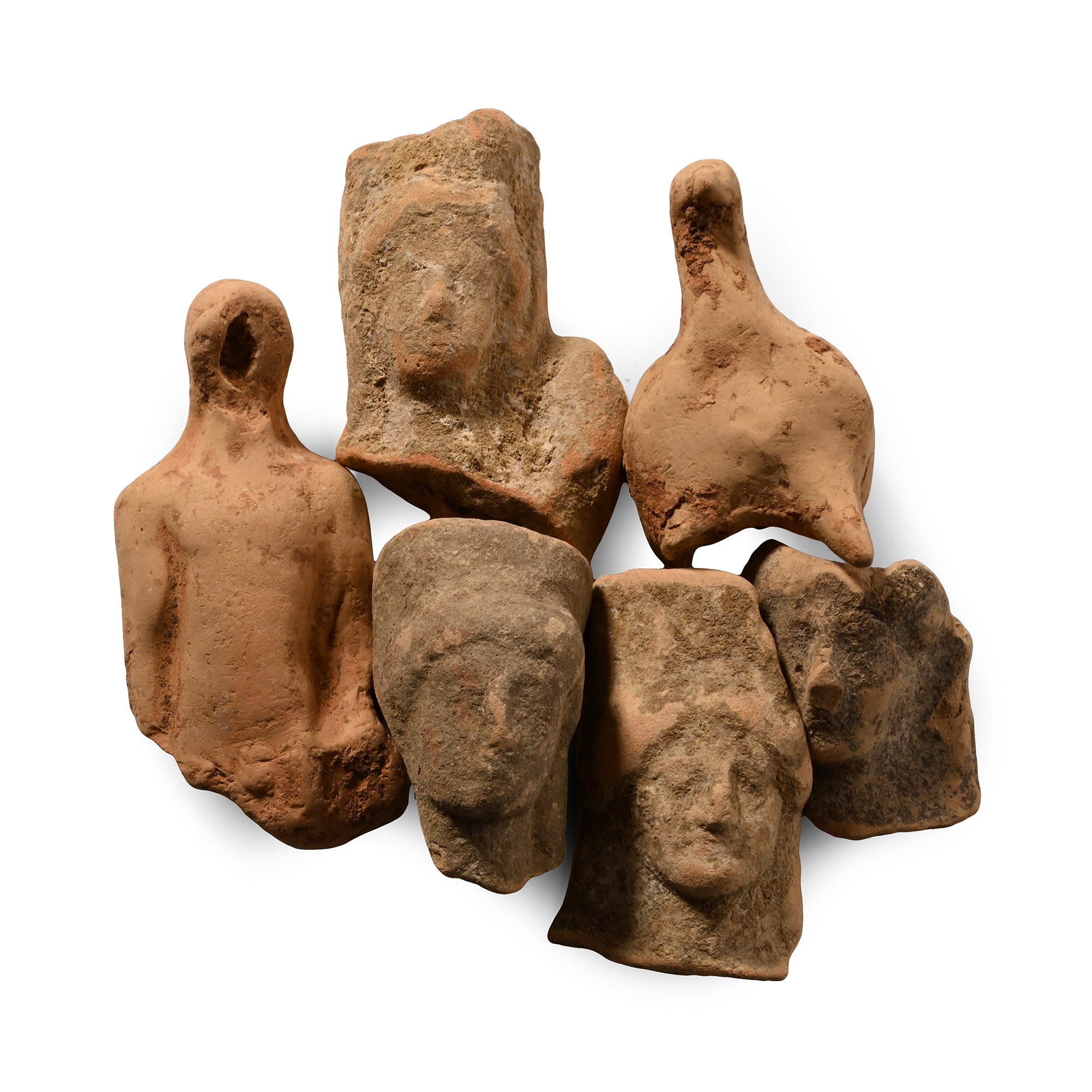
Greek Terracotta Head Collection
CIRCA 4TH-2ND CENTURY B.C.
1 1/2 - 2 7/8 in. (116 grams total, 37-72 mm).
Comprising four head fragments, one fragment of the upper torso of a male, and a bird fragment. [6, No Reserve]
ProvenanceFrom the collection of a Cambridge, UK, gentleman, by direct descent from his father, who acquired the items in London in circa 1960.
CONDITIONTimeLine Auctions follows a vetting process to ensure the authenticity and legality of all items, reinforcing our commitment to integrity and responsible trading. Each antiquity, antique, and coin lot undergoes thorough examination by a vetting committee of at least ten external specialists, professional trade association members, scientists, and archaeologists: Our Vetting Process
AUCTIONS:
TimeLine is a leading auction house specialising in antiquities, ancient art, collectables, natural history, coins, medals, and books. Our auctions offer museums, collectors, historians, and enthusiasts the opportunity to acquire unique and historically significant pieces.
-
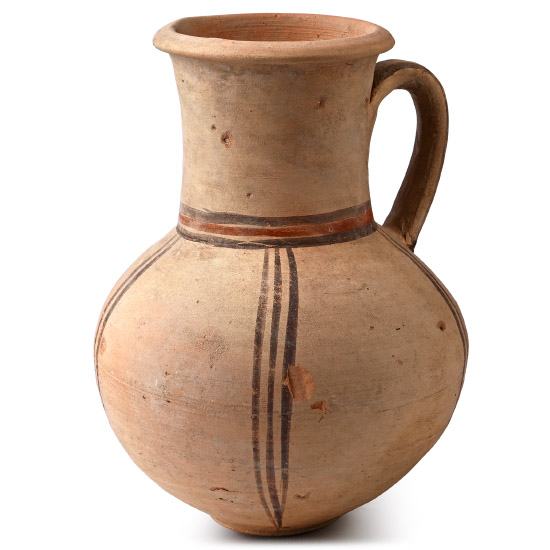
Large Eastern Mediterranean Painted Terracotta Pitcher
1st millennium B.C.Sold for (Inc. bp): £1,105
With a wide mouth, everted rim, and elongated, cylindrical neck, bulbous body with painted polychrome bands, a strap handle with painted linear decoration. 1.03 kg, 22.5 cm
From a 1980s UK collection. Acquired on the UK art market in the early 2000s. Property of a London, UK, antiquarian. -
.jpg)
Greek Gold Ring and Carnelian Gemstone with Asclepius and Hygeia
Hellenistic, 1st century B.C.-1st century A.D.Sold for (Inc. bp): £2,340
Comprising a gold wire hoop with panels of baluster detailing, scrolled and securing a gold cell with an inset cabochon gemstone; to the domed face, the god Asclepius with caduceus symbol; to the flat face, goddess Hygeia standing holding a serpent; some usage wear. 2.12 grams, 22.48 mm overall, 14.21 x 16.13 mm internal diameter (approximate size British F 1/2, USA 3, Europe 4.3, Japan 4)
Private collection, UK. This lot has been checked against the Interpol Database of stolen works of art and is accompanied by search certificate number no.13357- 259200.
Asclepius, son of Apollo and Coronis, was the Graeco-Roman god of medicine, healing and prophecy. He had two daughters with Epione, the goddess of soothing - Hygeia (goddess of health) and Panacea (goddess of healing). -
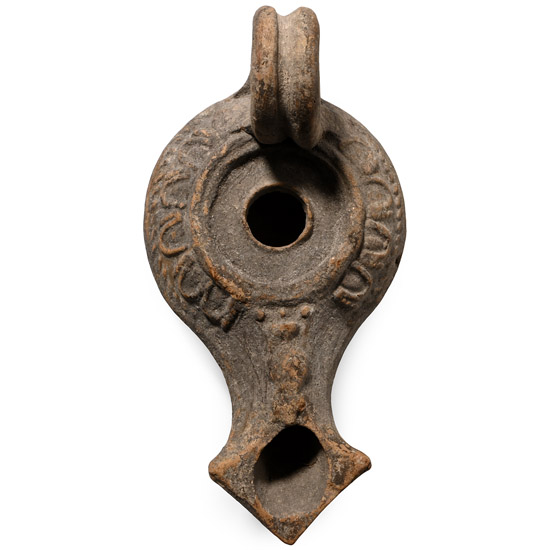
Greek Terracotta Oil Lamp with Handle
Hellenistic, 2nd-1st century B.C.Sold for (Inc. bp): £195
Low-relief ovolo decoration on the body with a raised rosette motif on the nozzle, ribbed loop handle to the rear, and an inked collector's note '191' on the base. 53.7 grams, 11.2 cm
From an important collection of lamps, Germany, 1970s.
