
Loading, please wait...
LOT 0564
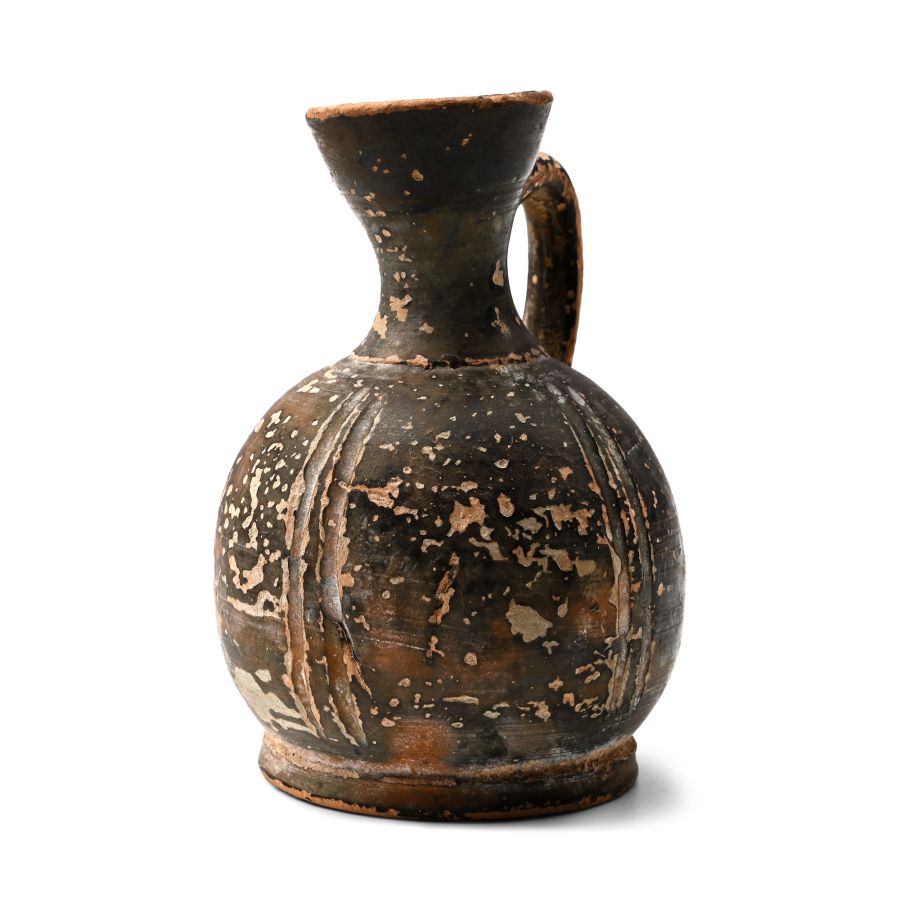
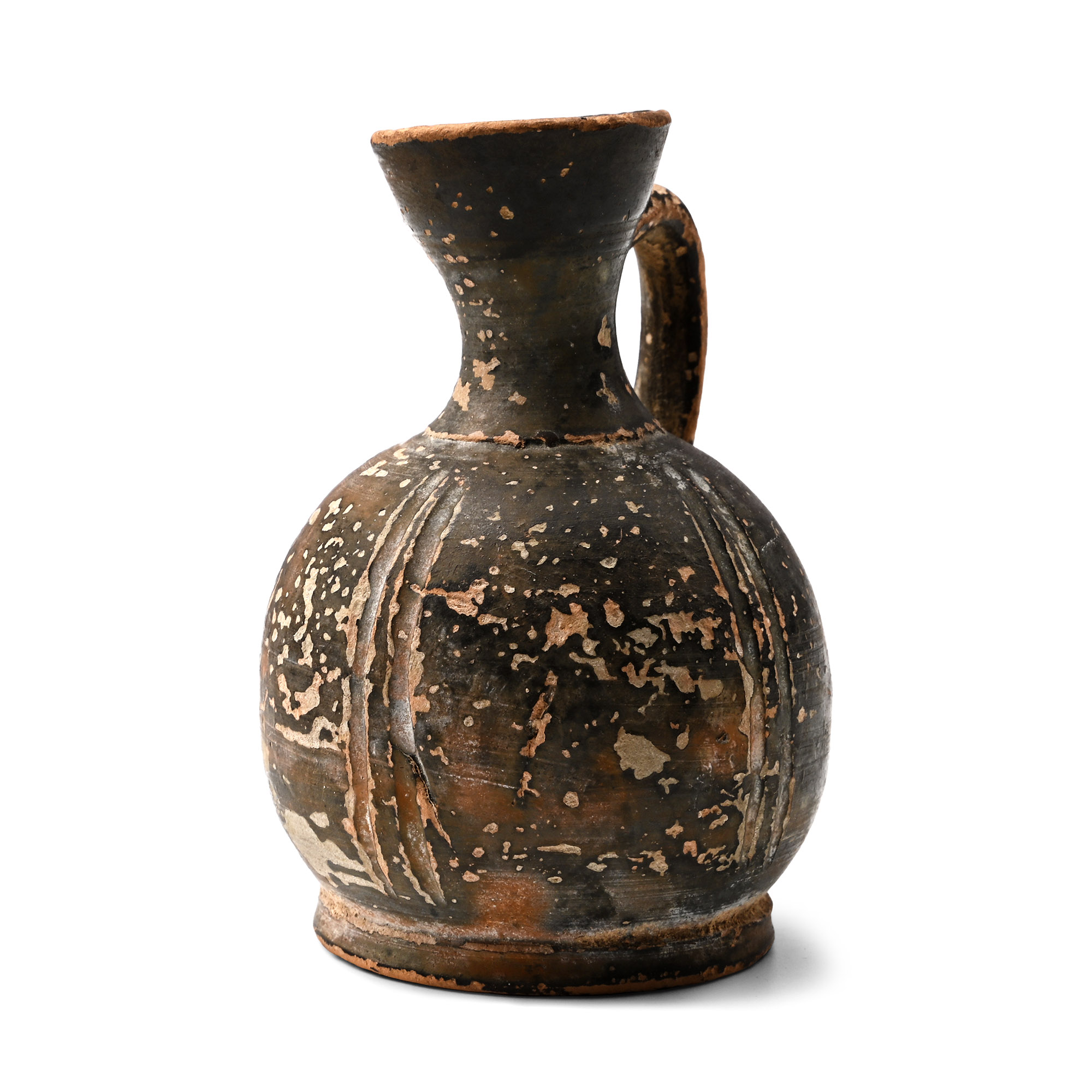
Greek Terracotta Handled Lekythos
4TH-3RD CENTURY B.C.
2 1/2 in. (44.3 grams, 64 mm).
Ovoid in profile with trumpet-shaped spout and strap handle, incised vertical bands to the bulbous body. [No Reserve]
ProvenanceFrom a Scottish gentleman’s collection, Glasgow, formed from the early 2000s.
CONDITIONTimeLine Auctions follows a vetting process to ensure the authenticity and legality of all items, reinforcing our commitment to integrity and responsible trading. Each antiquity, antique, and coin lot undergoes thorough examination by a vetting committee of at least ten external specialists, professional trade association members, scientists, and archaeologists: Our Vetting Process
AUCTIONS:
TimeLine is a leading auction house specialising in antiquities, ancient art, collectables, natural history, coins, medals, and books. Our auctions offer museums, collectors, historians, and enthusiasts the opportunity to acquire unique and historically significant pieces.
-
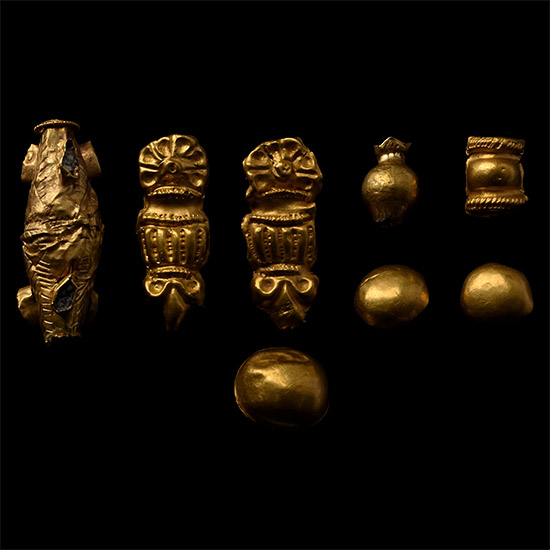
Greek Gold Bead Collection
4th-3rd century B.C.Estimate: £1,500 - 2,000 (‡+bp*)
Opening Bid: £750
A collection of necklace pendants and dress appliques comprising: a hollow bead with a truncated conical shape, featuring appliques for precious stone inserts; three studs with a hemispherical dome; a pair of appliques decorated with rosette and mask-shaped elements; a pendant in the form of a myrtle berry, and another fragment. 11.19 grams total, 10-31 mm
Acquired by a Swiss family in the mid-1980s to late 1990s, thence by descent. Private collection, Switzerland, since the late 1990s. This lot has been checked against the Interpol Database of stolen works of art and is accompanied by a search certificate number no.13023-246772.
The iconography of Hellenistic jewellery often incorporates vegetal motifs, reflecting the Greek value of fertility and a royal Greek female wearer’s obligation to produce heirs. With its heavy incorporation of plant motifs, including tendrils, blossoms, and a bursting pomegranate, the diadem design symbolises a woman’s reproductive potential and alludes to the female wearer’s social responsibility to produce offspring. -
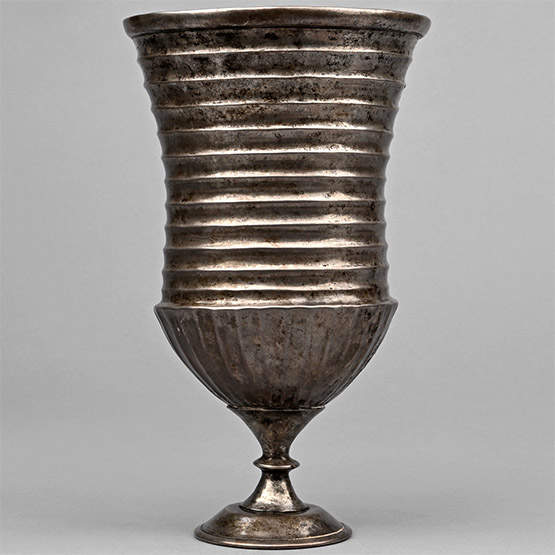
Large Graeco-Parthian Ribbed Silver Goblet
Graeco-Parthian or Gandharan, 1st century B.C.-1st century A.D.Estimate: £20,000 - 30,000 (+bp*)
Opening Bid: £10,000
With carinated ribbed walls, the upper portion cylindrical, the lower ovoid, with a separately made footed base, with the foot characterised by a central horizontal groove. 695 grams, 20 cm high
Robert Haber, New York, 1992. Accompanied by an academic report by Dr Raffaele D'Amato. This lot has been checked against the Interpol Database of stolen works of art and is accompanied by a search certificate number no.13036-248075. -
.jpg)
Etruscan Carnelian Scarab of a Fletcher in Gold Ring
4th-3rd century B.C.Estimate: £1,200 - 1,700 (+bp*)
Opening Bid: £600
With carapace detailing and intaglio of a crouching male carving an arrow; set into a later gold swivel ring. 4.24 grams, 27.12 mm overall, 18.38 x 18.49 mm internal diameter (approximate size British P 1/2, USA 7 3/4, Europe 16.86, Japan 16)
Private collection, Europe. Acquired on the English art market.
