
Loading, please wait...
LOT 0597
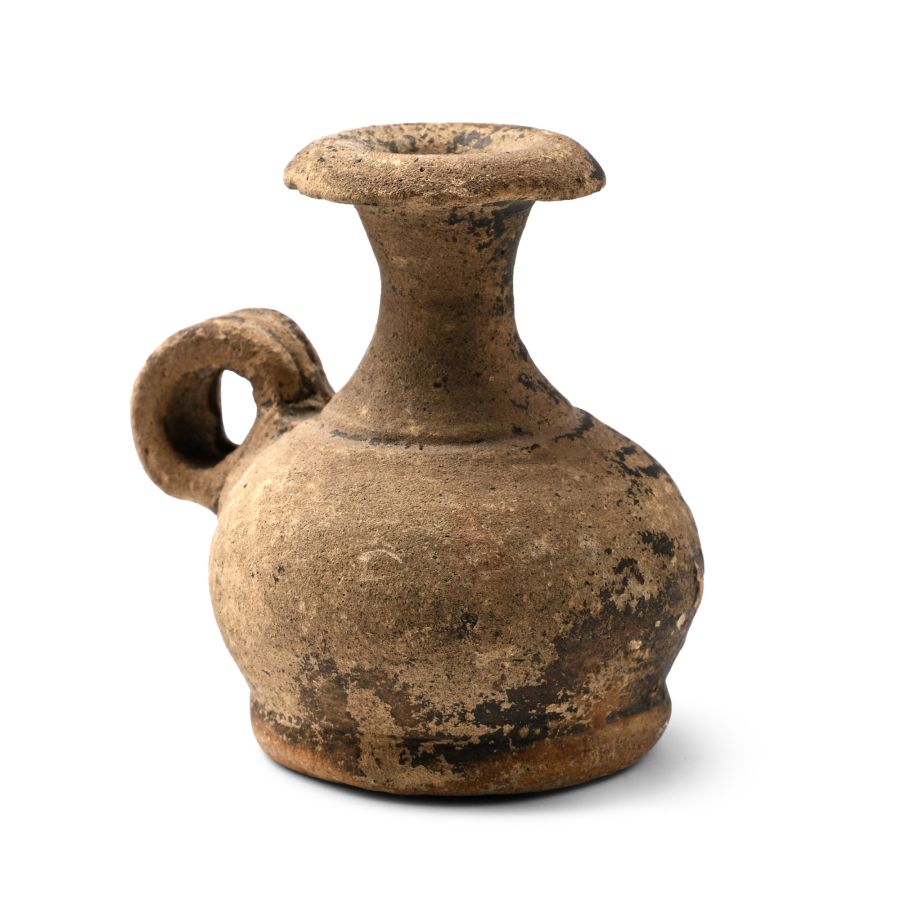
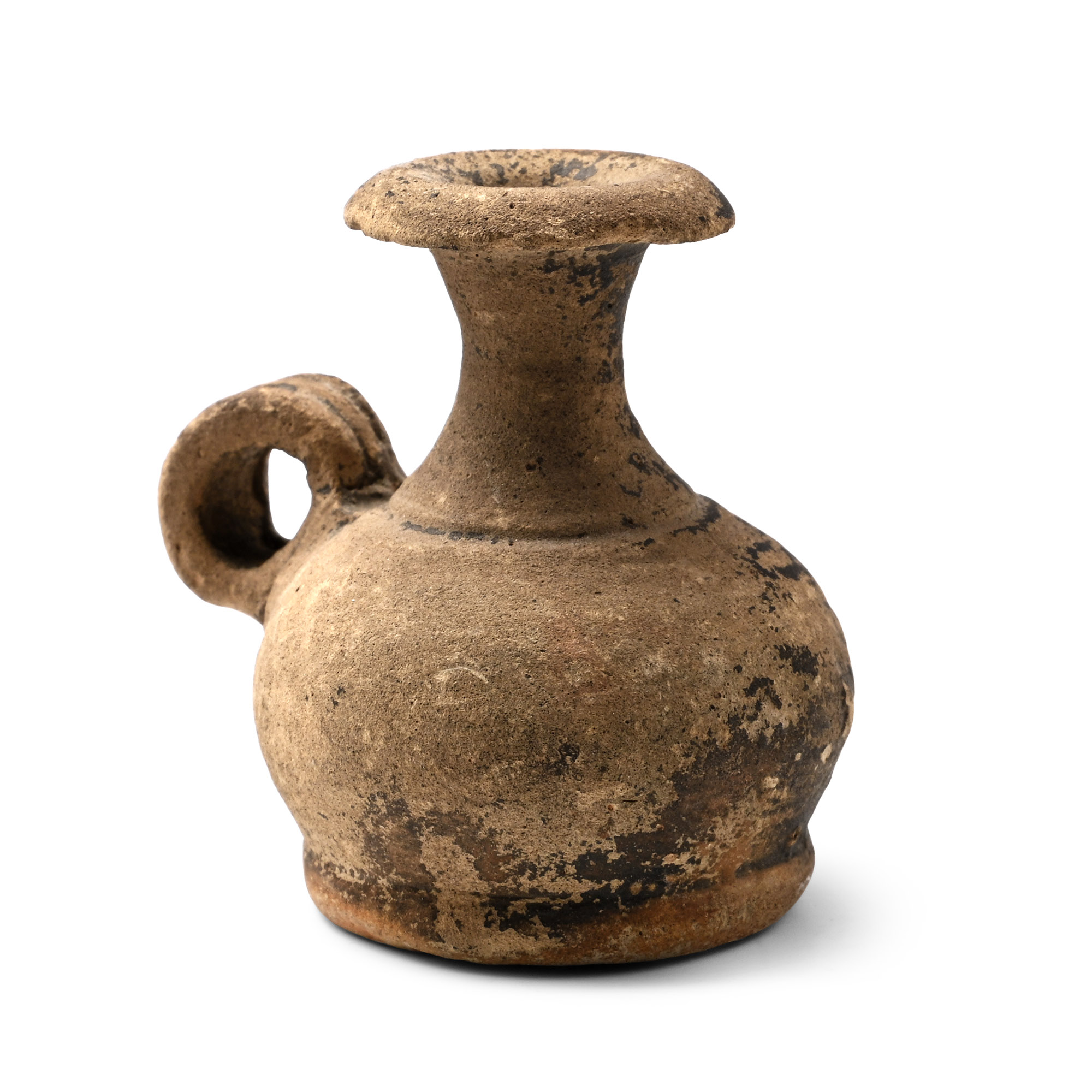
Greek Terracotta Handled Lekythos
4TH-3RD CENTURY B.C.
2 in. (32.7 grams, 51 mm).
Bulbous body and conical mouth with flat inverted rim, strap handle with ribbing, low discoid foot. [No Reserve]
ProvenanceFrom a Scottish gentleman’s collection, Glasgow, formed from the early 2000s.
LiteratureCf. Metropolitan Museum of Art, New York, accession no.41.162.238, for similar.
CONDITIONTimeLine Auctions follows a vetting process to ensure the authenticity and legality of all items, reinforcing our commitment to integrity and responsible trading. Each antiquity, antique, and coin lot undergoes thorough examination by a vetting committee of at least ten external specialists, professional trade association members, scientists, and archaeologists: Our Vetting Process
AUCTIONS:
TimeLine is a leading auction house specialising in antiquities, ancient art, collectables, natural history, coins, medals, and books. Our auctions offer museums, collectors, historians, and enthusiasts the opportunity to acquire unique and historically significant pieces.
-
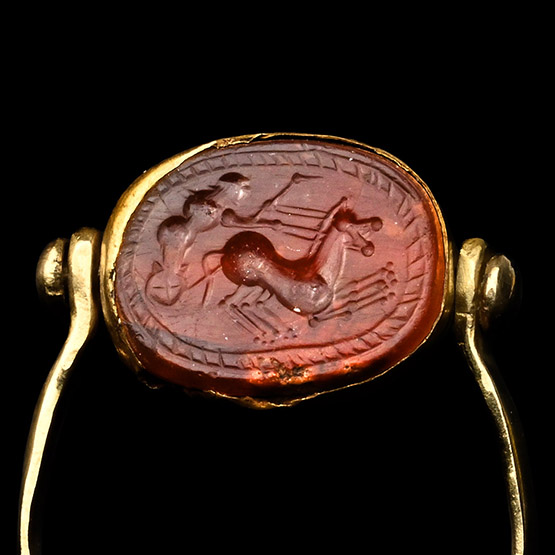
Etruscan Carnelian Scarab of a Charioteer in Gold Ring
3rd century B.C. and laterEstimate: £3,000 - 4,000 (+bp*)
Opening Bid: £1,500
Opaque scaraboid engraved with a dynamic scene of a charioteer driving a biga with his whip raised; set in a sheet-gold mount and a later swivel ring; supplied with a museum-quality impression. 4.26 grams, 25.07 mm overall, 17.77 x 16.22 mm internal diameter (approximate size British O, USA 7, Europe 14.98, Japan 14)
Private English collection, formed between the late 1970s and early 1990s. Private collection, UK. This lot has been checked against the Interpol Database of stolen works of art and is accompanied by search certificate number no.12948-245985. -
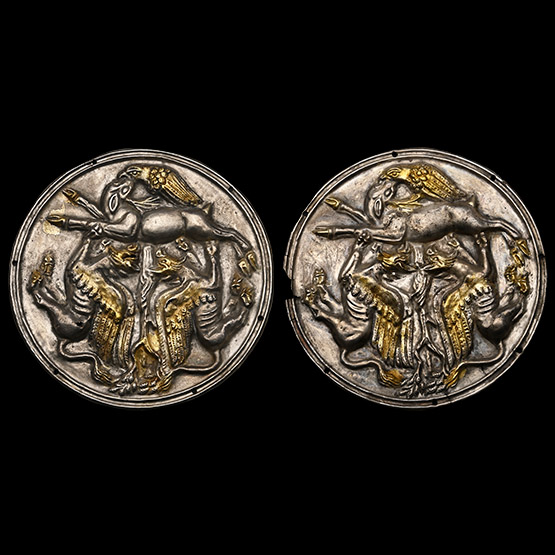
Greek Silver-Gilt Phalerae Depicting a Fight Between Gryphons, an Eagle and a Deer
Hellenistic, 1st century B.C.-1st century A.D.Sold for (Inc. bp): £31,200
A pair of circular horse trappings hammered from sheet-silver, each with a decoration of two gryphons and an eagle slaughtering a deer, the gryphons attacking the deer from below, and the eagle attacking its muzzle, a tree in the background; accompanied by a custom-made display case. 62 grams total, 13.2 cm
Private German collection, 1980s. Accompanied by an expertise from Striptwist Ltd, a London-based company run by historical precious metal specialist Dr Jack Ogden. Accompanied by an academic report by Dr Raffaele D’Amato. This lot has been checked against the Interpol Database of stolen works of art and is accompanied by a search certificate number no.13038-248044.
This phalera comes from the Hellenised East, and was likely used as decoration of the higher part of a horse harness, like the phalerae visible on the armoured and unarmoured horses of the famous graffiti of Dura Europos representing Parthian, Palmyrene or Roman clibanarii (D’Amato-Negin, 2018, pp.11,16-17,26). -
.jpg)
Greek Attic Red-Figure Fragment Collection
Early 5th century B.C.Sold for (Inc. bp): £1,950
Comprising four irregular, finely painted fragments depicting: an outstretched hand below a letter, a young male face in profile, and a pair of horseheads. 6.31 grams total, 18-26 mm
From the stock of a former UK antiquarian, acquired at trade fairs and from private collection formed in the 1980s-1990s. Private collection, Europe.
