
Loading, please wait...
LOT 0620
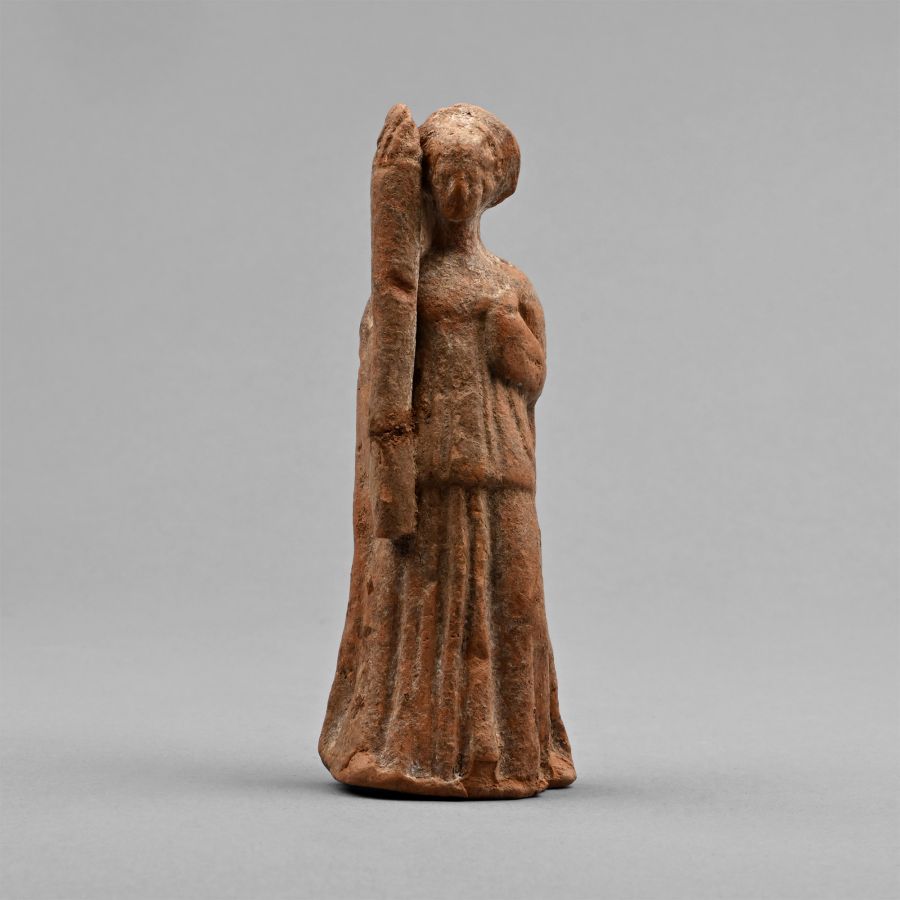
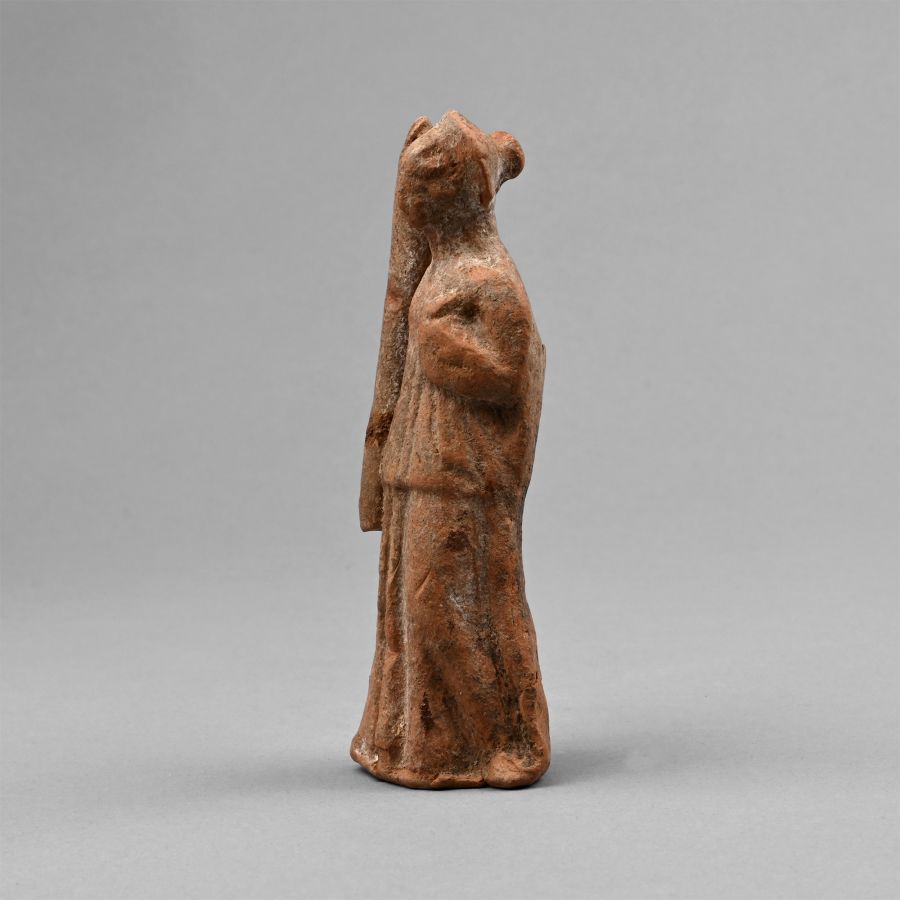
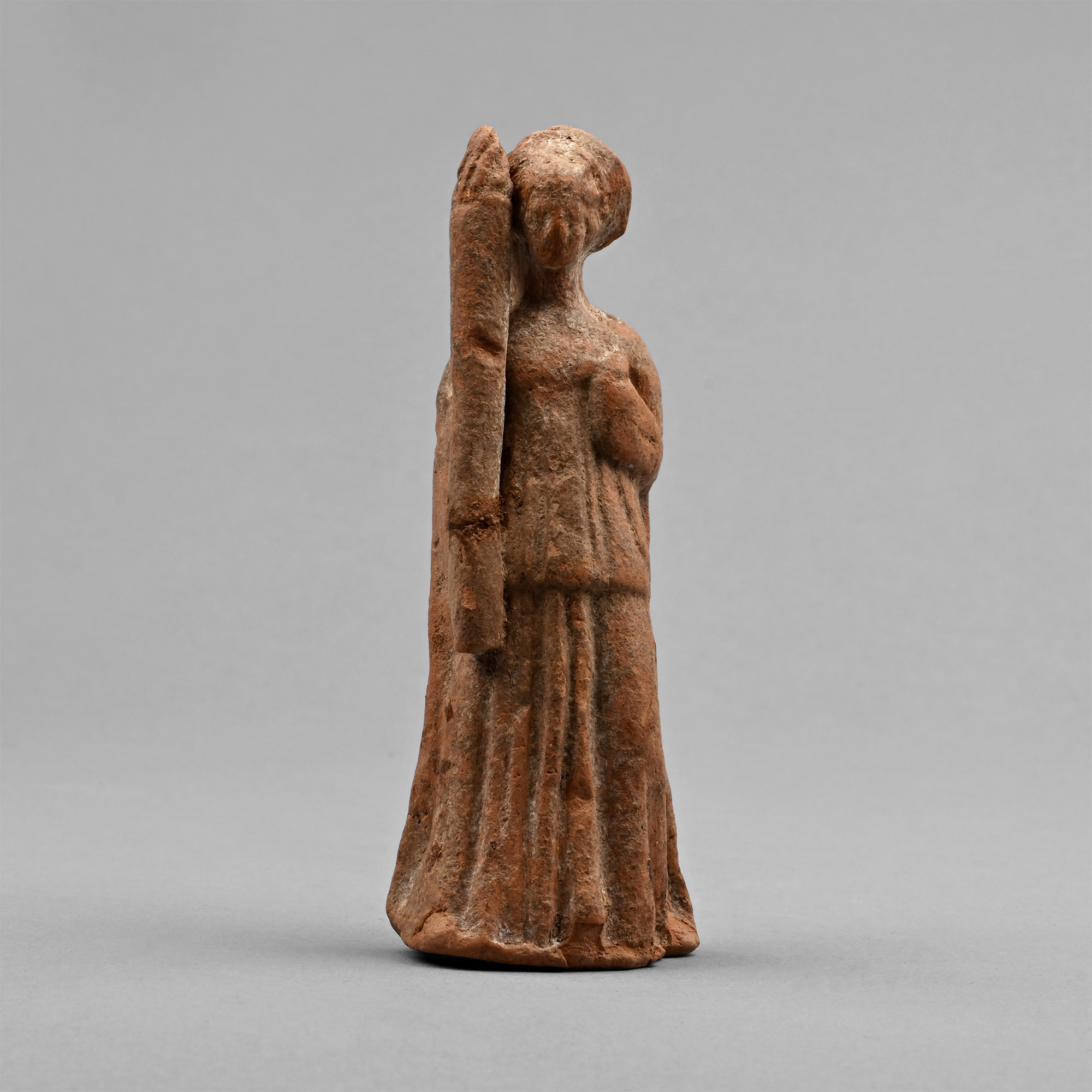
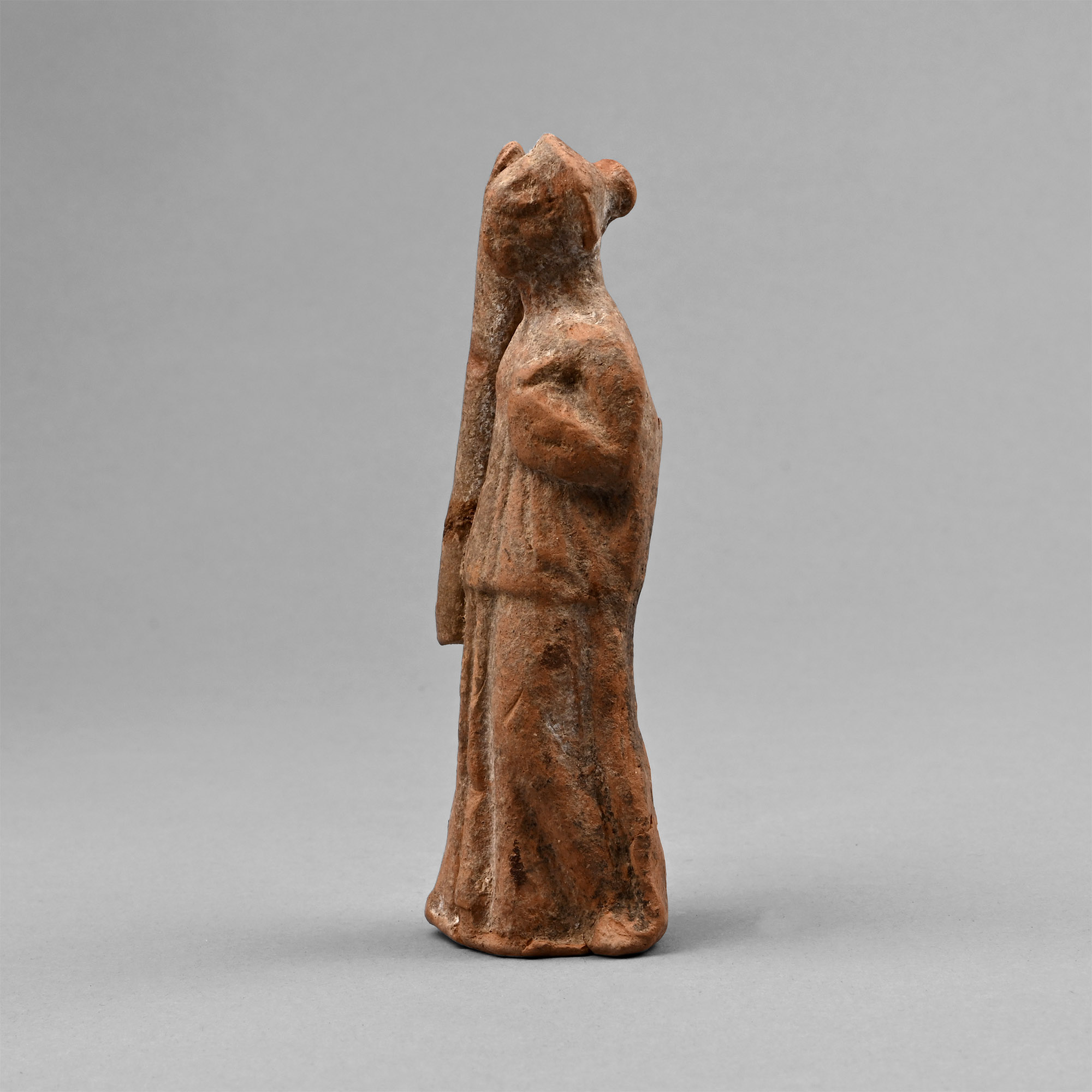
Greek Terracotta Goddess Figure
4TH-3RD CENTURY B.C.
4 3/4 in. (18 grams, 12 cm).
Tanagra type, hollow-formed with a void to the reverse, standing female in tiered robe wearing a diadem and with her hair drawn back, applied torch in her right hand.
ProvenanceEuropean art market.
Acquired in Münich in 2012.
European private collection.
See Dillon, S., The Female Portrait Statue in the Greek World, Cambridge, 2010.
CONDITIONTimeLine Auctions follows a vetting process to ensure the authenticity and legality of all items, reinforcing our commitment to integrity and responsible trading. Each antiquity, antique, and coin lot undergoes thorough examination by a vetting committee of at least ten external specialists, professional trade association members, scientists, and archaeologists: Our Vetting Process
AUCTIONS:
TimeLine is a leading auction house specialising in antiquities, ancient art, collectables, natural history, coins, medals, and books. Our auctions offer museums, collectors, historians, and enthusiasts the opportunity to acquire unique and historically significant pieces.
-
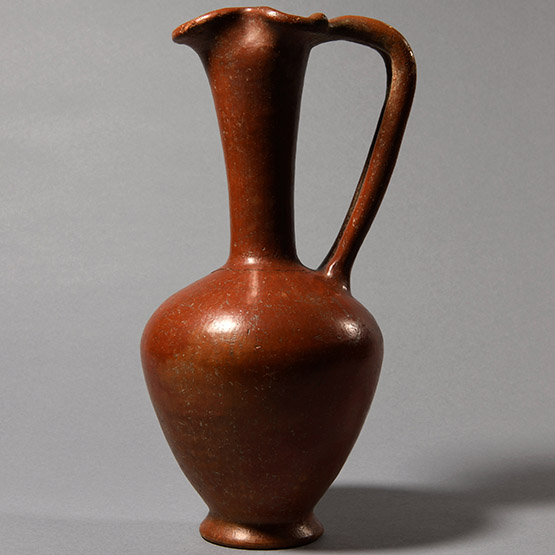
Large Phoenician Ceramic Piriform Jug
Levantine, 8th century B.C.Sold for (Inc. bp): £3,380
With trefoil mouth and integral ribbed handle, covered in a red slip with burnished surface; held in an antique wooden box crate. 1.72 kg, 28 cm
Collected by Miss Patience Townend, in the late 1950s. Thence by descent to the owner’s godmother. By gift to Mrs Lucy Manningham-Buller, circa 2002. Private collection, UK. Accompanied by a copy of a letter from Rupert Chapman, Curator of Levantine Antiquities, in the Middle Eastern Department at the British Museum, dated 4th March 2013, discussing the piece: ‘…there is no doubt in our minds that the piece is genuine, and that it dates to the eighth century B.C....the piece you have is a very fine one… any museum would be very happy to have such a fine example in its collection’. This lot has been checked against the Interpol Database of stolen works of art and is accompanied by search certificate number no.13090-248974.
This object exemplifies the high-quality tableware produced during its historical period, intended for use in the wealthiest homes. -
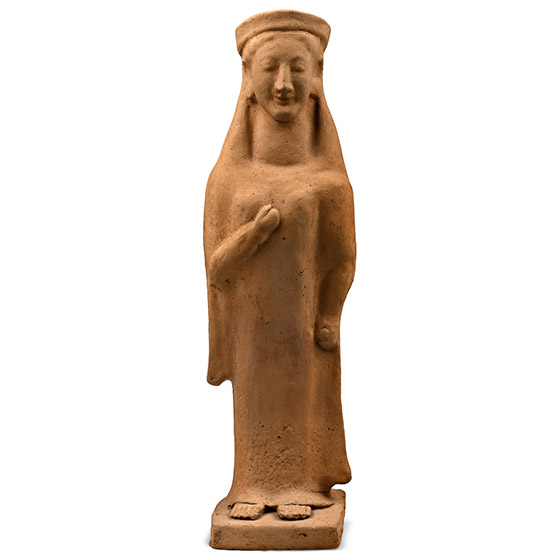
Large Greek Terracotta Figure of a Kore
6th century B.C.Estimate: £5,000 - 7,000 (‡+bp*)
Opening Bid: £2,778
Hollow-formed with scaphoid headdress, long hair hanging behind the shoulders, heavy peplos dress extending to the floor with splayed hem and feet visible beneath; left hand held straight at the thigh, right hand in a fist between the breasts; mounted on a custom-made stand. 6.7 kg total, 57 cm including stand
Swiss private collection, assembled in the 1970s-1980s. with Galerie Serodine, Ascona, Switzerland, 1993. Collection of Dr E.N., Zug, acquired in 1995. This lot has been checked against the Interpol Database of stolen works of art and is accompanied by a search certificate number no.12858-241755. -
.jpg)
Greek Attic Red-Figure Kylix Fragment Depicting a Lyre Player
Early 5th century B.C.Sold for (Inc. bp): £234
Irregular fragment depicting a draped figure playing a lyre, possibly Apollo; meander line to the reverse. 7.25 grams, 42 mm
From the stock of a former UK antiquarian, acquired at trade fairs and from private collection formed in the 1980s-1990s. Private collection, Europe.
