
Loading, please wait...
LOT 0577
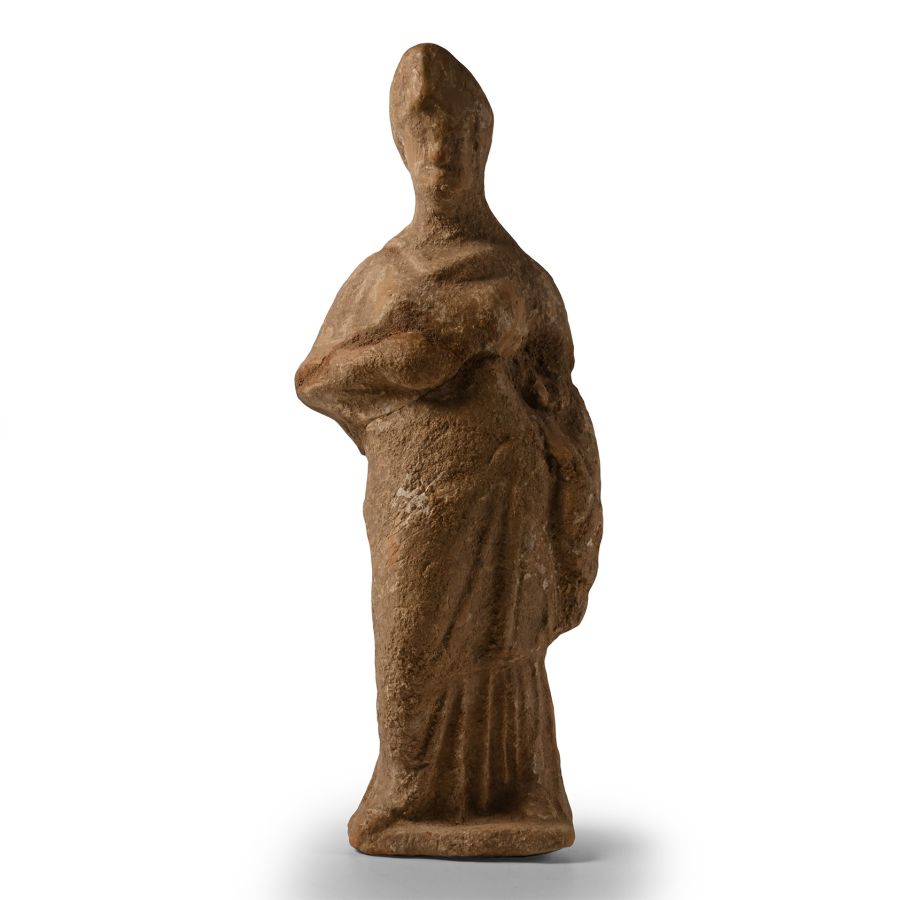
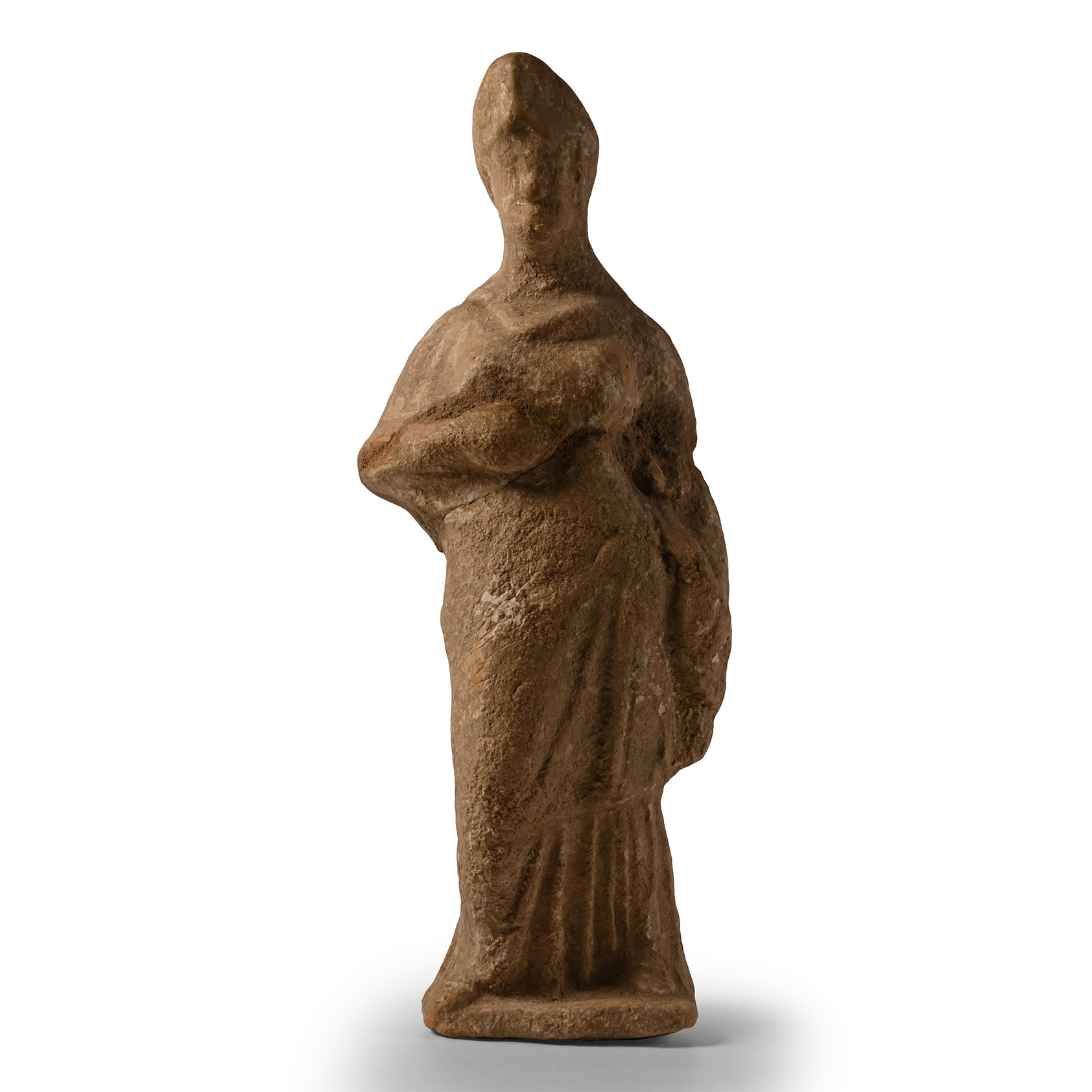
Greek Terracotta Goddess Figure
4TH-3RD CENTURY B.C.
6 1/2 in. (95 grams, 16.5 cm).
Tanagra type, hollow-formed with a void to the reverse, standing female in tiered robe wearing a diadem and with her hair drawn back, right hand cradling an object; chipped.
ProvenanceEuropean art market.
Acquired in Münich in 2012.
European private collection.
This lot is accompanied by an illustrated lot declaration signed by the Head of the Antiquities Department, Dr Raffaele D’Amato.
See Dillon, S., The Female Portrait Statue in the Greek World, Cambridge, 2010.
CONDITIONTimeLine Auctions follows a vetting process to ensure the authenticity and legality of all items, reinforcing our commitment to integrity and responsible trading. Each antiquity, antique, and coin lot undergoes thorough examination by a vetting committee of at least ten external specialists, professional trade association members, scientists, and archaeologists: Our Vetting Process
AUCTIONS:
TimeLine is a leading auction house specialising in antiquities, ancient art, collectables, natural history, coins, medals, and books. Our auctions offer museums, collectors, historians, and enthusiasts the opportunity to acquire unique and historically significant pieces.
-
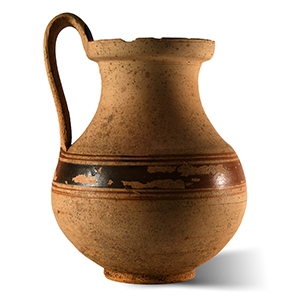
South Italian Painted Terracotta Wine Jug
4th-2nd century B.C.Sold for (Inc. bp): £338
Piriform with convex rim, lentoid-section handle and discoid foot; polychrome painted bands and lines decorating the equator and inner mouth, dash to handle. 227 grams, 13.5 cm high
Acquired in Europe before 1994. This lot is accompanied by an illustrated lot declaration signed by the Head of the Antiquities Department, Dr Raffaele D’Amato. -
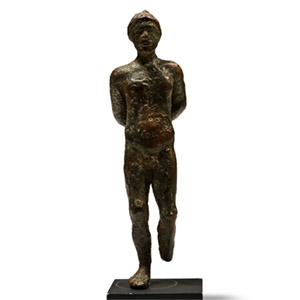
Hellenistic Bronze Figure of a Bound Captive
2nd century B.C.Estimate: £4,000 - 6,000 (‡+bp*)
Opening Bid: £2,000
Modelled in the round nude male standing with hands bound behind his back; with short cropped hair and slender figure; left foot absent; mounted on a custom-made stand. 491 grams, 17 cm including stand
Ex S.K. collection. Acquired on the German art market, July 1995. Accompanied by an academic report by Dr Raffaele D'Amato. This lot has been checked against the Interpol Database of stolen works of art and is accompanied by a search certificate number no.12518-232076. This lot has been cleared against the Art Loss Register database, and is accompanied by an illustrated lot declaration signed by the Head of the Antiquities Department, Dr Raffaele D’Amato. -
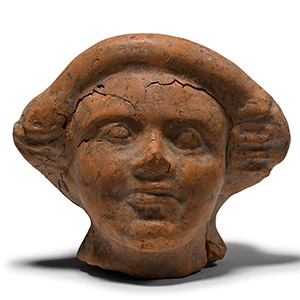
Hellenistic Terracotta Head of a Woman
3rd-1st century B.C.Estimate: £700 - 900 (‡+bp*)
Opening Bid: £350
Hollow-formed with flared neck, moulded face with shallow lentoid eyes, snub nose and wide mouth with enigmatic smile; band of hair framing the face. 499 grams, 12.3 cm wide
Acquired in the mid 1980s-1990s. Private collection, Switzerland, thence by descent. Private collection, since the late 1990s. This lot is accompanied by an illustrated lot declaration signed by the Head of the Antiquities Department, Dr Raffaele D’Amato.
