
Loading, please wait...
LOT 0084
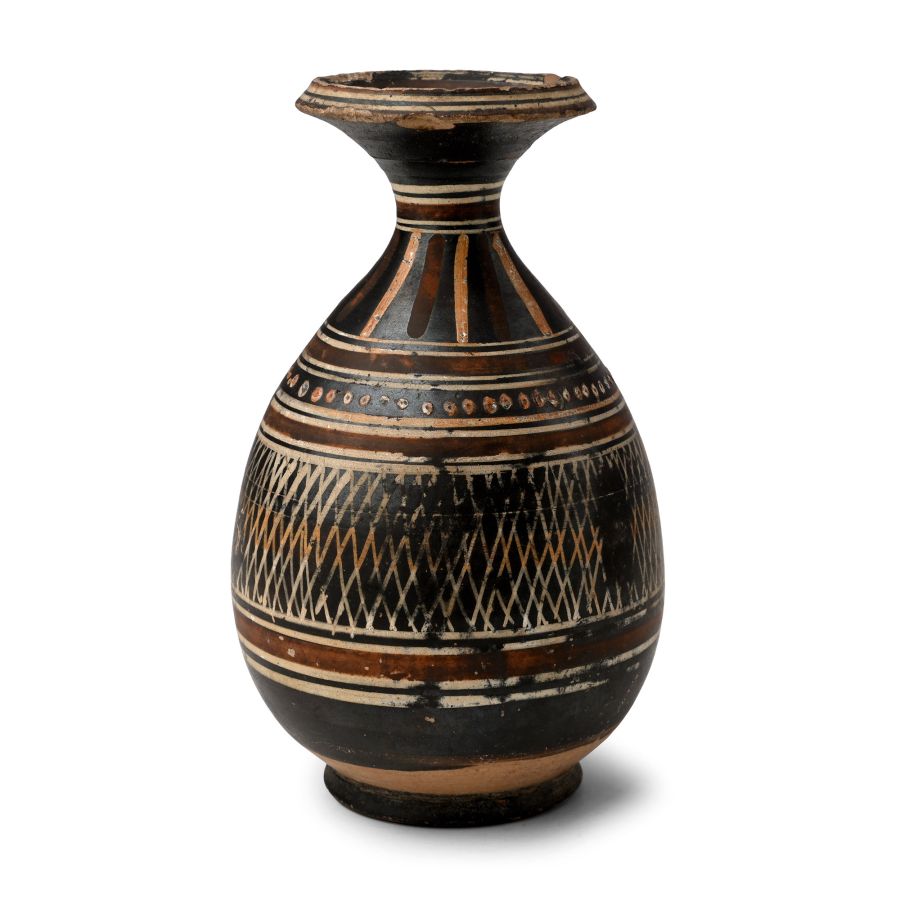
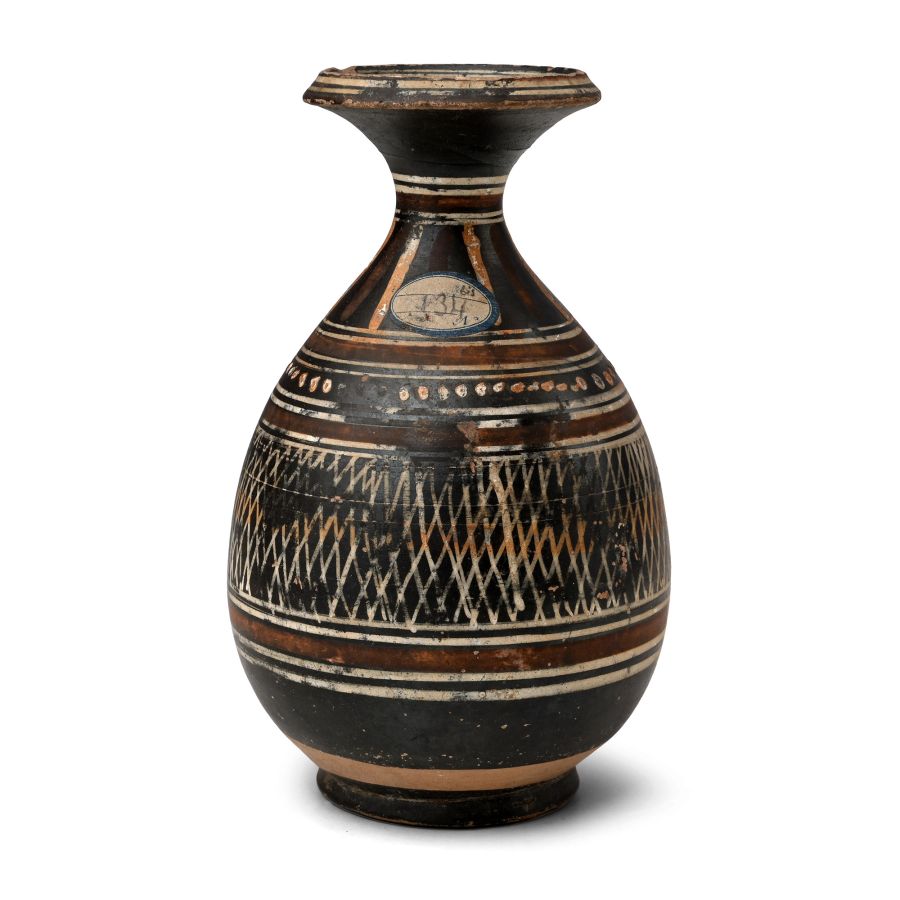
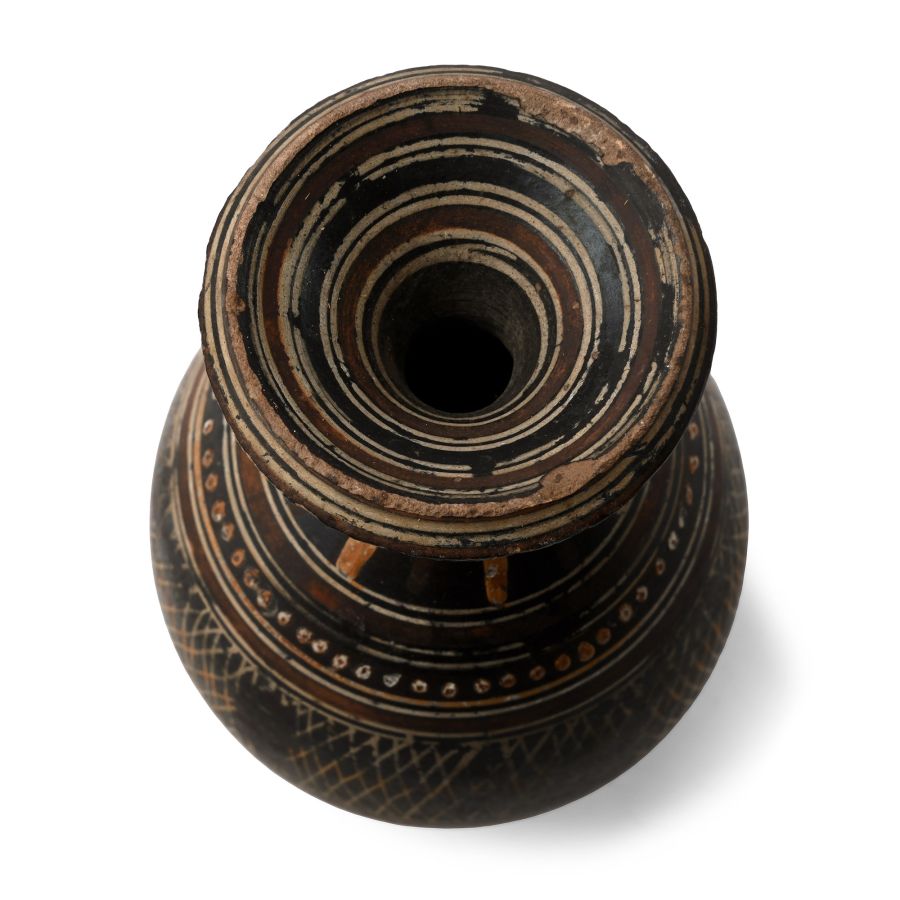
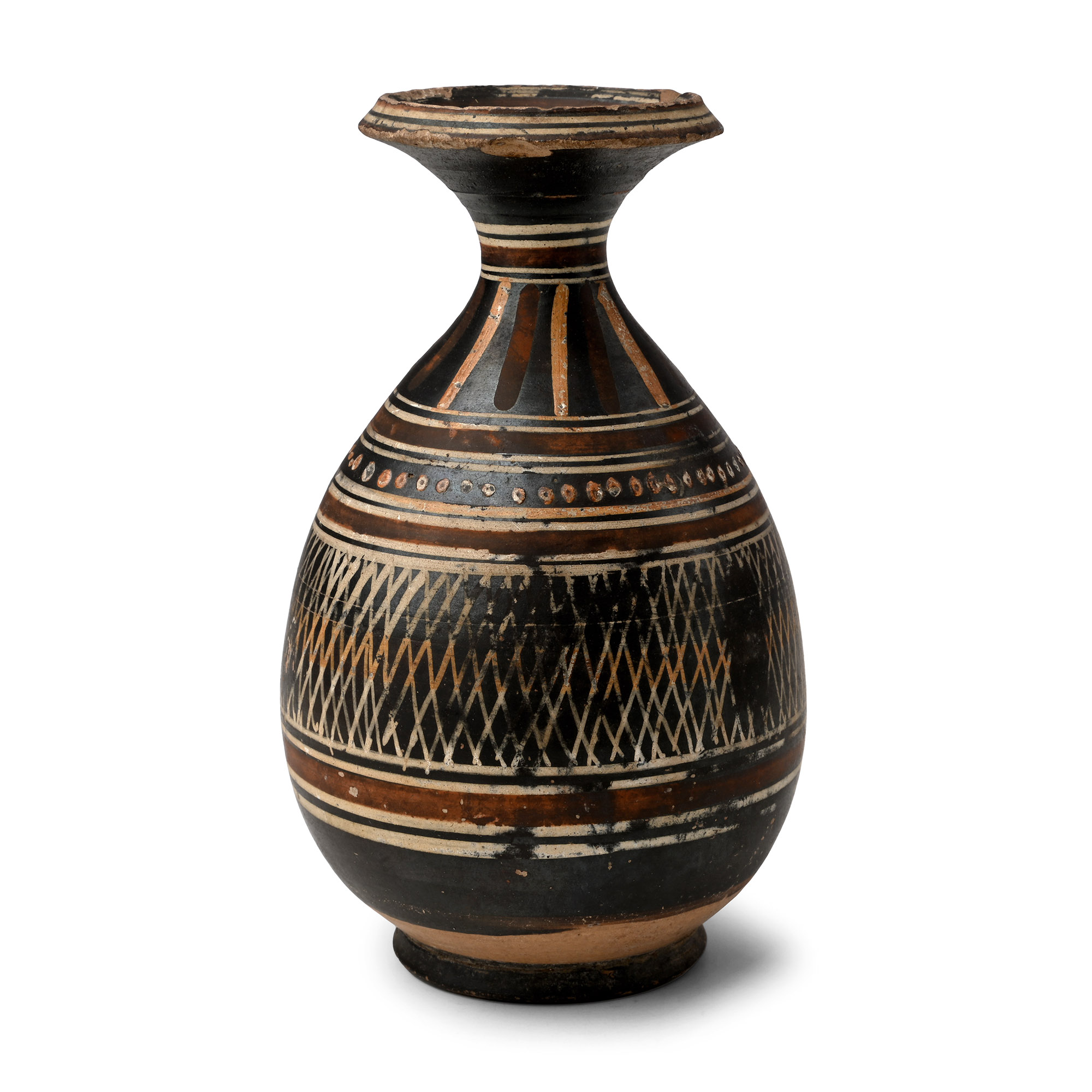
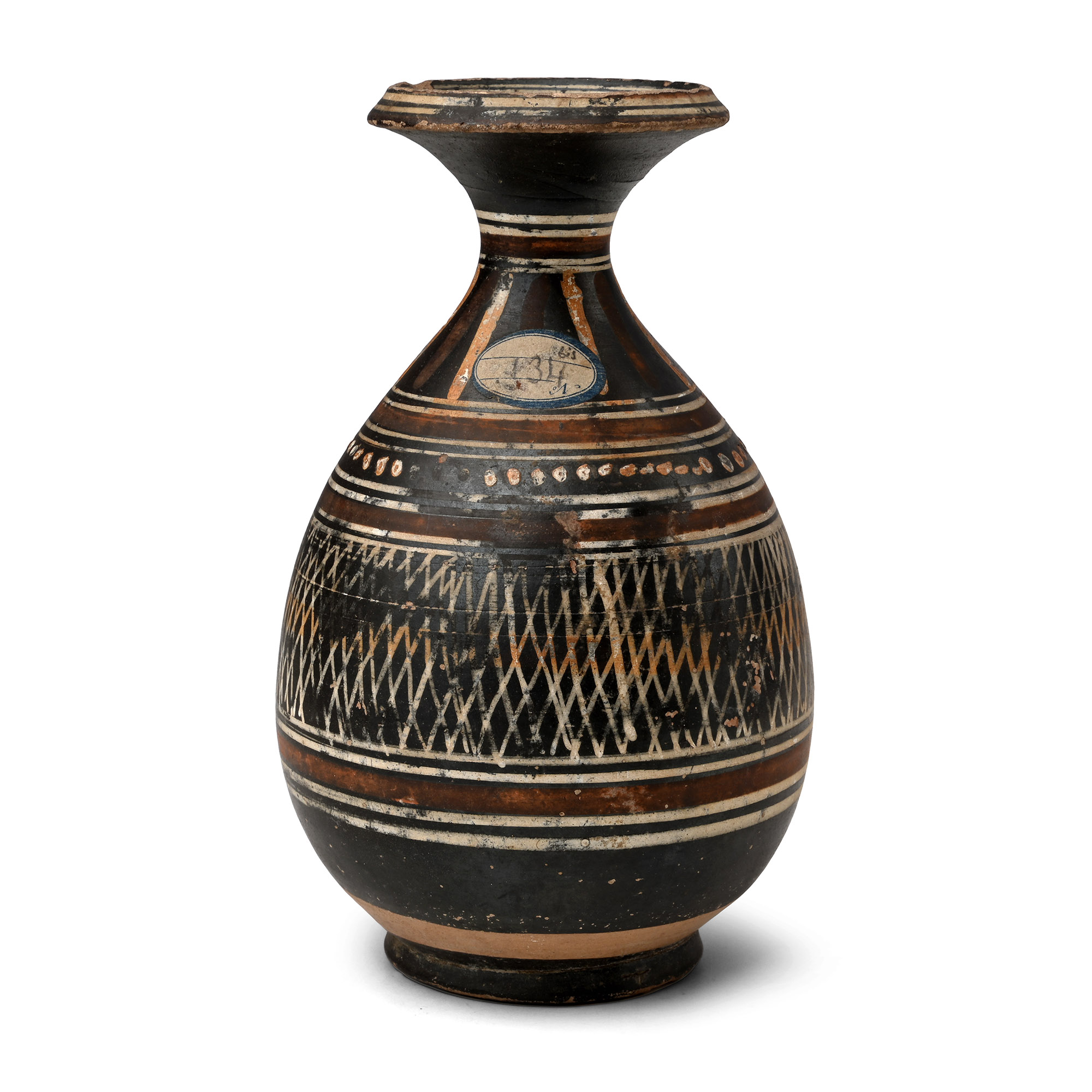
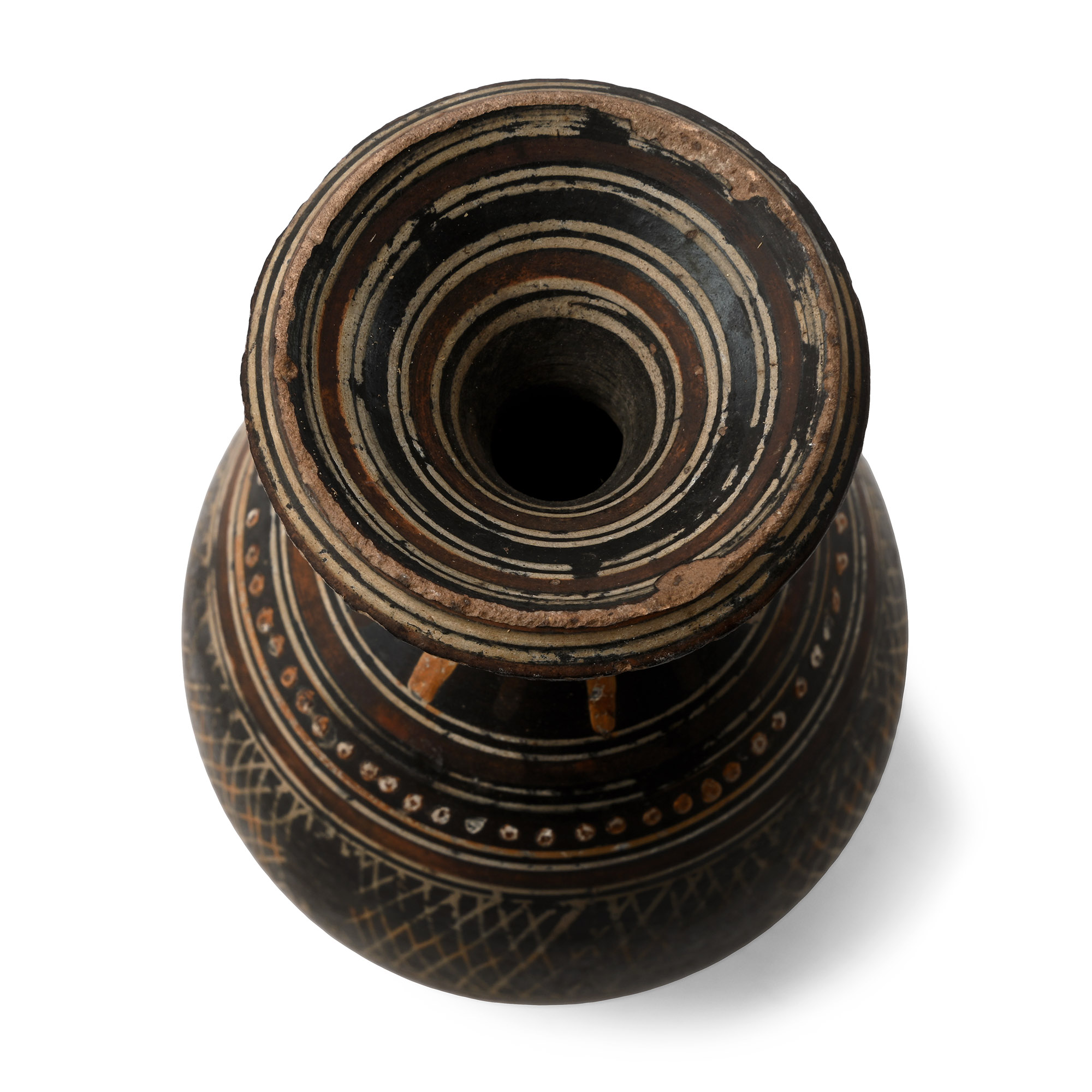
Greek Terracotta Gnathian-Ware Alabastron
APULIAN, CIRCA 3RD CENTURY B.C.
5 1/4 in. (255 grams, 14.5 cm).
Piriform in profile with a carinated rim to the mouth, a low basal ring; horizontal bands and a hatched panel, concentric rings.
ProvenanceLouis-Gabriel Bellon (1819-1899) collection, France.
European private collection, 2009.
Cf. similar alabastron in the British Museum, London, inv.no.1836.0224.340 in Nicol, W., Old Catalogue, A catalogue of the Greek and Etruscan Vases in the British Museum, London, 1804, no.1472; another similar alabastron in the National Gallery of Victoria, Melbourne, accession no.161-D1A.
FootnotesAmong the shapes of pottery that are also mostly represented in the Gnathian style are lekanides, bombilyoi and alabastra. They were containers for ointments and perfumes, used in funerary contexts during the first phase of the ritual, when the body needed to be treated and prepared for the burial.
CONDITIONTimeLine Auctions follows a vetting process to ensure the authenticity and legality of all items, reinforcing our commitment to integrity and responsible trading. Each antiquity, antique, and coin lot undergoes thorough examination by a vetting committee of at least ten external specialists, professional trade association members, scientists, and archaeologists: Our Vetting Process
AUCTIONS:
TimeLine is a leading auction house specialising in antiquities, ancient art, collectables, natural history, coins, medals, and books. Our auctions offer museums, collectors, historians, and enthusiasts the opportunity to acquire unique and historically significant pieces.
-
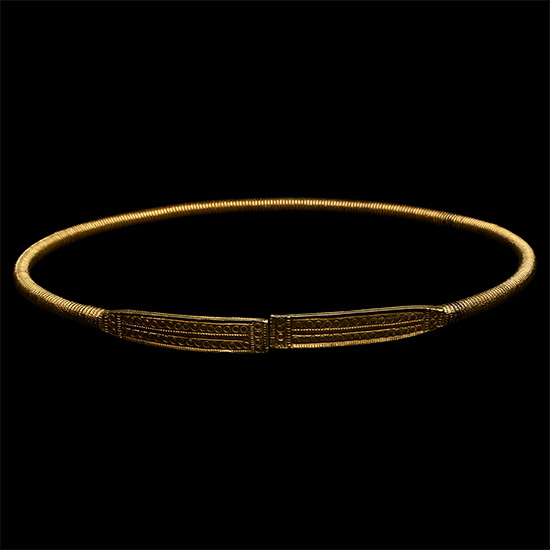
Scythian Gold-Clad Ribbed Torc with Decorated Terminals
4th-3rd century B.C.Sold for (Inc. bp): £9,360
Round in section with ribbing, rectangular finials with billeting to the borders and edges, and rows of impressed roundels. 481 grams, 28 cm
Private collection, Wagner family, Germany, 1955. Private collection, London. This lot has been checked against the Interpol Database of stolen works of art and is accompanied by a search certificate number no.12389-226870. -
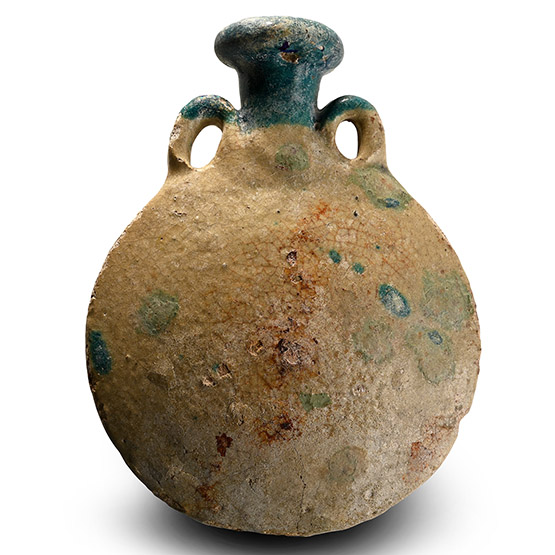
Parthian Blue Glazed Water Vessel
1st century B.C.-1st century A.D.Estimate: £300 - 400 (+bp*)
Opening Bid: £135
Discoid body and short tubular neck with everted rim, two loop handles. 561 grams, 19.2 cm
Ex London, UK gallery, 1971-early 2000s. Private collection, London. -
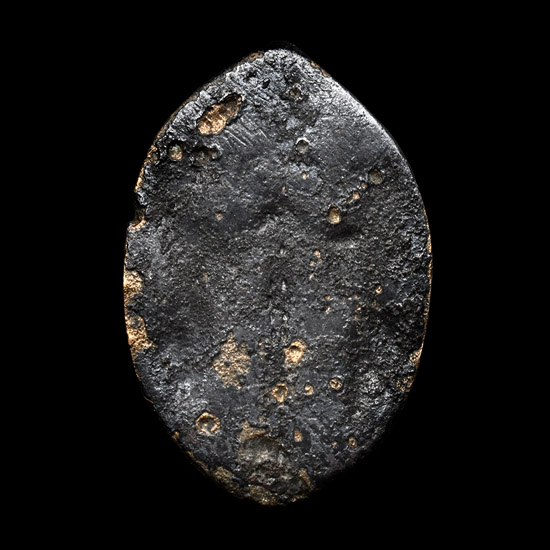
Large Greek Bronze Ring with Standing Goddess
Circa 4th-2nd century B.C.Sold for (Inc. bp): £26
Comprising a slender hoop and a large lentoid bezel with two standing figures flanking a staff(?). 4.01 grams, 22.61 mm overall, 21.02 x 19.12 mm internal diameter (approximate size British U 1/2, USA 10 1/4, Europe 23.15, Japan 22)
From the private collection of a European gentleman (1942-2024), formed since the 1970s.
