
Loading, please wait...
LOT 0073
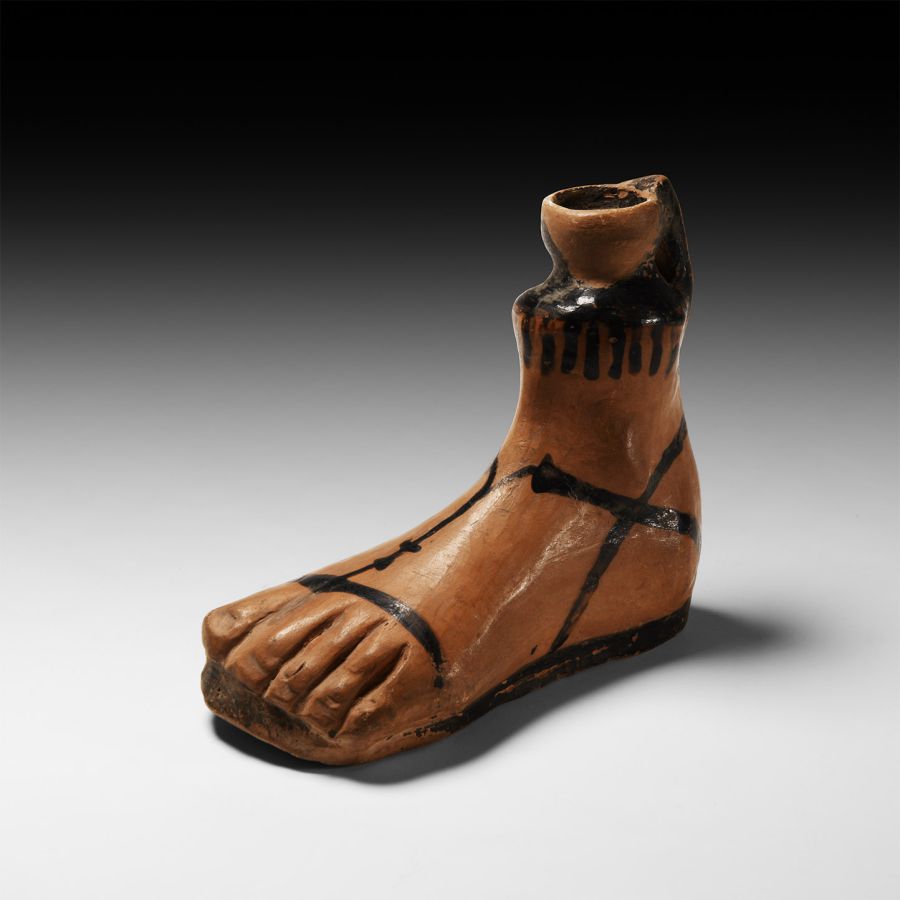
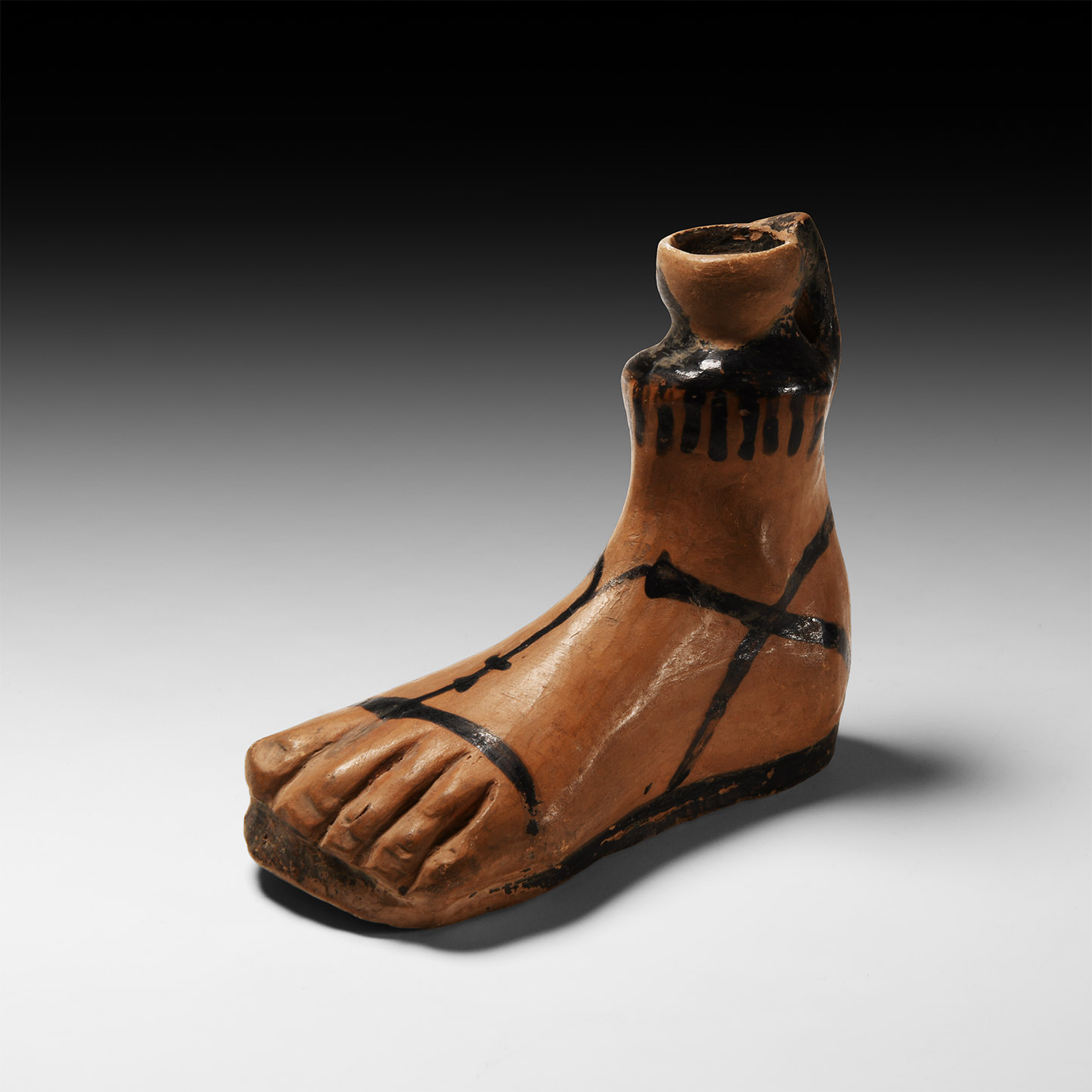
Greek Terracotta Foot-Shaped Aryballos
6TH CENTURY B.C.
4 1/4 in. (118 grams, 10.8 cm).
A ceramic vessel shaped as a human foot with sandal; cup-shaped mouth above the ankle with strap to the rear, painted strap detailing; restored.
ProvenanceEx Léon Rodrigues-Ely (1924-1973), Marseille, France.
with Christie's, Paris, Collection of Léon Rodrigues-Ely-Joseph Soustiel et à Divers, 6 May 2015, lot 32.
Accompanied by a copy of a French cultural passport no.163295.
Cf. Ducat, J., Les vase plastiques rhodiens archaïques en terre cuite, Paris, 1966, p.182, Type B.1.
CONDITIONTimeLine Auctions follows a vetting process to ensure the authenticity and legality of all items, reinforcing our commitment to integrity and responsible trading. Each antiquity, antique, and coin lot undergoes thorough examination by a vetting committee of at least ten external specialists, professional trade association members, scientists, and archaeologists: Our Vetting Process
AUCTIONS:
TimeLine is a leading auction house specialising in antiquities, ancient art, collectables, natural history, coins, medals, and books. Our auctions offer museums, collectors, historians, and enthusiasts the opportunity to acquire unique and historically significant pieces.
-
.jpg)
Hellenistic Gold Amphora Pendant Inlaid with Gemstones
2nd-1st century B.C.Sold for (Inc. bp): £1,430
A gold amphora-shaped pendant composed of strip-twist volute handles, spool-shaped neck, piriform body and plinth style foot, body decorated with deep geometric cells inlaid with vibrant lapis lazuli, turquoise and possibly glass paste; suspension loop over mouth; accompanied by a custom-made display stand. 6.96 grams, 33 mm (16 grams total, 49 mm including stand)
Fine condition.
with Sotheby's, New York, 12 June 2001, lot 230 (US$10,000-$15,000). Property of a London gentleman. Accompanied by copies of the relevant Sotheby's catalogue pages. -
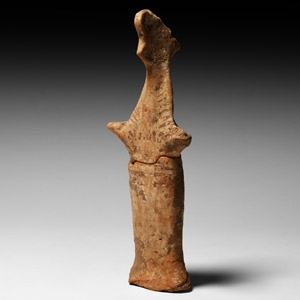
Boeotian Terracotta Idol
6th century B.C.Sold for (Inc. bp): £338
A terracotta idol formed with pinched stub arms and a pinched head crowned with a headpiece; remains of geometric detailing in painted pigment; repaired. 122 grams, 16.5 cm
Acquired early 1990s. Ex private American collection; thence by descent. Private Swiss collection since 1998. -
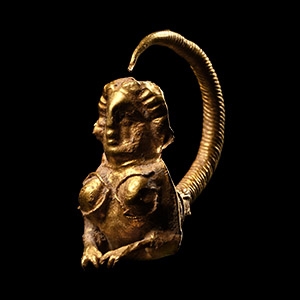
Greek Gold Sphinx Earring
3rd-2nd century B.C.Sold for (Inc. bp): £390
A single gold earring composed of a twisted wire hoop, stylised bust of a sphinx with detailed breast and lion paws. 2.55 grams, 26 mm
Acquired 1980-2015. Ex Abelita family collection.
Earrings with a sphinx represent a variety of the earrings created by the Hellenised goldsmiths of the Black Sea area. These figures usually had an inlaid garnet and are dated between late 3rd and 2nd century B.C. They belong to the category of earrings with a female head, often visible in graves of the Black Sea area and not always of good quality.
