
Loading, please wait...
LOT 0087
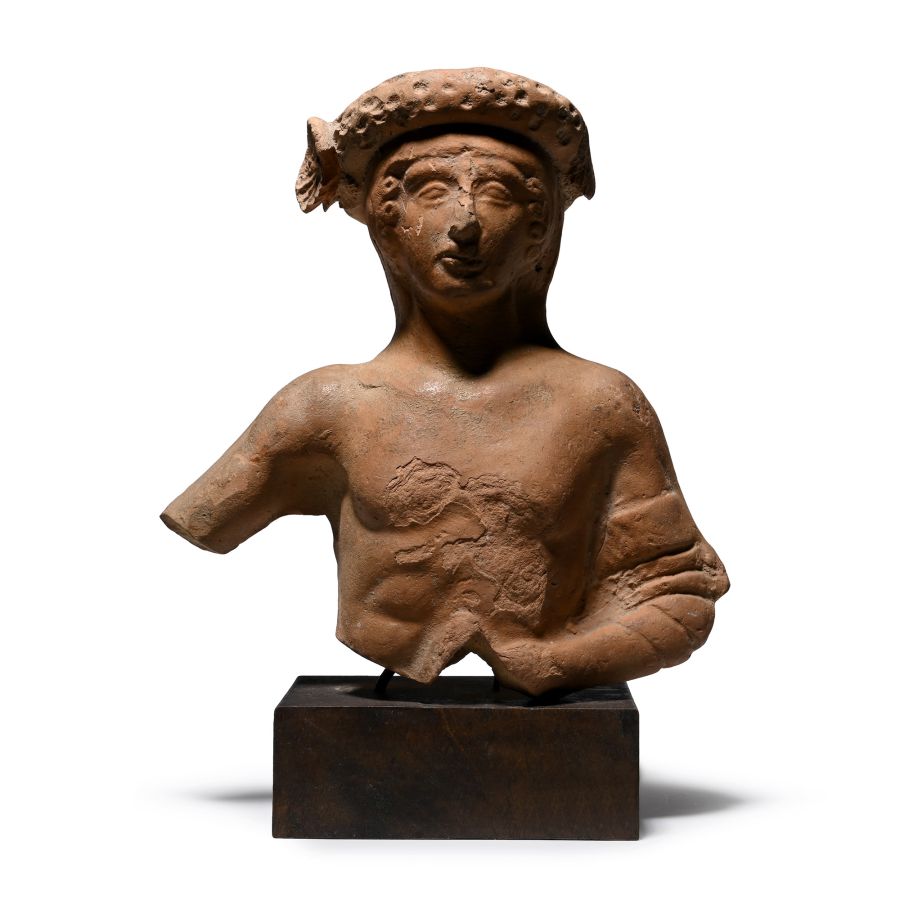
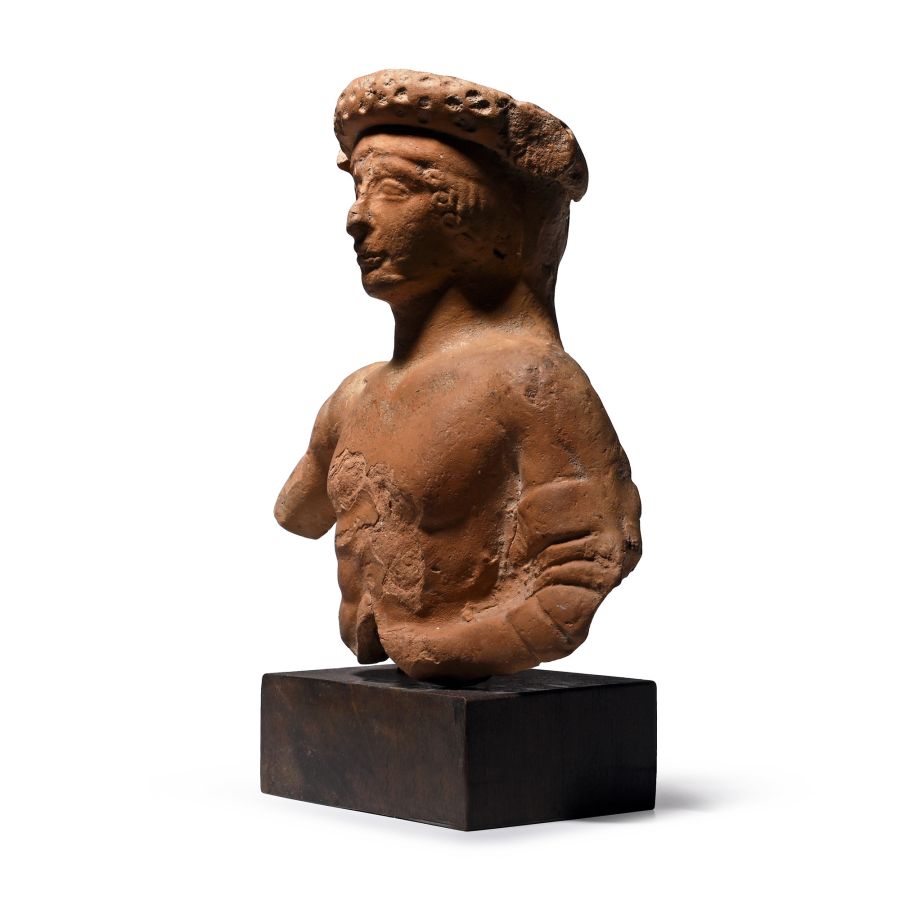
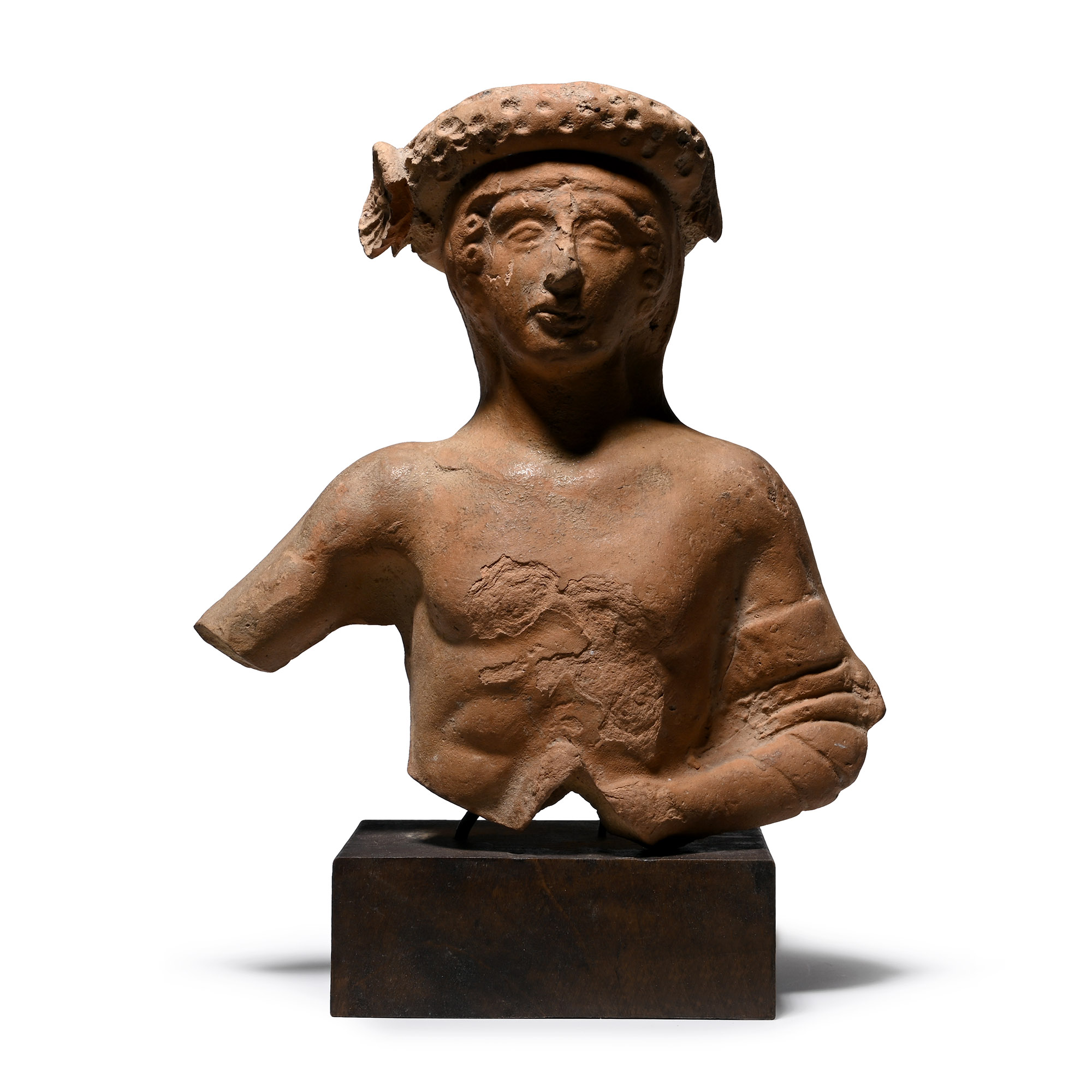
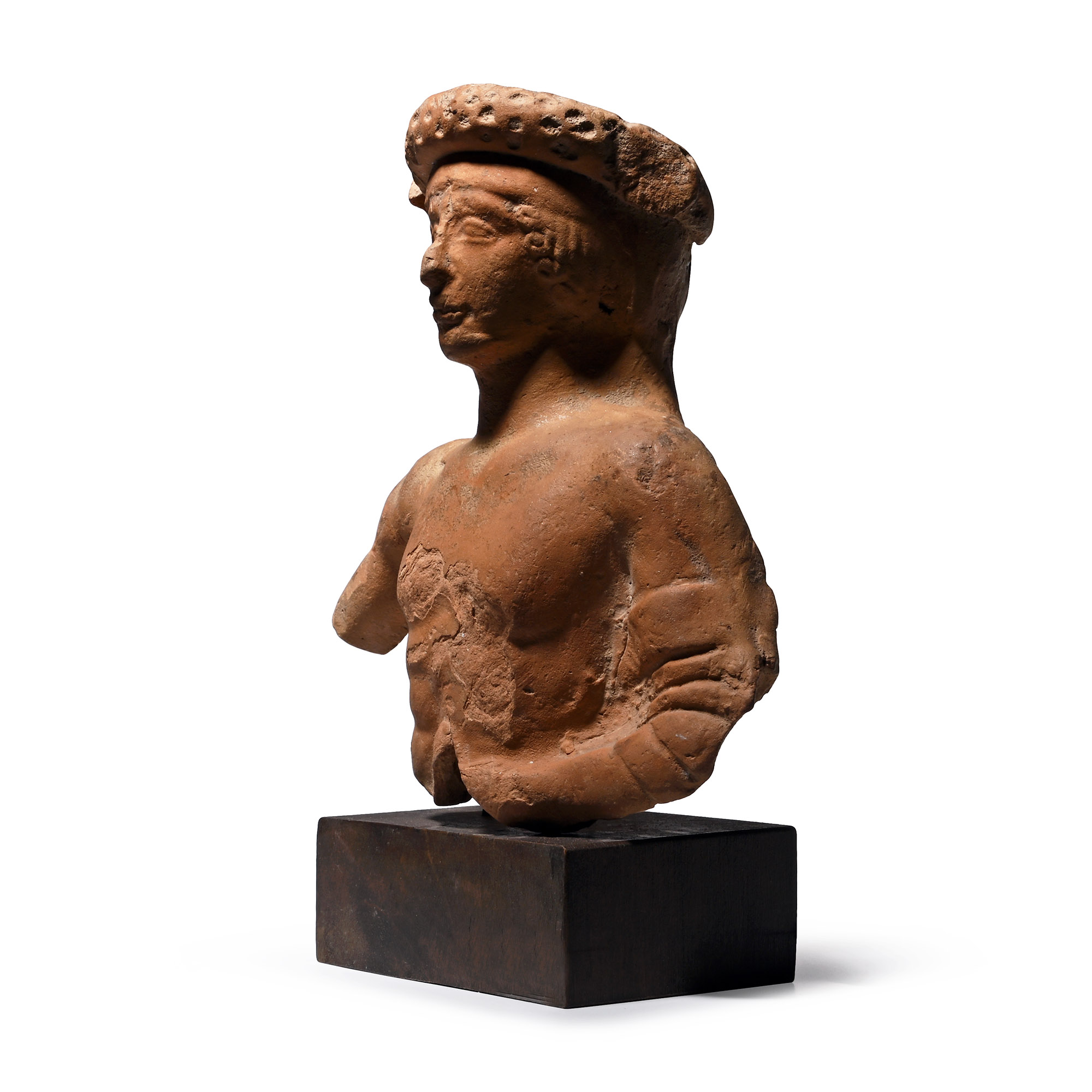
Greek Terracotta Figure of Young Dionysos
5TH CENTURY B.C.
5 7/8 in. (327 grams total, 15 cm including stand).
Modelled as a hollow torso nude of a youthful male, with a beardless face, full lips, tall nose and almond-shaped eyes; short curly hair with a thick wreath including a rosette, folded fabric draped over the right hand; mounted on a custom-made stand.
ProvenanceEx Prof. Hans Dahn (1919-2019), Lausanne; acquired 12 March 1954 from Donati in Basel (Dahn's list no.105).
LiteratureCf. The Metropolitan Museum of Art, item no.10.210.151; National Gallery Prague, item no.NM-H10 4777.
FootnotesIt remains a matter of debate who these clay symposiasts- characterised by their specific, sometimes very imaginative headdresses- represent. They have been variously interpreted as Dionysos, heroised deceased persons or representative images of the urban elite. The type was particularly popular in Taranto. The recumbent man probably held a kantharos in his left hand and wore a coat that was tightly wrapped around his left arm.
CONDITIONTimeLine Auctions follows a vetting process to ensure the authenticity and legality of all items, reinforcing our commitment to integrity and responsible trading. Each antiquity, antique, and coin lot undergoes thorough examination by a vetting committee of at least ten external specialists, professional trade association members, scientists, and archaeologists: Our Vetting Process
AUCTIONS:
TimeLine is a leading auction house specialising in antiquities, ancient art, collectables, natural history, coins, medals, and books. Our auctions offer museums, collectors, historians, and enthusiasts the opportunity to acquire unique and historically significant pieces.
LOT 0087
Greek Terracotta Figure of Young Dionysos
Estimate £1,200 - 1,700€1,390 - 1,970 (for guidance only)$1,620 - 2,300 (for guidance only)
Opening Bid
£675 (EUR 783; USD 911) ‡+BP*
-
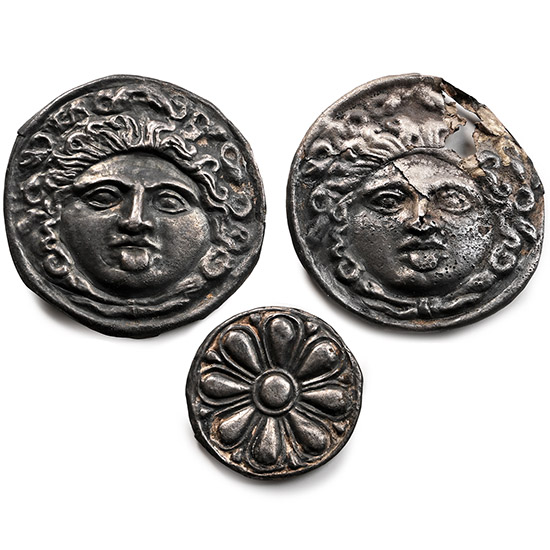
Greek Silver Medusa Repoussé Horse Harness Phalera Group
Circa 2nd-1st century B.C.Estimate: £600 - 800 (+bp*)
Bids: 4 | Current Bid: £31
Comprising: two sheet silver phalerae, each with a facing gorgoneion motif and fragments of a third; sheet-silver roundel with a lotiform rosette motif. 14.2 grams total, 31-50 mm
Private collection formed in Europe in the 1980s. Westminster collection, central London, UK
Similar phalerae were manufactured in the Greek workshops of Olbia or the northwestern Black Sea Region, including the Bosphorus and Asia Minor. These pieces were the top decorations of domed phalerae, used by Hellenistic horsemen, Thracians and Sarmatians. They were characterised by a variety of border designs, while, although rare, some of them have the upper part decorated with a frieze of horizontally arranged floral patterns. The image of Gorgon-Medusa is very common. -
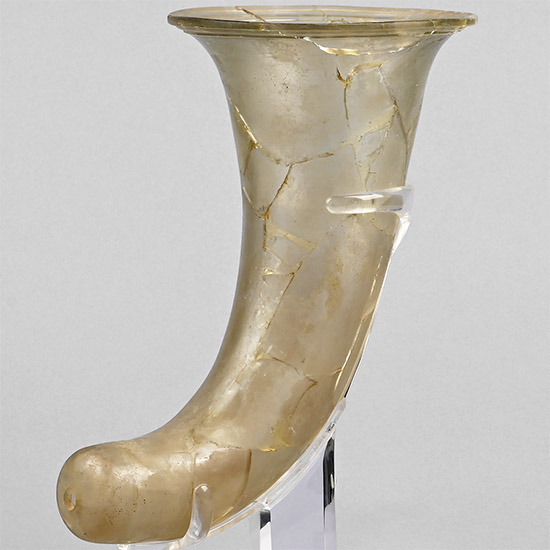
Very Large Parthian Glass Rhyton
1st century B.C.-1st century A.D.Estimate: £10,000 - 14,000 (+bp*)
Opening Bid: £5,000
With a trumpet-shaped broad end, tapering sidewalls and a thick pierced finial, accompanied by a custom-made wooden case. 718 grams, 25.5 cm
Japanese private collection, with a Japanese custom wooden box, prior to 1979. Aaron Gallery, Iran prior to 1970. Aaron Gallery, 19 September 1980. This lot has been checked against the Interpol Database of stolen works of art and is accompanied by search certificate no.12798-241349.
Rhyta, typically terminating in a zoomorphic or divine protome, were used as ceremonial drinking vessels, reflecting a close association with libation and purification rites. -
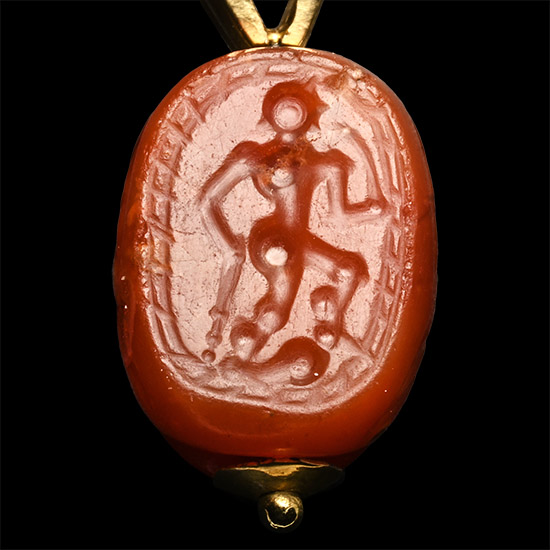
Greek Carnelian Scarab Engraved with Hercules with Later Gold Setting
Etruscan, 3rd century B.C.Estimate: £1,200 - 1,700 (+bp*)
Opening Bid: £625
With incised anatomical detailing, underside with a standing figure of Hercules, resting his hand on his club; with a later gold bar and suspension loop. 4.08 grams, 25 mm
Private collection, London.
