
Loading, please wait...
_900x900.jpg "Greek Terracotta Figure of Eros, the God of Love")
_200x200.jpg "Greek Terracotta Figure of Eros, the God of Love")
.jpg "Greek Terracotta Figure of Eros, the God of Love")
LOT 0086
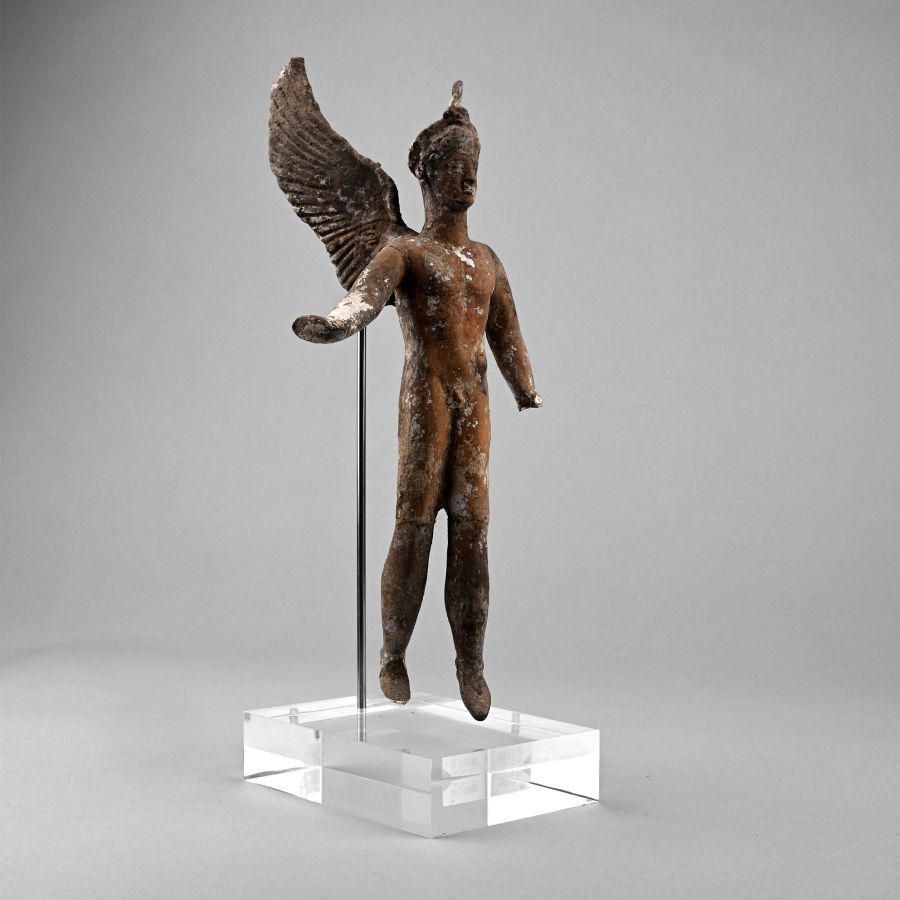
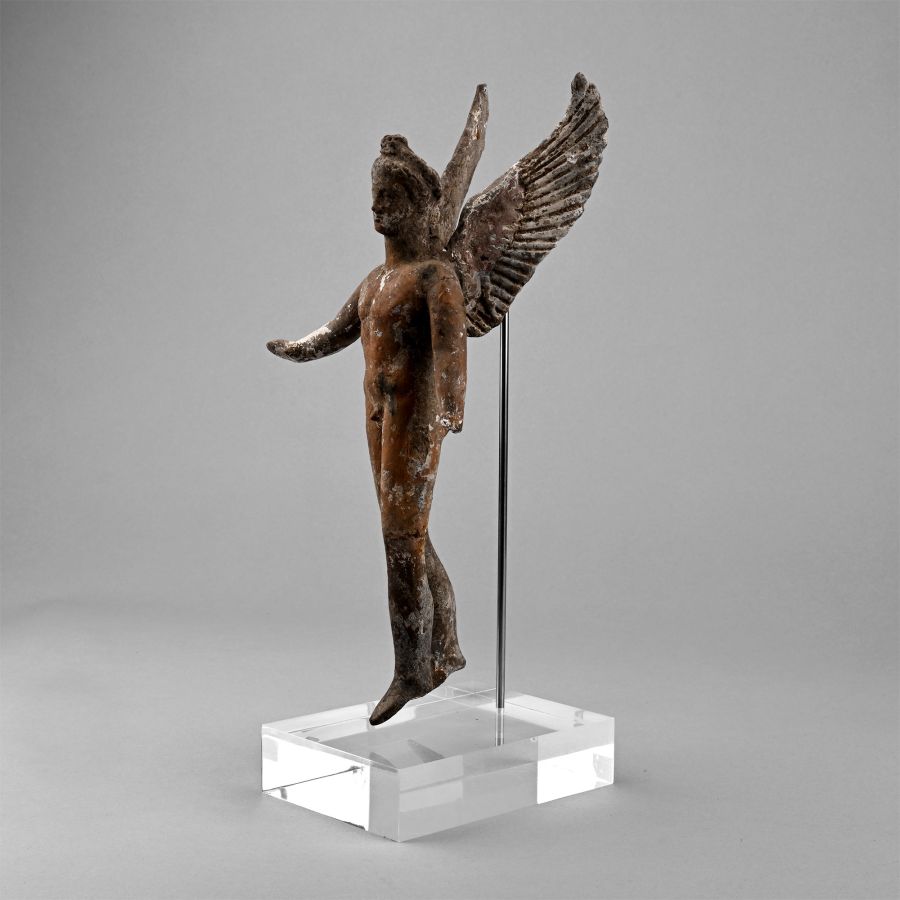
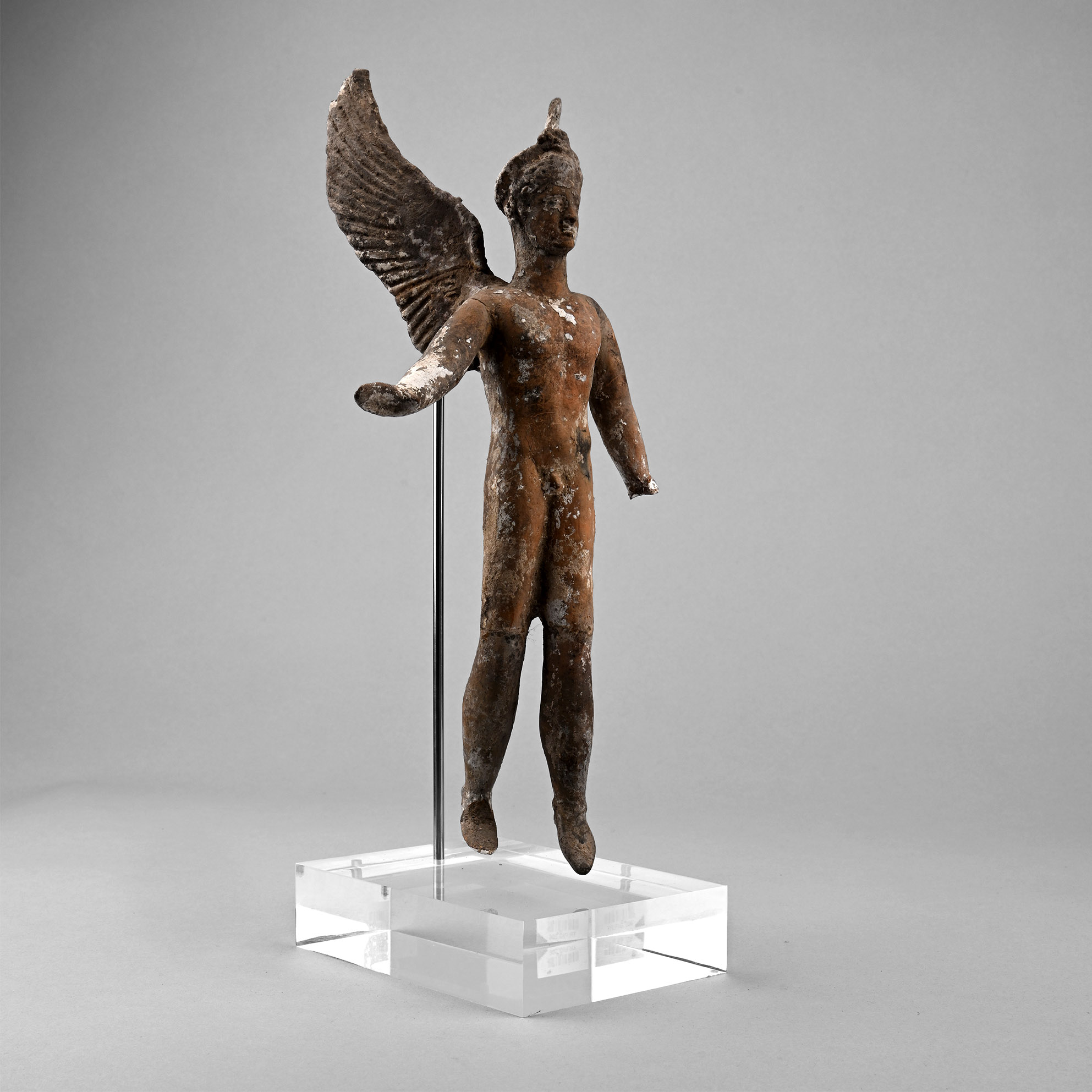
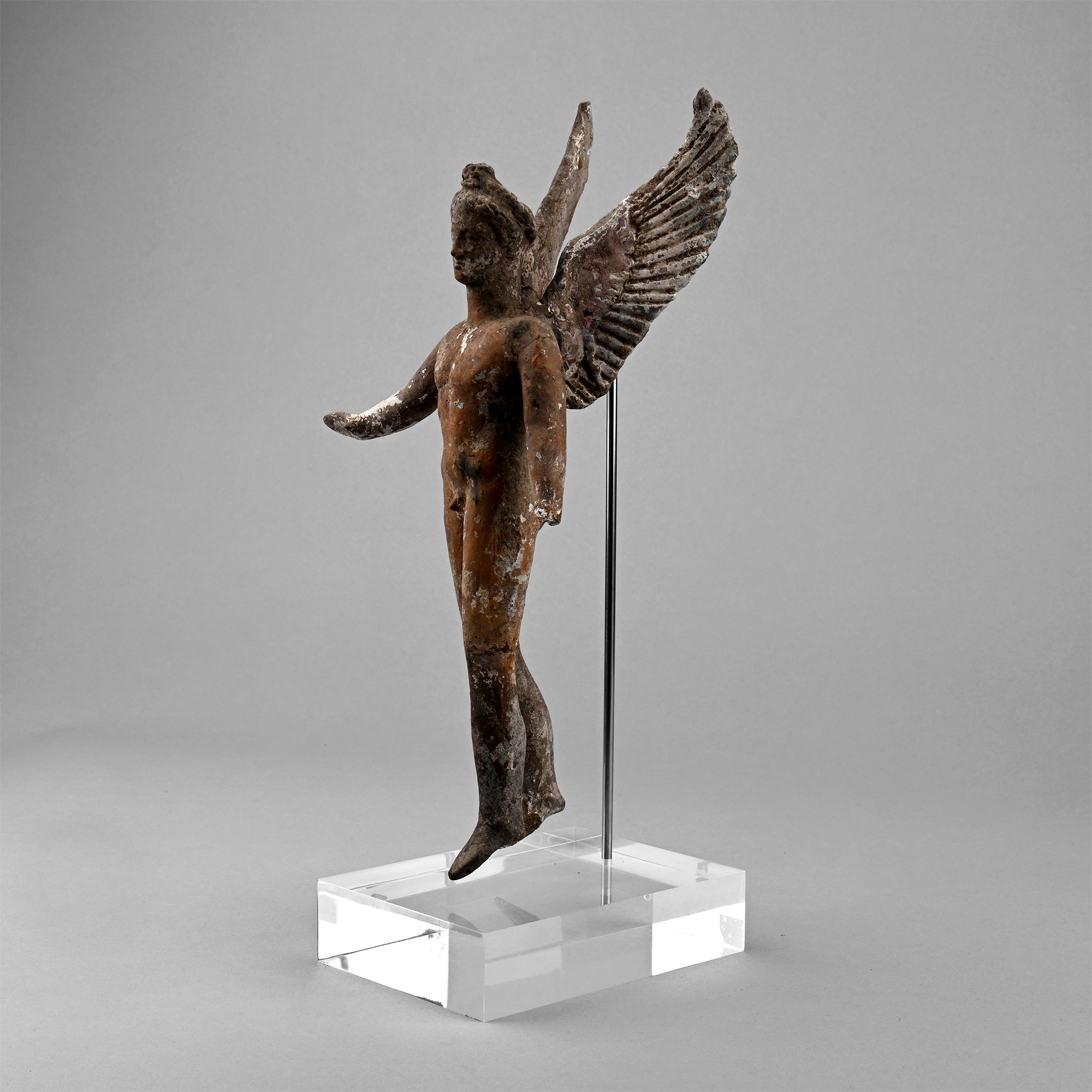
Greek Terracotta Figure of Eros, the God of Love
HELLENISTIC, 3RD-1ST CENTURY B.C.
12 1/4 in. (808 grams total, 31 cm including stand).
Modelled nude in a dynamic pose with his wings spread open, the left leg slightly advanced, and the right arm extended with open palm, a diadem or a fillet on his head; circular socket between the wings; accompanied by a display stand.
ProvenanceLouis-Gabriel Bellon (1819-1899) collection, France.
European private collection, 2009.
Accompanied by an academic report by Dr Raffaele D’Amato.
This lot has been checked against the Interpol Database of stolen works of art and is accompanied by search certificate number no. 13014-246790.
Cf. Mollard-Besques, S., Catalogue Raisonné des Figurines et Reliefs en Terre-Cuite Grecs et Romains. II: Myrina. 2 Bände Paris, 1963, pls.39-48, for similar terracotta flying erotes; cf. flying Eros with a mirror, in the Louvre Museum, accession no. Myr 95; a winged Eros with a diadem similar to our statuette, from Myrina, in Louvre, accession number Myr67; handmade statuette of winged dancing Eros with the same diadem in Mentesidou, E., The Terracotta figurines of Amisos, Thessaloniki, 2011, fig.60 (dancing winged Eros with similar diadem); for a general analysis of the Eros figure and character see Mattei, M. (ed.), La Favola di Amore e Psyche, Roma, 2012.
FootnotesIn classical times, Eros was usually depicted as a handsome adolescent, with only his wings distinguishing him from other kaloi and young athletes. Sometimes he was depicted younger and with less masculine features: Lysippos, in the famous statue of Eros of Thespiae, depicted him as a youth.
CONDITIONTimeLine Auctions follows a vetting process to ensure the authenticity and legality of all items, reinforcing our commitment to integrity and responsible trading. Each antiquity, antique, and coin lot undergoes thorough examination by a vetting committee of at least ten external specialists, professional trade association members, scientists, and archaeologists: Our Vetting Process
AUCTIONS:
TimeLine is a leading auction house specialising in antiquities, ancient art, collectables, natural history, coins, medals, and books. Our auctions offer museums, collectors, historians, and enthusiasts the opportunity to acquire unique and historically significant pieces.
LOT 0086
Greek Terracotta Figure of Eros, the God of Love
Estimate £10,000 - 14,000€11,600 - 16,240 (for guidance only)$13,500 - 18,900 (for guidance only)
-
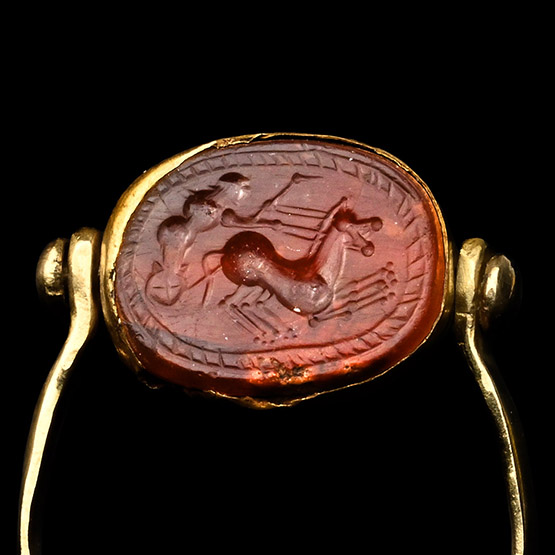
Etruscan Carnelian Scarab of a Charioteer in Gold Ring
3rd century B.C. and laterEstimate: £3,000 - 4,000 (+bp*)
Opening Bid: £1,500
Opaque scaraboid engraved with a dynamic scene of a charioteer driving a biga with his whip raised; set in a sheet-gold mount and a later swivel ring; supplied with a museum-quality impression. 4.26 grams, 25.07 mm overall, 17.77 x 16.22 mm internal diameter (approximate size British O, USA 7, Europe 14.98, Japan 14)
Private English collection, formed between the late 1970s and early 1990s. Private collection, UK. This lot has been checked against the Interpol Database of stolen works of art and is accompanied by search certificate number no.12948-245985. -
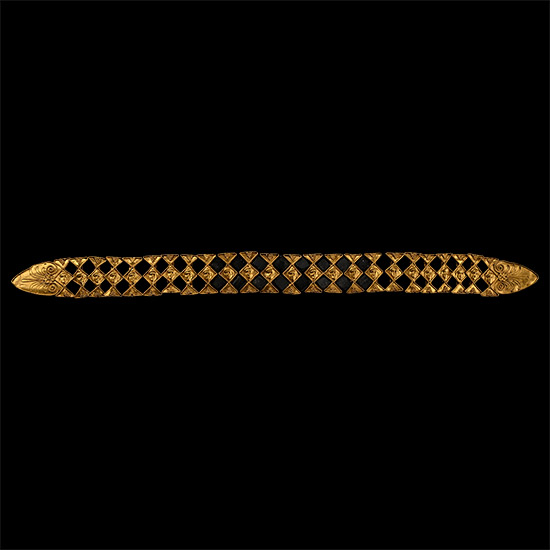
Greek Gold and Jet Diadem with Masks
Hellenistic, 3rd-2nd century B.C.Sold for (Inc. bp): £14,300
A gold necklace or diadem composed of twenty-two articulated units each in the form of a complex shields terminating in finials decorated with palmettes executed in filigree; body consists of shield-shaped jet(?) elements with a central rhomboid panel, joined above and below by triangular sections decorated with granulated triangles; the perimeter of each shield framed by a soldered beaded wire; at the centre of each rhomboid panel, an embossed appliqué mask in low relief; to the reverse of each element, two vertically aligned loops formed from narrow gold strips and intended for articulation; offered in a lined wooden display case. 22.5 grams, 21.6 cm
Ex M. Velensky collection, London, UK, 1990s. Accompanied by a copy of a four page examination report number 90/2015 by Dr habil Mikhail Treister. This lot has been checked against the Interpol Database of stolen works of art and is accompanied by search certificate number no.13104-248043.
The terminals are comparatively rare survivals, decorated with palmettes in filigree, a feature only occasionally attested among comparable assemblages from Bosporan contexts. The overall typology, decorative programme, and construction techniques closely parallel examples recovered from well-documented burials at Phanagoria, Pantikapaion, Tanais, and Tsukur-Liman. Comparable necklaces combining shield elements with embossed human heads are particularly characteristic of the 3rd-2nd centuries BC. According to the examination conducted by Dr habil. Mikhail Treister, there is nothing to challenge the authenticity of the object. The specific form, restricted geographic distribution, and close parallels suggest manufacture within a workshop of the Bosporan Kingdom, most plausibly in Phanagoria, one of its principal production centres during the Hellenistic period. -
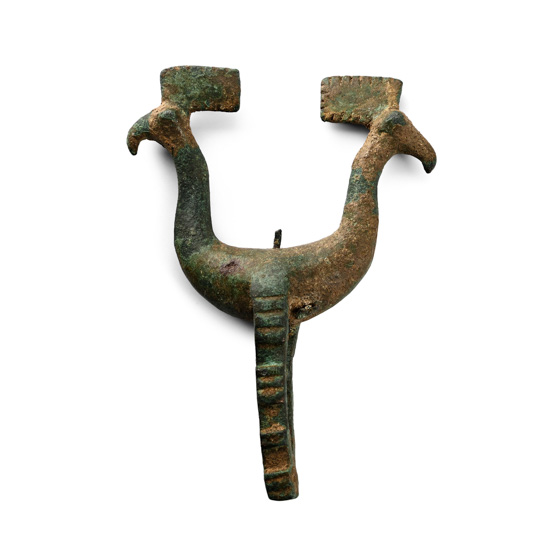
Large Greek Bronze Double-Headed Animal Terminal
Geometric, 8th-6th century B.C.Estimate: £1,500 - 2,000 (‡+bp*)
Opening Bid: £750
Comprising a crescent body with a slender neck at each end, topped by a bird-head with a rectangular crest, vertical legs with raised block detailing conjoined at the lower end into a mounting peg. 55.6 grams, 86 mm
Ex collection Mr K.H., Germany. Private collection, acquired in 2012. This lot has been checked against the Interpol Database of stolen works of art and is accompanied by search certificate no.13077-246757.
Bird figures, standing on plates or discs, are found as votives mainly in Northern Greek sanctuaries of the Geometric Age. They should be regarded as symbolic and sometimes modest gifts to the gods. Some birds were also designed as pendants. The present fitting evokes the rooster, but a possible representation of a peacock and its connection with Hera is not to be excluded.
