
Loading, please wait...
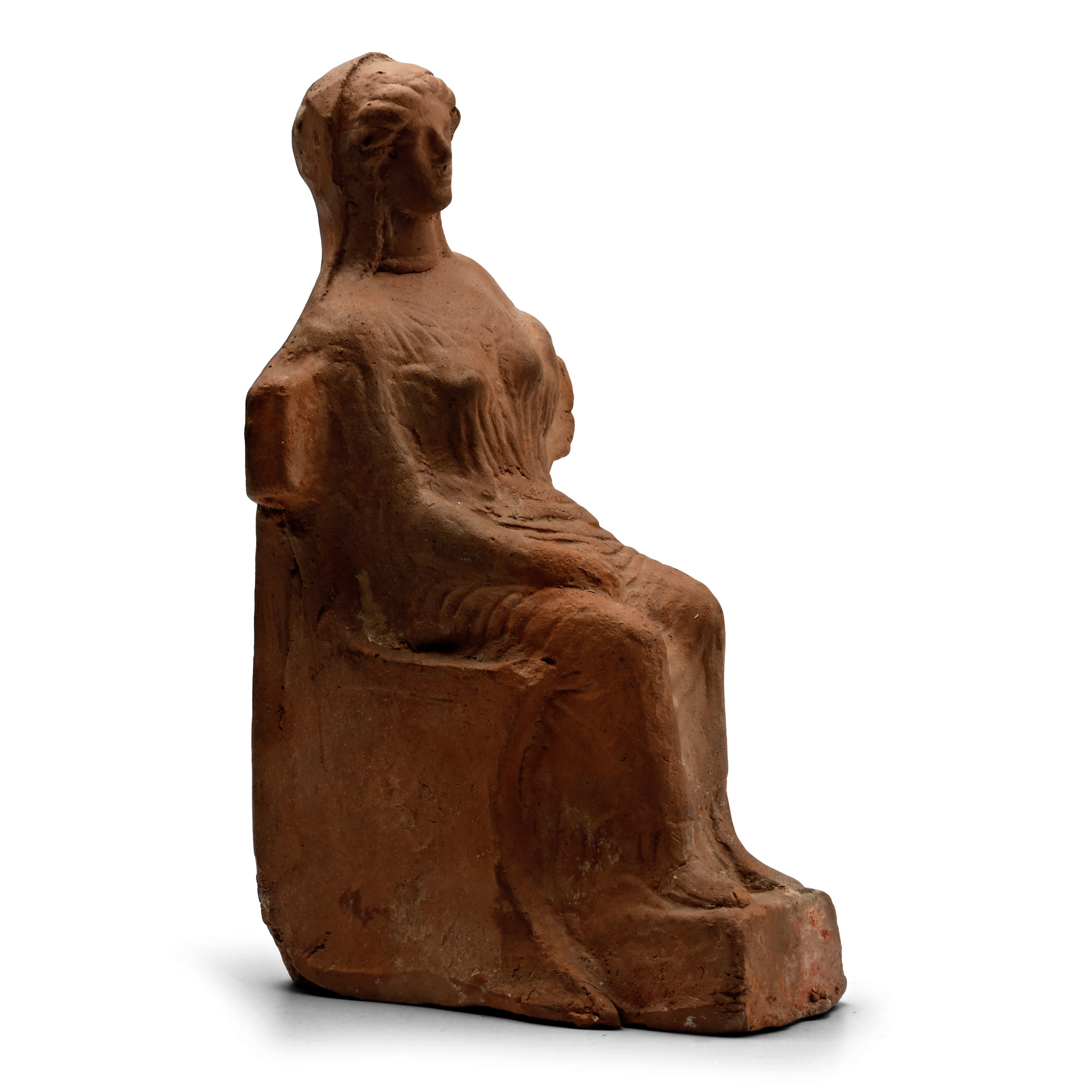
LOT 0077
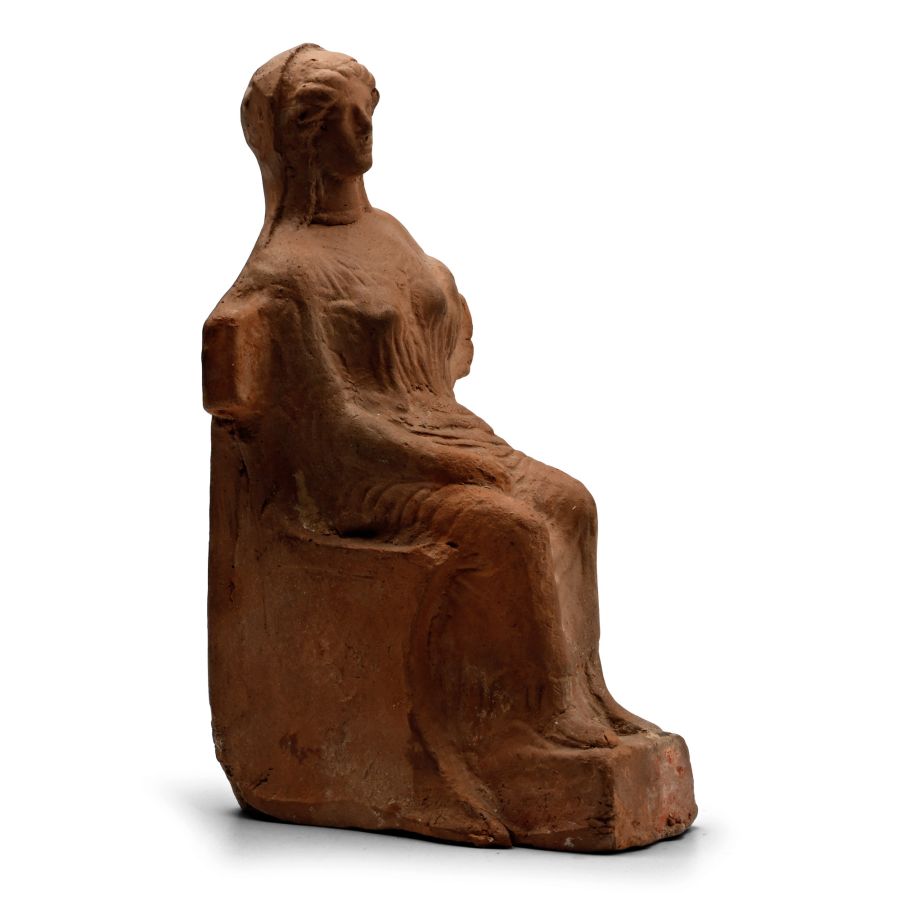
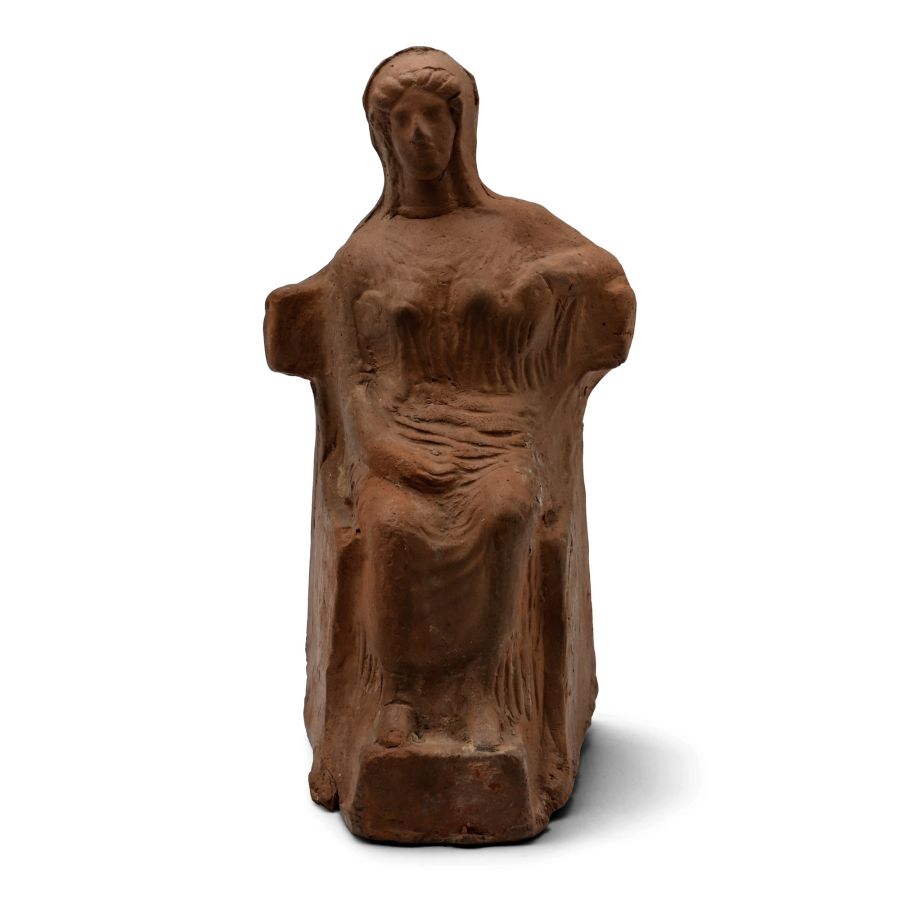
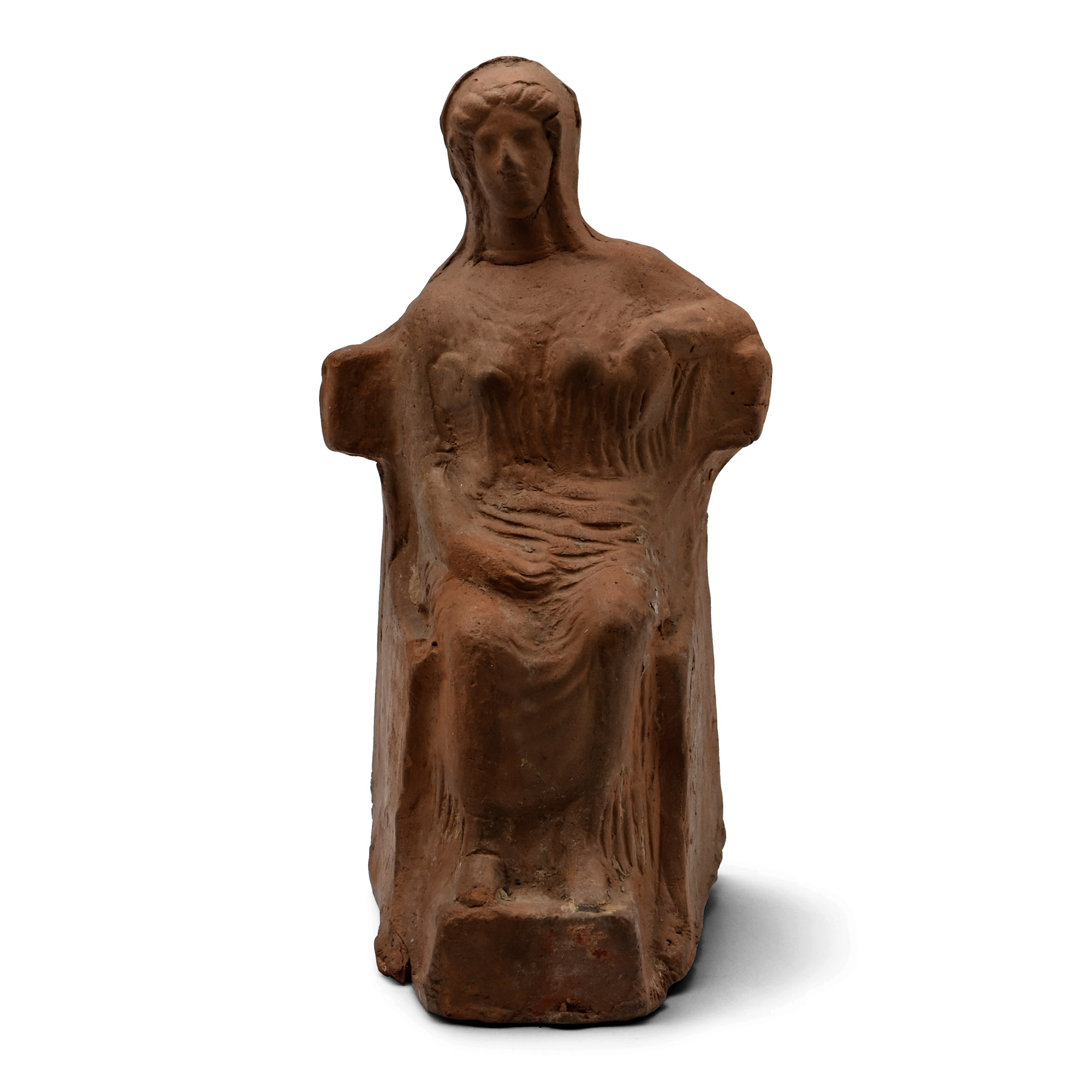
Greek Terracotta Figure of a Seated Goddess
3RD-2ND CENTURY B.C.
5 1/2 in. (255 grams, 13.8 cm).
Hollow-formed figurine of a female wearing a himation seated on a high-backed chair with right hand in her lap and left arm bent over the back of the chair; triangular vent to reverse, hollow underside; Tanagra type.
ProvenanceCollection of Mr C., Geneva, Switzerland (1936-2016), assembled between 1985 and 2010.
This lot is accompanied by an illustrated lot declaration signed by the Head of the Antiquities Department, Dr Raffaele D'Amato.
See Uhlenbrock, J.P., The Coroplast's Art: Greek Terracottas of the Hellenistic World, New York, 1990, for discussion.
CONDITIONTimeLine Auctions follows a vetting process to ensure the authenticity and legality of all items, reinforcing our commitment to integrity and responsible trading. Each antiquity, antique, and coin lot undergoes thorough examination by a vetting committee of at least ten external specialists, professional trade association members, scientists, and archaeologists: Our Vetting Process
AUCTIONS:
TimeLine is a leading auction house specialising in antiquities, ancient art, collectables, natural history, coins, medals, and books. Our auctions offer museums, collectors, historians, and enthusiasts the opportunity to acquire unique and historically significant pieces.
LOT 0077
Greek Terracotta Figure of a Seated Goddess
Estimate £600 - 800€700 - 930 (for guidance only)$810 - 1,080 (for guidance only)
-
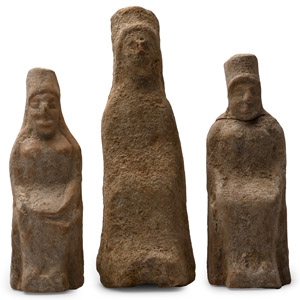
Archaic Greek Terracotta Seated Goddess Group
6th century B.C.Sold for (Inc. bp): £260
Each seated on a high-backed throne, wearing a polos headdress with two long braids falling from underneath the headdress and wearing a long chiton. 435 grams total, 11.1-14 cm
with H.A.C., Basel, prior 1999. This lot is accompanied by an illustrated lot declaration signed by the Head of the Antiquities Department, Dr Raffaele D'Amato. -
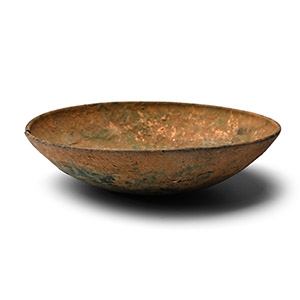
Greek Shallow Bronze Bowl
5th-3rd century B.C.Sold for (Inc. bp): £98
Shallow with chamfered rim, pierced beneath the rim to accept a chain. 152 grams, 14.5 cm
Fine condition.
From a private Netherlands collection; previously in an old collection since before 1980. From the private collection of John Meredith, acquired since the 1990s; thence by descent. This lot is accompanied by an illustrated lot declaration signed by the Head of the Antiquities Department, Dr Raffaele D'Amato. -
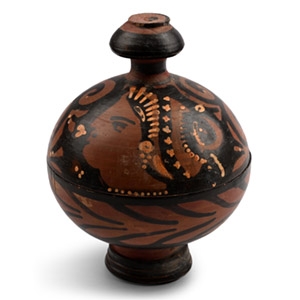
Greek Apulian Black-Glazed Lidded Pyxis with Lady of Fashion
South Italic, circa 325-300 B.C.Sold for (Inc. bp): £416
Squat and bulbous profile with broad body and domed lid with knop handle; black and red coloured bands and teardrops, profile bust of a lady of fashion with detailing picked out in cream and white; laurel leaf frond to the lower body; socle base; attributed to the Stoke-on-Trent Group: 'Pouting Lips' Sub-Group. 240 grams, 11.7 cm
From the private collection of a Canadian gentleman living in Essex, UK, formed since the 1920s-circa 1990. Property of an Essex lady until the late 1990s; thence by descent. From the private collection of an Essex gentleman since the late 1990s. This lot is accompanied by an illustrated lot declaration signed by the Head of the Antiquities Department, Dr Raffaele D'Amato.
