
Loading, please wait...
LOT 0084
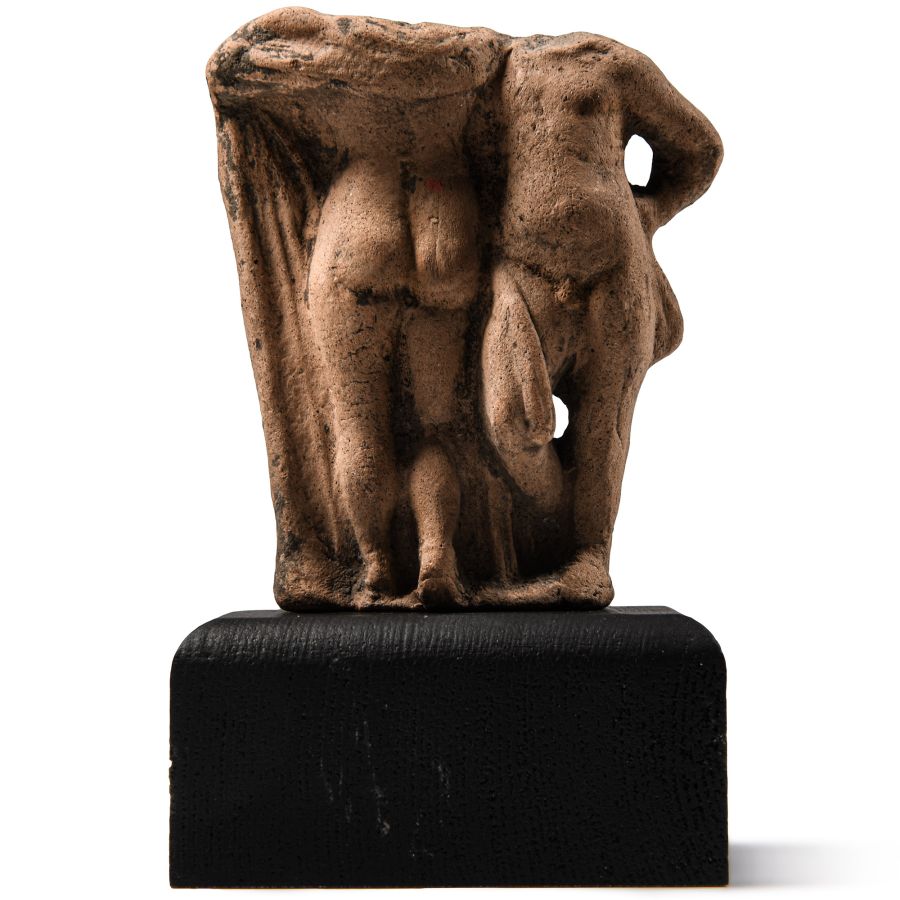
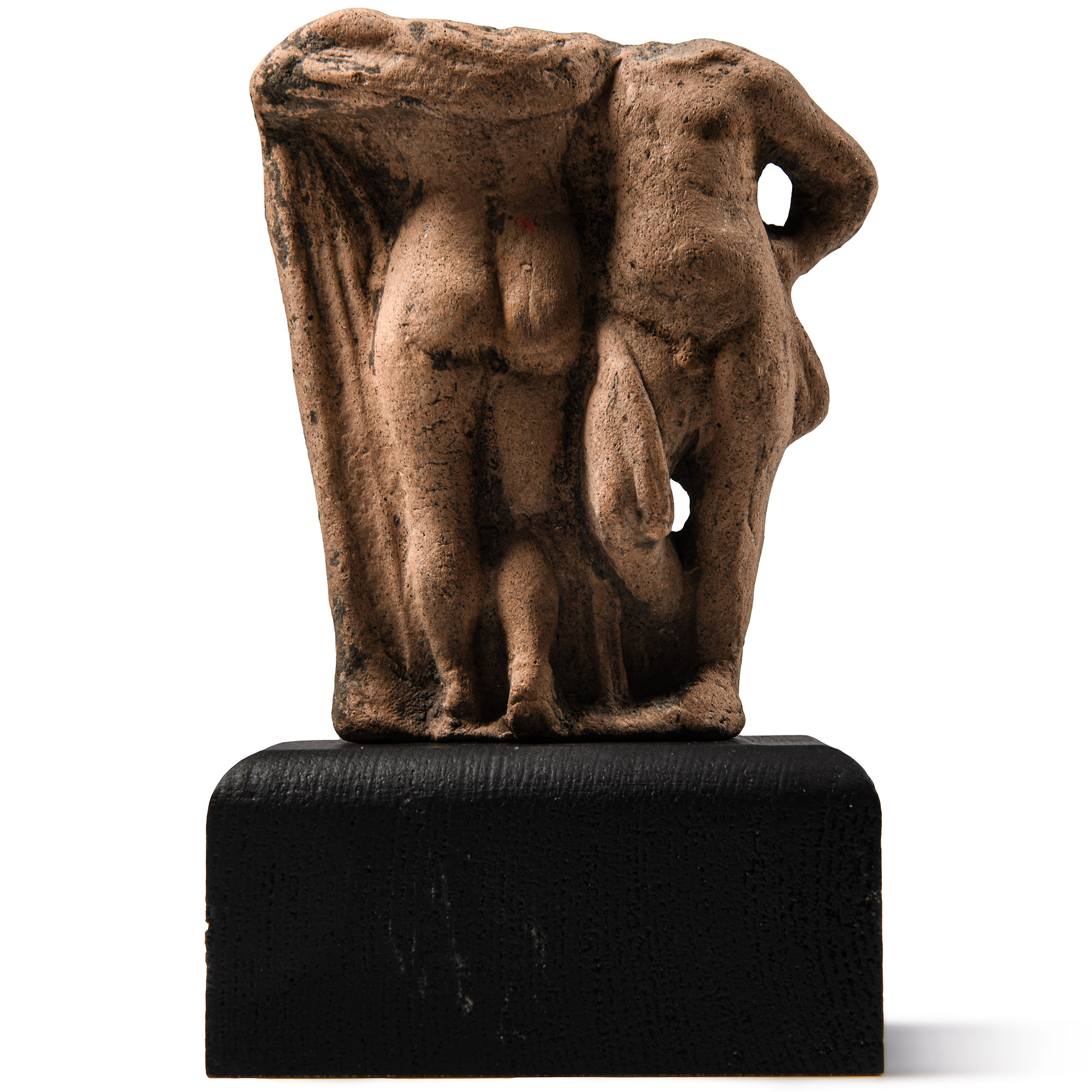
Greek Terracotta Figural Plaque
4TH-3RD CENTURY B.C.
4 in. (6 in.) (197 grams, 10.3 cm high (344 grams total, 15 cm high including stand)).
Comprising two acephalic nude figures: the female shown from behind with rounded buttocks and a voluminous garment draped over her shoulders; the male figure shown frontally with his weight on his left leg, leaning against the female, left hand resting on his hip; mounted on a custom-made display stand.
ProvenanceEx French Sorbonne archaeology professor (deceased); 1960s-2000s.
LiteratureCf. for similar but not identical couple in terracotta in Sporn, K., ‘Hellenistic Terracotta Figurines from Syme Viannou’ in Πεπραγμένα του IA΄ Διεθνούς Κρητολογικού Συνεδρίου, Ρέθυμνον, 20-27 Οκτωβρίου 2011, Τόμος Α 2.2 Τμήμα Αρχαιολογικό. Τάφοι – Ταφικές Πρακτικές – Φυσική Ανθρωπολογία. Νέες ανασκαφικές έρευνες. Τεχνολογία – Τέχνη – Εικονογραφία, Rethymnon, 2018, pp.125-136, fig.6.
FootnotesThe couple represented here could be a depiction of Eros and Psyche. Terracotta figurines of these divinities are quite common in Hellenistic Asia Minor, the Black Sea, the Near East, with examples from Amisos, Ephesos, Priene and possibly Smyrna, but also in the Cyrenaica and in Sicily. In mainland Greece there are a few examples of related types from Beroia and Pella. However, not all the figurines of couples depict Eros and Psyche. Different types are known from other areas of Greece in the late Hellenistic period, on Crete there are close parallels from the Idaean cave.
CONDITIONTimeLine Auctions follows a vetting process to ensure the authenticity and legality of all items, reinforcing our commitment to integrity and responsible trading. Each antiquity, antique, and coin lot undergoes thorough examination by a vetting committee of at least ten external specialists, professional trade association members, scientists, and archaeologists: Our Vetting Process
AUCTIONS:
TimeLine is a leading auction house specialising in antiquities, ancient art, collectables, natural history, coins, medals, and books. Our auctions offer museums, collectors, historians, and enthusiasts the opportunity to acquire unique and historically significant pieces.
-
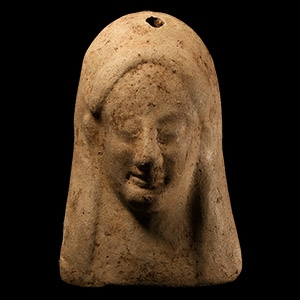
Greek Terracotta Protome Mask
Late 6th-early 5th century B.C.Sold for (Inc. bp): £156
Modelled as a female head with rounded oval face, slightly bulging eyes and pronounced chin, indistinct smiling mouth with thin lips, outline of ears; low straight polos with fastening hole. 130 grams, 12 cm
Acquired 1970s-1996. Property of a North American collector. London collection, 2016.
The figure belongs to a common type known from mainland Greece and the islands. The head clearly shows the so-called 'Archaic smile' visible on the dedicatory protomes of the same typology. They were terracotta votive offerings attached with a nail to the shrine of a goddess for ex-voto or to receive the grace of the represented goddess (Demeter?). -
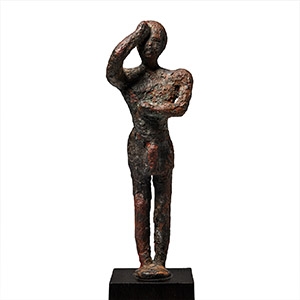
Minoan Bronze Votary Statue
Circa 3000–1100 B.C.Sold for (Inc. bp): £1,820
The figure standing on a small discoid base, wearing a short kilt, with broad chest and slender waist; the left arm bent across the chest and the right arm raised to the forehead in an act of worship; mounted on a custom-made stand. 447 grams total, 22.4 cm high including stand
British private collection, acquired by 2000. Accompanied by a copy of an old photograph showing this item on display in a display cabinet within the previous collectors home. This lot has been checked against the Interpol Database of stolen works of art and is accompanied by search certificate no.11950-210856. -
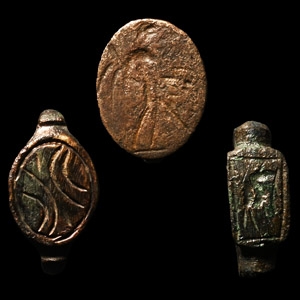
Greek and Roman Bronze Ring Group
Circa 2nd century B.C.-4th century A.D.Sold for (Inc. bp): £124
Including one with rectangular bezel and incuse hare motif. 15.7 grams total, 23-27 mm
Ex old English collection. London art market, pre 2000. Property of a London, UK, gentleman.
