
Loading, please wait...
LOT 0044
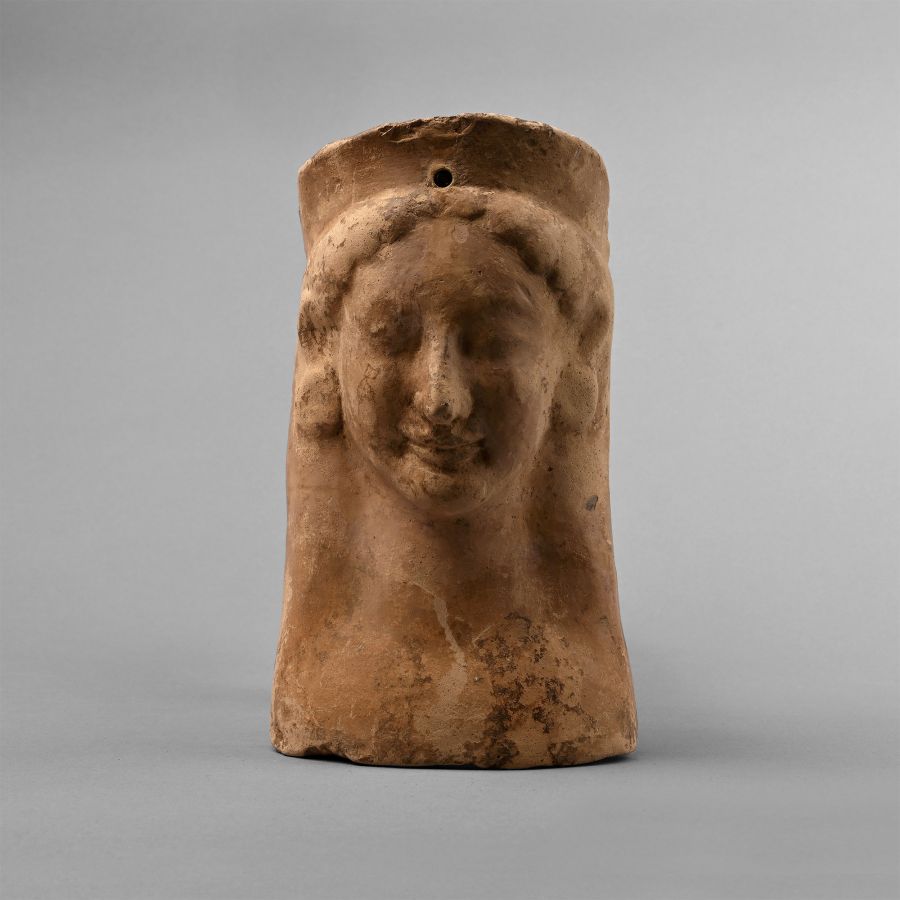
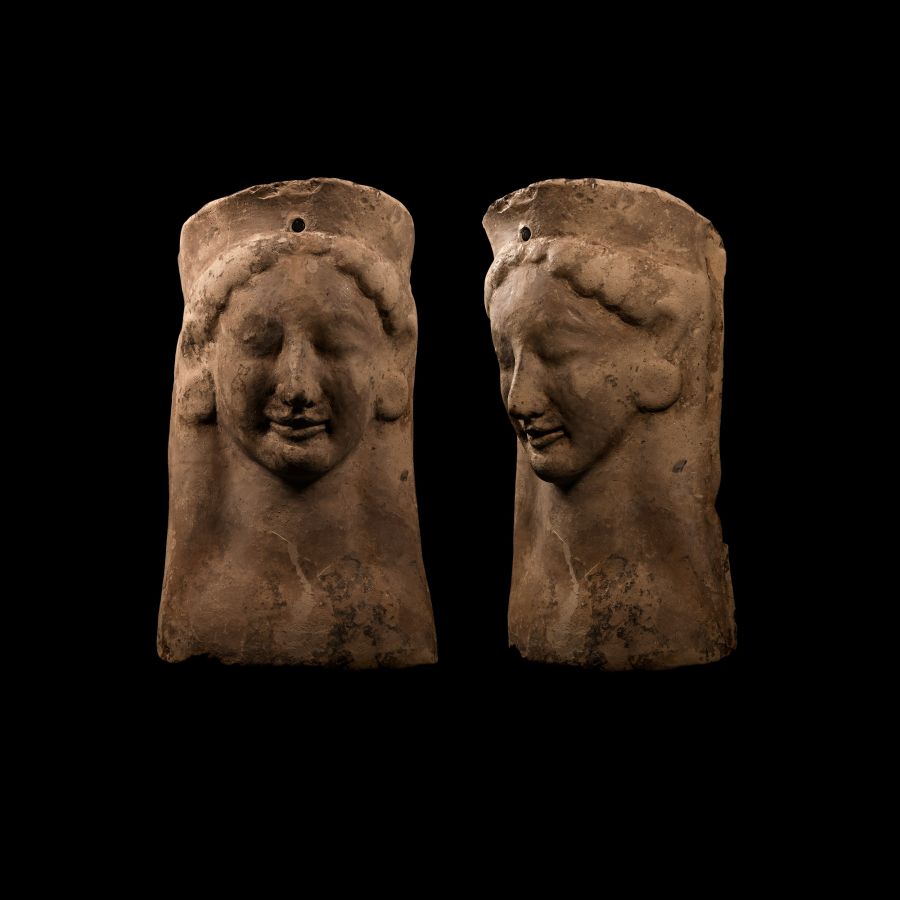
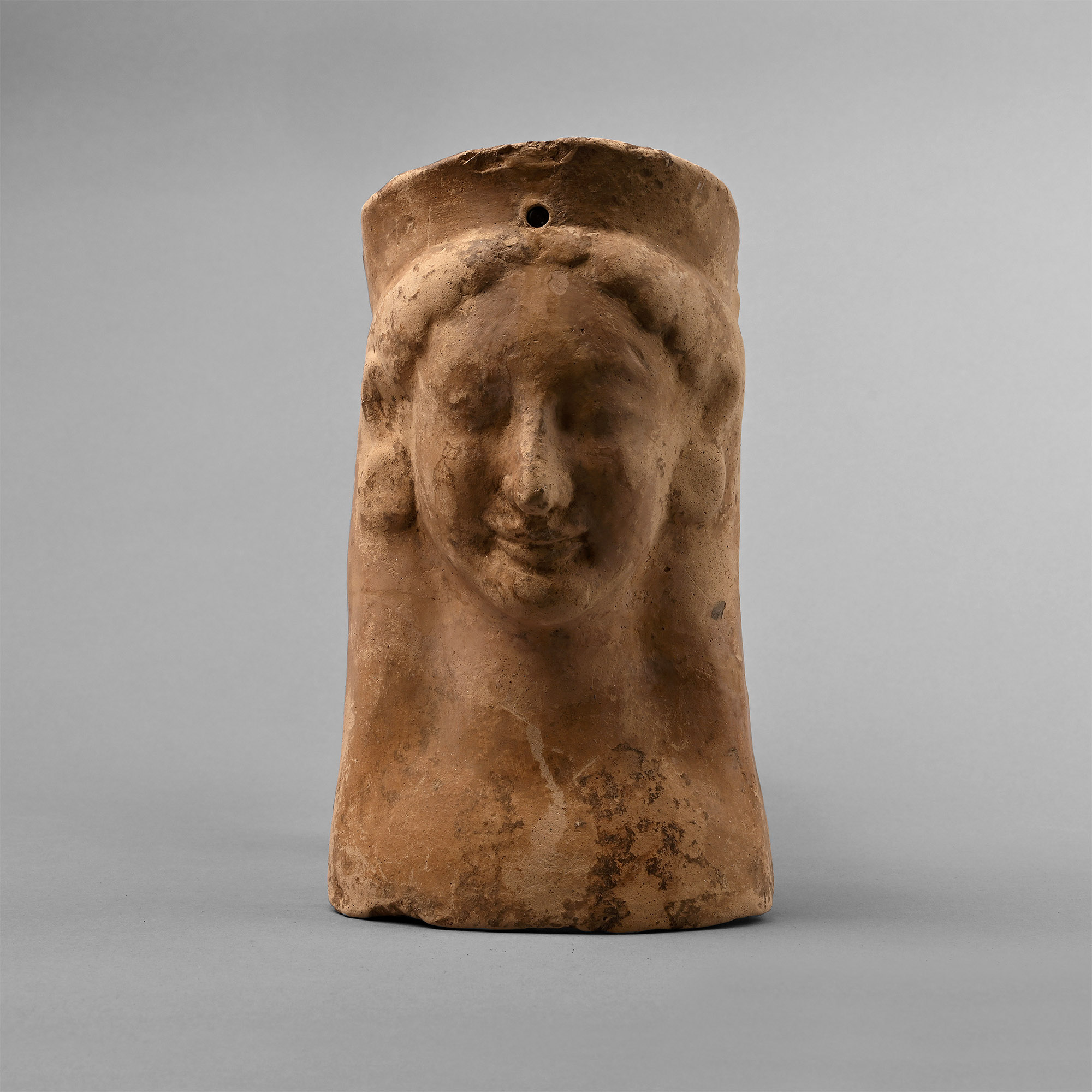
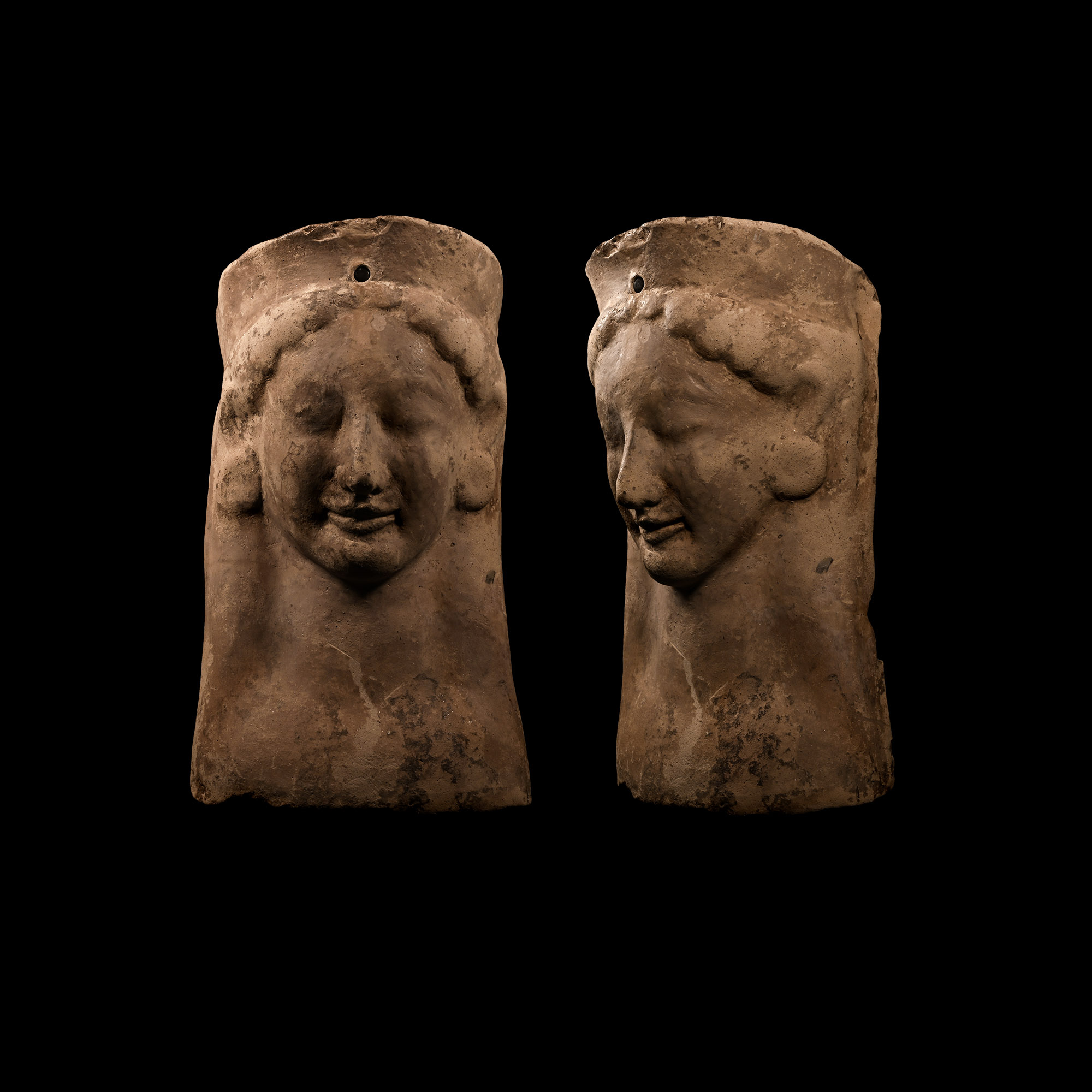
Greek Terracotta Female Protome
EARLY 5TH CENTURY B.C.
7 3/4 in. (606 grams, 19.5 cm).
Mould-made female protome with oval face, graceful nose and typical "archaic" smile; forehead framed by snail-shell curls descending to shoulder-height; with a low polos with a central perforation and large disc earrings.
ProvenanceEx Herbert A. Cahn, Kunst der Antike, Basel, 1997.
with Paul and Vreny Vosseler-Studer, Riehen.
Accompanied by a copy of an Art Loss Register certificate no.S00057826.
This lot has been checked against the Interpol Database of stolen works of art and is accompanied by search certificate number no.12474-228714.
Cahn, H. A., Griechische und Etruskische Kunstwerke archaischer Zeit, 600 - 480 v. Chr. : Katalog 9 Januar 1998. Basel Cat.9, (Basel 1998) no.19.
LiteratureCf. for various similar examples in Capuano, A., 'Il culto di Demetra nella Lucania Antica' in Basilicata Regione Notizie, 2017, pp.128-151.
FootnotesThe presence of cults in Magna Graecia, although they fell within a well-established pantheon, in which the deity representing the Great Mother or Mother Earth, protector of fertility, natural and human fecundity, as well as health, was the most ancient, traces back to the figure of Demeter. In terracotta statuary, especially in Lucania, the goddess became the prevalent subject of votive or propitiatory offerings, reproduced in numerous variations of pose. The most common is the seated position, a distant tradition and widespread in the ancient world, the so-called 'goddess enthroned' with its multiple meanings, which allowed it to be adapted to various forms of worship. Demeter is a female deity connected to the earthly world and fertility, and therefore also present in Lucanian religiosity. The theme of the archaic protome—a head severed just below the neck—was transformed and expanded between the 5th and 4th centuries B.C., into that of the bust, finished just above the waist.
CONDITIONTimeLine Auctions follows a vetting process to ensure the authenticity and legality of all items, reinforcing our commitment to integrity and responsible trading. Each antiquity, antique, and coin lot undergoes thorough examination by a vetting committee of at least ten external specialists, professional trade association members, scientists, and archaeologists: Our Vetting Process
AUCTIONS:
TimeLine is a leading auction house specialising in antiquities, ancient art, collectables, natural history, coins, medals, and books. Our auctions offer museums, collectors, historians, and enthusiasts the opportunity to acquire unique and historically significant pieces.
LOT 0044
Greek Terracotta Female Protome
Estimate £1,200 - 1,700€1,390 - 1,970 (for guidance only)$1,620 - 2,300 (for guidance only)
-
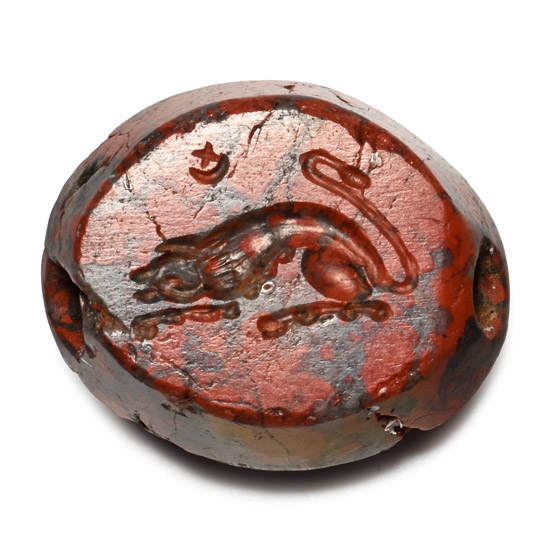
Greek Red Variegated Gemstone with Lioness
6th-4th century B.C.Sold for (Inc. bp): £169
Scaraboid type with incuse design to the underside of a lioness crouching in profile with star and crescent moon above; supplied with a museum-quality impression. 1.94 grams, 15 mm
From the private collection of a European gentleman (1942-2024), formed since the 1970s. -
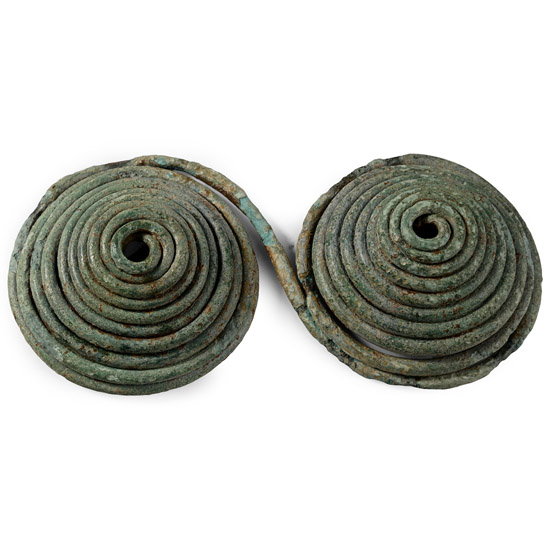
Greek Bronze Spectacle Brooch
Bronze Age, circa 8th century B.C.Sold for (Inc. bp): £169
Formed as a single rod in two large tightly-wound domed coils with integral catch to reverse of each dome. 121 grams, 12 cm
From a UK collection formed in the 1980s. Property of an Essex, UK, gentleman. -
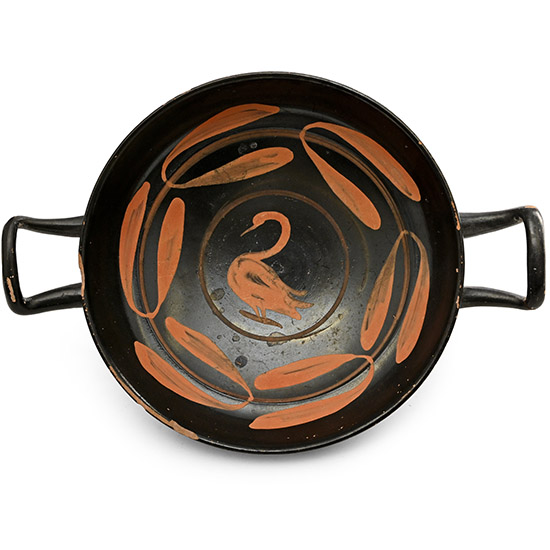
Greek Black-Glazed Twin-Handled Stemless Kylix with Swan
Apulia, 4th century B.C.Sold for (Inc. bp): £4,160
Shallow with arched loop handles below the rim, low stepped foot; tondo with painted wreath of laurel leaves surrounding a standing swan in profile; to the outer face, two horizontal sprigs of laurel leaves; possibly by the Swan painter. 206 grams, 20.6 cm
Bonhams, Knightsbridge, London, 20 October 1994, no.43. Private collection, Suffolk. Accompanied by copies of the relevant Bonhams cataloguing pages.
