
Loading, please wait...
LOT 0103
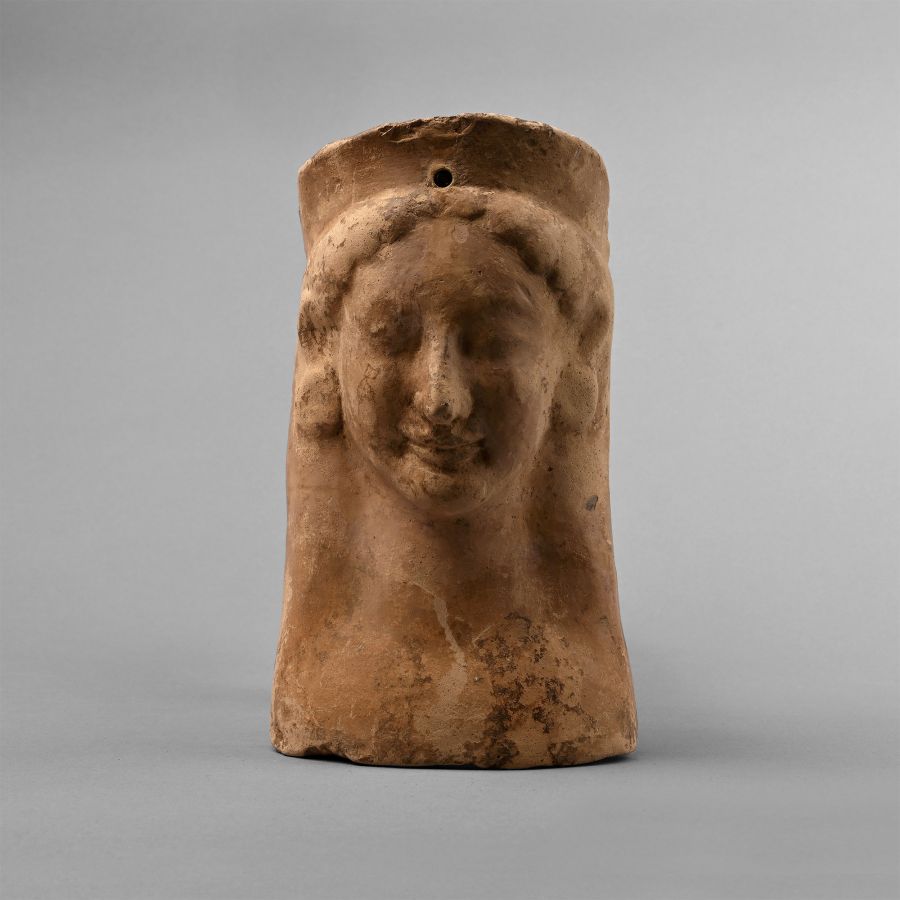
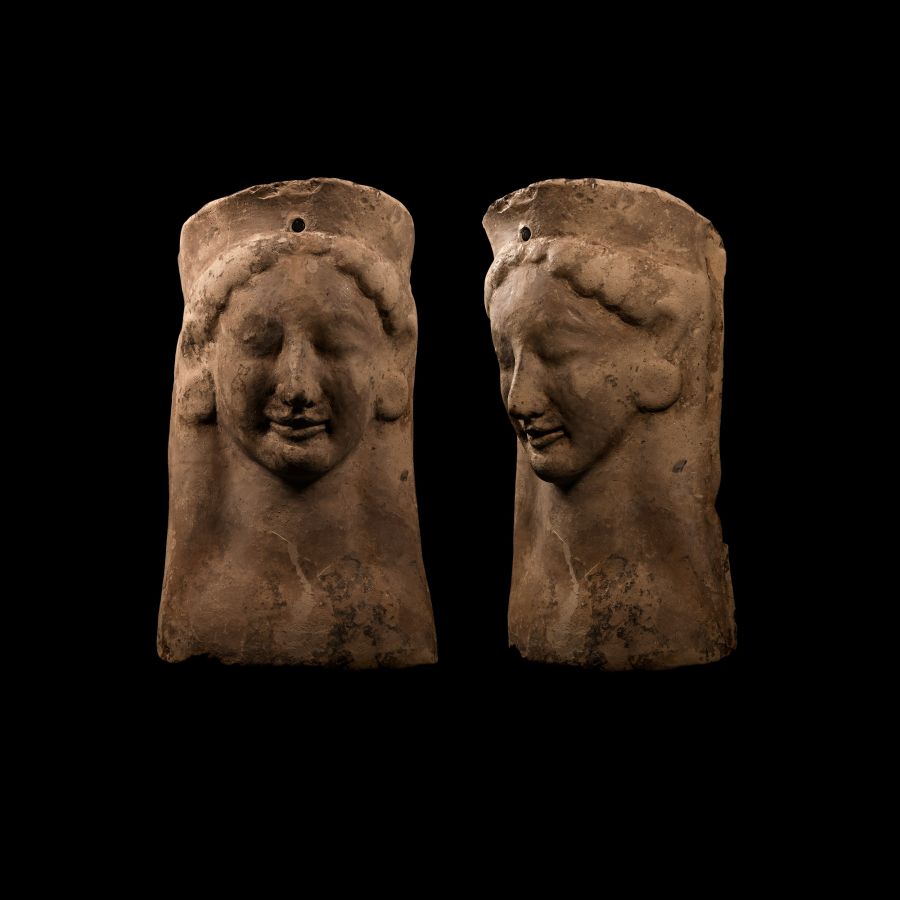
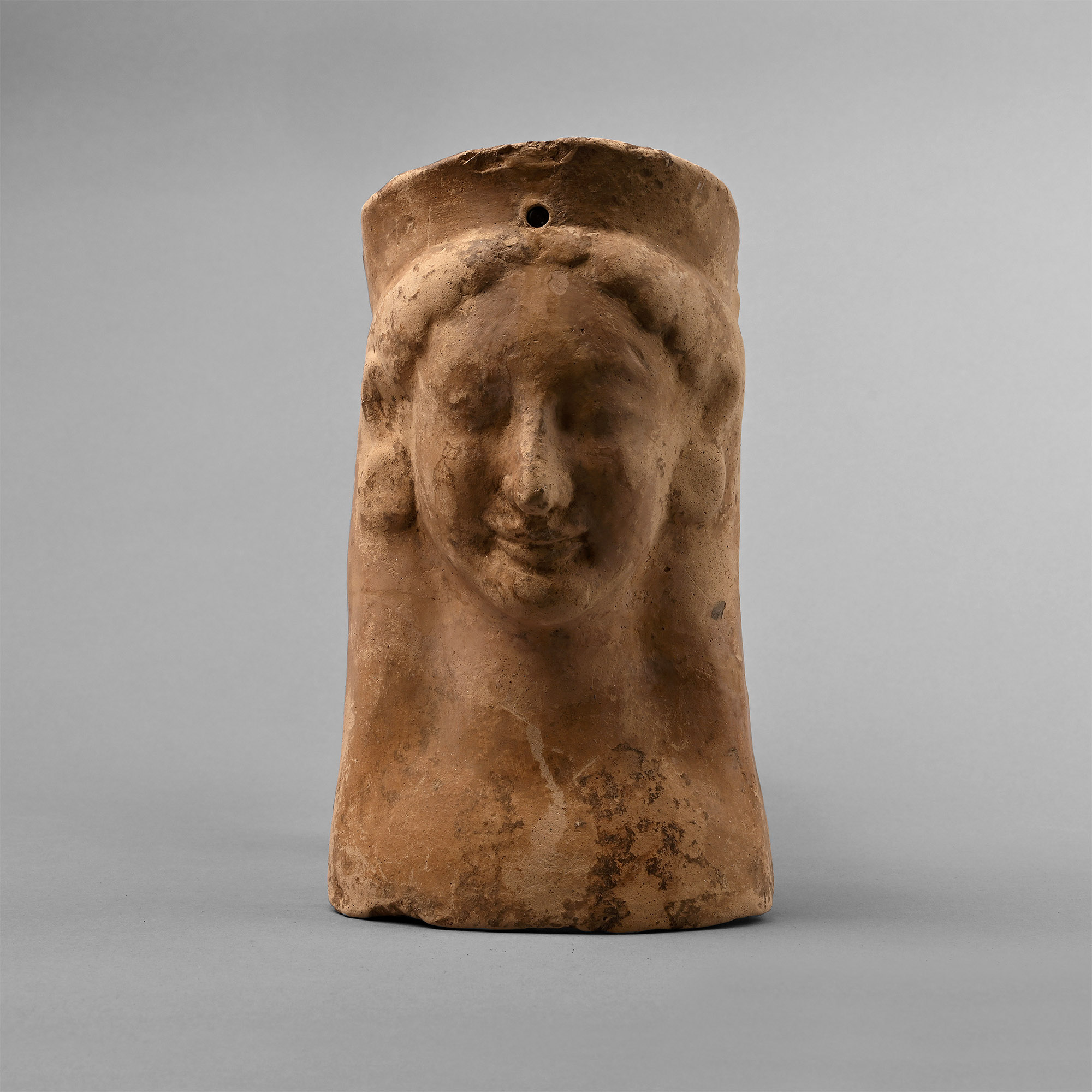
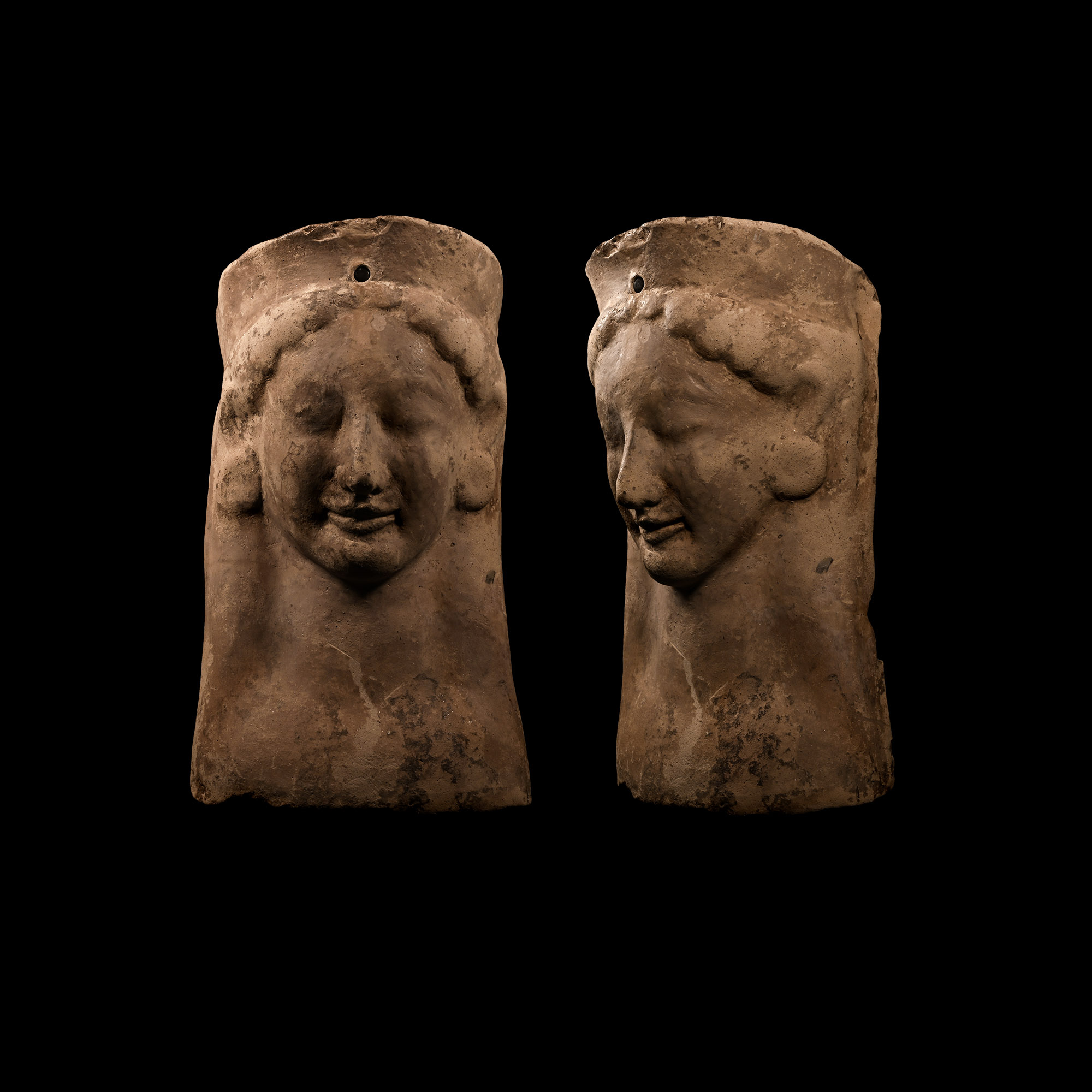
Greek Terracotta Female Protome
EARLY 5TH CENTURY B.C.
7 3/4 in. (606 grams, 19.5 cm).
Mould-made female protome with oval face, graceful nose and typical "archaic" smile; forehead framed by snail-shell curls descending to shoulder-height; with a low polos with a central perforation and large disc earrings.
ProvenanceEx Herbert A. Cahn, Kunst der Antike, Basel, 1997.
with Paul and Vreny Vosseler-Studer, Riehen.
Accompanied by a copy of an Art Loss Register certificate no.S00057826.
This lot has been checked against the Interpol Database of stolen works of art and is accompanied by search certificate number no.12474-228714.
Cat.9, Griechische und Etruskische Kunstwerke archaischer Zeit, (Basel 1998) no.19.
CONDITIONTimeLine Auctions follows a vetting process to ensure the authenticity and legality of all items, reinforcing our commitment to integrity and responsible trading. Each antiquity, antique, and coin lot undergoes thorough examination by a vetting committee of at least ten external specialists, professional trade association members, scientists, and archaeologists: Our Vetting Process
AUCTIONS:
TimeLine is a leading auction house specialising in antiquities, ancient art, collectables, natural history, coins, medals, and books. Our auctions offer museums, collectors, historians, and enthusiasts the opportunity to acquire unique and historically significant pieces.
LOT 0103
Greek Terracotta Female Protome
Estimate £1,500 - 2,000€1,740 - 2,320 (for guidance only)$2,030 - 2,700 (for guidance only)
-
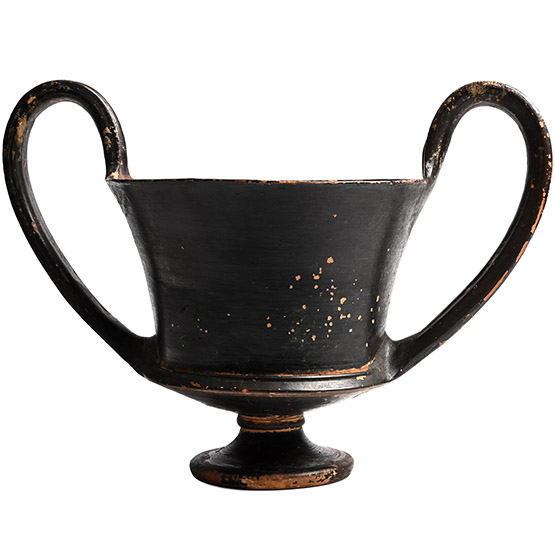
Greek Blackware Short-Stemmed Kantharos
Circa 5th-4th century B.C.Sold for (Inc. bp): £546
With a flared foot, tapering body and two lateral high strap handles with ribs to the outer edges, the sidewall set off from the foot by a carination. 354 grams, 23 cm wide
Ex Norri collection, Milton Keynes, Bedfordshire, UK, 1980s-1990s. -
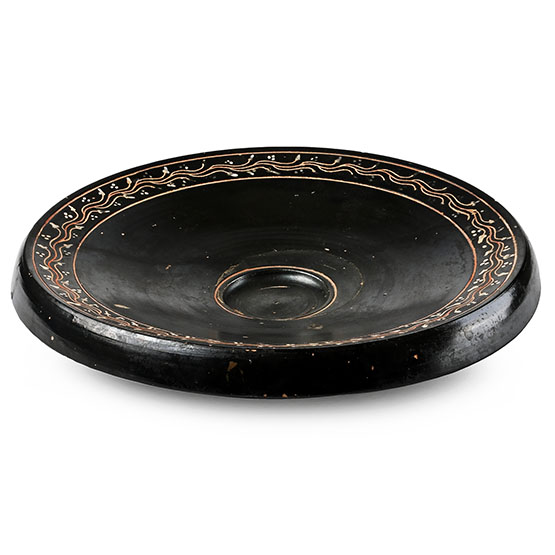
Large Greek Teano-Ware Fish Plate
Hellenistic, early 3rd century B.C.Sold for (Inc. bp): £1,235
Broad face with incised rings outlining the painted border of running vinescroll in red and white; with a shallow central socket outlined in red, broad carinated rim and low foot. 834 grams, 26.5 cm
Acquired at auction, London, UK, 1990s, no.233. Private collection, Suffolk, UK. Accompanied by a copy of the relevant catalogue page.
'Teano ware' is a type of ceramic produced from the late 4th century to the early 3rd century BC. Its modern name derives from Teanum Sidicinum, in northern Campania, the main centre of production. White and red pigment was used for the painted decoration on the black surface. It was probably used for votive or funerary purposes. -
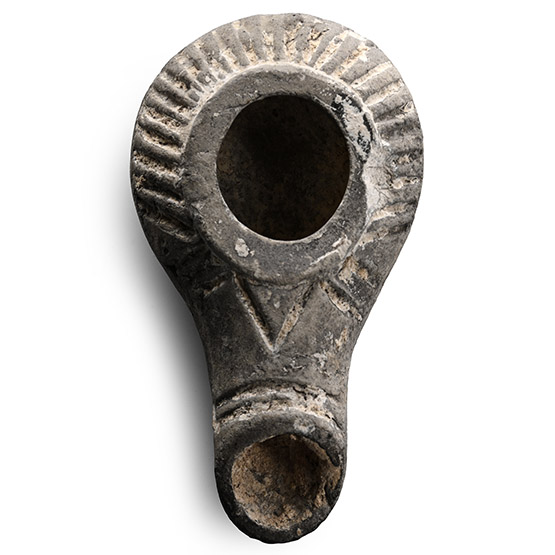
Greek Delphiniform Greyware Oil Lamp
Hellenistic, late 2nd-1st century B.C.Sold for (Inc. bp): £52
Slipper-shaped in plan and biconvex in section with radiating hatching to the shoulder, long nozzle with scooped end; impressed motif (maker's mark) to centre of the underside. 36 grams, 82 mm
From the Lloyd and Jeanne Raport collection, Washington, D.C. and Florida, USA, formed between 1972-2000. Acquired through Bonhams, London, UK.
